Red teaming is the systematic practice of simulating real-world adversarial attacks against a deployed machine learning system to identify vulnerabilities, test defensive mechanisms, and improve its overall security and robustness. Unlike standard testing, it adopts the mindset, tools, and techniques of a determined adversary, probing for weaknesses like adversarial examples, data poisoning, model extraction, and prompt injection. This offensive security exercise is critical for uncovering blind spots before malicious actors can exploit them.

Glossary
Red Teaming
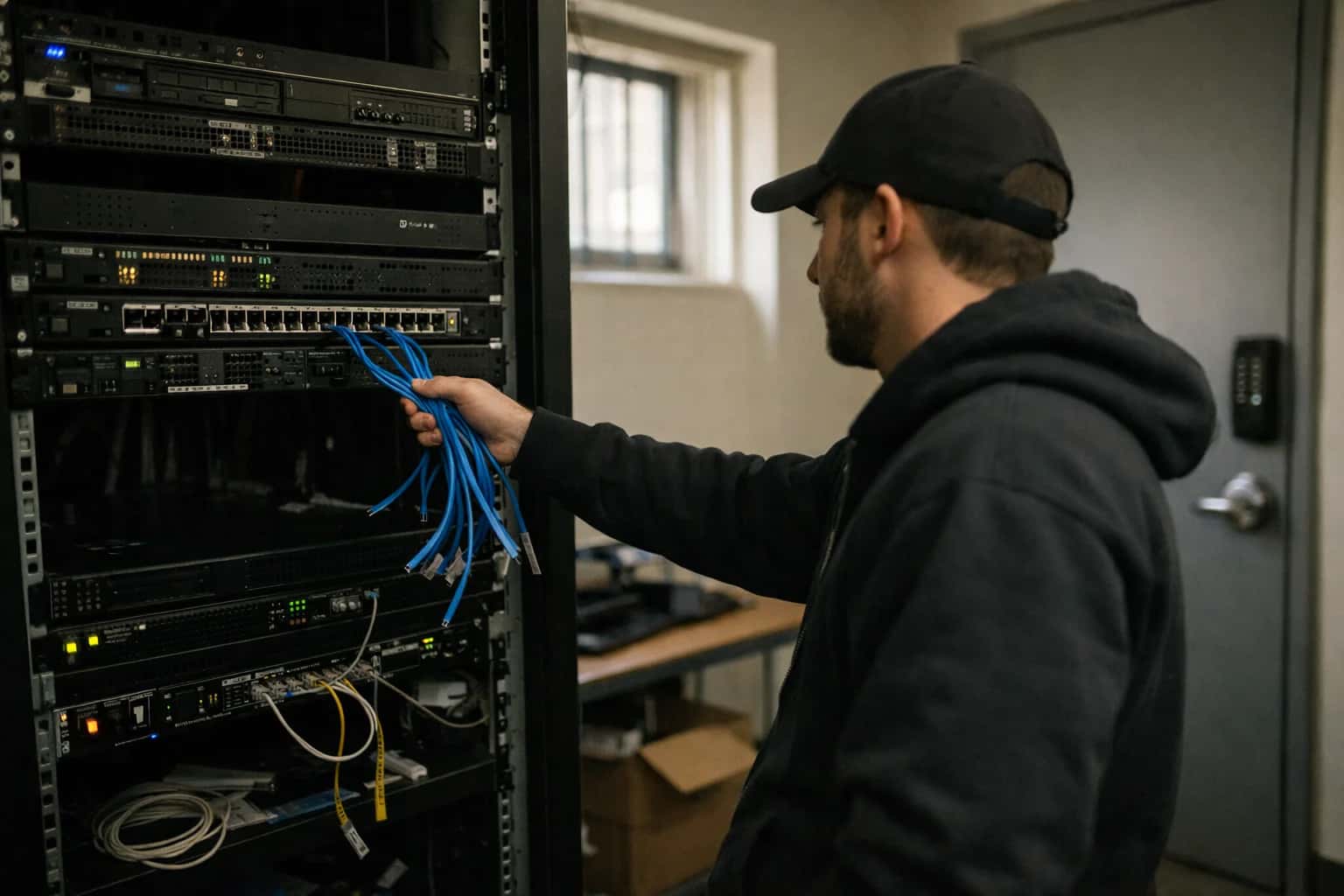
Red teaming is the proactive practice of simulating adversarial attacks against a machine learning system to identify vulnerabilities, test defenses, and improve its overall security posture.
AI SECURITY
What is Red Teaming?
In AI and machine learning, red teaming is a proactive security assessment methodology.
The process is integral to a mature MLOps and DevSecOps lifecycle, directly informing defensive strategies like adversarial training and threat modeling. For small language models (SLMs) and other edge-deployed AI, red teaming assesses risks specific to constrained environments, such as limited monitoring or physical access. Findings are used to harden models, validate certified robustness claims, and ensure compliance with frameworks for algorithmic cybersecurity and enterprise AI governance.
SECURITY POSTURE
Key Objectives of AI Red Teaming
AI red teaming is a structured offensive security exercise designed to proactively discover and mitigate vulnerabilities in machine learning systems before adversaries can exploit them. Its core objectives move beyond simple penetration testing to encompass the entire AI lifecycle.
01
Identify Adversarial Vulnerabilities
The primary technical objective is to systematically discover how an AI model can be made to fail. This involves crafting and executing adversarial attacks—such as evasion attacks (e.g., FGSM, PGD) on computer vision models or prompt injection and jailbreaking against language models—to test the model's adversarial robustness. The goal is to map the model's failure modes and the input perturbations required to trigger them.
02
Stress Test Model Integrity & Safety
Red teams assess whether a model behaves reliably and safely under edge cases and malicious inputs. This includes:
- Out-of-distribution detection: Can the model identify and handle data far from its training distribution?
- Safety alignment bypass: For LLMs, can safety guardrails be circumvented to generate harmful, biased, or unethical content?
- Backdoor/Trojan attack detection: Searching for hidden triggers that cause specific, attacker-chosen misbehavior. This objective ensures the model's operational integrity aligns with its intended use and safety requirements.
03
Evaluate Data Pipeline & Training Security
Attacks are simulated against the earlier stages of the ML pipeline. Red teams attempt data poisoning by injecting corrupted samples into training datasets to degrade model performance or embed backdoors. They also assess vulnerabilities to membership inference attacks (to determine if specific data was in the training set) and model inversion attacks (to reconstruct sensitive training data). This objective hardens the entire development process, not just the deployed model.
04
Assess Privacy & Confidentiality Protections
This objective focuses on the model's potential to leak sensitive information. Red teams probe for privacy vulnerabilities, including:
- Model extraction: Can the model's functionality or parameters be stolen via API queries?
- Inference attacks: Can proprietary business logic or confidential data be inferred from model outputs?
- Testing the efficacy of privacy-preserving techniques like differential privacy or federated learning security protocols (e.g., secure aggregation).
05
Test Deployment Infrastructure & Supply Chain
The security of the surrounding ecosystem is critical. Red teaming expands to attack vectors such as:
- Compromising model repositories or registries to deliver poisoned models.
- Exploiting vulnerabilities in inference servers or APIs (e.g., through input deserialization attacks).
- Attacking the supply chain of pre-trained models or third-party training libraries. This ensures the entire operational stack, not just the algorithm, is resilient.
06
Inform Defense Strategy & Improve Governance
The ultimate goal is not just to find bugs, but to drive measurable security improvements. Findings directly inform:
- The implementation of defensive techniques like adversarial training.
- The development of a comprehensive threat model for the AI system.
- Enterprise AI governance policies, including incident response plans for AI-specific failures.
- Requirements for algorithmic explainability and audit trails to support post-attack analysis.
AI SECURITY
The Red Teaming Process & Methodology
Red teaming is a structured, adversarial simulation methodology used to proactively identify and mitigate security vulnerabilities in machine learning systems before they can be exploited by malicious actors.
Red teaming is a proactive security assessment where a dedicated team, the "red team," simulates the tactics, techniques, and procedures of real-world adversaries to attack a live AI system. The goal is not to prove a system is broken, but to rigorously test its adversarial robustness, input validation, and guardrail integrity under controlled, ethical conditions. This process systematically uncovers vulnerabilities that automated scans or theoretical threat models may miss.
The methodology follows a structured lifecycle: reconnaissance to understand the system, threat modeling to prioritize attack vectors, and execution of tailored attacks like prompt injection or model extraction. Findings are documented and used to harden defenses, often through adversarial training or architectural changes. This continuous, offensive practice is essential for building trustworthy, resilient models, especially for autonomous agents and sensitive enterprise applications where failure carries significant risk.
ADVERSARIAL TACTICS
Common AI Red Teaming Attack Vectors
A comparison of primary attack methodologies used to probe and compromise machine learning models, detailing their mechanisms, objectives, and typical targets.
| Attack Vector | Primary Goal | Attack Phase | Target Model Type | Key Indicator |
|---|---|---|---|---|
Adversarial Example | Cause misclassification | Inference | Vision, NLP | Perturbed input with high confidence |
Data Poisoning | Corrupt training process | Training | All supervised models | Degraded accuracy on target class |
Backdoor / Trojan | Embed hidden trigger | Training | All supervised models | Normal accuracy on clean data, fails on trigger |
Model Extraction | Steal model functionality | Inference | All API-exposed models | High volume of similar queries |
Membership Inference | Determine if data was in training set | Inference | All models, especially generative | Overfitted model confidence scores |
Prompt Injection | Hijack LLM system instructions | Inference | Language Models (LLMs) | Model follows user instruction over system prompt |
Jailbreaking | Bypass safety/ethical guardrails | Inference | Aligned Language Models | Production of harmful or restricted content |
Model Inversion | Reconstruct training data features | Inference | Classification models | High-confidence outputs exploited to reconstruct inputs |
RED TEAMING
Challenges and Key Considerations
While essential for security, effective red teaming presents significant logistical, technical, and strategic hurdles. These challenges must be carefully managed to ensure the exercise yields actionable insights without disrupting operations.
01
Defining the Scope and Rules of Engagement
A poorly scoped red team exercise can be ineffective or destructive. Key considerations include:
- Attack Surface Definition: Clearly delineating which components (APIs, model endpoints, training pipelines, user interfaces) are in scope.
- Rules of Engagement: Establishing strict boundaries to prevent operational disruption, data corruption, or violation of legal/regulatory frameworks.
- Safety Nets: Implementing mechanisms like canary deployments, traffic shadowing, or isolated staging environments to contain the impact of successful attacks.
02
Simulating Realistic, Sophisticated Adversaries
The value of red teaming hinges on the realism of the simulated threat. Key challenges are:
- Adversary Persona Development: Moving beyond generic attacks to model specific threat actors (e.g., nation-states, competitors, malicious insiders) with distinct capabilities, resources, and goals.
- Attack Chaining: Sophisticated breaches rarely involve a single exploit. Red teams must test sequences of vulnerabilities (e.g., data poisoning → model extraction → prompt injection) to evaluate systemic resilience.
- Evolving Tactics: Adversarial machine learning is a rapidly advancing field. Red teams must continuously research and incorporate novel attack vectors published in academic literature.
03
Measuring Impact and Actionable Reporting
Translating attack success into prioritized remediation is a non-trivial task. Critical steps include:
- Risk Quantification: Moving beyond binary "pass/fail" to assess the likelihood of exploitation and the potential business impact (financial, reputational, operational) of each discovered vulnerability.
- Root Cause Analysis: Identifying whether a vulnerability stems from flawed model architecture, insufficient training data, weak infrastructure security, or inadequate input validation.
- Actionable Mitigation Roadmaps: Providing clear, technical recommendations—such as implementing adversarial training, deploying runtime monitors for out-of-distribution detection, or adding formal verification for critical components—tied to specific findings.
04
Operational and Cultural Integration
Red teaming must be a continuous process, not a one-time audit. Sustaining it requires:
- Breaking Down Silos: Fostering collaboration between ML engineers, security teams, DevOps, and product managers. Security cannot be an afterthought bolted onto a deployed model.
- Feedback Loop Integration: Ensuring findings from red team exercises directly inform the MLOps lifecycle, influencing future model architecture choices, data collection strategies, and deployment guardrails.
- Avoiding a "Checkbox" Mentality: The goal is not to "pass" a test but to cultivate an enduring security-first culture where adversarial thinking is part of the standard development workflow.
05
Resource Intensity and Expertise Gap
Effective red teaming is resource-intensive, posing significant barriers:
- Specialized Skill Scarcity: Requires rare expertise spanning machine learning, cybersecurity, software engineering, and domain-specific knowledge. This talent is expensive and difficult to retain.
- Computational and Time Costs: Generating high-quality adversarial examples, especially for large models, requires substantial GPU time. Comprehensive testing across an entire ML pipeline can take weeks or months.
- Tooling Maturity: While frameworks like IBM's Adversarial Robustness Toolbox (ART) and Microsoft's Counterfit exist, the tooling ecosystem for automated, scalable AI red teaming is less mature than traditional penetration testing suites.
06
The Evolving Landscape of AI-Specific Threats
Red teams must constantly adapt to novel attack vectors unique to AI systems:
- Supply Chain Attacks: Assessing vulnerabilities introduced via pre-trained model hubs (e.g., Hugging Face), training datasets, or third-party ML libraries, which can be vectors for backdoor attacks.
- Multi-Modal and Agentic System Risks: Testing the security of systems where language models orchestrate tool use (tool calling) or process images/audio. Attacks may involve cross-modal triggers or exploiting inter-agent communication.
- Data Integrity Beyond Poisoning: Evaluating resilience against inference attacks like model inversion or membership inference, which compromise data privacy without directly altering model behavior.
RED TEAMING
Frequently Asked Questions
Red teaming is a proactive security assessment methodology for AI systems. These questions address its core principles, processes, and role in building robust machine learning models.
In AI and machine learning, red teaming is a proactive security practice where a dedicated team, the 'red team,' simulates the tactics, techniques, and procedures (TTPs) of real-world adversaries to attack a deployed or pre-deployment model. The goal is to identify vulnerabilities, test defensive measures, and improve the overall security posture and adversarial robustness of the system before malicious actors can exploit them. Unlike standard testing, red teaming adopts an adversarial mindset, thinking creatively to uncover failure modes that standard evaluation metrics might miss. It is a critical component of a mature MLSecOps (Machine Learning Security Operations) lifecycle.
Enabling Efficiency, Speed & Accuracy
Intelligent Analysis, Decision & Execution
We build AI systems for teams that need search across company data, workflow automation across tools, or AI features inside products and internal software.
Talk to Us
Search across company data
Give teams answers from docs, tickets, runbooks, and product data with sources and permissions.
Useful when people spend too long searching or get different answers from different systems.
Enterprise searchRAGPermissions
Read more
Automate internal workflows
Use AI to route work, draft outputs, trigger actions, and keep approvals and logs in place.
Useful when repetitive work moves across multiple tools and teams.
AI agentsWorkflow automationGovernance
Read more
Add AI to products and internal tools
Build assistants, guided actions, or decision support into the software your team or customers already use.
Useful when AI needs to be part of the product, not a separate tool.
AI integrationDecision supportModel routing
Read more
About the author
Prasad Kumkar
CEO & MD, Inference Systems
Prasad Kumkar is the CEO & MD of Inference Systems and writes about AI systems architecture, LLM infrastructure, model serving, evaluation, and production deployment. Over 5+ years, he has worked across computer vision models, L5 autonomous vehicle systems, and LLM research, with a focus on taking complex AI ideas into real-world engineering systems.
His work and writing cover AI systems, large language models, AI agents, multimodal systems, autonomous systems, inference optimization, RAG, evaluation, and production AI engineering.
LinkedIn
Limited slotsGet a Free AI Consultation
Partnered with leading AI, data, and software stack.





How We Work
Custom AI workflows for your Business
One-fit-all AI don't work for modern businesses. At Inferensys, we aim to understand your business & custom requirements; which we use to define most efficient agentic workflows, the data, and the tools for your business.
01
Review the use case
We understand the task, the users, and where AI can actually help.
Read more02
Pick the right approach
We define what needs search, automation, or product integration.
Read more03
Build the first useful version
We implement the part that proves the value first.
Read more04
Improve from there
We add the checks and visibility needed to keep it useful.
Read moreThe first call is a practical review of your use case and the right next step.
Talk to Us