Cloud bursting is a hybrid cloud deployment model where an application running in a private cloud or on-premises data center dynamically 'bursts' into a public cloud to handle spikes in demand when local resources are insufficient. This model provides elastic scalability and cost-efficiency by leveraging pay-per-use public cloud resources only during peak periods, while maintaining baseline operations on dedicated, often more secure, private infrastructure. It is a key strategy for managing unpredictable workloads without over-provisioning capital-intensive private hardware.

Glossary
Cloud Bursting
Cloud bursting is a hybrid cloud deployment model where applications running on private infrastructure automatically scale into public cloud resources to handle demand spikes.
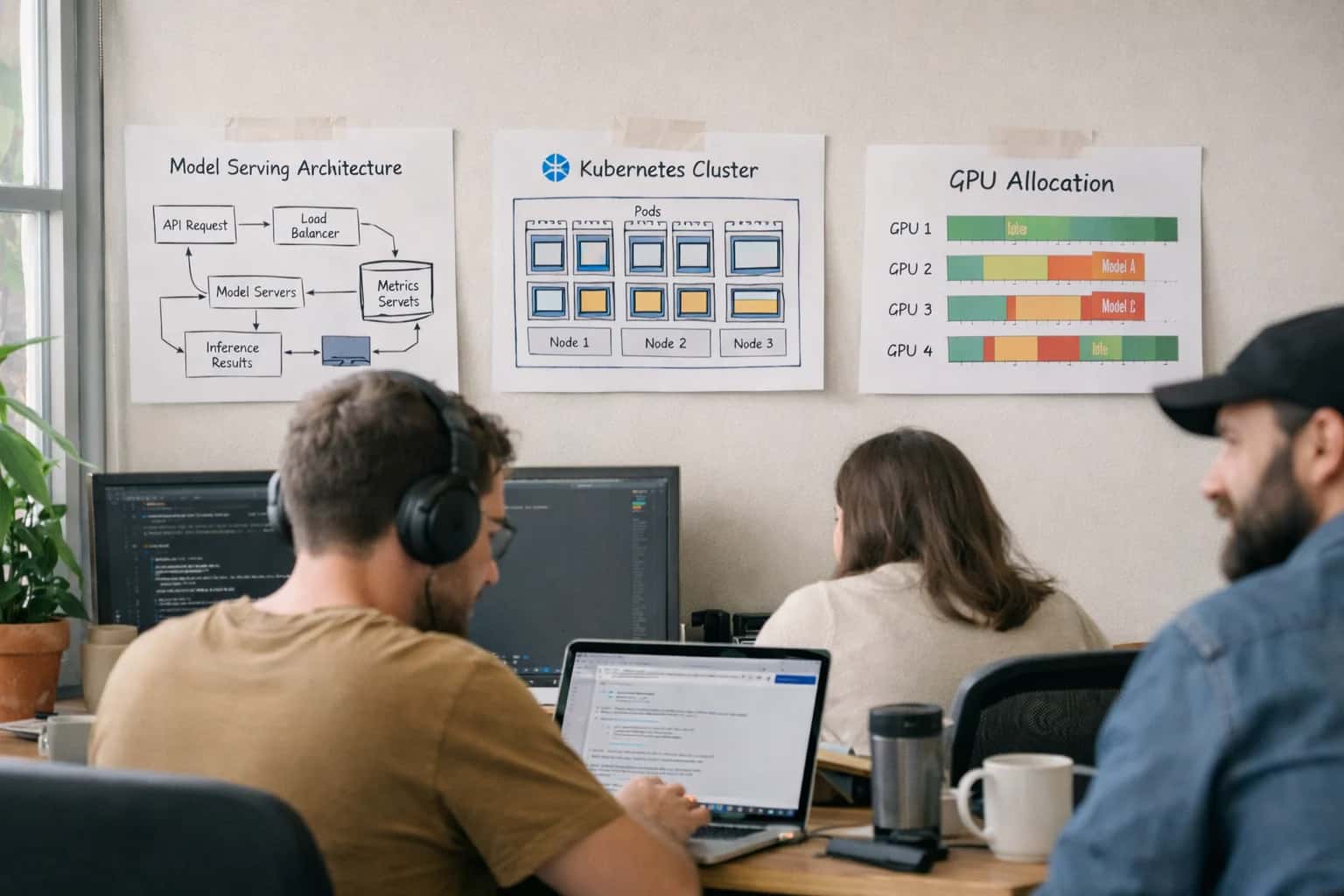
HYBRID CLOUD INFRASTRUCTURE
What is Cloud Bursting?
Cloud bursting is a hybrid cloud deployment model that dynamically scales application capacity from a private environment into a public cloud.
The architecture requires seamless integration between private and public environments, involving synchronized networking, security policies, and data management. Key enabling technologies include load balancers for traffic distribution, Infrastructure as Code (IaC) tools like Terraform for automated provisioning, and container orchestration platforms such as Kubernetes for workload portability. Successful implementation addresses challenges like data latency, compliance across jurisdictions, and cost management to prevent uncontrolled spending in the public cloud during burst events.
ARCHITECTURAL PRINCIPLES
Key Characteristics of Cloud Bursting
Cloud bursting is a hybrid cloud deployment model where an application running in a private cloud or on-premises data center 'bursts' into a public cloud to handle spikes in demand when local resources are insufficient. Its implementation is defined by several core technical and operational characteristics.
01
Demand-Driven Elasticity
The primary characteristic of cloud bursting is its reactive, event-driven scaling. The system automatically provisions public cloud resources in response to predefined performance thresholds or triggering events, such as:
- CPU utilization exceeding 80% for a sustained period.
- A surge in incoming request latency.
- A scheduled event known to cause load spikes (e.g., product launch, end-of-quarter reporting). Once the demand subsides, the system decommissions the burst resources, returning to baseline private infrastructure. This creates a cost-optimized, pay-per-use model for handling variable workloads.
02
Hybrid Network Architecture
Effective cloud bursting requires a secure, low-latency network bridge between on-premises and public cloud environments. This is typically achieved through:
- Virtual Private Cloud (VPC) Peering or VPN Gateways to create a unified network.
- Direct Connect or ExpressRoute services for dedicated, high-bandwidth private connections.
- Consistent network security policies and firewall rules applied across both domains. The goal is to make the bursted cloud instances appear as a seamless extension of the local network, minimizing application reconfiguration and ensuring data transfer performance does not become the bottleneck.
03
Unified Management & Orchestration
Cloud bursting is not manual; it relies on orchestration software to manage the lifecycle of hybrid resources. Key components include:
- A central orchestrator (e.g., Kubernetes with cluster federation, custom controllers) that monitors load and executes scaling policies.
- Infrastructure as Code (IaC) templates (e.g., Terraform, CloudFormation) to consistently provision burst environments.
- A unified identity and access management (IAM) framework, often using role synchronization or a central identity provider. This layer abstracts the complexity of multi-cloud management, presenting a single control plane for operators.
04
Data Synchronization Strategy
Applications bursting to the cloud require access to data. Strategies must address data locality and consistency:
- Read-Only Caching: Burst nodes cache frequently accessed, static reference data from the primary datastore.
- Active-Active Databases: Using database technologies that support multi-region replication for stateful applications.
- Session State Externalization: Storing user session data in a distributed cache (e.g., Redis, Memcached) accessible from both environments.
- Queue-Based Decoupling: Placing workloads in a message queue (e.g., Apache Kafka, AWS SQS) that workers in either cloud can consume. The chosen strategy directly impacts application architecture and is critical for avoiding data staleness or integrity issues.
05
Policy-Based Automation & Cost Control
To prevent runaway costs, cloud bursting is governed by strict, declarative policies. These are rules defined in the orchestrator that answer:
- When to Burst: The precise metrics and thresholds that trigger scaling.
- Where to Burst: Which cloud region and instance type to use (e.g., selecting spot instances for cost savings).
- How Much to Burst: The maximum number of external nodes or budget allowed.
- When to Scale Back: The cooldown period and conditions for terminating burst resources. This policy layer transforms cloud bursting from a manual emergency switch into a finely tuned, automated system that balances performance and expenditure.
06
Application Architecture Requirements
Not all applications are suitable for cloud bursting. The model favors applications designed with specific cloud-native principles:
- Statelessness: Application instances should not store persistent data locally, allowing any node to handle any request.
- Loose Coupling: Services should communicate asynchronously via APIs or messaging to tolerate network latency between clouds.
- Externalized Configuration: Configuration must be pulled from a central service (e.g., Consul, AWS AppConfig) rather than being baked into node images.
- Health Reporting: Applications must expose detailed health and metrics endpoints for the orchestrator to make intelligent scaling decisions. Legacy, monolithic, or tightly coupled applications often require significant refactoring to enable effective bursting.
INFRASTRUCTURE ENGINEERING
How Cloud Bursting Works: Technical Mechanism
Cloud bursting is a hybrid cloud deployment model where an application running in a private cloud or on-premises data center 'bursts' into a public cloud to handle spikes in demand when local resources are insufficient.
Cloud bursting is a hybrid cloud architecture that dynamically provisions public cloud resources to an on-premises or private cloud application when its local compute capacity is exceeded. This is typically triggered by an autoscaling policy monitoring metrics like CPU utilization or queue depth. The mechanism requires a load balancer or traffic director to seamlessly distribute incoming requests across the hybrid environment, maintaining a single, logical application endpoint for users while scaling the backend fleet.
Successful implementation hinges on pre-configured Infrastructure as Code (IaC) templates and container images in the public cloud to ensure rapid, consistent provisioning. Data locality is a critical challenge, often addressed via a parallel file system or distributed cache for shared state. For stateful applications, techniques like checkpointing and session replication are used. The architecture relies on secure, low-latency network connectivity, sometimes leveraging InfiniBand or RDMA for high-performance computing workloads, to minimize the performance penalty of the burst.
CLOUD BURSTING
Primary Use Cases and Implementations
Cloud bursting is a hybrid cloud deployment model where an application running in a private cloud or on-premises data center 'bursts' into a public cloud to handle spikes in demand when local resources are insufficient. Its primary implementations focus on managing variable, resource-intensive workloads.
01
Handling Peak Computational Loads
Cloud bursting is most commonly used to manage spikes in computational demand that exceed the capacity of on-premises infrastructure. This is critical for:
- Batch processing jobs (e.g., end-of-day financial risk modeling, large-scale media rendering).
- Scientific simulations and high-performance computing (HPC) workloads that require thousands of cores for a limited time.
- Seasonal traffic for e-commerce or media platforms, where user load can increase by orders of magnitude.
Implementation involves using a job scheduler (like Slurm or Kubernetes) configured with a hybrid cloud plugin to automatically provision public cloud instances (e.g., AWS EC2, Google Compute Engine) when the local cluster queue exceeds a defined threshold.
02
Parallelized Simulation & AI Training
In AI and robotics, cloud bursting enables massively parallel training runs for reinforcement learning or synthetic data generation. This is a core implementation for Sim-to-Real Transfer Learning pipelines.
- A robotics team trains a policy in thousands of parallel physics simulation instances. When the on-premises GPU cluster is saturated, the workload bursts to the cloud to launch additional simulated environments.
- This allows for hyperparameter sweeps or domain randomization at scale, drastically reducing the total time to train a robust model.
- The burst cloud resources are typically ephemeral, spun down immediately after the training job completes to control costs.
03
Disaster Recovery & Business Continuity
Cloud bursting serves as a dynamic component of disaster recovery (DR) strategies. Instead of maintaining a static, idle DR site, organizations can burst critical applications to the cloud in the event of an on-premises failure.
- Key implementations involve:
- Automated failover scripts that detect an outage and re-route traffic to a cloud-deployed replica of the application.
- Infrastructure as Code (IaC) templates (e.g., Terraform) that can provision the entire application stack in the public cloud within minutes.
- Synchronizing data to the cloud via parallel file systems or object storage to ensure the burst environment has access to recent data.
04
Development & Testing Environments
Engineering teams use cloud bursting to provision on-demand, large-scale testing environments without capital investment.
- Load testing: Bursting to generate traffic from thousands of simulated users to test application performance under peak load.
- Integration testing: Spinning up complex, multi-service environments that mirror production for final validation before deployment.
- Hardware-in-the-Loop (HIL) simulation: For robotics and IoT, cloud resources can be used to host additional digital twin or sensor simulation instances that interact with physical test hardware.
This use case relies heavily on container orchestration (Kubernetes) and autoscaling groups to bring environments up and down based on the project schedule.
05
Data-Intensive Processing & Analytics
For workloads that are I/O-bound or require processing large datasets, cloud bursting can provide access to scalable storage and compute.
- Big data analytics: Bursting a Spark or Hadoop job to the cloud to process a petabyte-scale dataset that resides in a cloud object store (e.g., Amazon S3, Google Cloud Storage).
- Genomic sequencing analysis: A research lab uses on-premises servers for day-to-day analysis but bursts to the cloud for large, periodic whole-genome sequencing batches.
- Media processing: Transcoding a large library of video files by bursting to a cloud-based media processing service.
Successful implementation requires high-bandwidth, low-latency network connectivity (like Direct Connect or ExpressRoute) and potentially a parallel file system like Lustre or WEKA that can span on-prem and cloud resources.
06
Cost-Optimized & Spot Instance Strategies
A sophisticated implementation of cloud bursting involves cost optimization by leveraging the cloud's pricing models.
- Spot Instances: Running fault-tolerant, interruptible batch workloads (like Monte Carlo simulations or non-critical rendering) on deeply discounted cloud spot instances. The on-premises cluster acts as the fallback if spot capacity is revoked.
- Mixed Resource Pools: Using a job scheduler to implement a cost-aware policy, prioritizing cheaper on-premises resources and automatically bursting to more expensive cloud instances only when necessary to meet deadlines.
- Rightsizing: Monitoring tools (like Prometheus) feed data into the bursting controller to ensure the smallest necessary cloud instance type is provisioned, avoiding over-provisioning.
This requires robust checkpointing for jobs and careful management of data transfer costs to ensure the financial benefits are realized.
HYBRID CLOUD DEPLOYMENT COMPARISON
Cloud Bursting vs. Related Models
This table compares Cloud Bursting, a dynamic scaling model, against other common hybrid and multi-cloud deployment strategies for compute-intensive workloads like parallelized simulation.
| Architectural Feature | Cloud Bursting | Hybrid Cloud | Multi-Cloud | On-Premises Only |
|---|---|---|---|---|
Primary Scaling Trigger | Spike in demand exceeding local capacity | Planned, long-term workload distribution | Vendor diversification or feature-specific needs | Fixed, hardware-limited capacity |
Resource Provisioning | Dynamic, automated, and ephemeral | Static or semi-static partitions | Static partitions per provider | Static, physically provisioned |
Typical Latency to Scale | < 1 minute (automated) | Minutes to hours (manual/planned) | Hours to days (manual configuration) | Weeks to months (procurement lead time) |
Cost Model | Pay-per-use for burst capacity; baseline is fixed | Mixed CapEx/OpEx with reserved instances | OpEx across multiple providers with reserved instances | High upfront CapEx with ongoing maintenance |
Data Gravity & Egress | High egress costs during burst; data must sync to cloud | Managed via dedicated network links (e.g., Direct Connect) | Very high complexity and cost for cross-cloud data transfer | Zero egress cost; data remains local |
Fault Tolerance | Improved (cloud as failover) | High (active-active or active-passive sites) | Highest (provider-level redundancy) | Low (dependent on local redundancy) |
Best For Workload Type | Unpredictable, spiky batch jobs (e.g., simulation rendering) | Predictable, segmented workloads with steady state | Avoiding vendor lock-in or leveraging unique cloud services | Workloads with strict data sovereignty, low latency, or consistent demand |
Management Complexity | High (requires orchestration, sync, and cost controls) | Moderate (unified management plane possible) | Very High (multiple control planes, inconsistent APIs) | Low (single, controlled environment) |
CLOUD BURSTING
Frequently Asked Questions
Cloud bursting is a critical hybrid cloud strategy for managing variable computational demand, particularly relevant for resource-intensive workloads like parallelized robotic simulation and AI training.
Cloud bursting is a hybrid cloud deployment model where an application running primarily on a private cloud or on-premises infrastructure dynamically and automatically provisions additional compute resources from a public cloud to handle temporary spikes in demand. It works by integrating local resource managers (like Slurm or Kubernetes) with public cloud APIs. When a predefined threshold—such as queue length or local cluster utilization—is exceeded, the system provisions virtual machines or container instances in the public cloud, seamlessly extends the local network, and dispatches excess jobs to these transient resources. Once demand subsides, the cloud resources are terminated, and the application contracts back to the private environment.
Enabling Efficiency, Speed & Accuracy
Intelligent Analysis, Decision & Execution
We build AI systems for teams that need search across company data, workflow automation across tools, or AI features inside products and internal software.
Talk to Us
Search across company data
Give teams answers from docs, tickets, runbooks, and product data with sources and permissions.
Useful when people spend too long searching or get different answers from different systems.
Enterprise searchRAGPermissions
Read more
Automate internal workflows
Use AI to route work, draft outputs, trigger actions, and keep approvals and logs in place.
Useful when repetitive work moves across multiple tools and teams.
AI agentsWorkflow automationGovernance
Read more
Add AI to products and internal tools
Build assistants, guided actions, or decision support into the software your team or customers already use.
Useful when AI needs to be part of the product, not a separate tool.
AI integrationDecision supportModel routing
Read more
About the author
Prasad Kumkar
CEO & MD, Inference Systems
Prasad Kumkar is the CEO & MD of Inference Systems and writes about AI systems architecture, LLM infrastructure, model serving, evaluation, and production deployment. Over 5+ years, he has worked across computer vision models, L5 autonomous vehicle systems, and LLM research, with a focus on taking complex AI ideas into real-world engineering systems.
His work and writing cover AI systems, large language models, AI agents, multimodal systems, autonomous systems, inference optimization, RAG, evaluation, and production AI engineering.
LinkedIn
Limited slotsGet a Free AI Consultation
Partnered with leading AI, data, and software stack.





How We Work
Custom AI workflows for your Business
One-fit-all AI don't work for modern businesses. At Inferensys, we aim to understand your business & custom requirements; which we use to define most efficient agentic workflows, the data, and the tools for your business.
01
Review the use case
We understand the task, the users, and where AI can actually help.
Read more02
Pick the right approach
We define what needs search, automation, or product integration.
Read more03
Build the first useful version
We implement the part that proves the value first.
Read more04
Improve from there
We add the checks and visibility needed to keep it useful.
Read moreThe first call is a practical review of your use case and the right next step.
Talk to Us