A Unified Namespace (UNS) is an architectural pattern that establishes a single, hierarchical source of truth for contextualized data across an industrial enterprise, enabling seamless discovery and integration between machines, software, and processes. It functions as a virtual directory, often implemented via a message broker like MQTT or using standards like OPC UA, where every data point—from a sensor reading to a production order—is published to a unique, descriptive topic path (e.g., /factory/line1/robotA/temperature). This creates a semantically interoperable data layer where applications subscribe only to the information they need, decoupling systems and eliminating point-to-point integrations.

Glossary
Unified Namespace (UNS)
A Unified Namespace (UNS) is an architectural pattern that provides a single, hierarchical source of truth for contextualized data across an industrial enterprise, enabling seamless data discovery and integration.
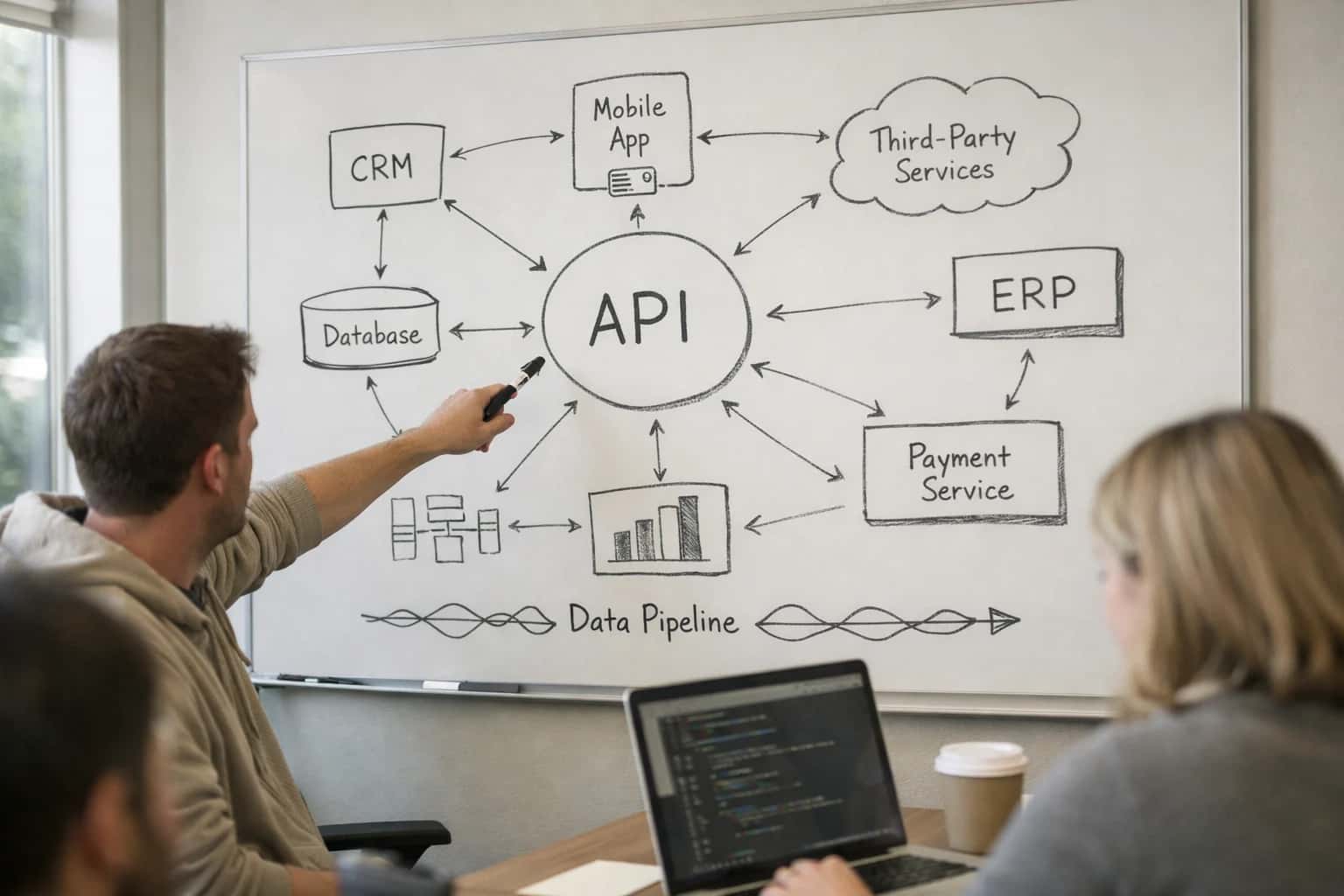
DIGITAL TWIN CREATION
What is Unified Namespace (UNS)?
A foundational architectural pattern for industrial data integration and digital twin ecosystems.
Within digital twin creation, the UNS is the critical communication backbone that allows a virtual model to receive live telemetry from its physical counterpart and, in advanced implementations, send commands back, enabling bidirectional data flow. By providing a consistent, real-time view of all operational data, the UNS empowers predictive maintenance, system-level analytics, and the orchestration of cognitive twins. It is the enabling infrastructure that turns isolated data streams into a coherent, queryable representation of the entire operational environment.
ARCHITECTURAL PATTERN
Core Architectural Features of a UNS
A Unified Namespace (UNS) is not a single technology but an architectural pattern defined by specific, foundational features that enable a single, hierarchical source of truth for contextualized industrial data.
01
Hierarchical Information Model
The UNS organizes data into a logical, tree-like hierarchy that mirrors the physical and functional structure of the enterprise. This is its defining structural feature.
- Nodes represent entities like sites, production lines, machines, or sensors.
- Parent-child relationships establish context (e.g.,
Factory_A/Line_1/Robot_3/Temperature). - This structure enables semantic discovery; knowing a machine's location in the hierarchy provides immediate context for its data, eliminating the need for complex, pre-defined point maps.
02
Single Source of Truth (SSOT)
The UNS acts as the canonical, authoritative repository for current and historical contextualized data across the organization.
- Eliminates data silos by providing one access point for all systems (MES, SCADA, ERP, Analytics).
- Ensures consistency; every application reads from and writes to the same namespace, preventing conflicting data states.
- Decouples data producers from consumers; a sensor publishes once to the UNS, and any authorized system can subscribe, enabling agile integration without point-to-point connections.
03
Publish-Subscribe (Pub/Sub) Communication
Data flows through the UNS via a publish-subscribe messaging pattern, which is fundamental to its real-time, decoupled nature.
- Publishers (e.g., PLCs, sensors, edge gateways) send data to a specific topic in the hierarchy.
- Subscribers (e.g., dashboards, analytics engines, control systems) listen to topics of interest.
- This asynchronous model scales efficiently, supports many-to-many communication, and allows new applications to tap into data streams without disrupting existing systems. Protocols like MQTT and OPC UA PubSub are commonly used to implement this layer.
04
Contextualized Data Points
In a UNS, raw data is enriched with metadata and placed within the hierarchical model to become contextualized information.
- A temperature value of
72.4is meaningless alone. In the UNS, it becomes{ value: 72.4, unit: '°C', timestamp: '2024-01-15T10:30:00Z', asset: 'Reactor_Vessel_5', location: 'Site_B/Chemical_Plant' }. - This context is provided by the node's position in the hierarchy and attached metadata (tags, properties, engineering units).
- Contextualization is what transforms a simple data stream into actionable information for both humans and downstream AI/ML models.
05
Semantic Interoperability
A UNS enables different systems to exchange data with shared, unambiguous meaning, moving beyond syntactic compatibility (same format) to semantic understanding.
- Achieved through the use of standardized information models (e.g., Asset Administration Shell - AAS, OPC UA Companion Specifications).
- These models define a common vocabulary and relationship rules for assets (e.g., what properties a "pump" has, how it relates to a "motor").
- This allows an ERP system to understand a maintenance alert from a PLC because both reference the same semantic model of the asset within the UNS.
06
Decoupled & Scalable Architecture
The UNS pattern creates a loosely coupled system where components interact through the namespace, not directly with each other.
- Key Benefit: Agility. New machines, sensors, or software applications can be added or removed without requiring changes to existing, integrated systems.
- Horizontal Scalability: The pub/sub backbone can be distributed across multiple brokers to handle massive data volumes from thousands of IoT devices.
- Resilience: The failure of one subscriber (e.g., a dashboard) does not affect the data flow to other subscribers (e.g., a historian or analytics service).
ARCHITECTURAL PATTERN
How a Unified Namespace Works
A Unified Namespace (UNS) is the foundational data architecture for Industry 4.0 and digital twin ecosystems, providing a single, hierarchical source of truth for contextualized information across an enterprise.
A Unified Namespace (UNS) is an architectural pattern that establishes a single, hierarchical source of truth for contextualized data across an industrial enterprise. It functions as a virtual directory, organizing information from machines, software, and processes into a discoverable structure using a consistent naming convention, often based on the Asset Administration Shell (AAS) standard. This eliminates data silos by providing a common interface, like an OPC UA information model or an MQTT topic tree, through which all systems can publish and subscribe to data.
The UNS enables seamless semantic interoperability by attaching rich metadata and ontologies to data points, giving them shared meaning. This allows a digital twin to automatically discover and ingest relevant live sensor feeds, or an analytics engine to query data from disparate sources without custom integrations. By decoupling data producers from consumers, the UNS creates a scalable, flexible backbone for real-time monitoring, predictive maintenance, and system-wide optimization, forming the critical data fabric that makes advanced industrial IoT and autonomous operations possible.
APPLICATION PATTERNS
Unified Namespace Use Cases
A Unified Namespace (UNS) is more than an architectural concept; it is an operational enabler. These cards detail the primary enterprise applications where a UNS delivers concrete value by providing a single, contextualized source of truth for industrial data.
01
Real-Time Operational Visibility
A UNS provides a single pane of glass for monitoring live operations by aggregating and contextualizing data from disparate sources. This enables:
- Live dashboards that combine machine OEE (Overall Equipment Effectiveness), production counts, and energy consumption from PLCs, SCADA, and MES systems.
- Cross-line performance analysis by correlating data from historically siloed production cells.
- Instant root-cause investigation by tracing an anomaly (e.g., a temperature spike) back through related processes and equipment states.
Without a UNS, this visibility requires complex, point-to-point integrations that are brittle and difficult to maintain.
02
Seamless System Integration
The UNS acts as a universal data bus, dramatically simplifying the integration of new machines, software applications, and legacy systems. Key functions include:
- Decoupling producers and consumers: An ERP system subscribes to 'production.order.completed' events without needing to know which MES or machine generated them.
- Legacy system modernization: Data from a legacy OPC DA server can be published to the UNS and immediately become available to modern cloud analytics.
- Agile deployment: A new predictive maintenance microservice can be deployed and begin consuming vibration data from the UNS namespace
/plantA/press123/vibrationwithout modifying the data source.
This pattern replaces the "integration spaghetti" of custom APIs and point-to-point connectors.
03
Contextualized Data for AI/ML
High-quality, contextualized data is the primary fuel for industrial AI. A UNS structures raw telemetry into feature-ready datasets for machine learning models.
- Temporal alignment: A UNS can serve synchronized time-series data from a robot's joint angles, camera feeds, and torque sensors as a single dataset for training a vision-language-action model.
- Semantic enrichment: Raw sensor data tagged with asset metadata (e.g.,
assetType=CNC_Mill,material=Stainless_Steel) allows models to learn condition-specific patterns. - Efficient data pipelining: A digital twin's simulation data can be published to a UNS path like
/digital_twin/press123/simulated_cycle_time, where it is ingested alongside real-world data for sim-to-real transfer learning and model validation.
04
Foundation for Digital Twins
A UNS is the essential data fabric that makes dynamic, scalable digital twins possible. It provides the live data stream and hierarchical context the twin requires.
- State synchronization: The physical asset publishes its state to
/assets/pump-101/state. The digital twin subscribes to this topic to update its virtual representation in real time. - Bidirectional communication: The twin runs a what-if analysis, determines an optimal setpoint, and publishes a command to
/assets/pump-101/commands/setSpeed. The physical controller subscribes and executes it. - Twin graph discovery: A cognitive twin searching for related assets can query the UNS hierarchy to discover and connect to other twins (e.g., find all pumps in the same cooling loop).
05
Event-Driven Automation
A UNS enables loosely coupled, reactive automation by treating all state changes as publishable events that can trigger downstream actions.
- Condition-based workflows: An event
production.batch.quality_check.failedpublished to the UNS can automatically trigger a work order creation in a CMMS and notify a supervisor via chat. - Predictive maintenance triggers: A machine learning model publishing a
remaining_useful_lifeprediction below a threshold to the UNS can automatically schedule a maintenance task. - Supply chain response: An event
warehouse.inventory.item_123.low_stockcan trigger a multi-agent system to autonomously negotiate with supplier agents and place a purchase order, all communicating via the UNS.
06
Unified Data Governance & Lineage
By centralizing data flow through a defined namespace, a UNS provides a structural framework for data observability, governance, and compliance.
- Centralized access control: Permissions and policies can be applied at the namespace level (e.g.,
readaccess to/plantA/*,writeaccess only to/plantA/line1/*). - Provenance tracking: The complete data lineage of a value—from its origin sensor, through transformations, to its consumption in a report—is inherently trackable through the publish-subscribe paths.
- Regulatory compliance: For industries like pharmaceuticals, a UNS provides an auditable trail of all process data, supporting adherence to standards like FDA 21 CFR Part 11 by ensuring data integrity and context.
ARCHITECTURAL COMPARISON
UNS vs. Traditional Integration Approaches
This table contrasts the core architectural principles of a Unified Namespace (UNS) with traditional point-to-point and hub-and-spoke integration patterns, highlighting the impact on data discoverability, system agility, and operational complexity.
| Architectural Feature | Unified Namespace (UNS) | Point-to-Point Integration | Hub-and-Spoke (ESB/Middleware) |
|---|---|---|---|
Core Data Model | Single, hierarchical source of truth with contextualized data nodes | Application-specific schemas with bespoke mappings | Centralized canonical data model requiring translation |
Data Discovery & Accessibility | Global, self-describing namespace enables ad-hoc discovery and subscription | Discovery requires prior knowledge of endpoint APIs and contracts | Controlled discovery through central registry; often requires mediation |
Integration Logic & Coupling | Decoupled; logic resides in publishers/subscribers at the edge | Tightly coupled; logic is hard-coded in each connection | Moderately coupled; logic centralized in the hub/broker |
Protocol & Schema Agility | Protocol-agnostic; supports MQTT, OPC UA, HTTP/S, etc., concurrently | Protocol-locked; changes require re-engineering each connection | Protocol mediation in hub; schema changes require hub reconfiguration |
Scalability & New Asset Onboarding | Linear; new assets publish to the namespace without disrupting existing systems | Exponential (N²); each new connection requires N-1 new integrations | Moderate; new assets connect to hub, but hub can become a bottleneck |
Real-Time Data Flow | True real-time via pub/sub; data is immediately available to all authorized subscribers | Polling or request/response; data latency depends on polling intervals | Often poll-and-forward or mediated pub/sub; introduces hub processing latency |
System Resilience & Fault Tolerance | High; failure of one subscriber does not affect publishers or other subscribers | Low; failure of one application can cascade through dependent connections | Medium; hub is a single point of failure; failure cascades to all spokes |
Evolution & Change Management | Agile; new applications can consume existing data without modifying publishers | Brittle; changes to one application's API require updates to all connected partners | Managed; changes are coordinated through the hub, but can be complex and slow |
UNIFIED NAMESPACE (UNS)
Frequently Asked Questions
A Unified Namespace (UNS) is a foundational architectural pattern for industrial digitalization, providing a single, hierarchical source of truth for contextualized data across machines, software, and processes. These questions address its core mechanics, implementation, and relationship to key Industry 4.0 concepts.
A Unified Namespace (UNS) is an architectural pattern that establishes a single, hierarchical, and contextualized source of truth for all data across an industrial enterprise, enabling seamless discovery and integration. It functions as a virtual data fabric, typically built on a publish-subscribe protocol like MQTT, where every asset, sensor, and software component publishes its data to a logically structured topic (e.g., factoryA/line1/robot3/temperature). Consumers, such as analytics dashboards or control systems, subscribe to these topics to receive real-time data without point-to-point integrations. The UNS adds semantic context through metadata and models (like an Asset Administration Shell), transforming raw telemetry into meaningful information that systems can automatically understand and act upon.
Enabling Efficiency, Speed & Accuracy
Intelligent Analysis, Decision & Execution
We build AI systems for teams that need search across company data, workflow automation across tools, or AI features inside products and internal software.
Talk to Us
Search across company data
Give teams answers from docs, tickets, runbooks, and product data with sources and permissions.
Useful when people spend too long searching or get different answers from different systems.
Enterprise searchRAGPermissions
Read more
Automate internal workflows
Use AI to route work, draft outputs, trigger actions, and keep approvals and logs in place.
Useful when repetitive work moves across multiple tools and teams.
AI agentsWorkflow automationGovernance
Read more
Add AI to products and internal tools
Build assistants, guided actions, or decision support into the software your team or customers already use.
Useful when AI needs to be part of the product, not a separate tool.
AI integrationDecision supportModel routing
Read more
About the author
Prasad Kumkar
CEO & MD, Inference Systems
Prasad Kumkar is the CEO & MD of Inference Systems and writes about AI systems architecture, LLM infrastructure, model serving, evaluation, and production deployment. Over 5+ years, he has worked across computer vision models, L5 autonomous vehicle systems, and LLM research, with a focus on taking complex AI ideas into real-world engineering systems.
His work and writing cover AI systems, large language models, AI agents, multimodal systems, autonomous systems, inference optimization, RAG, evaluation, and production AI engineering.
LinkedIn
Limited slotsGet a Free AI Consultation
Partnered with leading AI, data, and software stack.





How We Work
Custom AI workflows for your Business
One-fit-all AI don't work for modern businesses. At Inferensys, we aim to understand your business & custom requirements; which we use to define most efficient agentic workflows, the data, and the tools for your business.
01
Review the use case
We understand the task, the users, and where AI can actually help.
Read more02
Pick the right approach
We define what needs search, automation, or product integration.
Read more03
Build the first useful version
We implement the part that proves the value first.
Read more04
Improve from there
We add the checks and visibility needed to keep it useful.
Read moreThe first call is a practical review of your use case and the right next step.
Talk to Us