Materialization is a forward-chaining inference strategy that computes the deductive closure of a knowledge base by applying all defined rules and axioms to the ABox (instance data) and TBox (schema) prior to query execution. This process explicitly generates and persists every implicit triple that can be logically derived, such as new rdfs:subClassOf relationships or owl:sameAs identity links, transforming the graph into its saturated state.

Glossary
Materialization
The forward-chaining inference process of computing and explicitly storing all implicit logical consequences of an ontology and its instance data, enabling efficient query-time retrieval.
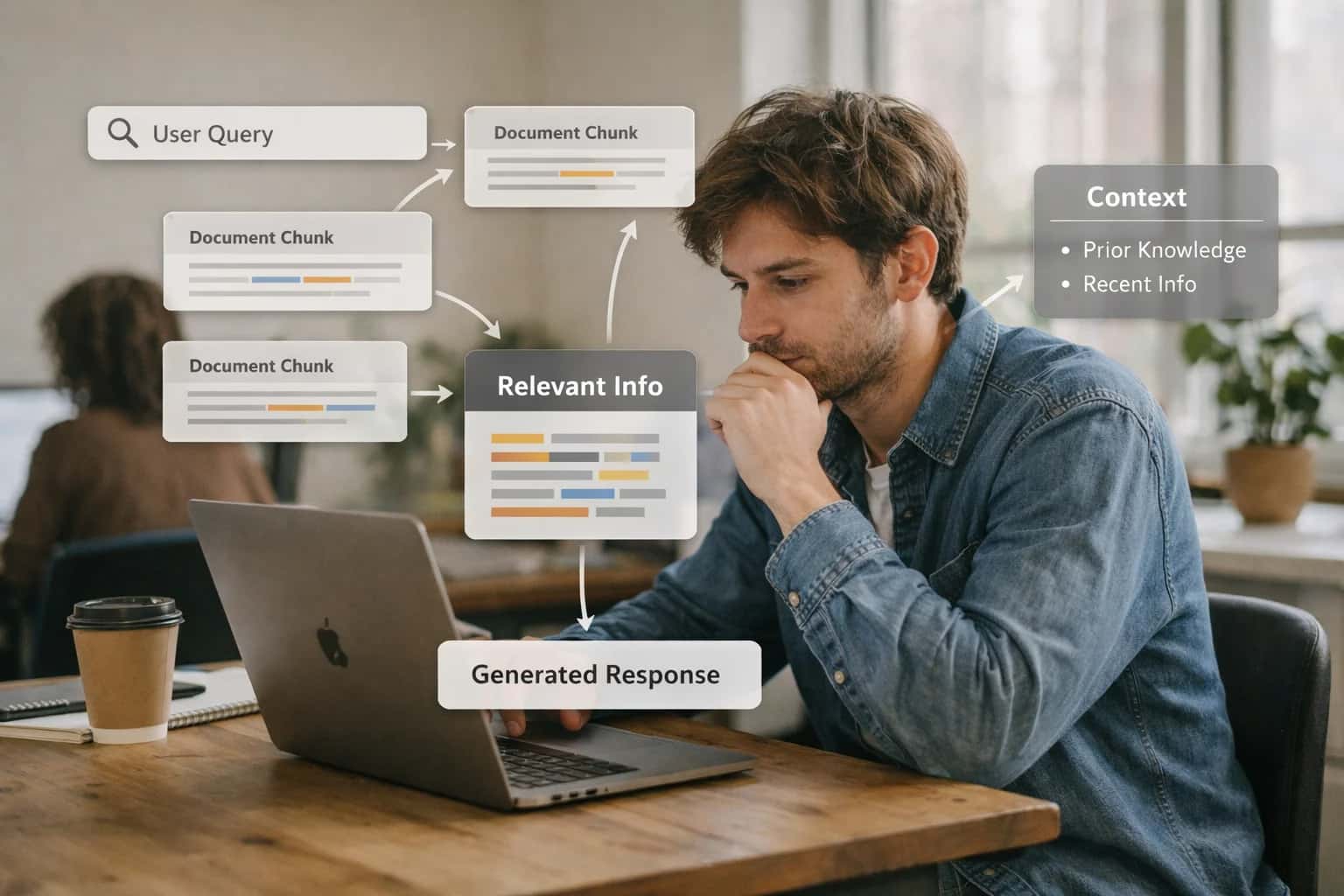
FORWARD-CHAINING INFERENCE
What is Materialization?
Materialization is the process of pre-computing and explicitly storing all logical entailments derived from an ontology and its instance data to optimize query-time performance.
The primary trade-off is storage overhead versus query latency: materialization consumes significant disk space to store the expanded graph but enables fast, simple lookups at runtime without requiring complex backward-chaining reasoners. This approach is critical for ontology-based data access and high-performance SPARQL entailment regimes where millisecond response times are required over large instance datasets.
Forward-Chaining Inference
Key Characteristics of Materialization
Materialization is the eager computation and physical storage of all implicit logical consequences derived from an ontology's TBox axioms and ABox assertions. This shifts the computational burden from query time to ingestion time, enabling sub-second retrieval on complex graph patterns.
01
Forward-Chaining Engine
Materialization relies on a forward-chaining reasoner that applies entailment rules iteratively until a closure is reached. Starting from explicit base facts, the engine fires rules to generate new triples. This process continues until no new logical consequences can be derived, guaranteeing that the materialized graph contains the complete deductive closure of the original dataset.
02
Query-Time vs. Ingestion-Time Trade-off
Materialization represents a fundamental architectural decision:
- Ingestion-Time (Eager): Compute all inferences upfront. Writes are slow and storage-intensive, but reads are extremely fast.
- Query-Time (Lazy/Backward-Chaining): Rewrite queries to derive answers dynamically. Writes are fast, but complex queries suffer high latency. The choice depends on the read/write ratio and the expressivity of the ontology profile (e.g., OWL 2 RL vs. OWL 2 DL).
03
RDFS and OWL 2 RL Entailment Regimes
Materialization is most practical for rule-based profiles with polynomial complexity:
- RDFS Entailment: Derives class hierarchies (rdfs:subClassOf), property domains/ranges, and transitive property closures.
- OWL 2 RL: A profile designed for rule-based implementation. Supports property chains, equivalent classes, and some qualified cardinality restrictions. Full OWL 2 DL materialization is often infeasible due to exponential worst-case complexity, making these profiles the standard for scalable systems.
04
Deduplication and Justification
A materialized graph can explode in size due to redundant derivations. Production systems must implement deduplication to store each unique triple only once. Additionally, maintaining provenance or justification traces—linking each inferred triple back to the specific rule and source facts that generated it—is critical for debugging, incremental updates, and explaining query results to end-users.
05
Incremental Materialization
When new facts are added or removed, recomputing the full closure from scratch is prohibitively expensive. Incremental materialization algorithms, such as the Delete/Rederive (DRed) and Backward/Forward (B/F) strategies, identify only the affected portion of the graph. They efficiently add newly entailed triples and retract those that are no longer supported, maintaining logical consistency without full recomputation.
06
SPARQL Entailment Regimes
The W3C SPARQL 1.1 Entailment Regimes specification defines how query engines should behave over materialized graphs. A system using the RDFS Entailment Regime must return answers that are logically entailed by the RDFS closure, not just the explicit graph. Materialization allows standard SPARQL evaluation to satisfy these regimes without modifying the query algebra, as all implicit triples are already physically present.
INFERENCE STRATEGY COMPARISON
Materialization vs. Query-Time Rewriting
Comparing forward-chaining materialization with backward-chaining query rewriting for answering queries over ontological knowledge bases.
| Feature | Materialization | Query-Time Rewriting | Hybrid Approach |
|---|---|---|---|
Inference Direction | Forward-chaining (data-driven) | Backward-chaining (query-driven) | Combined forward and backward |
Precomputation Required | |||
Query Response Latency | < 10 ms | 100 ms – 5 sec | 10 ms – 500 ms |
Storage Overhead | 2x–10x original ABox size | None | 1.5x–3x for frequent closures |
Reasoning Expressivity | OWL 2 RL / RDFS | OWL 2 QL | OWL 2 EL / RL subsets |
Update Complexity | Full or incremental re-computation | None (stateless rewriting) | Partial re-computation |
Scalability Ceiling | Limited by storage capacity | Limited by query complexity | Balanced by partitioning strategy |
Typical Use Case | Read-heavy analytical workloads | Write-heavy transactional systems | Mixed workloads with hot-path optimization |
MATERIALIZATION DEEP DIVE
Frequently Asked Questions
Explore the forward-chaining inference process that pre-computes and stores all implicit logical consequences of an ontology for blazing-fast query-time retrieval.
Materialization is the forward-chaining inference process of computing and explicitly storing all implicit logical consequences of an ontology and its instance data before query time. Rather than deriving new facts on-the-fly during SPARQL evaluation, a reasoner applies a set of rules or description logic axioms to the asserted ABox (instance data) and TBox (schema) to generate the full deductive closure. This closure—containing all entailed class memberships, property assertions, and relationships—is then persisted to a triple store or relational database. The result is a materialized knowledge graph where queries execute against pre-computed answers, trading increased storage and preprocessing latency for dramatically faster read performance. Systems like RDFox and Oracle Spatial and Graph use incremental materialization to maintain the closure efficiently as data changes.
Enabling Efficiency, Speed & Accuracy
Intelligent Analysis, Decision & Execution
We build AI systems for teams that need search across company data, workflow automation across tools, or AI features inside products and internal software.
Talk to Us
Search across company data
Give teams answers from docs, tickets, runbooks, and product data with sources and permissions.
Useful when people spend too long searching or get different answers from different systems.
Enterprise searchRAGPermissions
Read more
Automate internal workflows
Use AI to route work, draft outputs, trigger actions, and keep approvals and logs in place.
Useful when repetitive work moves across multiple tools and teams.
AI agentsWorkflow automationGovernance
Read more
Add AI to products and internal tools
Build assistants, guided actions, or decision support into the software your team or customers already use.
Useful when AI needs to be part of the product, not a separate tool.
AI integrationDecision supportModel routing
Read more
About the author
Prasad Kumkar
CEO & MD, Inference Systems
Prasad Kumkar is the CEO & MD of Inference Systems and writes about AI systems architecture, LLM infrastructure, model serving, evaluation, and production deployment. Over 5+ years, he has worked across computer vision models, L5 autonomous vehicle systems, and LLM research, with a focus on taking complex AI ideas into real-world engineering systems.
His work and writing cover AI systems, large language models, AI agents, multimodal systems, autonomous systems, inference optimization, RAG, evaluation, and production AI engineering.
LinkedIn
Limited slotsGet a Free AI Consultation
Partnered with leading AI, data, and software stack.





How We Work
Custom AI workflows for your Business
One-fit-all AI don't work for modern businesses. At Inferensys, we aim to understand your business & custom requirements; which we use to define most efficient agentic workflows, the data, and the tools for your business.
01
Review the use case
We understand the task, the users, and where AI can actually help.
Read more02
Pick the right approach
We define what needs search, automation, or product integration.
Read more03
Build the first useful version
We implement the part that proves the value first.
Read more04
Improve from there
We add the checks and visibility needed to keep it useful.
Read moreThe first call is a practical review of your use case and the right next step.
Talk to Us