Vector store audit logging is the immutable recording of every access, query, and modification event within a vector database to create a tamper-proof trail for security monitoring and compliance. It captures the who, what, and when of interactions with embeddings, including the specific query vector, retrieved nearest neighbors, and any metadata modifications, ensuring a complete forensic record distinct from standard application logs.

Glossary
Vector Store Audit Logging
The immutable recording of all access, query, and modification events within a vector database to provide a tamper-proof trail for security monitoring and compliance.
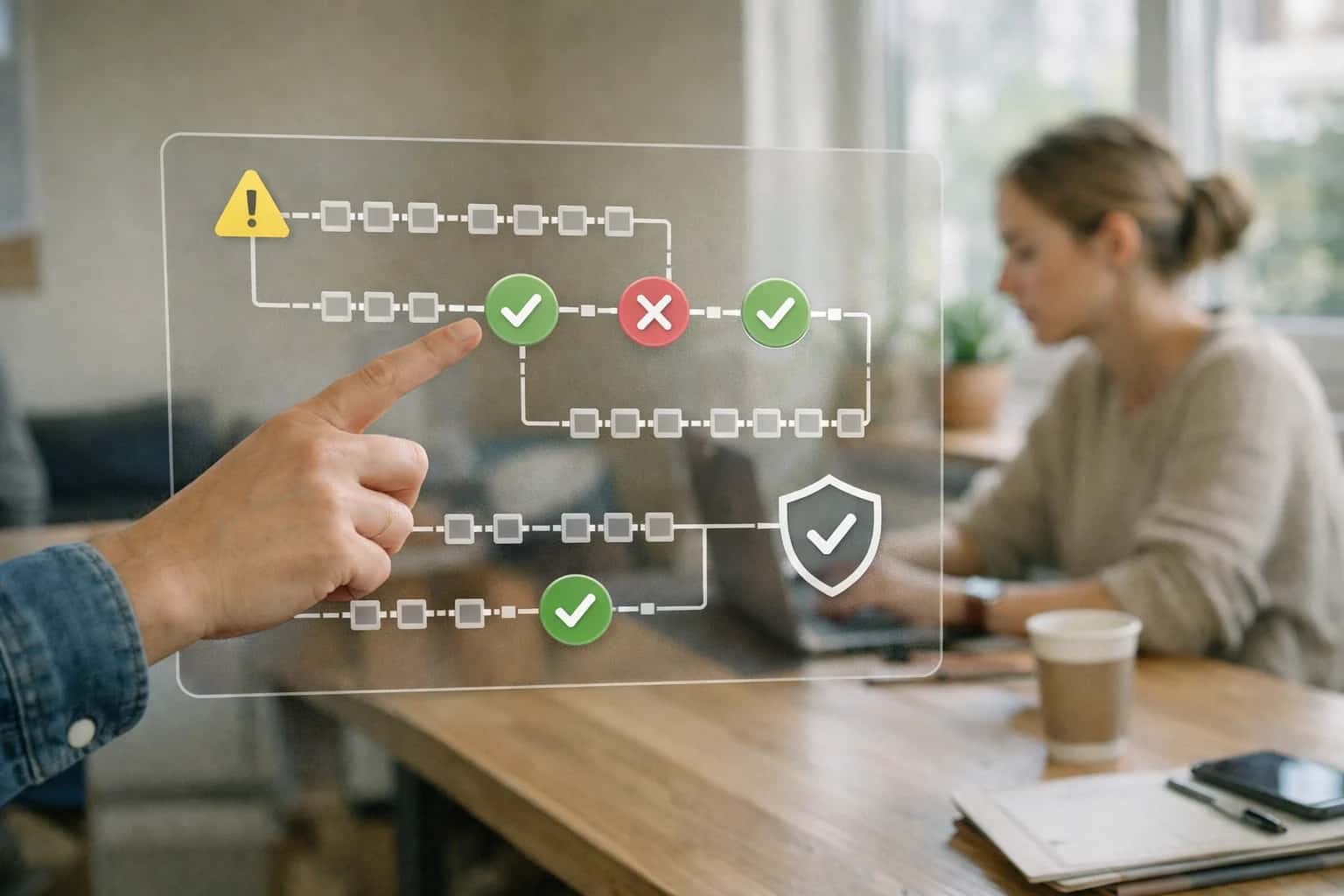
IMMUTABLE COMPLIANCE RECORDING
What is Vector Store Audit Logging?
Vector store audit logging is the systematic, tamper-proof recording of all interactions with a vector database, providing a chronological trail for security analysis and regulatory compliance.
This mechanism is critical for detecting data exfiltration attempts and adversarial query patterns by providing granular visibility into semantic search activity. By integrating with SIEM systems, audit logs enable real-time alerting on anomalous access to sensitive vector collections, supporting regulatory frameworks that demand demonstrable data access governance.
IMMUTABLE OBSERVABILITY
Key Features of Vector Store Audit Logging
Vector store audit logging provides a cryptographically verifiable, tamper-proof record of every interaction within a vector database, enabling security teams to detect anomalies, enforce compliance, and perform forensic analysis on semantic data access.
01
Immutable Event Sequencing
Every operation—vector insertion, similarity search, index modification, and metadata update—is recorded as an append-only, chronologically ordered log entry. This creates a tamper-proof ledger that cannot be altered retroactively.
- Uses Merkle tree structures to chain log entries cryptographically
- Prevents log tampering by administrators or compromised processes
- Enables point-in-time reconstruction of the entire database state
- Provides non-repudiation for all data access events
02
Granular Semantic Telemetry
Audit logs capture not just who queried the database, but what conceptual intent drove the retrieval. Each entry records the query embedding hash, similarity threshold, top-K parameters, and returned vector identifiers.
- Logs the cosine similarity scores of all candidate results
- Records metadata filter predicates applied during the query
- Captures latency metrics for each retrieval operation
- Enables reconstruction of the exact semantic neighborhood accessed
03
Real-Time Anomaly Detection
Streaming audit logs feed into Security Information and Event Management (SIEM) systems for continuous monitoring. Behavioral baselines detect adversarial query patterns, data exfiltration attempts, and credential misuse.
- Triggers alerts on semantic rate limit violations
- Identifies extraction attack signatures through query distribution analysis
- Detects unusual similarity threshold probing indicative of reconnaissance
- Integrates with OpenTelemetry collectors for unified observability
04
Compliance-Ready Attestation
Audit trails are structured to satisfy SOC 2, HIPAA, GDPR, and ISO 27001 requirements. Logs include cryptographic signatures that prove integrity and origin, enabling third-party auditors to verify that no unauthorized semantic access occurred.
- Supports WORM (Write Once, Read Many) storage backends
- Generates cryptographic checksums for each log segment
- Provides role-based access to audit data itself
- Maintains retention policies aligned with regulatory mandates
05
Forensic Query Reconstruction
Security analysts can replay historical queries against snapshotted index states to determine exactly what data was exposed during a breach window. This deterministic replay capability is critical for breach notification and impact assessment.
- Reconstructs exact result sets from logged vector IDs
- Correlates user sessions with semantic access patterns
- Maps embedding provenance back to source documents
- Supports legal hold workflows for litigation discovery
06
Decoupled Logging Architecture
Audit logging operates as an out-of-band sidecar process that does not add latency to the critical retrieval path. Log events are emitted asynchronously to a dedicated message queue, ensuring that security observability never degrades query performance.
- Uses non-blocking I/O for log emission
- Supports Kafka and Amazon Kinesis streaming destinations
- Implements backpressure handling to prevent data loss during spikes
- Allows pluggable storage backends including S3, Elasticsearch, and Splunk
VECTOR STORE AUDIT LOGGING
Frequently Asked Questions
Explore the critical mechanisms for establishing an immutable, cryptographically verifiable record of all interactions within your vector database infrastructure to meet stringent security and compliance mandates.
Vector store audit logging is the systematic process of capturing and preserving an immutable, chronological record of every access, query, modification, and administrative event occurring within a vector database. It works by intercepting API calls at the database gateway or proxy layer, serializing the full context of each operation—including the query vector, returned nearest neighbors, metadata filters, user identity, and timestamp—into a structured log entry. These entries are then streamed to a tamper-proof storage backend, often using append-only data structures or blockchain anchoring, to ensure they cannot be altered retroactively. This provides a definitive forensic trail for security investigations, anomaly detection, and demonstrating compliance with frameworks like SOC 2 or GDPR.
COMPARATIVE ANALYSIS
Vector Audit Logging vs. Traditional Database Logging
A feature-level comparison of immutable audit mechanisms in vector databases versus traditional relational database logging for security monitoring and compliance.
| Feature | Vector Audit Logging | Traditional DB Logging |
|---|---|---|
Log Granularity | Per-vector query, similarity score, and embedding hash | Per-row CRUD operation and table-level access |
Query Type Captured | Semantic similarity search with top-K parameters | Structured SQL statements with exact predicates |
Immutability Mechanism | Append-only ledger with cryptographic chaining | Write-ahead logging with periodic archival |
Tamper Detection | Hash-chain verification across log entries | Checksum validation on log segments |
Metadata Logged | Embedding model version, dimension count, similarity threshold | Transaction ID, row count, affected columns |
Anomaly Detection | Semantic drift monitoring and query fingerprinting | Pattern matching on SQL injection signatures |
Compliance Standard | SOC 2 for AI pipelines, EU AI Act traceability | SOX, PCI-DSS, HIPAA for structured data |
Storage Overhead | 0.3% per query due to vector checksum storage | 0.1% per transaction with compression |
Enabling Efficiency, Speed & Accuracy
Intelligent Analysis, Decision & Execution
We build AI systems for teams that need search across company data, workflow automation across tools, or AI features inside products and internal software.
Talk to Us
Search across company data
Give teams answers from docs, tickets, runbooks, and product data with sources and permissions.
Useful when people spend too long searching or get different answers from different systems.
Enterprise searchRAGPermissions
Read more
Automate internal workflows
Use AI to route work, draft outputs, trigger actions, and keep approvals and logs in place.
Useful when repetitive work moves across multiple tools and teams.
AI agentsWorkflow automationGovernance
Read more
Add AI to products and internal tools
Build assistants, guided actions, or decision support into the software your team or customers already use.
Useful when AI needs to be part of the product, not a separate tool.
AI integrationDecision supportModel routing
Read more
About the author
Prasad Kumkar
CEO & MD, Inference Systems
Prasad Kumkar is the CEO & MD of Inference Systems and writes about AI systems architecture, LLM infrastructure, model serving, evaluation, and production deployment. Over 5+ years, he has worked across computer vision models, L5 autonomous vehicle systems, and LLM research, with a focus on taking complex AI ideas into real-world engineering systems.
His work and writing cover AI systems, large language models, AI agents, multimodal systems, autonomous systems, inference optimization, RAG, evaluation, and production AI engineering.
LinkedIn
Limited slotsGet a Free AI Consultation
Partnered with leading AI, data, and software stack.





How We Work
Custom AI workflows for your Business
One-fit-all AI don't work for modern businesses. At Inferensys, we aim to understand your business & custom requirements; which we use to define most efficient agentic workflows, the data, and the tools for your business.
01
Review the use case
We understand the task, the users, and where AI can actually help.
Read more02
Pick the right approach
We define what needs search, automation, or product integration.
Read more03
Build the first useful version
We implement the part that proves the value first.
Read more04
Improve from there
We add the checks and visibility needed to keep it useful.
Read moreThe first call is a practical review of your use case and the right next step.
Talk to Us