Data provenance is the comprehensive, verifiable record of a dataset's origin, custody, and transformation history. It establishes a chain of custody from raw ingestion through every processing step, capturing metadata about who created the data, how it was modified, and under what license terms it is governed. This documented lineage is critical for verifying the authenticity of human-originated data and preventing synthetic data contamination in training corpora.

Glossary
Data Provenance
Data provenance is the documented lineage and origin of a dataset that tracks its creation, transformation, and ownership history to verify authenticity and licensing compliance.
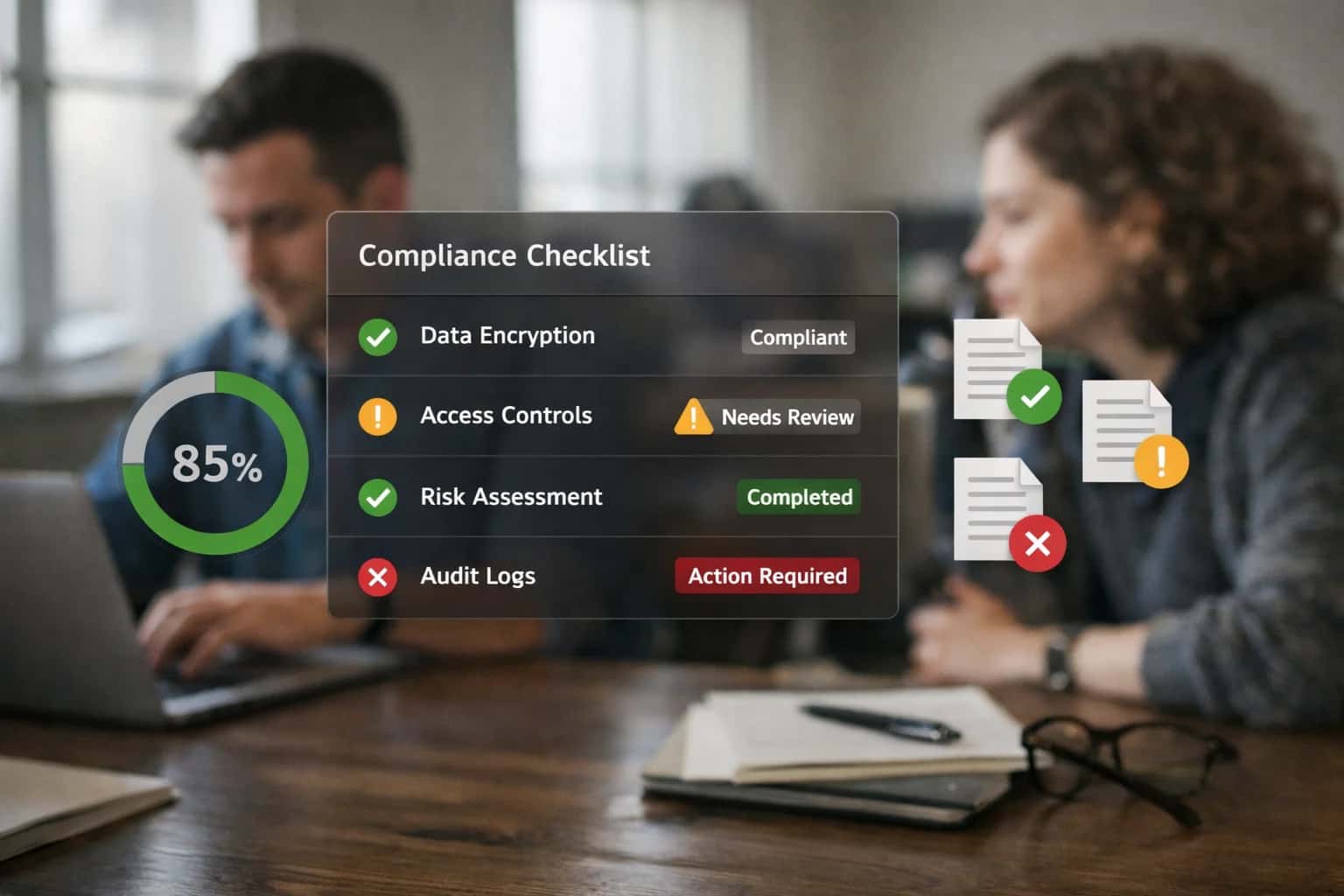
LINEAGE & AUTHENTICITY
What is Data Provenance?
Data provenance is the documented lineage of a dataset that establishes its origin, transformation history, and ownership chain to verify authenticity and licensing compliance.
In machine learning pipelines, robust provenance tracking enables teams to audit for data contamination and benchmark leakage by tracing exactly which sources entered a training set. Cryptographic techniques like the C2PA standard and AI watermarking embed tamper-evident metadata directly into assets, allowing downstream systems to distinguish authentic human-generated content from AI-generated content (AIGC). Without strict provenance, organizations risk model collapse from recursive training on unverified synthetic outputs.
LINEAGE & AUTHENTICITY
Core Properties of Data Provenance
The foundational pillars that establish trust in datasets by documenting origin, tracking transformations, and verifying ownership to prevent contamination and ensure licensing compliance.
01
Immutable Lineage Tracking
The end-to-end lifecycle mapping of data from its raw ingestion point through every transformation and aggregation step. Data Lineage provides a directed acyclic graph of operations, essential for debugging contamination sources.
- Cryptographic hashing ensures no intermediate step can be altered retroactively
- Captures provenance metadata: timestamps, actor identity, and processing logic
- Enables rapid root-cause analysis when synthetic data contamination is detected
- Critical for demonstrating compliance with training data opt-out requests
02
Cryptographic Content Fingerprinting
The technique of embedding an imperceptible, machine-readable signal into digital content to establish origin. AI Watermarking technologies like SynthID embed signals directly into the generation process.
- C2PA Standard attaches verifiable manifests to media files
- Enables reliable distinction between human-originated data and AIGC
- Forms the first line of defense in synthetic data filtering pipelines
- Watermarks persist through common transformations like compression and cropping
03
Ownership & Licensing Verification
The documented chain of custody that proves a dataset's legal status for use in model training. Establishes whether data is public domain, licensed, or proprietary.
- Tracks consent frameworks for training data opt-out compliance
- Integrates with Content Licensing APIs for programmatic rights management
- Prevents ingestion of copyrighted material that could trigger legal liability
- Essential for data sovereignty enforcement across jurisdictional boundaries
04
Statistical Authenticity Testing
Automated detection methods that distinguish machine-generated content from human writing using probability metrics. Perplexity Filtering uses a model's own scores to identify statistically predictable text.
- Burstiness Scoring measures sentence structure variance to detect uniform AI cadence
- Tools like GPTZero combine multiple signals for classification
- Prevents model autophagy by filtering synthetic outputs from training corpora
- Complements MinHash Deduplication for near-duplicate removal at web scale
05
Canary Injection & Leak Detection
The practice of seeding datasets with unique, randomized token sequences to detect unauthorized usage. Canary Strings act as tripwires that prove a specific corpus was included in training.
- Detects benchmark leakage when test prompts appear in training data
- Provides legal evidence of web scraping violations
- Enables verification of model unlearning requests by testing for canary reproduction
- A proactive defense against data contamination from unauthorized sources
06
Corpus Sanitization Pipelines
The systematic pre-processing workflow that scrubs datasets before training begins. Training Corpus Sanitization removes toxic language, PII, and low-quality synthetic duplicates.
- Common Crawl Filtering parses massive web archives to remove boilerplate and spam
- Applies MinHash Deduplication to eliminate near-duplicate documents
- Integrates synthetic data filtering to reject machine-generated text
- Prevents model hallucination recycling by blocking factually incorrect AI outputs from re-entry
DATA PROVENANCE
Frequently Asked Questions
Explore the critical concepts of data lineage, origin tracking, and authenticity verification that form the foundation of trustworthy machine learning pipelines and licensing compliance.
Data provenance is the documented lineage and origin of a dataset that tracks its creation, transformation, and ownership history to verify authenticity and licensing compliance. In AI training, it serves as the chain of custody for every data point ingested into a model. Without rigorous provenance tracking, organizations cannot validate whether their training corpus contains synthetic data contamination, copyrighted material, or benchmark leakage. Provenance metadata typically includes timestamps, source identifiers, transformation logs, and consent receipts. This audit trail is essential for defending against intellectual property claims, complying with the EU AI Act, and debugging model failures by tracing errors back to their root data sources. For enterprise CTOs, implementing provenance systems transforms data from an opaque liability into a verifiable asset.
DATA MANAGEMENT DISCIPLINES
Data Provenance vs. Data Lineage vs. Data Governance
A technical comparison of the distinct but interrelated disciplines for tracking, tracing, and controlling data assets within machine learning pipelines.
| Feature | Data Provenance | Data Lineage | Data Governance |
|---|---|---|---|
Primary Focus | Origin, ownership, and authenticity of data | Technical flow and transformation of data across systems | Policy, compliance, and lifecycle control of data assets |
Core Question Answered | Who created this data and can I trust it? | How was this data derived and where did it move? | Who can access this data and under what rules? |
Key Artifacts | Cryptographic signatures, metadata manifests, C2PA claims | Directed acyclic graphs, ETL logs, pipeline run metadata | Access control lists, retention policies, audit reports |
Primary Stakeholder | IP lawyers, content owners, model auditors | Data engineers, MLOps, infrastructure architects | Compliance officers, CISOs, data stewards |
Synthetic Data Contamination Relevance | Verifies if training data is human-originated or AI-generated | Traces contamination propagation through recursive training loops | Enforces policies to block synthetic data ingestion at the gate |
Technical Mechanism | Watermarking, digital signatures, content fingerprinting | Column-level lineage parsing, query history analysis | Role-based access control, policy-as-code engines |
Temporal Orientation | Past-focused: historical origin and chain of custody | End-to-end: full lifecycle from source to consumption | Present and future: active enforcement and planning |
Standard/Protocol | C2PA, W3C PROV, ISO 21127 | OpenLineage, Marquez, Spline | NIST AI RMF, EU AI Act, ISO 42001 |
Enabling Efficiency, Speed & Accuracy
Intelligent Analysis, Decision & Execution
We build AI systems for teams that need search across company data, workflow automation across tools, or AI features inside products and internal software.
Talk to Us
Search across company data
Give teams answers from docs, tickets, runbooks, and product data with sources and permissions.
Useful when people spend too long searching or get different answers from different systems.
Enterprise searchRAGPermissions
Read more
Automate internal workflows
Use AI to route work, draft outputs, trigger actions, and keep approvals and logs in place.
Useful when repetitive work moves across multiple tools and teams.
AI agentsWorkflow automationGovernance
Read more
Add AI to products and internal tools
Build assistants, guided actions, or decision support into the software your team or customers already use.
Useful when AI needs to be part of the product, not a separate tool.
AI integrationDecision supportModel routing
Read more
About the author
Prasad Kumkar
CEO & MD, Inference Systems
Prasad Kumkar is the CEO & MD of Inference Systems and writes about AI systems architecture, LLM infrastructure, model serving, evaluation, and production deployment. Over 5+ years, he has worked across computer vision models, L5 autonomous vehicle systems, and LLM research, with a focus on taking complex AI ideas into real-world engineering systems.
His work and writing cover AI systems, large language models, AI agents, multimodal systems, autonomous systems, inference optimization, RAG, evaluation, and production AI engineering.
LinkedIn
Limited slotsGet a Free AI Consultation
Partnered with leading AI, data, and software stack.





How We Work
Custom AI workflows for your Business
One-fit-all AI don't work for modern businesses. At Inferensys, we aim to understand your business & custom requirements; which we use to define most efficient agentic workflows, the data, and the tools for your business.
01
Review the use case
We understand the task, the users, and where AI can actually help.
Read more02
Pick the right approach
We define what needs search, automation, or product integration.
Read more03
Build the first useful version
We implement the part that proves the value first.
Read more04
Improve from there
We add the checks and visibility needed to keep it useful.
Read moreThe first call is a practical review of your use case and the right next step.
Talk to Us