Redaction is a post-retrieval security control that irreversibly removes or obscures specific sensitive data elements—such as personally identifiable information (PII) , credentials, or proprietary code—from a document chunk after it has been retrieved from a vector store but before it is injected into the large language model (LLM) context window. Unlike data masking, which substitutes values with realistic but fictitious placeholders, redaction performs a destructive write operation, replacing targeted spans with fixed character blocks (e.g., [REDACTED]) or zero-width characters to ensure the underlying secret cannot be reconstructed by the model or appear in the generated output.

Glossary
Redaction
The permanent removal or blacking out of sensitive text spans from a document chunk during post-retrieval processing to prevent exposure to the generation model.
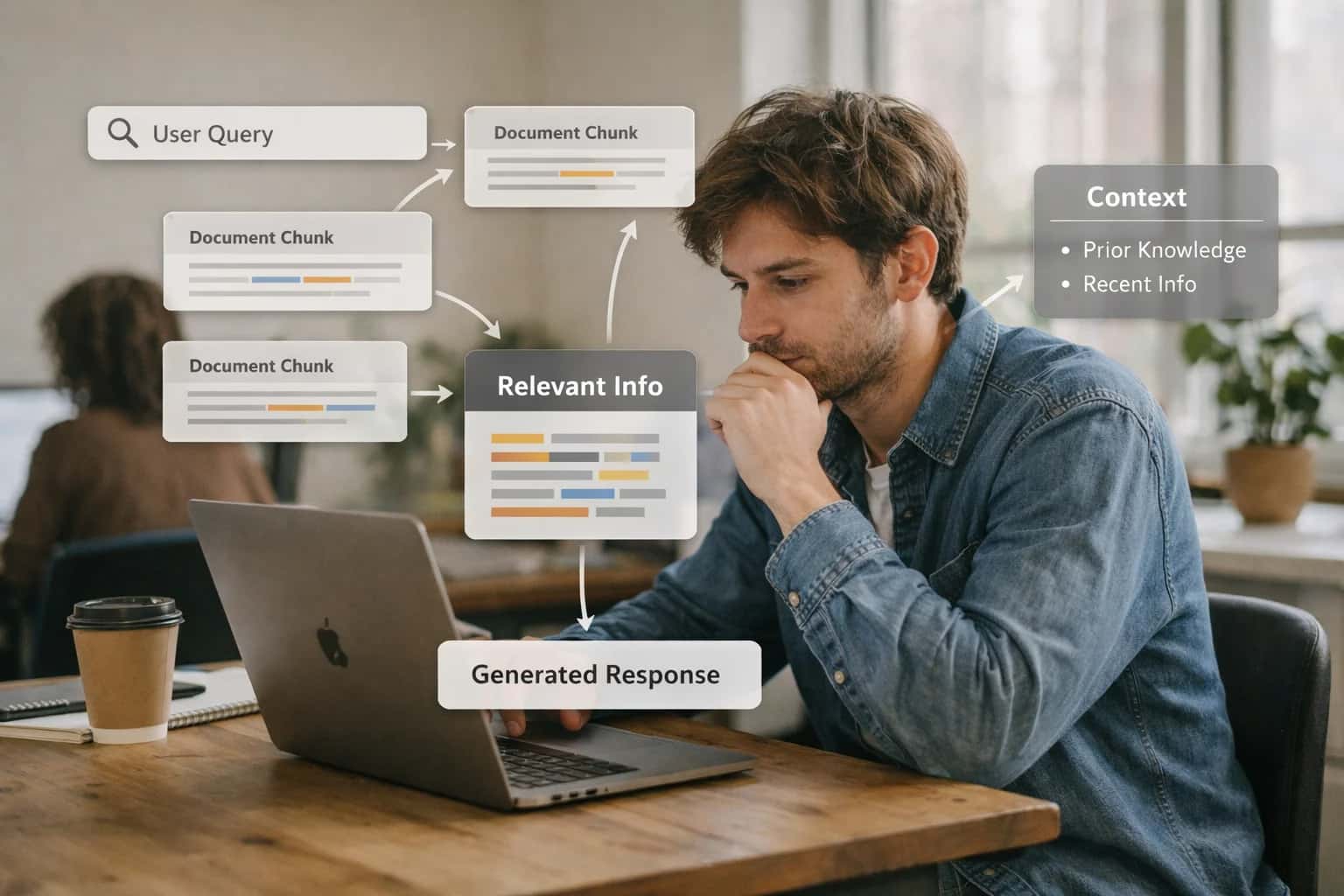
POST-RETRIEVAL DATA SANITIZATION
What is Redaction?
Redaction is the permanent removal or blacking out of sensitive text spans from a document chunk during post-retrieval processing to prevent exposure to the generation model.
This technique is typically executed by a Policy Enforcement Point (PEP) that integrates with named entity recognition (NER) scanners and regex-based PII detection classifiers. The redaction engine evaluates each chunk against a configurable policy defining entity types to suppress—such as credit card numbers, social security numbers, or classified project codenames—and surgically excises matching spans before the text is concatenated into the final prompt. This provides a critical defense-in-depth layer for Retrieval-Augmented Generation (RAG) architectures, ensuring that even if pre-retrieval filtering or chunk-level authorization fails to exclude a sensitive document, the confidential content is still neutralized prior to generation, preventing inadvertent leakage in the model's response.
POST-RETRIEVAL DATA SANITIZATION
Key Characteristics of Redaction
Redaction is the deterministic, irreversible removal of sensitive text spans from a document chunk before it is passed to the generation model. Unlike masking, which substitutes data with realistic placeholders, redaction permanently excises the information, ensuring it cannot be reconstructed or inferred by the LLM.
01
Irreversible Text Excision
Redaction performs permanent removal of sensitive spans, replacing them with fixed placeholder tokens (e.g., [REDACTED]) or zero-width characters. This is distinct from data masking, which preserves format and reversibility.
- Mechanism: The original byte sequence is deleted from the context string; no reversible encryption or tokenization is applied.
- Critical property: The generation model never observes the sensitive data, eliminating the risk of memorization or regurgitation.
- Use case: Removing Social Security Numbers, credit card details, or classified codewords before prompt injection.
100%
Data Removal Guarantee
02
Named Entity Recognition (NER) Triggering
Redaction engines rely on Named Entity Recognition models to identify sensitive spans before removal. These models scan for predefined entity types such as PERSON, CREDIT_CARD, PHONE_NUMBER, or custom regex patterns.
- Pattern matching: Regular expressions catch structured data like
\d{3}-\d{2}-\d{4}. - ML-based detection: Transformer models identify context-dependent entities like organization names or medical terms.
- False positive risk: Overly aggressive NER can redact non-sensitive text, degrading context quality for the LLM.
03
Post-Retrieval Pipeline Placement
Redaction executes after the vector similarity search but before the prompt is assembled and sent to the LLM. This placement is critical for maintaining search recall while enforcing security.
- Pre-retrieval filtering restricts the search space; redaction sanitizes the results.
- Execution order: 1) Retrieve chunks, 2) Apply authorization filters, 3) Run NER + redaction, 4) Construct final prompt.
- Latency impact: Each redaction pass adds inference time; batching and GPU acceleration minimize overhead.
04
Context Integrity Preservation
Redaction must balance security with semantic coherence. Removing a name or number can break anaphoric references and confuse the LLM, leading to degraded answer quality.
- Co-reference resolution: Advanced systems resolve pronouns before redaction to maintain sentence flow.
- Placeholder strategies: Using typed placeholders like
[PERSON_1]instead of generic[REDACTED]helps the model track entities. - Trade-off: Complete removal guarantees zero leakage but may reduce the factual grounding of the generated response.
05
Compliance and Audit Integration
Redaction is a key control for regulatory compliance frameworks including GDPR, HIPAA, and PCI-DSS. Every redaction event must be logged for auditability.
- Audit trail: Logs capture the original span type, redaction timestamp, and the identity of the requesting user.
- Right to erasure: Redaction supports data minimization principles by ensuring PII is never processed by the AI model.
- DLP alignment: Integrates with enterprise Data Loss Prevention systems to enforce consistent policies across retrieval and generation.
06
Redaction vs. Masking vs. Tokenization
Understanding the distinctions between obfuscation techniques is critical for architecting secure RAG pipelines.
- Redaction: Permanent removal; original data is irretrievable from the prompt. Used for highest-sensitivity fields.
- Masking: Replaces data with format-preserving but fictitious values (e.g.,
****1234). The LLM sees a realistic structure but not real data. - Tokenization: Substitutes sensitive data with a reversible reference token. The original value can be recovered from a secure vault if needed.
- Selection heuristic: Use redaction when the LLM never needs the data; use masking when format matters; use tokenization when reversibility is required downstream.
POST-RETRIEVAL DATA OBFUSCATION TECHNIQUES
Redaction vs. Data Masking vs. Field-Level Security
A technical comparison of three distinct mechanisms for preventing sensitive data exposure in retrieval-augmented generation pipelines.
| Feature | Redaction | Data Masking | Field-Level Security |
|---|---|---|---|
Core Mechanism | Permanent removal or blacking out of sensitive text spans from the document chunk | Replacement of sensitive data with realistic but fictitious surrogate values | Conditional rendering of specific fields based on user attributes or roles |
Data Reversibility | |||
Original Data Preserved in Source | |||
Granularity | Character or token-level spans | Field or entity-level substitution | Field-level visibility control |
Primary Use Case | Preventing PII exposure to the generation model | Preserving data structure for development and testing | Multi-tenant applications with role-based views |
Output to LLM | Sanitized text with gaps or black bars | Structurally valid but fictitious data | Authorized fields only; unauthorized fields omitted |
Typical Implementation Layer | Post-retrieval pre-processing | Data pipeline or database view | Authorization middleware or policy engine |
Performance Overhead | < 5ms per chunk | < 10ms per record | < 2ms per field evaluation |
REDACTION CLARIFIED
Frequently Asked Questions
Precise answers to common technical questions about the redaction process in retrieval-augmented generation pipelines, focusing on the permanent removal of sensitive text spans before model exposure.
Redaction is the permanent removal or blacking out of sensitive text spans from a document chunk during post-retrieval processing to prevent exposure to the generation model. Unlike data masking, which substitutes sensitive data with realistic but fictitious placeholders, redaction completely excises the target text, replacing it with a static token such as [REDACTED] or a zero-width character block. This operation occurs after the Policy Enforcement Point (PEP) has authorized the document for retrieval but before the chunk is injected into the large language model's (LLM) context window. The process is irreversible by design, ensuring that even if the model's output is logged or intercepted, the original sensitive information cannot be reconstructed from the prompt. Redaction is a critical component of Data Loss Prevention (DLP) strategies in enterprise AI architectures, particularly for compliance with regulations like GDPR and HIPAA that mandate the minimization of personal data processing.
Enabling Efficiency, Speed & Accuracy
Intelligent Analysis, Decision & Execution
We build AI systems for teams that need search across company data, workflow automation across tools, or AI features inside products and internal software.
Talk to Us
Search across company data
Give teams answers from docs, tickets, runbooks, and product data with sources and permissions.
Useful when people spend too long searching or get different answers from different systems.
Enterprise searchRAGPermissions
Read more
Automate internal workflows
Use AI to route work, draft outputs, trigger actions, and keep approvals and logs in place.
Useful when repetitive work moves across multiple tools and teams.
AI agentsWorkflow automationGovernance
Read more
Add AI to products and internal tools
Build assistants, guided actions, or decision support into the software your team or customers already use.
Useful when AI needs to be part of the product, not a separate tool.
AI integrationDecision supportModel routing
Read more
About the author
Prasad Kumkar
CEO & MD, Inference Systems
Prasad Kumkar is the CEO & MD of Inference Systems and writes about AI systems architecture, LLM infrastructure, model serving, evaluation, and production deployment. Over 5+ years, he has worked across computer vision models, L5 autonomous vehicle systems, and LLM research, with a focus on taking complex AI ideas into real-world engineering systems.
His work and writing cover AI systems, large language models, AI agents, multimodal systems, autonomous systems, inference optimization, RAG, evaluation, and production AI engineering.
LinkedIn
Limited slotsGet a Free AI Consultation
Partnered with leading AI, data, and software stack.





How We Work
Custom AI workflows for your Business
One-fit-all AI don't work for modern businesses. At Inferensys, we aim to understand your business & custom requirements; which we use to define most efficient agentic workflows, the data, and the tools for your business.
01
Review the use case
We understand the task, the users, and where AI can actually help.
Read more02
Pick the right approach
We define what needs search, automation, or product integration.
Read more03
Build the first useful version
We implement the part that proves the value first.
Read more04
Improve from there
We add the checks and visibility needed to keep it useful.
Read moreThe first call is a practical review of your use case and the right next step.
Talk to Us