An ephemeral token is a dynamically generated, short-lived authentication credential designed to authorize a single session or transaction within a retrieval-augmented generation (RAG) pipeline. Unlike long-lived API keys or static passwords, these tokens carry an intrinsic time-to-live (TTL)—often measured in seconds or minutes—after which they become cryptographically invalid. This mechanism enforces just-in-time (JIT) access, ensuring that a compromised credential cannot be replayed or reused by an adversary to exfiltrate sensitive enterprise documents from a vector database or knowledge graph.

Glossary
Ephemeral Tokens
Short-lived authentication credentials that automatically expire shortly after issuance, minimizing the window of opportunity for credential theft in retrieval pipelines.
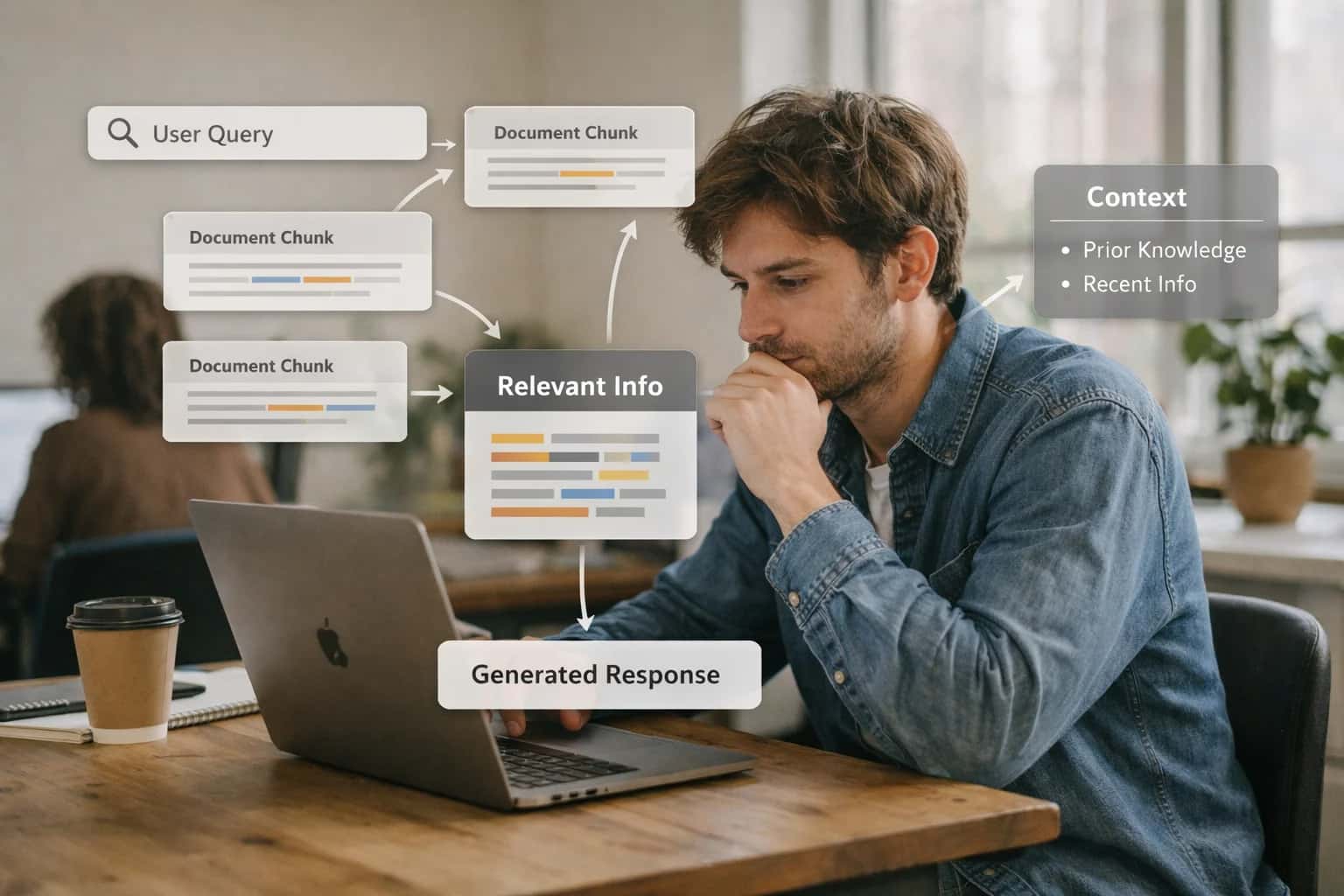
JUST-IN-TIME CREDENTIAL SECURITY
What is Ephemeral Tokens?
Ephemeral tokens are short-lived authentication credentials that automatically expire shortly after issuance, minimizing the window of opportunity for credential theft in retrieval pipelines.
In a zero-trust retrieval architecture, ephemeral tokens are minted by a secure token service (STS) at the moment a user query is authenticated, binding the credential to specific session attributes such as the user's identity, device posture, and requested resource scope. The retrieval engine presents this token to the policy enforcement point (PEP), which validates its signature and expiry before allowing a semantic search to execute. By eliminating persistent secrets, ephemeral tokens drastically reduce the blast radius of a breach and align with the principle of least privilege retrieval, granting access to data only for the exact duration required to fulfill a single prompt generation cycle.
SECURITY ARCHITECTURE
Core Characteristics of Ephemeral Tokens
Ephemeral tokens are the cryptographic cornerstone of zero-trust retrieval pipelines, designed to minimize the blast radius of a credential leak by strictly bounding the lifetime of an authentication assertion.
01
Time-Bound Validity Window
The defining characteristic of an ephemeral token is a strictly enforced Time-To-Live (TTL). Unlike long-lived API keys or static passwords, these tokens are issued with an expiration timestamp often measured in seconds or minutes.
- Typical TTL: Ranges from 60 seconds for high-security operations to 1 hour for active sessions.
- Expiration Hardening: Once expired, the token is cryptographically invalid and rejected by the Policy Enforcement Point (PEP) without needing a revocation list check.
- Clock Skew Mitigation: Systems account for minor server time discrepancies by allowing a small grace period (e.g., 30 seconds) post-expiry.
< 60 sec
Standard TTL
99.9%
Rejection Rate Post-Expiry
03
Narrow Scoping and Least Privilege
To complement the short lifespan, ephemeral tokens enforce the principle of Least Privilege Retrieval. The token is cryptographically bound to a specific set of permissions, often limited to a single document, chunk, or query.
- Attribute-Based Constraints: The token payload includes claims that map to Attribute-Based Access Control (ABAC) policies, such as
document_id: 123orclearance: level_3. - Audience Restriction: The
audclaim ensures the token is only valid for a specific Relying Party (RP) , preventing its misuse against another API endpoint. - Proof-of-Possession: Advanced implementations use DPoP (Demonstration of Proof-of-Possession) tokens that bind the credential to a specific client-side private key, rendering stolen tokens useless without the key.
04
Continuous Authorization Flow
In a Zero-Trust Retrieval architecture, a single token issuance is not a permanent trust grant. Ephemeral tokens facilitate Continuous Authorization by forcing frequent re-authentication and re-evaluation of the security posture.
- Step-Up Challenges: If a user attempts to access higher-sensitivity chunks, the system requires a fresh token with elevated claims, often triggered by multi-factor authentication.
- Risk Signal Integration: The token issuance pipeline can query real-time risk engines. A change in device posture or geolocation can block the minting of a new token even if the previous one was valid.
- Session Termination: The inability to refresh an expired token effectively terminates the retrieval session, enforcing strict session management hygiene.
05
Identity Propagation Mechanism
Ephemeral tokens are the primary vehicle for Identity Propagation in a RAG pipeline. They carry the user's verified identity context from the application layer down to the vector database.
- Claims-Based Identity: The token securely transmits user attributes (roles, groups, clearance) without the downstream service needing to query the Identity Provider (IdP) directly.
- Delegation Flows: Using standards like OAuth 2.0 Token Exchange, a front-end token can be swapped for a downstream token scoped specifically for the vector store, ensuring the database never sees the user's primary credential.
- Impersonation Prevention: The tight coupling between the token and the original authentication event prevents privilege escalation attacks where a service impersonates a user without proper delegation.
06
Stateless Validation
To maintain low latency in retrieval pipelines, ephemeral tokens are typically validated statelessly. The Policy Enforcement Point (PEP) validates the token's signature and claims locally without a synchronous call to the authorization server.
- JSON Web Token (JWT) Standard: Most ephemeral tokens are JWTs signed using asymmetric cryptography (RS256/ES256).
- Local Verification: The PEP caches the public key of the token issuer to verify the signature instantly.
- Performance Impact: This eliminates the network round-trip to a central Policy Decision Point (PDP) for every chunk retrieval, keeping retrieval latency under strict thresholds.
< 5 ms
Validation Overhead
EPHEMERAL TOKEN SECURITY
Frequently Asked Questions
Explore the critical role of short-lived authentication credentials in securing retrieval-augmented generation pipelines against credential theft and unauthorized data access.
An ephemeral token is a short-lived authentication credential that automatically expires shortly after issuance, typically within seconds or minutes. Unlike long-lived API keys or static passwords, ephemeral tokens are generated dynamically for a specific session or transaction and become invalid immediately after their time-to-live (TTL) elapses. In a RAG pipeline, the Policy Decision Point (PDP) issues an ephemeral token after evaluating the user's attributes against access policies. The Policy Enforcement Point (PEP) then validates this token on each retrieval request to the vector database. The core mechanism relies on cryptographic signing with a timestamped nonce, ensuring that even if a token is intercepted via a man-in-the-middle attack, the window of exploitability is minimized to near zero.
ACCESS CONTROL COMPARISON
Ephemeral Tokens vs. Other Access Mechanisms
A technical comparison of short-lived credential strategies against persistent and static access mechanisms for securing retrieval-augmented generation pipelines.
| Feature | Ephemeral Tokens | Persistent API Keys | Static ACLs |
|---|---|---|---|
Credential Lifespan | Seconds to minutes | Indefinite until revoked | Persistent until modified |
Window of Compromise | < 60 seconds | Days to years | Indefinite |
Supports Just-In-Time Access | |||
Automatic Rotation | |||
Revocation Latency | Near-instant (expiry) | Propagation delay (minutes) | Policy update dependent |
Identity Propagation Required | |||
Suitable for Zero-Trust Retrieval | |||
Risk of Long-Term Credential Leak | High | Medium |
Enabling Efficiency, Speed & Accuracy
Intelligent Analysis, Decision & Execution
We build AI systems for teams that need search across company data, workflow automation across tools, or AI features inside products and internal software.
Talk to Us
Search across company data
Give teams answers from docs, tickets, runbooks, and product data with sources and permissions.
Useful when people spend too long searching or get different answers from different systems.
Enterprise searchRAGPermissions
Read more
Automate internal workflows
Use AI to route work, draft outputs, trigger actions, and keep approvals and logs in place.
Useful when repetitive work moves across multiple tools and teams.
AI agentsWorkflow automationGovernance
Read more
Add AI to products and internal tools
Build assistants, guided actions, or decision support into the software your team or customers already use.
Useful when AI needs to be part of the product, not a separate tool.
AI integrationDecision supportModel routing
Read more
About the author
Prasad Kumkar
CEO & MD, Inference Systems
Prasad Kumkar is the CEO & MD of Inference Systems and writes about AI systems architecture, LLM infrastructure, model serving, evaluation, and production deployment. Over 5+ years, he has worked across computer vision models, L5 autonomous vehicle systems, and LLM research, with a focus on taking complex AI ideas into real-world engineering systems.
His work and writing cover AI systems, large language models, AI agents, multimodal systems, autonomous systems, inference optimization, RAG, evaluation, and production AI engineering.
LinkedIn
Limited slotsGet a Free AI Consultation
Partnered with leading AI, data, and software stack.





How We Work
Custom AI workflows for your Business
One-fit-all AI don't work for modern businesses. At Inferensys, we aim to understand your business & custom requirements; which we use to define most efficient agentic workflows, the data, and the tools for your business.
01
Review the use case
We understand the task, the users, and where AI can actually help.
Read more02
Pick the right approach
We define what needs search, automation, or product integration.
Read more03
Build the first useful version
We implement the part that proves the value first.
Read more04
Improve from there
We add the checks and visibility needed to keep it useful.
Read moreThe first call is a practical review of your use case and the right next step.
Talk to Us