Security Information and Event Management (SIEM) is a software solution that provides real-time analysis of security alerts generated by network hardware and applications through the centralized aggregation and correlation of log data. It combines security information management (SIM) , which focuses on long-term log storage and compliance reporting, with security event management (SEM) , which handles real-time monitoring and incident notification.

Glossary
Security Information and Event Management (SIEM)
A software solution that aggregates and analyzes activity from multiple resources across an IT infrastructure, providing real-time analysis of security alerts generated by applications and network hardware for audit purposes.
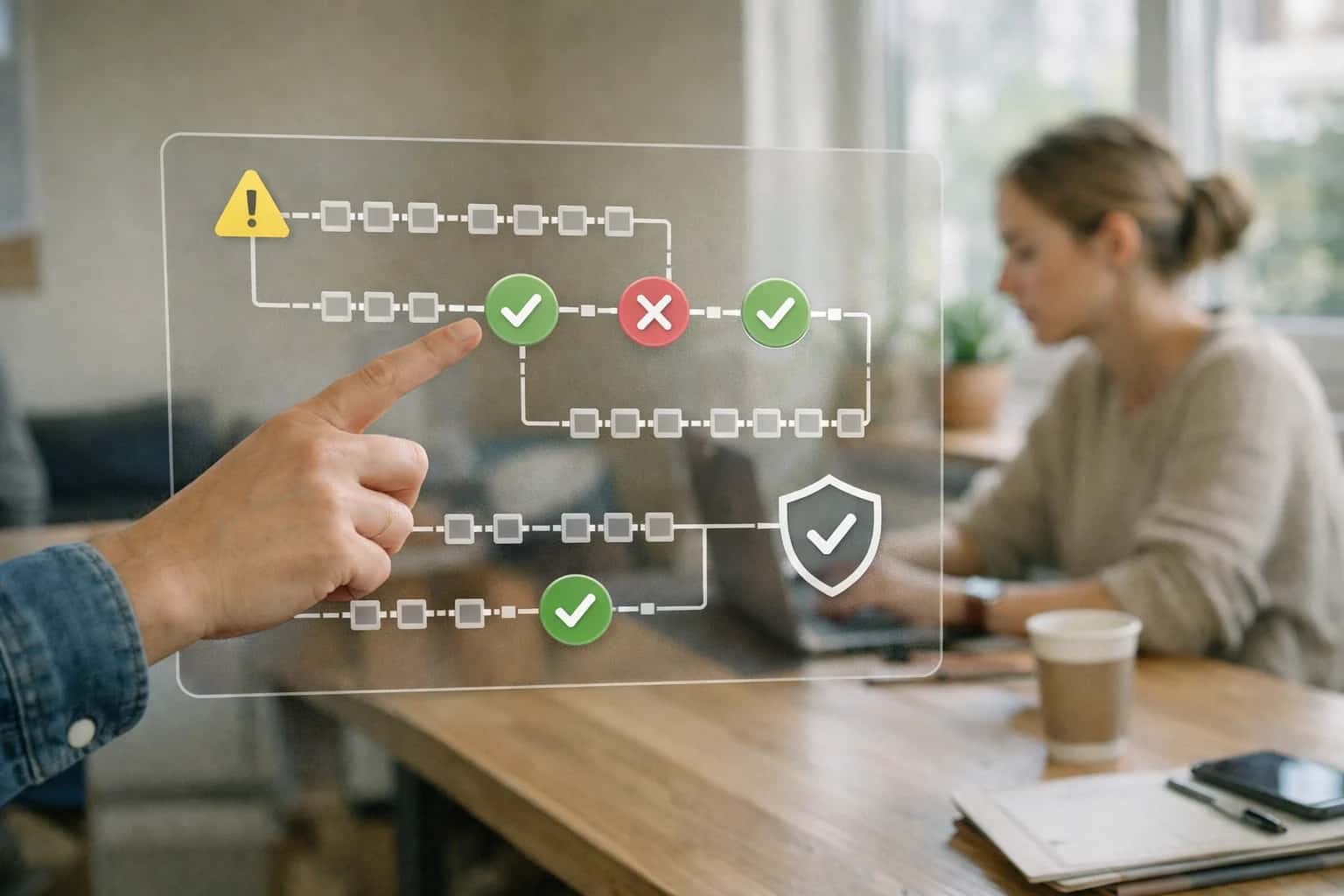
REAL-TIME SECURITY ANALYTICS
What is Security Information and Event Management (SIEM)?
A foundational cybersecurity platform for aggregating, correlating, and analyzing log data from across an enterprise IT environment to detect threats and support compliance auditing.
In the context of AI audit logging, a SIEM ingests structured telemetry from model access logs, inference endpoints, and data pipelines to identify anomalous behavior, such as unauthorized retrieval-augmented generation queries or data exfiltration attempts. By applying correlation rules and statistical analysis, it transforms disparate events into actionable security incidents, providing the immutable audit trail required for forensic investigations and regulatory compliance.
Security Information and Event Management
Core Capabilities of a SIEM Platform
A SIEM platform provides a centralized, real-time view of security events by aggregating and correlating data from across the entire IT infrastructure, enabling rapid threat detection and compliance reporting.
01
Log Aggregation and Normalization
The foundational capability of ingesting data from thousands of disparate sources—firewalls, servers, cloud services, and endpoints—and transforming it into a single, standardized format.
- Parsing: Extracts structured fields from unstructured syslog messages.
- Normalization: Maps vendor-specific event codes (e.g., 'User Login') to a universal taxonomy.
- Time Synchronization: Aligns timestamps across different time zones using NTP to ensure accurate event sequencing. This process creates a unified data lake, enabling queries that span the entire enterprise without manual data wrangling.
02
Real-Time Correlation Engine
A rules-based and statistical engine that analyzes normalized events in real time to identify patterns indicative of a security incident, moving beyond isolated alerts to detect multi-stage attacks.
- Rule-Based Logic: Executes predefined 'if-then' statements, such as 'If a user fails login 10 times in 1 minute, then generate an alert.'
- Statistical Correlation: Uses baselines to detect anomalies, like a server suddenly sending 10x its normal volume of outbound data.
- Asset Context: Enriches events with vulnerability scan data to prioritize attacks targeting unpatched systems. This capability reduces alert fatigue by connecting discrete events into a single, high-fidelity incident.
03
Automated Incident Response (SOAR)
Modern SIEMs integrate Security Orchestration, Automation, and Response (SOAR) capabilities to execute pre-defined playbooks, reducing the mean time to respond (MTTR) from hours to seconds.
- Playbook Execution: Automatically isolates a compromised endpoint on the network via an API call to the firewall when a malware alert is confirmed.
- Contextual Enrichment: Queries threat intelligence platforms (TIPs) to check IP reputation and geolocation automatically.
- Case Management: Opens a ticket in Jira or ServiceNow with the full forensic timeline attached. This closes the loop from detection to containment without human intervention for known threat patterns.
04
User and Entity Behavior Analytics (UEBA)
An advanced detection layer that applies machine learning models to establish behavioral baselines for users, hosts, and service accounts, surfacing subtle insider threats and compromised credentials.
- Peer Group Analysis: Compares a user's activity against their departmental peers to flag lateral movement that rule-based systems miss.
- Sequence Analysis: Detects impossible travel scenarios, such as a login from New York and a second login from London 10 minutes later.
- Service Account Monitoring: Identifies when a non-human account exhibits human-like interactive logon behavior. UEBA transforms the SIEM from a log repository into an intelligent threat-hunting platform.
05
Compliance Reporting and Dashboarding
A pre-built library of reports and visualizations mapped to regulatory mandates (GDPR, PCI DSS, HIPAA, SOC 2), designed to prove due care to external auditors.
- PCI DSS Requirement 10: Generates reports proving the monitoring of all access to cardholder data environments.
- Audit Trail Integrity: Uses cryptographic hashing to prove log files have not been tampered with since creation.
- Scheduled Distribution: Automatically emails PDF evidence packs to compliance officers on a weekly basis. This capability shifts SIEM from a purely security tool to a critical governance, risk, and compliance (GRC) asset.
06
Threat Intelligence Feed Integration
The ability to ingest and operationalize external threat data streams (STIX/TAXII) to detect known malicious indicators of compromise (IOCs) within internal traffic.
- IOC Matching: Compares internal DNS queries and connection logs against lists of known command-and-control (C2) domains.
- Retrospective Analysis: Re-scans historical logs against newly published threat signatures to find previously undetected breaches.
- TTP Mapping: Tags alerts with MITRE ATT&CK framework techniques to standardize threat classification. This integration provides the external context necessary to distinguish a mundane configuration error from a targeted nation-state attack.
SIEM & AI AUDIT LOGGING
Frequently Asked Questions
Explore the critical intersection of Security Information and Event Management systems with AI audit logging, covering how modern SIEMs ingest, correlate, and protect machine-generated telemetry from autonomous systems.
A Security Information and Event Management (SIEM) system is a software solution that provides real-time analysis of security alerts generated by applications and network hardware. It works by aggregating log and event data from across an organization's entire IT infrastructure—including servers, firewalls, intrusion detection systems, and now AI model endpoints—into a centralized platform. The SIEM engine then performs log correlation and statistical analysis to identify anomalous patterns that may indicate a security threat. For AI audit logging, a SIEM ingests structured logs from model access logs and inference logging pipelines, applying pre-defined correlation rules to detect events like unusual token usage spikes or unauthorized prompt injection attempts. The system generates prioritized alerts and provides dashboards for security analysts to investigate incidents, ensuring compliance with frameworks like SOC 2 and the EU AI Act.
Enabling Efficiency, Speed & Accuracy
Intelligent Analysis, Decision & Execution
We build AI systems for teams that need search across company data, workflow automation across tools, or AI features inside products and internal software.
Talk to Us
Search across company data
Give teams answers from docs, tickets, runbooks, and product data with sources and permissions.
Useful when people spend too long searching or get different answers from different systems.
Enterprise searchRAGPermissions
Read more
Automate internal workflows
Use AI to route work, draft outputs, trigger actions, and keep approvals and logs in place.
Useful when repetitive work moves across multiple tools and teams.
AI agentsWorkflow automationGovernance
Read more
Add AI to products and internal tools
Build assistants, guided actions, or decision support into the software your team or customers already use.
Useful when AI needs to be part of the product, not a separate tool.
AI integrationDecision supportModel routing
Read more
About the author
Prasad Kumkar
CEO & MD, Inference Systems
Prasad Kumkar is the CEO & MD of Inference Systems and writes about AI systems architecture, LLM infrastructure, model serving, evaluation, and production deployment. Over 5+ years, he has worked across computer vision models, L5 autonomous vehicle systems, and LLM research, with a focus on taking complex AI ideas into real-world engineering systems.
His work and writing cover AI systems, large language models, AI agents, multimodal systems, autonomous systems, inference optimization, RAG, evaluation, and production AI engineering.
LinkedIn
Limited slotsGet a Free AI Consultation
Partnered with leading AI, data, and software stack.





How We Work
Custom AI workflows for your Business
One-fit-all AI don't work for modern businesses. At Inferensys, we aim to understand your business & custom requirements; which we use to define most efficient agentic workflows, the data, and the tools for your business.
01
Review the use case
We understand the task, the users, and where AI can actually help.
Read more02
Pick the right approach
We define what needs search, automation, or product integration.
Read more03
Build the first useful version
We implement the part that proves the value first.
Read more04
Improve from there
We add the checks and visibility needed to keep it useful.
Read moreThe first call is a practical review of your use case and the right next step.
Talk to Us