Chain of Custody is the chronological documentation and paper trail that records the sequence of custody, control, transfer, analysis, and disposition of physical or electronic evidence. In AI audit logging, it provides an unbroken, verifiable record proving that specific log files have remained in secure possession and have not been altered or tampered with from the moment of creation to their presentation in a legal or compliance proceeding.

Glossary
Chain of Custody
The chronological documentation that records the sequence of custody, control, transfer, and disposition of digital evidence, proving that audit logs have not been altered during an investigation.
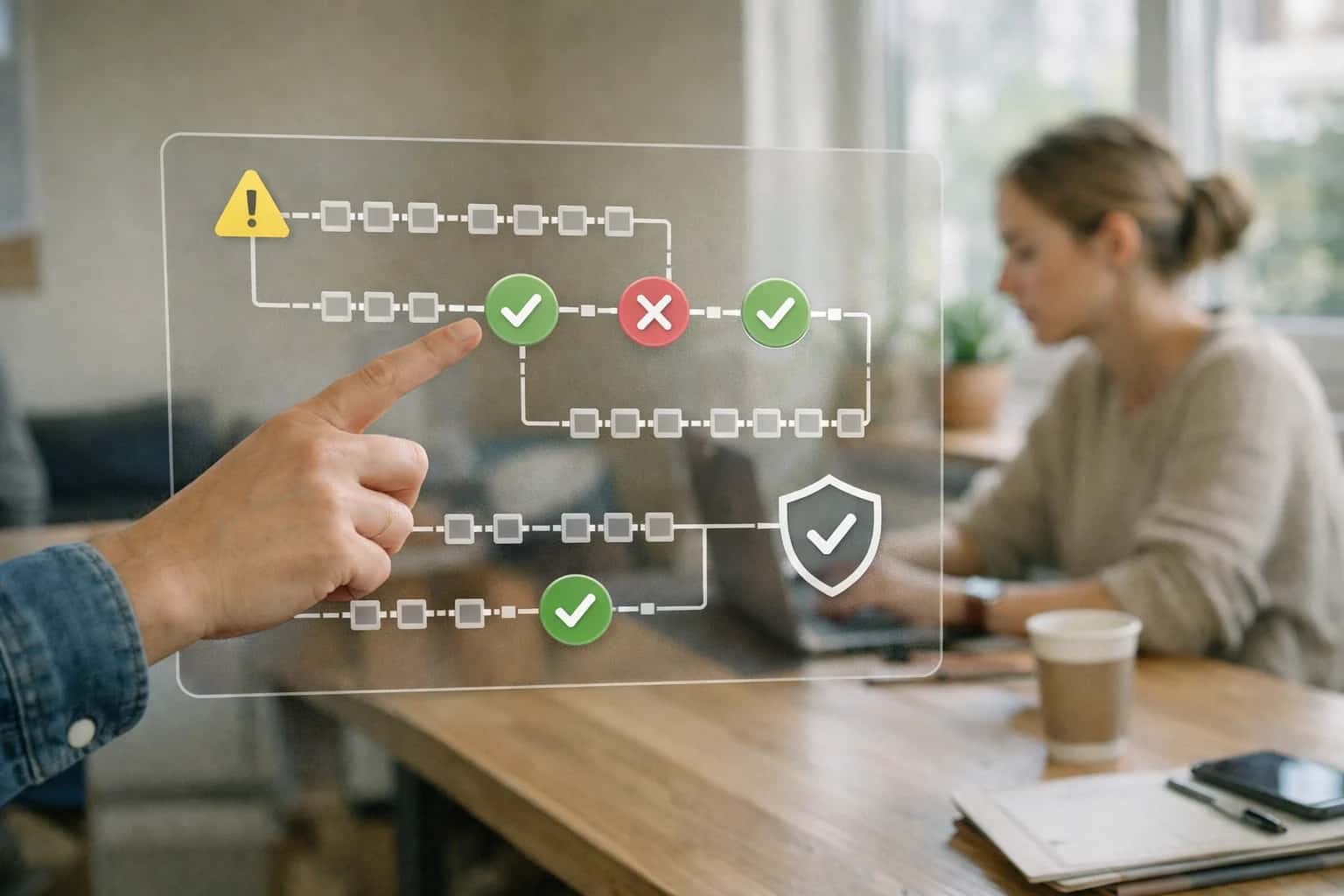
DIGITAL FORENSICS
What is Chain of Custody?
The chronological documentation that records the sequence of custody, control, transfer, and disposition of digital evidence, proving that audit logs have not been altered during an investigation.
Establishing a robust chain of custody relies on cryptographic mechanisms such as digital signatures and trusted timestamping to seal log entries at the point of origin. By maintaining a strict log of every individual who accessed the data, the exact time of access, and the purpose of the interaction, organizations achieve non-repudiation, ensuring that no entity can deny their actions and that the evidence remains admissible under strict regulatory scrutiny.
DIGITAL EVIDENCE INTEGRITY
Core Properties of a Secure Chain of Custody
A defensible chain of custody for AI audit logs requires specific technical properties to ensure evidence remains admissible and unassailable. These core pillars guarantee that records of model access and data ingestion can withstand forensic scrutiny.
01
Immutability via WORM Storage
The foundational property ensuring that once an audit record is written, it cannot be modified or deleted. Write-Once-Read-Many (WORM) storage enforces this at the hardware or software level.
- Prevents retroactive alteration of access logs by privileged administrators.
- Satisfies strict regulatory archiving requirements (SEC Rule 17a-4, FINRA).
- Often implemented using object locking on cloud storage like AWS S3 Glacier or Azure Immutable Blob Storage.
02
Cryptographic Integrity & Hashing
Every log entry must be sealed with a cryptographic hash (e.g., SHA-256) to create a unique digital fingerprint. Any subsequent modification to the record will produce a mismatched hash, immediately revealing tampering.
- Merkle Trees aggregate these hashes, allowing efficient verification of large log datasets without rehashing every entry.
- Blockchain Anchoring extends this by publishing the root hash to a public ledger, providing an immutable, globally verifiable timestamp.
03
Non-Repudiation & Digital Signatures
It is not enough to prove a log is unaltered; you must prove who created it. Digital signatures using Public Key Infrastructure (PKI) bind an identity to a specific log entry.
- Ensures an AI agent or human operator cannot deny performing a specific data access action.
- Provides legally binding proof of origination, critical for e-discovery and litigation holds.
- Requires secure key management via Hardware Security Modules (HSMs).
04
Trusted Timestamping
The sequence of events is as critical as the events themselves. Trusted Timestamping proves that a log entry existed at a specific point in time and has not been backdated.
- Relies on a trusted third-party Time Stamping Authority (TSA) per RFC 3161.
- Counters sophisticated insider threats attempting to rewrite history by altering system clocks.
- Establishes the chronological sequence required for forensic reconstruction of an AI ingestion event.
05
Comprehensive Metadata & Lineage
A bare event log is insufficient. A secure chain of custody requires rich, structured metadata that captures the full context of an action, establishing data provenance.
- Structured Logging (JSON) captures fields like
user_agent,source_ip,model_id, anddata_object_uri. - Distributed Tracing (via OpenTelemetry) correlates a single AI request across multiple microservices using a unique trace ID.
- This lineage tracking allows auditors to reconstruct the exact path of data from retrieval to model inference.
06
Strict Access Segregation
The chain of custody is broken if the individuals managing the logs can also alter them. Role-Based Access Control (RBAC) and Privileged Access Management (PAM) enforce strict separation of duties.
- Security engineers can configure logging infrastructure but cannot read or modify stored log data.
- Compliance officers can query and analyze logs but cannot alter configurations or delete records.
- All administrative sessions are themselves recorded and audited, creating a recursive chain of custody.
CHAIN OF CUSTODY
Frequently Asked Questions
Explore the foundational concepts of digital chain of custody, a critical process for ensuring the integrity and admissibility of AI audit logs in legal and compliance contexts.
A chain of custody is the chronological documentation that records the sequence of custody, control, transfer, and disposition of digital evidence. It proves that audit logs have not been altered during an investigation. The process begins the moment a piece of digital evidence is identified and continues through its entire lifecycle, including collection, preservation, analysis, and final archiving. Each transfer between individuals or systems must be logged with a timestamp, the identity of the receiving party, and the purpose of the transfer. This unbroken paper trail is essential for establishing non-repudiation and ensuring the evidence remains admissible in court. Without a rigorous chain of custody, opposing counsel can successfully argue that the data was tampered with, rendering it worthless.
Enabling Efficiency, Speed & Accuracy
Intelligent Analysis, Decision & Execution
We build AI systems for teams that need search across company data, workflow automation across tools, or AI features inside products and internal software.
Talk to Us
Search across company data
Give teams answers from docs, tickets, runbooks, and product data with sources and permissions.
Useful when people spend too long searching or get different answers from different systems.
Enterprise searchRAGPermissions
Read more
Automate internal workflows
Use AI to route work, draft outputs, trigger actions, and keep approvals and logs in place.
Useful when repetitive work moves across multiple tools and teams.
AI agentsWorkflow automationGovernance
Read more
Add AI to products and internal tools
Build assistants, guided actions, or decision support into the software your team or customers already use.
Useful when AI needs to be part of the product, not a separate tool.
AI integrationDecision supportModel routing
Read more
About the author
Prasad Kumkar
CEO & MD, Inference Systems
Prasad Kumkar is the CEO & MD of Inference Systems and writes about AI systems architecture, LLM infrastructure, model serving, evaluation, and production deployment. Over 5+ years, he has worked across computer vision models, L5 autonomous vehicle systems, and LLM research, with a focus on taking complex AI ideas into real-world engineering systems.
His work and writing cover AI systems, large language models, AI agents, multimodal systems, autonomous systems, inference optimization, RAG, evaluation, and production AI engineering.
LinkedIn
Limited slotsGet a Free AI Consultation
Partnered with leading AI, data, and software stack.





How We Work
Custom AI workflows for your Business
One-fit-all AI don't work for modern businesses. At Inferensys, we aim to understand your business & custom requirements; which we use to define most efficient agentic workflows, the data, and the tools for your business.
01
Review the use case
We understand the task, the users, and where AI can actually help.
Read more02
Pick the right approach
We define what needs search, automation, or product integration.
Read more03
Build the first useful version
We implement the part that proves the value first.
Read more04
Improve from there
We add the checks and visibility needed to keep it useful.
Read moreThe first call is a practical review of your use case and the right next step.
Talk to Us