A LlamaIndex Node Parser is a configurable software component within the LlamaIndex framework that ingests raw documents and programmatically segments them into discrete, indexable units called Nodes. These Nodes are the fundamental atomic data structures for all subsequent operations, including embedding generation, storage in a vector database, and semantic retrieval. The parser's primary function is to apply a specific chunking strategy—such as fixed-size, semantic, or hierarchical splitting—to transform unstructured text into optimized chunks for language model context windows.

Glossary
LlamaIndex Node Parser
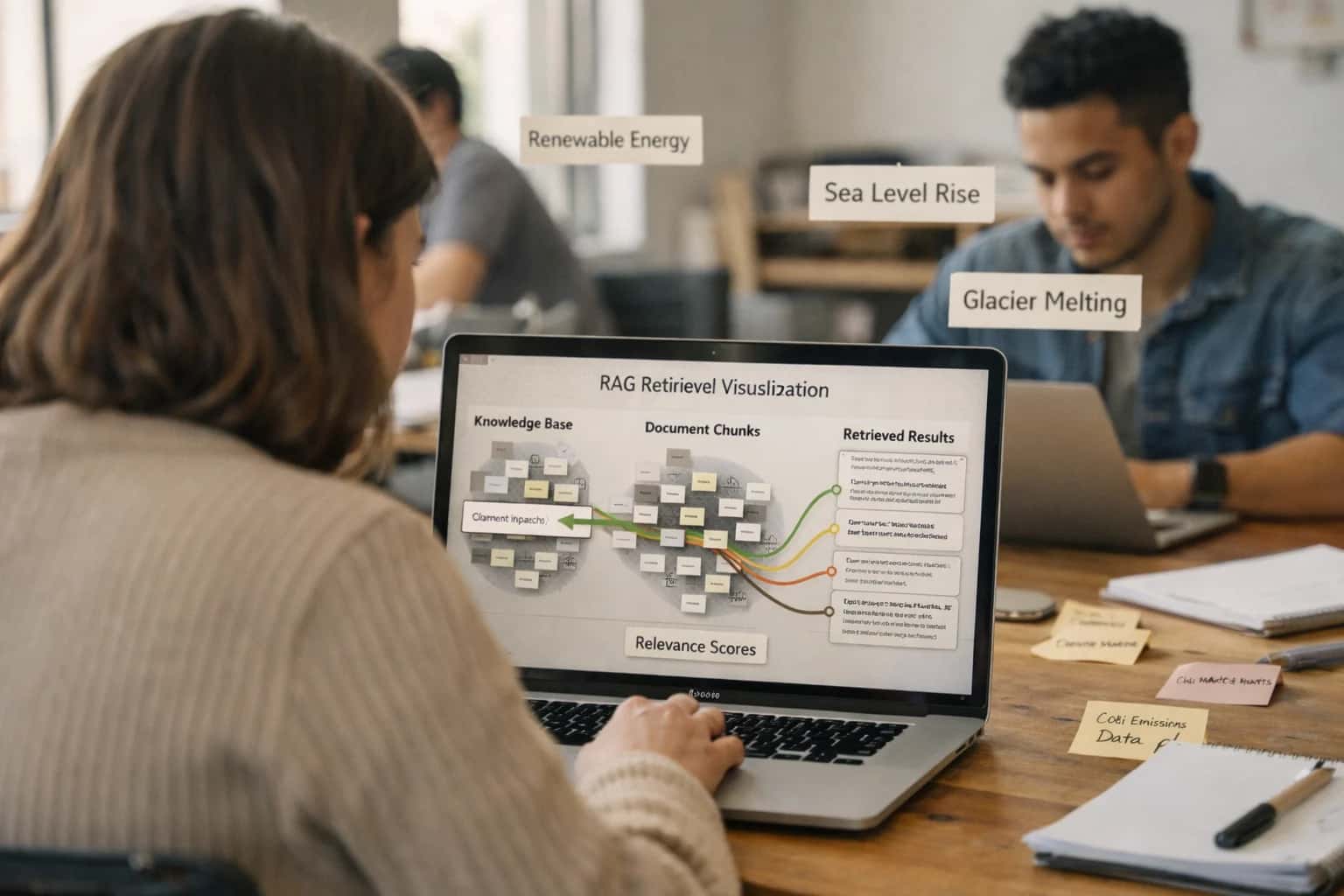
The LlamaIndex Node Parser is a core component of the LlamaIndex framework that converts raw documents into structured 'Node' objects, which serve as the fundamental units for indexing and retrieval in retrieval-augmented generation (RAG) systems.
DOCUMENT CHUNKING STRATEGIES
What is LlamaIndex Node Parser?
A core component for structuring data in retrieval-augmented generation (RAG) pipelines.
Different parser types, like the SentenceSplitter or SemanticSplitterNodeParser, implement distinct segmentation logic, balancing chunk granularity and contextual coherence. By standardizing document ingestion into Nodes with metadata (e.g., source, relationships), the Node Parser enables efficient retrieval-augmented generation architectures. It is a foundational piece of document preprocessing, working in tandem with text splitters and embedding models to prepare enterprise data for accurate, hallucination-free AI responses.
DOCUMENT CHUNKING STRATEGIES
Key Features of the LlamaIndex Node Parser
The LlamaIndex Node Parser is the core component responsible for converting raw documents into structured 'Node' objects, the fundamental units for indexing and retrieval in RAG pipelines. Its design directly impacts retrieval quality and system performance.
01
Modular Architecture & Extensibility
The Node Parser is built as a modular, abstract base class, allowing developers to implement custom parsing logic for any document type. This enables:
- Pluggable strategies: Seamlessly switch between semantic, fixed-length, or hierarchical chunking.
- Custom metadata injection: Attach source file, page number, or author data to each Node.
- Specialized parsers: Create parsers for code (AST-based), scientific papers, or legal contracts by overriding the core
get_nodes_from_documents()method. This design ensures the parser is not a black box but an extensible framework component.
02
Semantic-Aware Chunking
Beyond simple character splitting, advanced parsers like the SemanticSplitterNodeParser use embedding models to identify natural semantic boundaries. This process involves:
- Calculating sentence embeddings for the text.
- Identifying breakpoints where the semantic similarity between adjacent sentences drops significantly.
- Creating coherent chunks that group related concepts, preserving context better than arbitrary splits. This results in chunks that are more likely to be self-contained answers to queries, improving retrieval precision.
03
Metadata Preservation & Propagation
A critical function is preserving document metadata and relationships during chunking. Each generated Node object contains:
- Inherited metadata: Source document ID, file path, creation date.
- Positional metadata: Character start/end index, page number, section heading.
- Node relationships: References to parent nodes (in hierarchical chunking) or previous/next nodes. This metadata is crucial for source attribution in RAG responses and enables advanced retrieval patterns like parent-child or sentence-window retrieval.
04
Integration with Text Splitters
The parser acts as a bridge between raw text splitters and the LlamaIndex data structure. It wraps foundational splitting libraries (like those from LangChain) to produce Nodes. For example:
SimpleNodeParsercan use a RecursiveCharacterTextSplitter with configurable chunk size and overlap.- It handles the tokenization process, ensuring chunks respect the target LLM's context window limits.
- The splitter's parameters (separators, chunk size, overlap) are exposed and configurable through the parser's interface, providing granular control over the chunking outcome.
05
Hierarchical Node Generation
For complex documents, parsers like the HierarchicalNodeParser create a multi-level tree structure of Nodes. This involves:
- First-pass chunking: Creating large 'parent' nodes (e.g., entire sections).
- Second-pass chunking: Splitting each parent into smaller 'child' nodes (e.g., paragraphs).
- Storing relationships: Each child node retains a reference to its parent ID. This enables multi-granularity retrieval, where a query can first retrieve a high-level parent for overview, then drill down into specific child nodes for detail.
06
Optimization for Retrieval & Indexing
The parser's output is optimized for downstream vector embedding and index storage. Key optimizations include:
- Controlled chunk size: Prevents creating chunks too large for embedding models or too small to be meaningful.
- Overlap management: Configurable overlap between consecutive chunks mitigates context fragmentation at boundaries.
- Structured JSON output: Nodes are serializable objects, ready for insertion into vector databases (like Pinecone or Weaviate) or LlamaIndex's built-in indices. This ensures the chunking process is not an isolated step but a tuned precursor to efficient similarity search.
FEATURE COMPARISON
LlamaIndex Node Parser vs. LangChain Text Splitter
A technical comparison of two primary document chunking components used in retrieval-augmented generation (RAG) pipelines, highlighting their architectural philosophies and implementation specifics.
| Feature / Metric | LlamaIndex Node Parser | LangChain Text Splitter |
|---|---|---|
Core Architectural Unit | Node object (with metadata, relationships) | Text string (plain or with metadata) |
Primary Framework Integration | Tightly coupled with LlamaIndex's data structures (Index, Retriever) | Modular component designed for chain composition |
Default Chunking Strategy | SemanticSplitterNodeParser (sentence-aware) | RecursiveCharacterTextSplitter (separator hierarchy) |
Native Support for Hierarchical Chunks | ||
Built-in Metadata Extraction (e.g., titles) | ||
Chunk Relationship Modeling (e.g., parent/child) | ||
Pre-Built Connectors for Document Types | ||
Typical Output for Indexing | List[Node] ready for LlamaIndex vector store | List[Document] or List[str] for further processing |
Control Overlap Method | Via | Via |
Direct Compatibility with LangChain Chains | ||
Direct Compatibility with LlamaIndex Query Engines |
DOCUMENT CHUNKING STRATEGIES
Common Node Parser Types in LlamaIndex
LlamaIndex provides a suite of specialized Node Parsers, each implementing a distinct document segmentation strategy to convert raw documents into structured 'Node' objects for indexing and retrieval.
01
SimpleNodeParser
The SimpleNodeParser is the default and most commonly used parser. It implements fixed-length chunking using a configurable token or character limit.
- Primary Mechanism: Splits text using a defined
chunk_sizeand optionalchunk_overlap. - Use Case: General-purpose text processing where uniform chunk size is acceptable.
- Key Parameters:
chunk_size,chunk_overlap,separator(e.g., " "), andparagraph_separatorfor better boundary handling. - Underlying Library: Often uses a RecursiveCharacterTextSplitter from LangChain under the hood, applying a hierarchy of separators (e.g., double newlines, single newlines, spaces) to respect natural breaks while hitting size targets.
02
SemanticSplitterNodeParser
The SemanticSplitterNodeParser performs semantic chunking by embedding sentences and grouping them based on similarity to find natural topic boundaries.
- Primary Mechanism: Embeds each sentence in a document, calculates cosine similarity between adjacent sentences, and splits where similarity drops below a threshold.
- Use Case: Creating chunks that are thematically coherent, improving retrieval precision for complex, multi-topic documents.
- Key Parameters:
buffer_size,breakpoint_percentile_threshold, and theembed_modelused for sentence embeddings. - Advantage: Produces variable-length chunks that align with the document's intrinsic semantic structure, unlike fixed-size splits.
03
SentenceWindowNodeParser
The SentenceWindowNodeParser is designed for sentence window retrieval, a strategy that retrieves a core sentence and includes its surrounding context.
- Primary Mechanism: Splits a document into individual sentences. Each sentence becomes a 'node' for embedding and retrieval. A configurable window of sentences before and after the core sentence is stored as metadata.
- Use Case: High-precision tasks where the exact answer is contained within a single sentence, but broader context is needed for the LLM to interpret it correctly.
- Key Parameters:
window_size(number of sentences on each side) andwindow_metadata_key. - Retrieval Flow: The retriever finds the most relevant single-sentence node; the system then passes the full window of surrounding sentences from the node's metadata to the LLM.
04
HierarchicalNodeParser
The HierarchicalNodeParser creates a parent-child chunk structure, enabling retrieval at multiple levels of granularity.
- Primary Mechanism: Generates a tree of nodes. Large parent nodes (e.g., whole sections) provide broad context. Smaller child nodes (e.g., paragraphs or sentences) within each parent provide fine-grained detail.
- Use Case: Complex Q&A where a query might require a broad overview or a specific detail. Enables two-stage retrieval: retrieve top parent nodes first, then select relevant child nodes from within them.
- Key Parameters: The
chunk_sizesdict defines the token sizes for each level (e.g.,{2048: 512}for parents of 2048 tokens containing children of 512 tokens). - Benefit: Balances the recall of broad topics with the precision of specific information.
05
CodeSplitter
The CodeSplitter is a specialized parser for source code, implementing Abstract Syntax Tree (AST) chunking.
- Primary Mechanism: Parses code into its Abstract Syntax Tree and uses language-specific syntax nodes (functions, classes, methods) as logical, self-contained chunk boundaries.
- Use Case: Creating a code knowledge base for retrieval-augmented generation (RAG) on codebases, enabling queries about specific functions or classes.
- Key Parameters:
language(e.g.,python,javascript),max_chars, andchunk_lines. - Advantage: Preserves the syntactic and semantic integrity of code units far better than splitting by raw characters or tokens, which would break function definitions.
06
MarkdownNodeParser & HTMLNodeParser
These parsers perform layout-aware chunking for documents with native structural markup.
- Primary Mechanism: The MarkdownNodeParser uses markdown elements (headings
#, lists-, code blocks) as natural chunk boundaries. The HTMLNodeParser uses HTML tags (e.g.,<p>,<h1>,<div>) and their nesting. - Use Case: Splitting technical documentation, blogs, or web pages where the existing markup defines semantic sections.
- Key Parameters: Tags/headers to split on and optional size limits for fallback splitting within large elements.
- Benefit: Chunks align perfectly with the document's authored structure, often matching a human's intuitive segmentation of the content.
LLAMAINDEX NODE PARSER
Frequently Asked Questions
Essential questions about the LlamaIndex Node Parser, the core component responsible for converting documents into structured 'Node' objects for indexing and retrieval in RAG pipelines.
A LlamaIndex Node Parser is a configurable software component within the LlamaIndex framework that ingests raw documents and splits them into structured Node objects, which are the fundamental, retrievable units of text in a Retrieval-Augmented Generation (RAG) system. It works by applying a specific segmentation strategy—such as fixed-length, semantic, or recursive splitting—to raw text, creating a list of Node objects. Each Node contains the text chunk, metadata (like source file and position), and relationships (e.g., to parent or child nodes), preparing them for embedding and indexing in a vector database.
Enabling Efficiency, Speed & Accuracy
Intelligent Analysis, Decision & Execution
We build AI systems for teams that need search across company data, workflow automation across tools, or AI features inside products and internal software.
Talk to Us
Search across company data
Give teams answers from docs, tickets, runbooks, and product data with sources and permissions.
Useful when people spend too long searching or get different answers from different systems.
Enterprise searchRAGPermissions
Read more
Automate internal workflows
Use AI to route work, draft outputs, trigger actions, and keep approvals and logs in place.
Useful when repetitive work moves across multiple tools and teams.
AI agentsWorkflow automationGovernance
Read more
Add AI to products and internal tools
Build assistants, guided actions, or decision support into the software your team or customers already use.
Useful when AI needs to be part of the product, not a separate tool.
AI integrationDecision supportModel routing
Read more
About the author
Prasad Kumkar
CEO & MD, Inference Systems
Prasad Kumkar is the CEO & MD of Inference Systems and writes about AI systems architecture, LLM infrastructure, model serving, evaluation, and production deployment. Over 5+ years, he has worked across computer vision models, L5 autonomous vehicle systems, and LLM research, with a focus on taking complex AI ideas into real-world engineering systems.
His work and writing cover AI systems, large language models, AI agents, multimodal systems, autonomous systems, inference optimization, RAG, evaluation, and production AI engineering.
LinkedIn
Limited slotsGet a Free AI Consultation
Partnered with leading AI, data, and software stack.





How We Work
Custom AI workflows for your Business
One-fit-all AI don't work for modern businesses. At Inferensys, we aim to understand your business & custom requirements; which we use to define most efficient agentic workflows, the data, and the tools for your business.
01
Review the use case
We understand the task, the users, and where AI can actually help.
Read more02
Pick the right approach
We define what needs search, automation, or product integration.
Read more03
Build the first useful version
We implement the part that proves the value first.
Read more04
Improve from there
We add the checks and visibility needed to keep it useful.
Read moreThe first call is a practical review of your use case and the right next step.
Talk to Us