PII detection is the automated process of identifying Personally Identifiable Information within unstructured data streams or structured outputs. It uses named entity recognition (NER), regular expressions, and machine learning classifiers to locate data elements like names, social security numbers, email addresses, and financial account numbers. This process is critical for privacy compliance with regulations like GDPR and CCPA, forming a mandatory guardrail in any agentic system handling user data.

Glossary
PII Detection
PII detection is the automated identification of Personally Identifiable Information within data streams or outputs for privacy compliance and security.
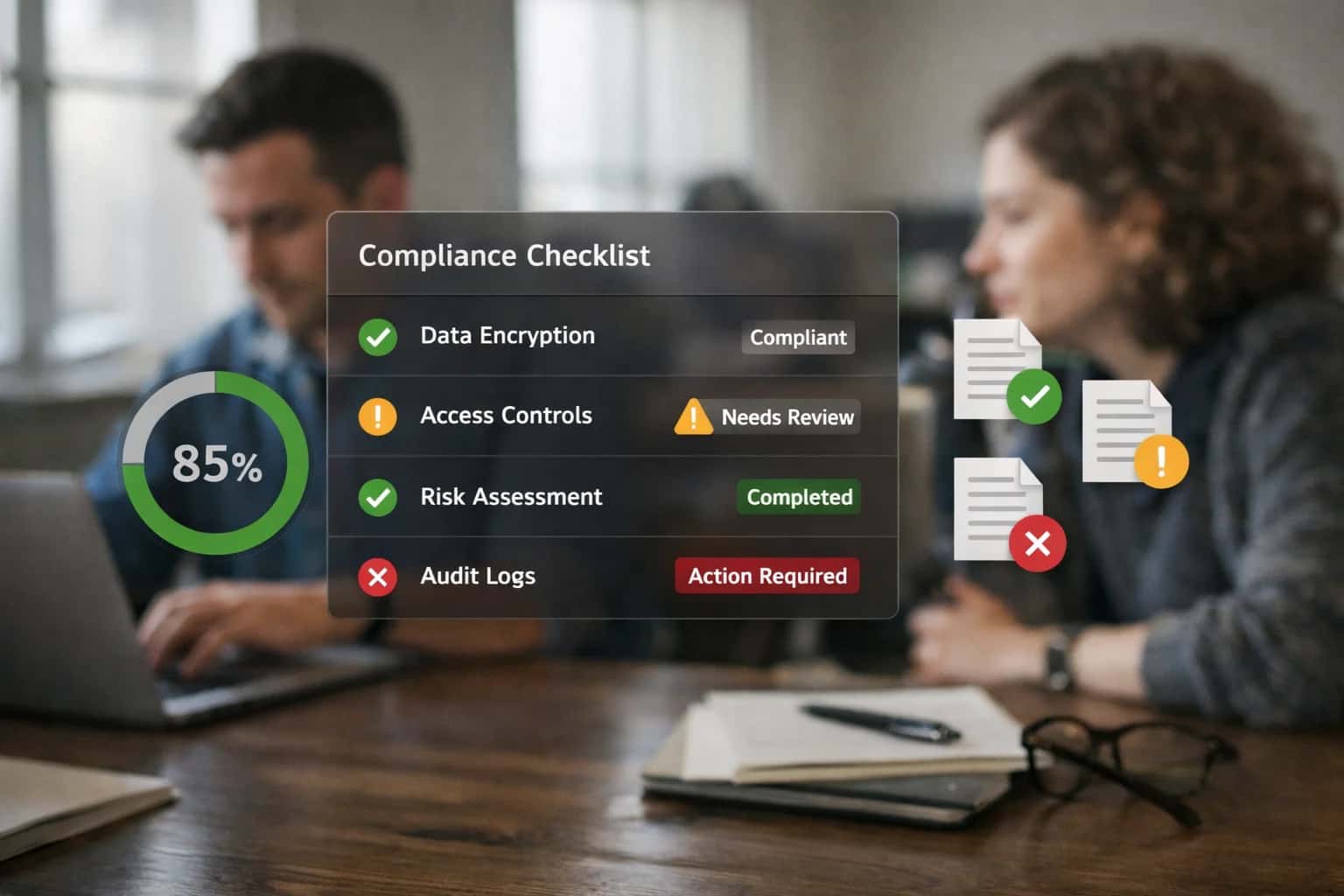
OUTPUT VALIDATION FRAMEWORKS
What is PII Detection?
PII detection is a core component of output validation frameworks, ensuring autonomous agents do not inadvertently expose sensitive personal data.
Within recursive error correction loops, PII detection acts as a validation step that can trigger corrective action planning. If an agent's output contains unflagged PII, a self-evaluation mechanism can classify this as an error, initiating a rollback strategy or dynamic prompt correction to redact the sensitive data. Effective detection integrates contextual analysis to reduce false positives, distinguishing between permissible and prohibited PII use based on business rule validation and data sovereignty requirements.
OUTPUT VALIDATION FRAMEWORKS
Key Characteristics of PII Detection
PII detection is a critical validation step for autonomous agents, ensuring outputs comply with privacy regulations by identifying and protecting sensitive personal data before it is exposed.
01
Pattern-Based Recognition
This core technique uses regular expressions (regex) and deterministic rules to identify structured data formats. It is highly effective for predictable patterns like:
- Social Security Numbers:
###-##-#### - Credit Card Numbers: Luhn algorithm validation on 16-digit sequences.
- Phone Numbers: Country-specific formats (e.g.,
(###) ###-####for US). - Email Addresses: Validation against RFC 5322 standards. While fast and precise for structured data, it can struggle with unstructured text where PII lacks a strict format.
02
Named Entity Recognition (NER)
A machine learning approach that uses pre-trained models to classify and extract entities from unstructured text. Key entities for PII include:
- Person Names: Identifies full names, surnames, and titles.
- Locations: Home addresses, cities, and specific landmarks.
- Organizations: Employers or institutions that can be linkable to an individual.
- Dates of Birth: Crucial for identity verification. Modern NER models are often based on transformer architectures like BERT, fine-tuned on legal and medical corpora rich in PII examples.
03
Contextual Analysis
Advanced systems evaluate the surrounding text to reduce false positives and negatives. This involves:
- Disambiguation: Determining if "Washington" refers to a person, state, or city based on sentence context.
- Proximity Analysis: Flagging a combination of a name, date, and location in close proximity as a high-confidence PII cluster.
- Syntactic Parsing: Understanding grammatical structure to identify possessive relationships (e.g., "John's medical record"). This moves detection beyond simple keyword matching to understanding semantic relationships.
04
Compliance & Classification Frameworks
PII detection is governed by legal and regulatory definitions that vary by jurisdiction. Key frameworks include:
- GDPR (EU): Defines 'personal data' broadly. Detection must identify data that can directly or indirectly identify a natural person.
- HIPAA (US Healthcare): Mandates protection of 18 specific Protected Health Information (PHI) identifiers.
- CCPA/CPRA (California): Focuses on 'personal information' linked to a household. Detection systems must be configurable to align with the specific data classification schema and sensitivity levels required by the operating environment.
05
Redaction and Pseudonymization
The actionable output of PII detection is the secure handling of identified data. Core techniques include:
- Redaction: Permanently removing or obscuring PII (e.g., blacking out text in a document).
- Pseudonymization: Replacing PII with a consistent but artificial identifier (a pseudonym), allowing data to be used for analysis while reducing direct identifiability.
- Tokenization: Substituting sensitive data with a non-sensitive equivalent (token) that has no exploitable meaning, often used in payment processing. The choice depends on the data utility requirements and the de-identification standard being applied.
06
Integration with Validation Pipelines
For autonomous agents, PII detection is not a standalone task but a validation guardrail integrated into the output generation workflow. This involves:
- Pre-output Scanning: Analyzing an agent's draft response before it is finalized.
- Post-processing Hooks: Automatically applying redaction to any PII found in the final output.
- Confidence Scoring: Assigning a confidence level to each detection, with low-confidence cases routed for human-in-the-loop review.
- Audit Logging: Recording all detections and actions for compliance audit trails. This ensures PII handling is deterministic and verifiable.
OUTPUT VALIDATION FRAMEWORKS
How PII Detection Works
PII detection is a core component of output validation frameworks, ensuring autonomous agents do not inadvertently expose sensitive personal data.
PII detection is the automated process of identifying Personally Identifiable Information within unstructured text or structured data streams. It functions by applying a combination of pattern matching for formats like social security numbers, named entity recognition (NER) for names and locations, and contextual analysis to distinguish sensitive data from benign text. This process is critical for privacy compliance (e.g., GDPR, CCPA) and is a foundational guardrail within agentic systems to prevent data leaks.
Modern systems implement detection using pre-trained machine learning models fine-tuned on labeled PII datasets and rule-based validators for deterministic formats. Detected entities are typically classified (e.g., NAME, EMAIL, CREDIT_CARD) and can trigger actions like redaction, tokenization, or alerting. Integration into a validation pipeline allows for real-time scanning of agent outputs, enabling corrective action planning such as halting execution or invoking a recursive reasoning loop to generate a sanitized response.
OUTPUT VALIDATION FRAMEWORKS
Common PII Detection Examples
Personally Identifiable Information (PII) detection systems are trained to identify a wide range of sensitive data types. This section details common examples, categorized by their format and associated risk level.
01
Direct Identifiers
These are data elements that can uniquely identify an individual on their own. Detection is typically rule-based or pattern-matching.
- Social Security Numbers (SSN): U.S. format
XXX-XX-XXXX. High-risk. - Passport Numbers: Varies by country but follows specific issuing authority formats.
- Driver's License Numbers: State-specific alphanumeric patterns.
- Taxpayer Identification Numbers (TIN): Includes U.S. Employer Identification Numbers (EIN).
- Full Name with Title: e.g., "Dr. Jane A. Doe". Often combined with other context for higher confidence scoring.
02
Financial Identifiers
Sensitive data linked to an individual's financial accounts and transactions. Detection uses Luhn algorithm checks and format validation.
- Credit/Debit Card Numbers (PAN): 13-19 digits, validated via the Luhn algorithm. Major Industry Identifiers (e.g., starting with 4 for Visa) aid classification.
- Bank Account Numbers: Length and format vary globally; often detected in context with routing numbers (e.g., in the U.S.).
- Financial Transaction Details: Specific amounts, dates, and merchant names linked to an individual in correspondence.
03
Contact & Location Information
Data that can be used to contact or locate an individual. Detection often uses regular expressions for patterns and context analysis.
- Email Addresses: Standard format
local-part@domain. High-volume, common in logs and communications. - Physical Addresses: Structured (street, city, ZIP) or unstructured text. Entity recognition models parse components.
- Telephone Numbers: International (E.164) and local formats. Country codes are key signals.
- IP Addresses: IPv4 (
192.168.1.1) and IPv6. May be considered PII in certain jurisdictions when linked to an individual.
04
Biometric & Medical Data
Biological measurements and health information. Detection may require specialized models trained on medical or biometric terminology.
- Medical Record Numbers (MRN): Unique identifiers within healthcare systems.
- Diagnosis Codes: ICD-10 codes (e.g.,
I10for hypertension) within clinical notes. - Biometric Templates: References to fingerprint, facial recognition, or iris scan data.
- Genetic Information: Mentions of specific genetic markers, alleles, or sequencing data.
05
Quasi-Identifiers & Linked Data
Data that can identify an individual when combined with other information. Detection requires understanding context and relationships.
- Date of Birth: Especially full date (
MM/DD/YYYY). A key linking datum. - Place of Birth: City, state, or country.
- Gender/Race/Ethnicity: Often protected attributes that, when combined, increase re-identification risk.
- Occupation & Employer: Job title and company name can be highly identifying in small populations.
- Vehicle Identification Number (VIN): 17-character identifier for motor vehicles.
06
Online & Digital Identifiers
Identifiers generated from digital activity and profiles. Detection scans for platform-specific patterns and tokens.
- Usernames/Handles: Especially when linked to real names or used across platforms.
- Social Media Profile URLs: Direct links to Facebook, LinkedIn, X (Twitter) profiles.
- Advertising IDs: Google Advertising ID (GAID), Apple's Identifier for Advertisers (IDFA).
- Cookie IDs & Device Fingerprints: Long alphanumeric strings used for web tracking.
- Login Credentials: Plaintext references to passwords or security questions (a critical security finding).
COMPARISON
PII Detection vs. Related Validation Methods
This table contrasts PII detection with other common output validation frameworks, highlighting their distinct objectives, mechanisms, and typical use cases within autonomous agent systems.
| Feature / Metric | PII Detection | Schema Validation | Rule-Based Validation | Semantic Validation |
|---|---|---|---|---|
Primary Objective | Identify and redact sensitive personal data for privacy compliance. | Ensure structured output (e.g., JSON) matches a predefined format and data types. | Enforce explicit, deterministic business logic and constraints. | Verify the contextual meaning and factual correctness of content. |
Core Mechanism | Pattern matching (regex), Named Entity Recognition (NER), ML classifiers. | Parser/validator against a formal schema definition (e.g., JSON Schema, Pydantic). | Evaluation of boolean expressions and conditional logic rules. | Cross-referencing with knowledge bases, embedding similarity, fact-checking LLMs. |
Input Type | Unstructured or semi-structured text, log streams, data outputs. | Structured data objects (JSON, XML, YAML). | Any output that can be evaluated against a rule (text, numbers, booleans). | Primarily natural language text or summaries. |
Output | Flagged/redacted text, entity labels (e.g., PERSON, EMAIL), confidence scores. | Pass/Fail status, detailed error messages on schema violations. | Pass/Fail status, which specific rule was violated. | Pass/Fail status, confidence score, evidence for/against the claim. |
Determinism | High for regex rules, probabilistic for ML-based detection. | Fully deterministic. | Fully deterministic. | Probabilistic; based on model confidence and reference data quality. |
Key Challenge | Balancing recall (find all PII) vs. precision (avoid false positives); handling novel formats. | Handling schema evolution and optional fields gracefully. | Rule maintenance becoming complex and brittle for nuanced scenarios. | Requiring authoritative ground truth or reference data; combating model hallucinations. |
Common Tools/Frameworks | Presidio, Microsoft PII Detector, spaCy NER models, custom regex libraries. | Pydantic, JSON Schema validators, XML Schema validators. | Drools, custom rule engines, simple if-else logic in code. | LLM-as-a-judge, vector similarity search, knowledge graph lookups. |
Place in Validation Pipeline | Typically a first-pass safety/ compliance filter on raw agent output. | Often applied immediately after an LLM call expected to produce structured data. | Applied after basic parsing/schema validation, for domain-specific logic. | Applied later in the pipeline for high-stakes or complex factual outputs. |
OUTPUT VALIDATION FRAMEWORKS
Frequently Asked Questions
Common questions about the automated detection of Personally Identifiable Information (PII) within data streams and AI-generated outputs, a critical component for privacy compliance and secure AI operations.
PII detection is the automated process of identifying Personally Identifiable Information within unstructured text, structured data, or AI-generated outputs. It works by applying a combination of pattern matching (regex), named entity recognition (NER), and machine learning classifiers to scan content for predefined categories of sensitive data. Common techniques include:
- Regular Expressions (Regex): For detecting formatted data like Social Security Numbers (###-##-####) or credit card numbers.
- Contextual Analysis: Using language models to understand if a sequence like "John Smith" is a name within a sentence versus a company name.
- Pre-trained Models: Leveraging specialized NER models fine-tuned to recognize entities like medical record numbers or passport IDs.
- Validation Checks: Such as Luhn algorithm verification for credit card numbers to reduce false positives. The system flags or redacts detected PII to prevent unauthorized exposure.
Enabling Efficiency, Speed & Accuracy
Intelligent Analysis, Decision & Execution
We build AI systems for teams that need search across company data, workflow automation across tools, or AI features inside products and internal software.
Talk to Us
Search across company data
Give teams answers from docs, tickets, runbooks, and product data with sources and permissions.
Useful when people spend too long searching or get different answers from different systems.
Enterprise searchRAGPermissions
Read more
Automate internal workflows
Use AI to route work, draft outputs, trigger actions, and keep approvals and logs in place.
Useful when repetitive work moves across multiple tools and teams.
AI agentsWorkflow automationGovernance
Read more
Add AI to products and internal tools
Build assistants, guided actions, or decision support into the software your team or customers already use.
Useful when AI needs to be part of the product, not a separate tool.
AI integrationDecision supportModel routing
Read more
About the author
Prasad Kumkar
CEO & MD, Inference Systems
Prasad Kumkar is the CEO & MD of Inference Systems and writes about AI systems architecture, LLM infrastructure, model serving, evaluation, and production deployment. Over 5+ years, he has worked across computer vision models, L5 autonomous vehicle systems, and LLM research, with a focus on taking complex AI ideas into real-world engineering systems.
His work and writing cover AI systems, large language models, AI agents, multimodal systems, autonomous systems, inference optimization, RAG, evaluation, and production AI engineering.
LinkedIn
Limited slotsGet a Free AI Consultation
Partnered with leading AI, data, and software stack.





How We Work
Custom AI workflows for your Business
One-fit-all AI don't work for modern businesses. At Inferensys, we aim to understand your business & custom requirements; which we use to define most efficient agentic workflows, the data, and the tools for your business.
01
Review the use case
We understand the task, the users, and where AI can actually help.
Read more02
Pick the right approach
We define what needs search, automation, or product integration.
Read more03
Build the first useful version
We implement the part that proves the value first.
Read more04
Improve from there
We add the checks and visibility needed to keep it useful.
Read moreThe first call is a practical review of your use case and the right next step.
Talk to Us