Hardware-in-the-Loop bridges the gap between pure software simulation and physical field testing by inserting a real Device Under Test (DUT) into a closed-loop simulation. A real-time computer runs a high-fidelity RF digital twin model, generating the electromagnetic environment, while signal converters interface with the DUT's physical ports. This allows engineers to subject actual hardware to repeatable, extreme, and corner-case scenarios—such as severe multipath fading or adversarial jamming—without leaving the laboratory.

Glossary
Hardware-in-the-Loop
A real-time simulation technique where physical hardware components, such as a software-defined radio, are integrated into a virtual RF environment to validate performance under realistic conditions.
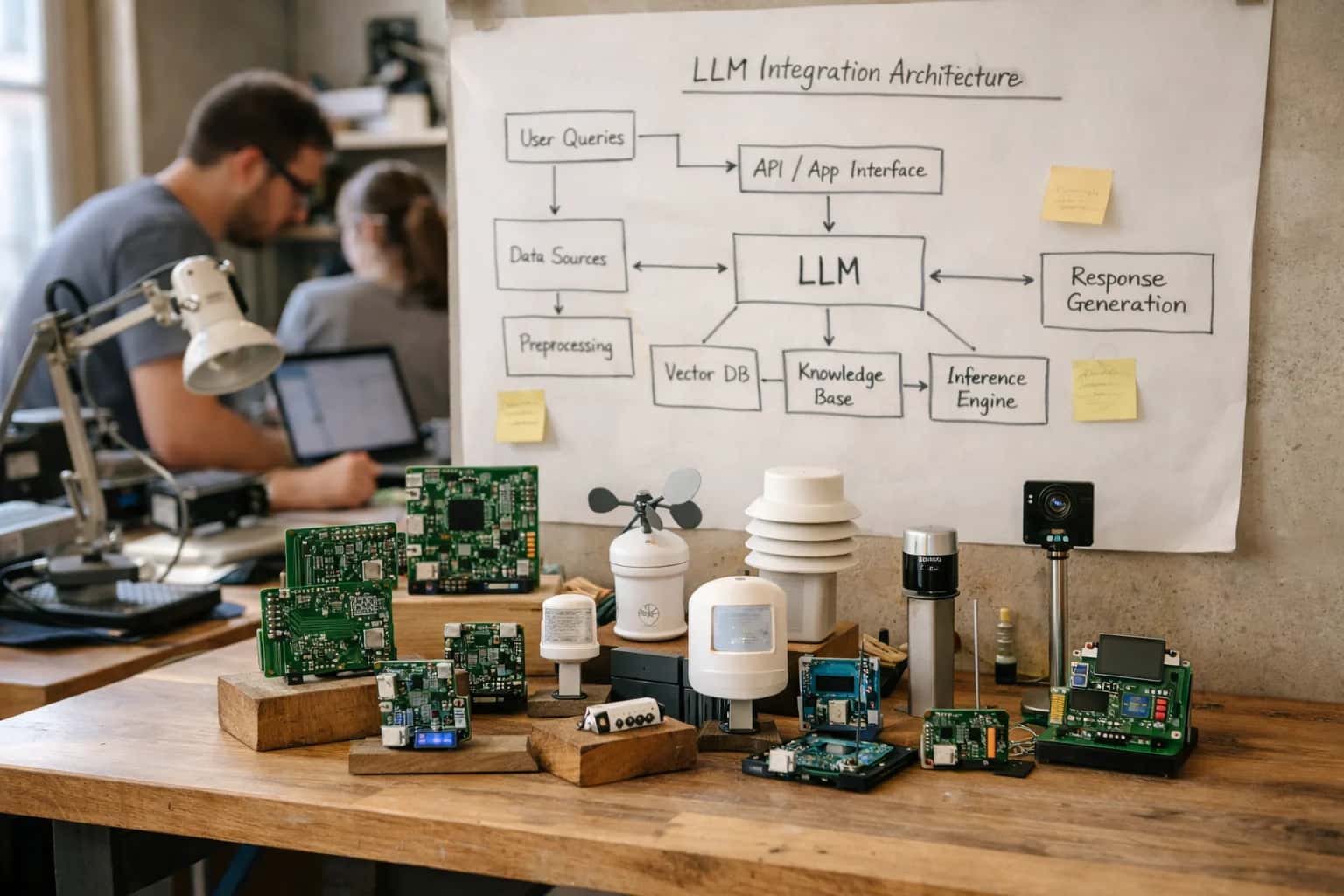
REAL-TIME SIMULATION INTEGRATION
What is Hardware-in-the-Loop?
Hardware-in-the-Loop (HIL) is a real-time simulation technique that integrates a physical hardware component, such as a software-defined radio, into a virtual RF environment to validate its performance under realistic, dynamic conditions before field deployment.
The primary value of HIL for RFML is the ability to validate a neural network's inference on a live software-defined radio against a simulated but physically accurate channel. This exposes implementation bottlenecks like processing latency, quantization errors, and hardware-induced distortion that are invisible in offline inference. By enabling rigorous, automated regression testing against a library of virtual environments, HIL ensures that a cognitive radio model's performance in the field matches its theoretical accuracy.
HARDWARE-IN-THE-LOOP
Key Characteristics of HIL Testing
Hardware-in-the-Loop (HIL) testing integrates physical radio components into a real-time virtual RF environment, enabling validation of wireless systems under realistic, repeatable, and often extreme conditions without field deployment.
01
Real-Time Closed-Loop Operation
HIL systems operate with strict deterministic latency, typically on the order of microseconds to single-digit milliseconds. The virtual RF environment must compute channel impulse responses, apply fading profiles, and deliver the convolved signal to the physical device under test (DUT) within the coherence time of the channel. This closed-loop feedback allows the DUT's adaptive algorithms—such as link adaptation, beamforming, and power control—to react as they would in the field. Any deviation in timing breaks the fidelity of the simulation and invalidates the test.
02
High-Fidelity Channel Emulation
The core of an HIL system is its ability to replicate complex multipath propagation. This involves convolving the transmitted signal with a dynamic channel impulse response generated by a geometry-based stochastic model or ray tracing engine. Key parameters emulated in real-time include:
- Delay spread and Doppler spread for time and frequency selectivity
- Rician K-Factor for line-of-sight vs. scattered power ratios
- Spatial correlation matrices for MIMO antenna array testing
- Path loss exponents for large-scale fading behavior
03
Physical Signal Interfacing
Unlike pure software simulation, HIL testing requires a physical interface to the DUT. Software-defined radios (SDRs) and vector signal generators convert the digital IQ samples from the channel emulator into analog RF waveforms at the desired carrier frequency. This signal is injected directly into the DUT's antenna port via conducted connections or radiated inside an anechoic chamber for over-the-air testing. This interface introduces real-world impairments like phase noise, non-linear distortion, and thermal noise that are difficult to model perfectly in software alone.
04
Repeatable Adversarial Injection
HIL platforms provide a controlled sandbox for security and robustness validation. Engineers can inject precise, repeatable adversarial perturbations into the waveform to test the resilience of automatic modulation classification or RF fingerprinting models. Scenarios like model extraction attacks, where an adversary queries the DUT to clone its behavior, can be safely executed. The ability to replay the exact same interference or jamming pattern across multiple design iterations is critical for regression testing and verifying patches.
05
Sim-to-Real Calibration Bridge
HIL serves as the critical intermediate step between pure software simulation and costly field trials. It validates synthetic-to-real transfer by exposing a model trained on simulated data to real hardware impairments in a lab setting. Discrepancies in error vector magnitude (EVM) or classification accuracy between the simulation and the HIL output are used to refine the digital twin's fidelity. This process, often involving domain randomization of noise floors and interference counts, ensures the model generalizes before deployment.
06
Continuous Model Drift Monitoring
In extended HIL test campaigns, the platform monitors for model drift and channel aging effects. As the virtual environment shifts to represent a new operational domain—such as an urban canyon to a rural highway—the system tracks the expected calibration error of the DUT's decisions. An out-of-distribution detection module flags when the DUT encounters signal types or channel conditions not present in its training manifold, providing an automated safety check against silent failures in the field.
HARDWARE-IN-THE-LOOP
Frequently Asked Questions
Hardware-in-the-Loop (HIL) bridges the gap between pure simulation and real-world deployment by integrating physical RF components into a virtual electromagnetic environment. Below are answers to the most common questions about this critical test and evaluation methodology.
Hardware-in-the-Loop (HIL) testing is a real-time simulation technique where a physical hardware component—such as a software-defined radio (SDR), power amplifier, or antenna array—is connected to a virtual RF environment that emulates realistic channel conditions, interference, and propagation effects. Unlike pure software simulation, HIL validates how actual analog impairments, oscillator drift, and non-linearities interact with the digital signal processing chain. The virtual environment, often driven by a channel emulator or RF digital twin, generates IQ samples that are streamed through the physical device under test, while its responses are captured and fed back into the simulation loop. This closed-loop architecture enables engineers to assess end-to-end performance, including error vector magnitude (EVM) and bit error rate, under repeatable yet realistic conditions before committing to expensive field trials.
Enabling Efficiency, Speed & Accuracy
Intelligent Analysis, Decision & Execution
We build AI systems for teams that need search across company data, workflow automation across tools, or AI features inside products and internal software.
Talk to Us
Search across company data
Give teams answers from docs, tickets, runbooks, and product data with sources and permissions.
Useful when people spend too long searching or get different answers from different systems.
Enterprise searchRAGPermissions
Read more
Automate internal workflows
Use AI to route work, draft outputs, trigger actions, and keep approvals and logs in place.
Useful when repetitive work moves across multiple tools and teams.
AI agentsWorkflow automationGovernance
Read more
Add AI to products and internal tools
Build assistants, guided actions, or decision support into the software your team or customers already use.
Useful when AI needs to be part of the product, not a separate tool.
AI integrationDecision supportModel routing
Read more
About the author
Prasad Kumkar
CEO & MD, Inference Systems
Prasad Kumkar is the CEO & MD of Inference Systems and writes about AI systems architecture, LLM infrastructure, model serving, evaluation, and production deployment. Over 5+ years, he has worked across computer vision models, L5 autonomous vehicle systems, and LLM research, with a focus on taking complex AI ideas into real-world engineering systems.
His work and writing cover AI systems, large language models, AI agents, multimodal systems, autonomous systems, inference optimization, RAG, evaluation, and production AI engineering.
LinkedIn
Limited slotsGet a Free AI Consultation
Partnered with leading AI, data, and software stack.





How We Work
Custom AI workflows for your Business
One-fit-all AI don't work for modern businesses. At Inferensys, we aim to understand your business & custom requirements; which we use to define most efficient agentic workflows, the data, and the tools for your business.
01
Review the use case
We understand the task, the users, and where AI can actually help.
Read more02
Pick the right approach
We define what needs search, automation, or product integration.
Read more03
Build the first useful version
We implement the part that proves the value first.
Read more04
Improve from there
We add the checks and visibility needed to keep it useful.
Read moreThe first call is a practical review of your use case and the right next step.
Talk to Us