Liveness detection is a technique used to determine if a biometric sample is being captured from a live, present human or device, rather than from a spoofed or replayed source. It distinguishes a genuine, real-time physiological or physical-layer trait from a static replica, recording, or synthetic forgery. The core objective is to defeat presentation attacks, such as using a photograph, silicone mask, or recorded voice sample to impersonate an authorized user, or replaying a captured RF waveform to impersonate a legitimate transmitter.

Glossary
Liveness Detection
A security mechanism that verifies whether a captured biometric or radio frequency sample is being sourced from a live, present human or authentic device, rather than from a synthetic, recorded, or replayed spoof.
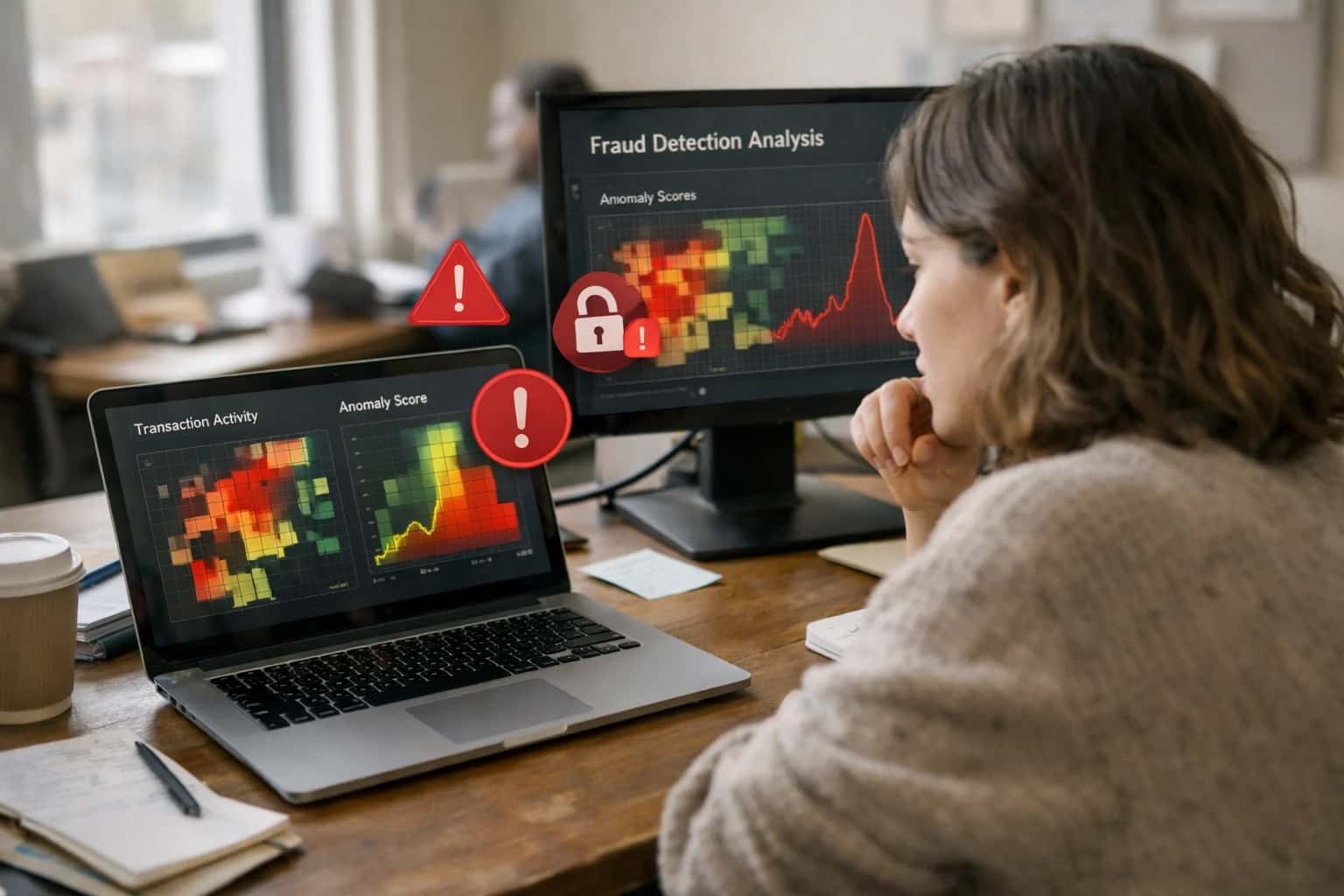
SPOOFING PREVENTION
What is Liveness Detection?
Liveness detection is a security mechanism that verifies a biometric sample originates from a live, present human or device rather than a spoofed, replayed, or synthetic source.
In the context of radio frequency fingerprinting, liveness detection validates that a received signal originates from an actively transmitting, physically present device, not a high-fidelity recording or retransmission. This is achieved by analyzing dynamic, unpredictable signal characteristics—such as transient behavior, phase noise, or response to a challenge—that cannot be perfectly replicated by a replay system. This ensures physical layer authentication is bound to a live entity, closing a critical security gap in zero-trust architectures.
SPOOF RESISTANCE
Key Characteristics of Liveness Detection
Liveness detection distinguishes genuine, present-time biometric samples from synthetic or replayed artifacts. These characteristics define the technical mechanisms that separate active, real-world signals from static or cloned representations.
01
Challenge-Response Protocols
The system issues a random, unpredictable stimulus and verifies the correct physiological response. This breaks replay attacks because a pre-recorded sample cannot adapt to a novel challenge.
- Randomized prompts: Blinking patterns, head turns, or specific speech phrases
- Temporal binding: Response must occur within a strict time window
- Non-deterministic: Each session generates a unique challenge set
< 500 ms
Typical Response Window
02
Texture and Micro-Texture Analysis
Algorithms analyze surface properties and sub-pixel noise patterns to differentiate living tissue from synthetic materials. Genuine skin exhibits microscopic pores, sweat ducts, and non-uniform reflectance absent in silicone masks or paper prints.
- Local Binary Patterns (LBP): Captures fine-grained textural descriptors
- Specular reflection: Living skin has a characteristic subsurface scattering profile
- Moiré pattern detection: Identifies the aliasing artifacts of digital screen recapture
03
Involuntary Physiological Signals
Detection of unconscious biological rhythms that cannot be suppressed or accurately forged. These signals provide a continuous liveness guarantee without requiring active user cooperation.
- Micro-saccades: Involuntary, high-frequency eye movements during fixation
- Pulse detection: Remote photoplethysmography (rPPG) extracts heart rate from subtle skin color variations
- Pupillary light reflex: Automatic constriction/dilation in response to illumination changes
04
Depth and 3D Structure Verification
Using structured light, time-of-flight sensors, or stereo vision to confirm the sample originates from a three-dimensional object with genuine topography. Flat photographs and screen replays are immediately rejected.
- Point cloud consistency: Validates continuous depth curvature of a real face
- Parallax analysis: Detects the absence of 3D geometry in planar spoofs
- NIR depth mapping: Near-infrared patterns are unaffected by ambient lighting
05
Temporal Signature Analysis
Examining the dynamic evolution of a signal over time to isolate the transient and steady-state characteristics of a live acquisition. Replayed signals lack the stochastic noise and subtle drift of a live sensor.
- Signal-to-noise ratio (SNR) profiling: Live captures have a characteristic noise floor
- Temporal derivative patterns: Frame-to-frame pixel variation follows natural biological motion
- Compression artifact detection: Identifies the block-boundary signatures of previously encoded video
06
Multimodal Sensor Fusion
Combining evidence from heterogeneous sensor streams to create a liveness score resilient to single-modality spoofing. An attacker must simultaneously defeat all sensing channels.
- Visible + NIR + thermal: Each spectrum reveals different material properties
- Audio-visual synchronization: Lip movement must precisely correlate with speech
- Inertial measurement: Gyroscope data detects the micro-movements of a handheld device versus a fixed mount
LIVENESS DETECTION
Frequently Asked Questions
Liveness detection is a critical security mechanism that distinguishes genuine biometric or physical-layer signatures from fraudulent spoofing attempts. The following answers address the most common technical inquiries regarding its implementation in radio frequency fingerprinting and few-shot enrollment systems.
Liveness detection is a security technique used to determine if a biometric sample or device signature is being captured from a live, present source rather than from a spoofed, replayed, or synthetic artifact. In the context of radio frequency fingerprinting, it works by analyzing dynamic, non-stationary properties of a transmitted waveform that cannot be perfectly cloned by an attacker. Unlike static hardware impairments, liveness indicators—such as transient phase noise during power amplifier ramp-up or micro-Doppler shifts caused by environmental interaction—prove the signal is being generated in real-time by a physical transmitter. The system extracts these ephemeral features and passes them through a classifier trained to distinguish live, causal signal generation from recorded or digitally synthesized waveforms. This creates a challenge-response dynamic at the physical layer without requiring explicit cryptographic handshakes.
COMPARATIVE ANALYSIS
Liveness Detection vs. Related Security Concepts
A technical comparison of liveness detection against adjacent security mechanisms used to verify the authenticity and presence of biometric sources or hardware devices.
| Feature | Liveness Detection | Physical Unclonable Function (PUF) | Replay Attack Detection |
|---|---|---|---|
Primary Objective | Verify a biometric sample originates from a live, present human or device | Generate a unique, unclonable hardware fingerprint from manufacturing variations | Identify and reject duplicated or retransmitted valid data streams |
Core Mechanism | Analyzes physiological signs (e.g., pulse, micro-movements) or challenge-response interactions | Exploits inherent, random physical variations in silicon (e.g., SRAM startup values) | Uses timestamps, nonces, or sequence numbers to detect message freshness |
Threat Mitigated | Presentation attacks using spoofs, masks, or recordings | Physical chip cloning, counterfeiting, and key extraction | Session hijacking via captured and replayed authentication tokens |
Operational Layer | Application and sensor layer | Physical hardware layer | Network protocol and transport layer |
Typical Latency | < 1 sec | < 100 ms | < 10 ms |
Requires Active User Participation | |||
Resilience to Physical Theft | Low (sensor can be bypassed if stolen) | High (response is intrinsic to the specific silicon die) | Medium (depends on key storage security) |
Enabling Efficiency, Speed & Accuracy
Intelligent Analysis, Decision & Execution
We build AI systems for teams that need search across company data, workflow automation across tools, or AI features inside products and internal software.
Talk to Us
Search across company data
Give teams answers from docs, tickets, runbooks, and product data with sources and permissions.
Useful when people spend too long searching or get different answers from different systems.
Enterprise searchRAGPermissions
Read more
Automate internal workflows
Use AI to route work, draft outputs, trigger actions, and keep approvals and logs in place.
Useful when repetitive work moves across multiple tools and teams.
AI agentsWorkflow automationGovernance
Read more
Add AI to products and internal tools
Build assistants, guided actions, or decision support into the software your team or customers already use.
Useful when AI needs to be part of the product, not a separate tool.
AI integrationDecision supportModel routing
Read more
About the author
Prasad Kumkar
CEO & MD, Inference Systems
Prasad Kumkar is the CEO & MD of Inference Systems and writes about AI systems architecture, LLM infrastructure, model serving, evaluation, and production deployment. Over 5+ years, he has worked across computer vision models, L5 autonomous vehicle systems, and LLM research, with a focus on taking complex AI ideas into real-world engineering systems.
His work and writing cover AI systems, large language models, AI agents, multimodal systems, autonomous systems, inference optimization, RAG, evaluation, and production AI engineering.
LinkedIn
Limited slotsGet a Free AI Consultation
Partnered with leading AI, data, and software stack.





How We Work
Custom AI workflows for your Business
One-fit-all AI don't work for modern businesses. At Inferensys, we aim to understand your business & custom requirements; which we use to define most efficient agentic workflows, the data, and the tools for your business.
01
Review the use case
We understand the task, the users, and where AI can actually help.
Read more02
Pick the right approach
We define what needs search, automation, or product integration.
Read more03
Build the first useful version
We implement the part that proves the value first.
Read more04
Improve from there
We add the checks and visibility needed to keep it useful.
Read moreThe first call is a practical review of your use case and the right next step.
Talk to Us