A Red-Teaming Protocol is a structured adversarial testing methodology where security experts systematically probe an AI system to discover vulnerabilities, biases, and potential failure modes before deployment. Unlike standard benchmarking, red-teaming simulates malicious actors using techniques like prompt injection, jailbreak attempts, and edge-case exploitation to stress-test safety alignment and content guardrails.

Glossary
Red-Teaming Protocol
A structured adversarial testing methodology where security experts systematically probe an AI system to discover vulnerabilities, biases, and potential failure modes before deployment.
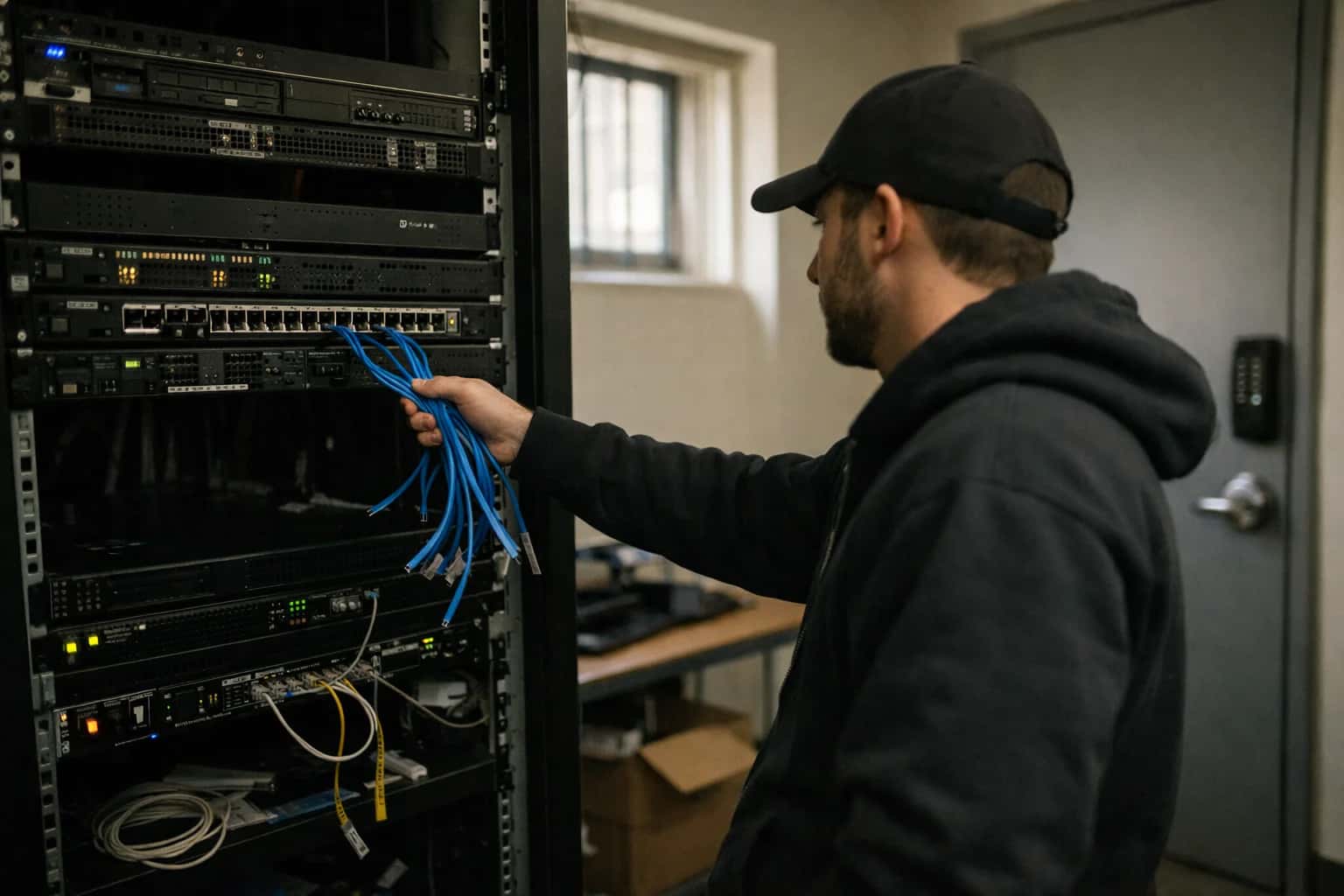
ADVERSARIAL SAFETY EVALUATION
What is Red-Teaming Protocol?
A structured adversarial testing methodology where security experts systematically probe an AI system to discover vulnerabilities, biases, and potential failure modes before deployment.
The protocol typically involves a diverse team of domain experts operating under defined rules of engagement to elicit harmful, biased, or nonsensical outputs. Findings are documented in a vulnerability taxonomy, feeding directly into RLHF Guardrails, Constitutional AI fine-tuning, and Prompt Injection Shield development to harden the model against real-world adversarial threats.
ADVERSARIAL TESTING FRAMEWORK
Key Characteristics of a Red-Teaming Protocol
A structured methodology for systematically probing AI systems to discover vulnerabilities, biases, and failure modes before production deployment.
01
Adversarial Objective Definition
The protocol begins by defining specific attack surfaces and failure modes to probe. This moves beyond generic testing to target concrete risks such as prompt injection susceptibility, harmful content generation, or sensitive data leakage. Each test case maps to a specific threat model.
- Defines clear success criteria for both attacker and defender
- Prioritizes risks based on deployment context and user base
- Aligns with frameworks like NIST AI RMF and OWASP Top 10 for LLMs
02
Structured Attack Taxonomy
Red-teaming employs a catalog of known adversarial techniques, systematically applied to test model robustness. This includes token manipulation, context overflow, role-playing coercion, and multi-turn jailbreak chains. Each attack vector is documented with its technique, target, and severity.
- Uses libraries of adversarial prompts and mutation strategies
- Tests both single-turn and multi-turn conversation scenarios
- Categorizes attacks by MITRE ATLAS adversary tactics
03
Automated & Human-in-the-Loop Execution
Modern protocols blend automated fuzzing tools with expert human red-teamers. Automated systems rapidly generate thousands of syntactic variations of attack prompts, while human experts focus on novel semantic exploits and creative reasoning gaps that algorithms miss.
- Automated scanners for bulk vulnerability discovery
- Human experts for novel attack surface exploration
- Iterative feedback loop where automated findings inform human focus areas
04
Quantitative Risk Scoring
Each discovered vulnerability receives a standardized severity score based on exploitability, impact, and reproducibility. This creates a risk heatmap that engineering teams can prioritize. Metrics include attack success rate (ASR), harmfulness score, and contextual relevance.
- Assigns CVSS-like severity ratings to AI vulnerabilities
- Tracks regression of previously patched exploits
- Generates executive-ready risk dashboards for compliance reporting
05
Bias and Fairness Probing
Beyond security, red-teaming systematically probes for representational harms and allocational harms across demographic axes. Test suites include counterfactual fairness checks, stereotype elicitation prompts, and toxicity triggers targeting protected characteristics.
- Tests for disparate performance across gender, race, and language
- Uses template-based probes with demographic variable substitution
- Measures stereotype score and toxicity probability per category
06
Continuous Red-Teaming Pipeline
The protocol is not a one-time audit but a continuous integration process. Every model update, fine-tuning run, or prompt template change triggers automated red-teaming regression tests. This prevents silent degradation of safety alignment over time.
- Integrated into CI/CD pipelines as a gating step
- Monitors for concept drift in safety boundaries
- Maintains an adversarial example repository for regression testing
RED-TEAMING PROTOCOL
Frequently Asked Questions
Explore the core concepts of adversarial testing for AI systems. These answers address the most common queries from engineering leaders and compliance officers regarding the systematic probing of models to uncover vulnerabilities before production deployment.
A red-teaming protocol is a structured adversarial testing methodology where a dedicated team of security experts systematically probes an AI system to discover vulnerabilities, biases, and potential failure modes before deployment. Unlike standard benchmarking, the protocol simulates creative, multi-turn attacks from malicious actors, including prompt injection, jailbreak attempts, and data poisoning scenarios. The process is governed by a strict rules of engagement document that defines the scope of testing, authorized attack vectors, and safety boundaries to prevent irreversible damage to the production model. The output is a prioritized vulnerability matrix that maps each discovered weakness to a specific mitigation strategy, such as implementing a prompt injection shield or adjusting the RLHF guardrails. This methodology is a cornerstone of enterprise AI governance and is explicitly recommended by the EU AI Act for high-risk system compliance.
Enabling Efficiency, Speed & Accuracy
Intelligent Analysis, Decision & Execution
We build AI systems for teams that need search across company data, workflow automation across tools, or AI features inside products and internal software.
Talk to Us
Search across company data
Give teams answers from docs, tickets, runbooks, and product data with sources and permissions.
Useful when people spend too long searching or get different answers from different systems.
Enterprise searchRAGPermissions
Read more
Automate internal workflows
Use AI to route work, draft outputs, trigger actions, and keep approvals and logs in place.
Useful when repetitive work moves across multiple tools and teams.
AI agentsWorkflow automationGovernance
Read more
Add AI to products and internal tools
Build assistants, guided actions, or decision support into the software your team or customers already use.
Useful when AI needs to be part of the product, not a separate tool.
AI integrationDecision supportModel routing
Read more
About the author
Prasad Kumkar
CEO & MD, Inference Systems
Prasad Kumkar is the CEO & MD of Inference Systems and writes about AI systems architecture, LLM infrastructure, model serving, evaluation, and production deployment. Over 5+ years, he has worked across computer vision models, L5 autonomous vehicle systems, and LLM research, with a focus on taking complex AI ideas into real-world engineering systems.
His work and writing cover AI systems, large language models, AI agents, multimodal systems, autonomous systems, inference optimization, RAG, evaluation, and production AI engineering.
LinkedIn
Limited slotsGet a Free AI Consultation
Partnered with leading AI, data, and software stack.





How We Work
Custom AI workflows for your Business
One-fit-all AI don't work for modern businesses. At Inferensys, we aim to understand your business & custom requirements; which we use to define most efficient agentic workflows, the data, and the tools for your business.
01
Review the use case
We understand the task, the users, and where AI can actually help.
Read more02
Pick the right approach
We define what needs search, automation, or product integration.
Read more03
Build the first useful version
We implement the part that proves the value first.
Read more04
Improve from there
We add the checks and visibility needed to keep it useful.
Read moreThe first call is a practical review of your use case and the right next step.
Talk to Us