The Trusted Computing Base (TCB) is the totality of hardware, firmware, and software elements whose correct functioning is essential to enforcing a system's security policy. A flaw or misconfiguration in any component within the TCB—be it the CPU, kernel, or a cryptographic library—can lead to a complete system compromise, rendering all higher-level security controls ineffective.

Glossary
Trusted Computing Base (TCB)
The set of all hardware, firmware, and software components critical to a system's security; a bug or vulnerability in any TCB component can compromise the entire system's security guarantees.
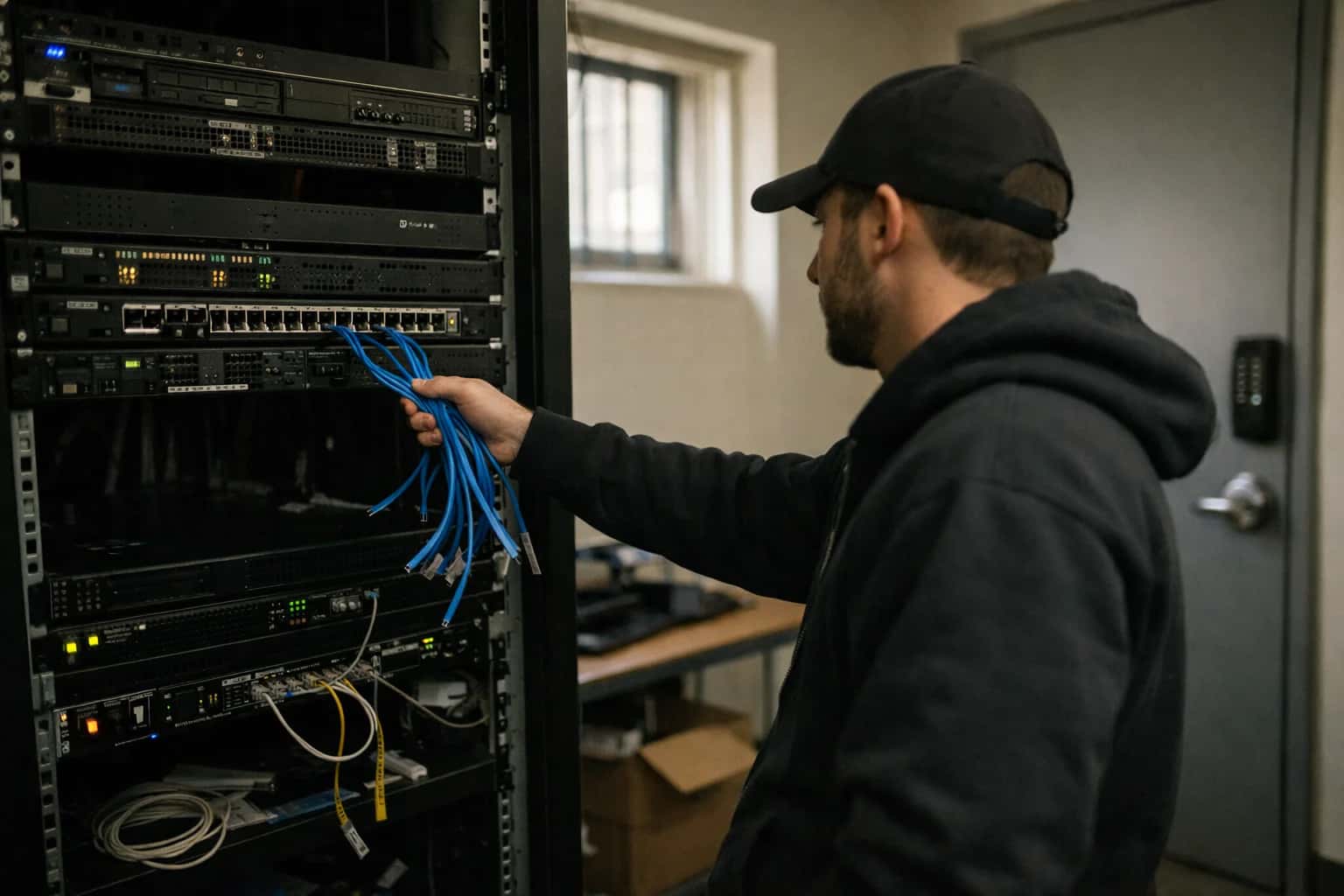
SECURITY FOUNDATION
What is Trusted Computing Base (TCB)?
The Trusted Computing Base (TCB) is the set of all hardware, firmware, and software components critical to a system's security; a single vulnerability in any TCB component can compromise the entire system's security guarantees.
Minimizing the TCB is a core security engineering principle. By reducing the size and complexity of the trusted codebase, architects shrink the attack surface and make formal verification feasible. Trusted Execution Environments (TEEs) like Intel TDX and AMD SEV-SNP exemplify this philosophy by removing the massive host operating system and hypervisor from the TCB, anchoring trust solely in a small, hardened processor package.
SECURITY FOUNDATIONS
Core Characteristics of a TCB
The Trusted Computing Base (TCB) is defined by several non-negotiable properties that determine the security posture of the entire system. Understanding these characteristics is essential for minimizing the attack surface.
01
Minimality
The security of a system is inversely proportional to the size of its TCB. A smaller TCB means fewer lines of code and hardware components to audit, resulting in a lower probability of exploitable vulnerabilities.
- Goal: Reduce the TCB to the absolute minimum required for functionality.
- Strategy: Strip non-essential drivers, services, and libraries from the security-critical boundary.
- Example: A microkernel architecture keeps the TCB in kernel space tiny, moving file systems and device drivers to unprivileged user space.
02
Verifiability
Every component within the TCB must be subject to rigorous formal or semi-formal verification. The system's security guarantees are only as strong as the ability to prove the correctness of the TCB's implementation.
- Formal Verification: Using mathematical proofs to ensure the TCB code adheres strictly to its specification.
- Reproducible Builds: Ensuring the binary deployed matches the audited source code exactly.
- Example: seL4, a formally verified microkernel, provides a mathematical proof of functional correctness, eliminating entire classes of bugs within its TCB.
03
Complete Mediation
The TCB must be an unavoidable gatekeeper for all security-critical operations. It is impossible for a subject to bypass the TCB to access a protected object.
- Non-Bypassable: Every access request must be intercepted and validated by the TCB's reference monitor.
- Tamper-Proof: The TCB's own code and data structures must be protected from unauthorized modification.
- Example: A hypervisor acting as the TCB must trap every privileged instruction from a guest OS, leaving no vector for the guest to directly control hardware resources.
04
Isolation
The TCB must maintain a strict, hardware-enforced boundary between itself and untrusted processes. This isolation prevents a compromise in a non-TCB component from escalating privileges into the trusted core.
- Hardware Protection: Leveraging CPU rings, memory management units (MMUs), and I/O MMUs to enforce separation.
- Sandboxing: Confining untrusted code to a restricted environment where it cannot interfere with the TCB.
- Example: Intel SGX creates an enclave that isolates a security-sensitive computation from the host OS, hypervisor, and even other enclaves, shrinking the TCB to just the enclave code and the processor package.
05
Trustworthiness
The TCB's components must originate from a trusted source and maintain their integrity over their entire lifecycle. Trust is not an inherent property but a judgment based on provenance and continuous monitoring.
- Provenance: The supply chain for TCB hardware and software must be secured against tampering.
- Integrity: Mechanisms like secure boot and remote attestation cryptographically verify that the TCB hasn't been modified.
- Example: A Hardware Root of Trust anchors the boot process, cryptographically measuring each firmware and software layer before execution to establish a chain of trust up to the TCB.
06
Correctness
The TCB must function exactly as specified, with no deviations. A single bug in a TCB component can invalidate the security of the entire system, making correctness a paramount design goal.
- Defensive Programming: Applying rigorous input validation, fail-safe defaults, and least privilege within the TCB itself.
- Eliminating Side Channels: Ensuring the TCB's implementation doesn't leak secrets through timing, power consumption, or electromagnetic emissions.
- Example: A side-channel attack on a cryptographic library within the TCB can extract private keys by measuring the precise time taken for operations, bypassing the mathematical security of the algorithm.
MINIMIZING THE ATTACK SURFACE
How the TCB Enforces Security
The Trusted Computing Base enforces security by strictly limiting the set of components that can violate system policy, then using hardware roots of trust and cryptographic verification to ensure those components remain uncompromised.
The TCB enforces security through minimization and isolation. By design, any code outside the TCB—such as a compromised operating system or malicious application—cannot violate the system's security policy. The TCB implements a reference monitor that mediates all access requests from untrusted subjects to protected objects, ensuring every operation is validated against an unforgeable policy.
Integrity is guaranteed through a chain of trust anchored in immutable hardware. During secure boot, each firmware and software component is cryptographically measured and verified before execution. This extends to remote attestation, where the TCB produces a signed quote of its measurement, proving to remote parties that the trusted code stack is unmodified before any secrets are provisioned.
TRUSTED COMPUTING BASE
Frequently Asked Questions
Clear, technically precise answers to the most common questions about the Trusted Computing Base (TCB), its components, and its critical role in system security architecture.
A Trusted Computing Base (TCB) is the complete set of hardware, firmware, and software components that are critical to enforcing a system's security policy—a vulnerability in any single TCB component can compromise the entire system's security guarantees. The TCB works by establishing a minimal, verifiable foundation of trust upon which all security mechanisms depend. It includes the processor's privileged execution modes, the operating system kernel, authentication modules, and any software that can bypass security audits. The core principle is minimization: by keeping the TCB as small and auditable as possible, the attack surface is reduced, and formal verification becomes feasible. For example, in a Trusted Execution Environment (TEE) like Intel SGX, the TCB typically includes the CPU package, the enclave code, and the quoting enclave—deliberately excluding the operating system and hypervisor from the trust boundary.
Enabling Efficiency, Speed & Accuracy
Intelligent Analysis, Decision & Execution
We build AI systems for teams that need search across company data, workflow automation across tools, or AI features inside products and internal software.
Talk to Us
Search across company data
Give teams answers from docs, tickets, runbooks, and product data with sources and permissions.
Useful when people spend too long searching or get different answers from different systems.
Enterprise searchRAGPermissions
Read more
Automate internal workflows
Use AI to route work, draft outputs, trigger actions, and keep approvals and logs in place.
Useful when repetitive work moves across multiple tools and teams.
AI agentsWorkflow automationGovernance
Read more
Add AI to products and internal tools
Build assistants, guided actions, or decision support into the software your team or customers already use.
Useful when AI needs to be part of the product, not a separate tool.
AI integrationDecision supportModel routing
Read moreMINIMIZING THE ATTACK SURFACE
TCB in Practice: Real-World Implementations
The Trusted Computing Base (TCB) is the set of all hardware, firmware, and software components critical to a system's security. A bug in any TCB component can compromise the entire system. The following implementations demonstrate how architects minimize the TCB to reduce the attack surface and increase verifiability.
01
seL4 Microkernel: The Verified Core
The seL4 microkernel represents the gold standard for minimizing the software TCB. At approximately 10,000 lines of C code, it is the first operating-system kernel to be mathematically proven to be free of implementation bugs. This formal verification ensures the kernel enforces integrity and confidentiality exactly as specified.
- TCB Scope: CPU, memory, kernel, and hardware drivers
- Verification: Machine-checked proof of correctness
- Use Case: Defense systems, autonomous vehicles, and critical infrastructure
~10k
Lines of Code in TCB
04
Intel SGX Enclaves: Application-Level TCB
Intel SGX shrinks the TCB for a specific workload to just the application code and the processor package. The OS, hypervisor, and firmware are excluded from the trust boundary. An enclave's memory is hardware-encrypted and inaccessible to any software outside it.
- TCB Scope: CPU package, enclave code, and supporting libraries
- Excluded: Operating system, hypervisor, and cloud provider
- Attestation: Cryptographic proof of enclave identity via MRENCLAVE
05
Qubes OS: Security by Compartmentalization
Qubes OS implements a 'security by isolation' architecture using the Xen hypervisor. It decomposes the user's digital life into isolated virtual machines (qubes), each with a distinct security domain. The hypervisor itself is the primary TCB.
- TCB Scope: Xen hypervisor, dom0 admin domain, and hardware
- Isolation: Separate VMs for work, personal, and untrusted tasks
- Principle: Compromise of one qube does not affect others

About the author
Prasad Kumkar
CEO & MD, Inference Systems
Prasad Kumkar is the CEO & MD of Inference Systems and writes about AI systems architecture, LLM infrastructure, model serving, evaluation, and production deployment. Over 5+ years, he has worked across computer vision models, L5 autonomous vehicle systems, and LLM research, with a focus on taking complex AI ideas into real-world engineering systems.
His work and writing cover AI systems, large language models, AI agents, multimodal systems, autonomous systems, inference optimization, RAG, evaluation, and production AI engineering.
LinkedIn
Limited slotsGet a Free AI Consultation
Partnered with leading AI, data, and software stack.





How We Work
Custom AI workflows for your Business
One-fit-all AI don't work for modern businesses. At Inferensys, we aim to understand your business & custom requirements; which we use to define most efficient agentic workflows, the data, and the tools for your business.
01
Review the use case
We understand the task, the users, and where AI can actually help.
Read more02
Pick the right approach
We define what needs search, automation, or product integration.
Read more03
Build the first useful version
We implement the part that proves the value first.
Read more04
Improve from there
We add the checks and visibility needed to keep it useful.
Read moreThe first call is a practical review of your use case and the right next step.
Talk to Us