Master Data Management (MDM) is the systematic process of defining and managing an organization's critical data to provide a single point of reference. It consolidates data from multiple source systems to resolve inconsistencies, eliminate duplicates, and enforce data quality standards, ensuring that core business entities—such as customers, products, and suppliers—are represented accurately across the enterprise.

Glossary
Master Data Management (MDM)
A comprehensive governance and technology framework that ensures the uniformity, accuracy, and semantic consistency of an enterprise's shared critical data assets, often relying on a golden record.
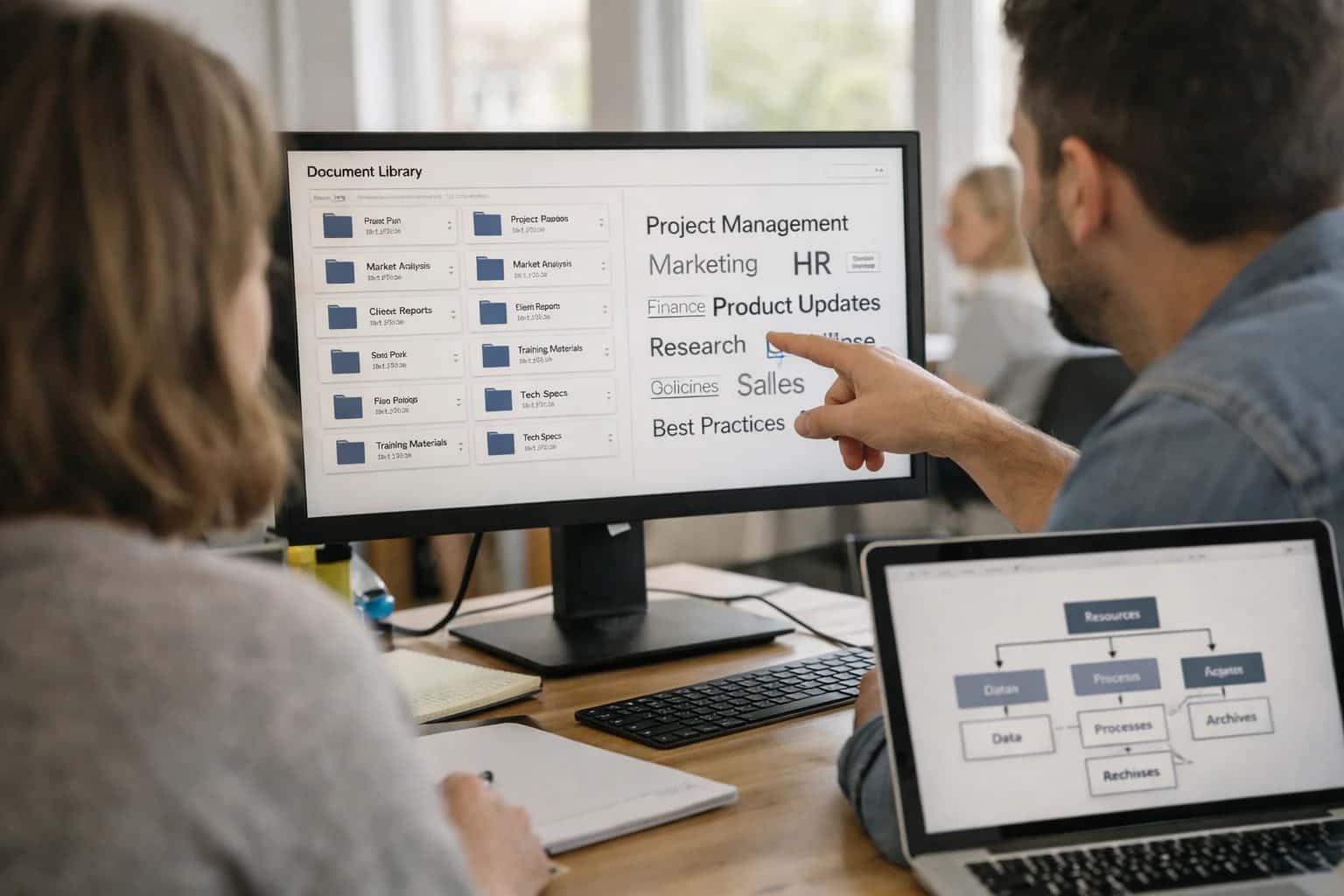
DATA GOVERNANCE
What is Master Data Management (MDM)?
Master Data Management (MDM) is a comprehensive governance and technology framework that ensures the uniformity, accuracy, and semantic consistency of an enterprise's shared critical data assets, often culminating in a single, trusted **golden record**.
MDM relies on entity resolution and survivorship rules to merge conflicting attributes into a golden record, which serves as the authoritative version of truth. This discipline is foundational for effective privacy-preserving record linkage, as it requires robust schema alignment and data standardization to accurately match records without exposing sensitive identifiers.
Core Principles
Key Characteristics of MDM
Master Data Management is not a single technology but a comprehensive framework defined by several distinct architectural and operational characteristics that ensure enterprise-wide data consistency.
01
Golden Record Creation
The central mechanism of MDM is the consolidation of fragmented, duplicate records into a single, best-curated version known as the golden record. This involves applying survivorship rules to resolve conflicting attributes from multiple source systems. The golden record is not necessarily a physical merge; it can exist as a virtual consolidated view that links back to source data while providing a unified, trusted identifier for the entity.
02
Entity Resolution
MDM relies on sophisticated matching algorithms to identify that disparate records refer to the same real-world entity. This process, known as entity resolution or identity resolution, moves beyond simple deterministic matching to include:
- Probabilistic linkage using statistical likelihood ratios
- Fuzzy matching with edit distance thresholds and phonetic encodings
- Transitive closure to group multiple pairwise matches into a single entity cluster
03
System of Record vs. System of Reference
MDM distinguishes between two critical architectural roles:
- System of Record (SOR): The authoritative source where master data is created and maintained. The MDM hub itself often becomes the SOR for core entity identifiers.
- System of Reference (SOR): A read-only, consolidated view that harmonizes data from multiple systems without owning the data. This distinction allows MDM to coexist with legacy applications while providing a unified access layer.
04
Data Governance Integration
MDM is inseparable from data governance. It operationalizes governance policies by enforcing:
- Data stewardship workflows for manual curation and dispute resolution
- Business rules for validation, standardization, and survivorship
- Role-based access controls to manage who can create, update, or merge master data Without governance, an MDM hub degrades into another unmanaged data silo.
05
Multi-Domain Mastery
While early MDM implementations focused on a single domain like customer or product, modern platforms support multiple interconnected domains. A multi-domain MDM manages the relationships between entities—linking a customer to their contracts, locations, and products—creating a rich, navigable semantic network that reflects the real-world connections within the enterprise.
06
Deployment Style Flexibility
MDM architectures are categorized by how the master data is stored and accessed:
- Registry Style: Maintains a thin index of cross-referenced keys; source systems remain the owners of attribute data.
- Consolidation Style: Periodically aggregates and cleanses data from sources into a central hub for reporting and analytics.
- Coexistence Style: Allows updates in both the MDM hub and source systems with bidirectional synchronization.
- Centralized Style: The MDM hub is the sole system of record for all master data attributes.
MASTER DATA MANAGEMENT
Frequently Asked Questions
Clear, technically precise answers to the most common questions about Master Data Management frameworks, golden records, and the governance required to maintain a single source of truth.
Master Data Management (MDM) is a comprehensive governance and technology framework that ensures the uniformity, accuracy, and semantic consistency of an enterprise's shared critical data assets. It works by establishing a golden record—a single, best-curated version of a core business entity (like a customer, product, or supplier)—that is reconciled from multiple source systems. The process involves entity resolution to identify and merge duplicate records, data standardization to normalize formats, and survivorship rules to determine which source system's attribute value prevails in a conflict. MDM operates in four primary architectural styles: a registry (read-only index of linked records), a consolidation (a downstream hub for reporting), a coexistence (a hub that synchronizes updates back to sources), and a centralized (a transactional system of record). The framework relies on continuous data quality monitoring and stewardship workflows to maintain trust in the master data over time.
DISCIPLINE COMPARISON
MDM vs. Related Data Management Disciplines
How Master Data Management differs from related data management functions in scope, objective, and output.
| Feature | Master Data Management | Entity Resolution | Data Governance | Data Integration |
|---|---|---|---|---|
Primary Objective | Create and maintain a single, authoritative golden record for core business entities across the enterprise | Identify and link records referring to the same real-world entity within or across datasets | Establish policies, standards, and accountability frameworks for data assets across their lifecycle | Combine data from heterogeneous sources into a unified, consistent view for operational or analytical use |
Core Output | A curated, survivorship-merged master record with resolved conflicts and standardized attributes | A set of matched record pairs or entity clusters with confidence scores | A formalized framework of roles, policies, and compliance controls | A consolidated dataset or federated query layer with transformed and harmonized fields |
Scope of Concern | Enterprise-wide, cross-domain core entities (customer, product, supplier, location) | Specific record matching tasks within or between defined datasets | All data assets across the organization, including policies, lineage, and stewardship | Technical movement and transformation of data between source and target systems |
Temporal Orientation | Ongoing, continuous stewardship and synchronization of master data over its full lifecycle | Point-in-time or batch resolution of existing record collections | Continuous oversight and enforcement of data policies across all stages of the data lifecycle | Batch or real-time movement of data during project or pipeline execution |
Conflict Resolution | Survivorship rules merge conflicting attributes into a single best version based on source trust rankings | Probabilistic or deterministic matching classifies pairs; conflicts flagged but not automatically merged | Defines escalation paths and decision rights for resolving data quality disputes | Schema mapping and transformation rules resolve structural conflicts; semantic conflicts left to downstream systems |
Stewardship Model | Data stewards actively curate, merge, and certify master records with defined ownership | Typically automated with clerical review for uncertain pairs; no ongoing curation role | Assigns data owners and stewards with defined responsibilities across domains | Technical ownership by integration engineers; no business stewardship of integrated output |
Relationship to Golden Record | Directly produces and manages the golden record as its central artifact | Generates match clusters that serve as input to golden record creation but does not merge attributes | Defines the policies and quality standards that golden records must satisfy | Provides the consolidated source data from which golden records may be derived |
Typical Technology | Dedicated MDM hubs with match-merge engines, hierarchy management, and workflow orchestration | Record linkage engines, fuzzy matching libraries, and blocking frameworks | Data catalogs, policy engines, lineage tools, and compliance dashboards | ETL/ELT pipelines, data virtualization layers, and message buses |
Enabling Efficiency, Speed & Accuracy
Intelligent Analysis, Decision & Execution
We build AI systems for teams that need search across company data, workflow automation across tools, or AI features inside products and internal software.
Talk to Us
Search across company data
Give teams answers from docs, tickets, runbooks, and product data with sources and permissions.
Useful when people spend too long searching or get different answers from different systems.
Enterprise searchRAGPermissions
Read more
Automate internal workflows
Use AI to route work, draft outputs, trigger actions, and keep approvals and logs in place.
Useful when repetitive work moves across multiple tools and teams.
AI agentsWorkflow automationGovernance
Read more
Add AI to products and internal tools
Build assistants, guided actions, or decision support into the software your team or customers already use.
Useful when AI needs to be part of the product, not a separate tool.
AI integrationDecision supportModel routing
Read more
About the author
Prasad Kumkar
CEO & MD, Inference Systems
Prasad Kumkar is the CEO & MD of Inference Systems and writes about AI systems architecture, LLM infrastructure, model serving, evaluation, and production deployment. Over 5+ years, he has worked across computer vision models, L5 autonomous vehicle systems, and LLM research, with a focus on taking complex AI ideas into real-world engineering systems.
His work and writing cover AI systems, large language models, AI agents, multimodal systems, autonomous systems, inference optimization, RAG, evaluation, and production AI engineering.
LinkedIn
Limited slotsGet a Free AI Consultation
Partnered with leading AI, data, and software stack.





How We Work
Custom AI workflows for your Business
One-fit-all AI don't work for modern businesses. At Inferensys, we aim to understand your business & custom requirements; which we use to define most efficient agentic workflows, the data, and the tools for your business.
01
Review the use case
We understand the task, the users, and where AI can actually help.
Read more02
Pick the right approach
We define what needs search, automation, or product integration.
Read more03
Build the first useful version
We implement the part that proves the value first.
Read more04
Improve from there
We add the checks and visibility needed to keep it useful.
Read moreThe first call is a practical review of your use case and the right next step.
Talk to Us