Red teaming is a structured adversarial assessment where a security team simulates realistic poisoning and evasion attacks against a machine learning system to identify vulnerabilities proactively. Unlike standard penetration testing, it emulates the full kill chain of a motivated adversary targeting the model's integrity, confidentiality, or availability.

Glossary
Red Teaming
A structured adversarial assessment where a security team simulates real-world poisoning and evasion attacks against an ML system to proactively identify vulnerabilities before malicious actors can exploit them.
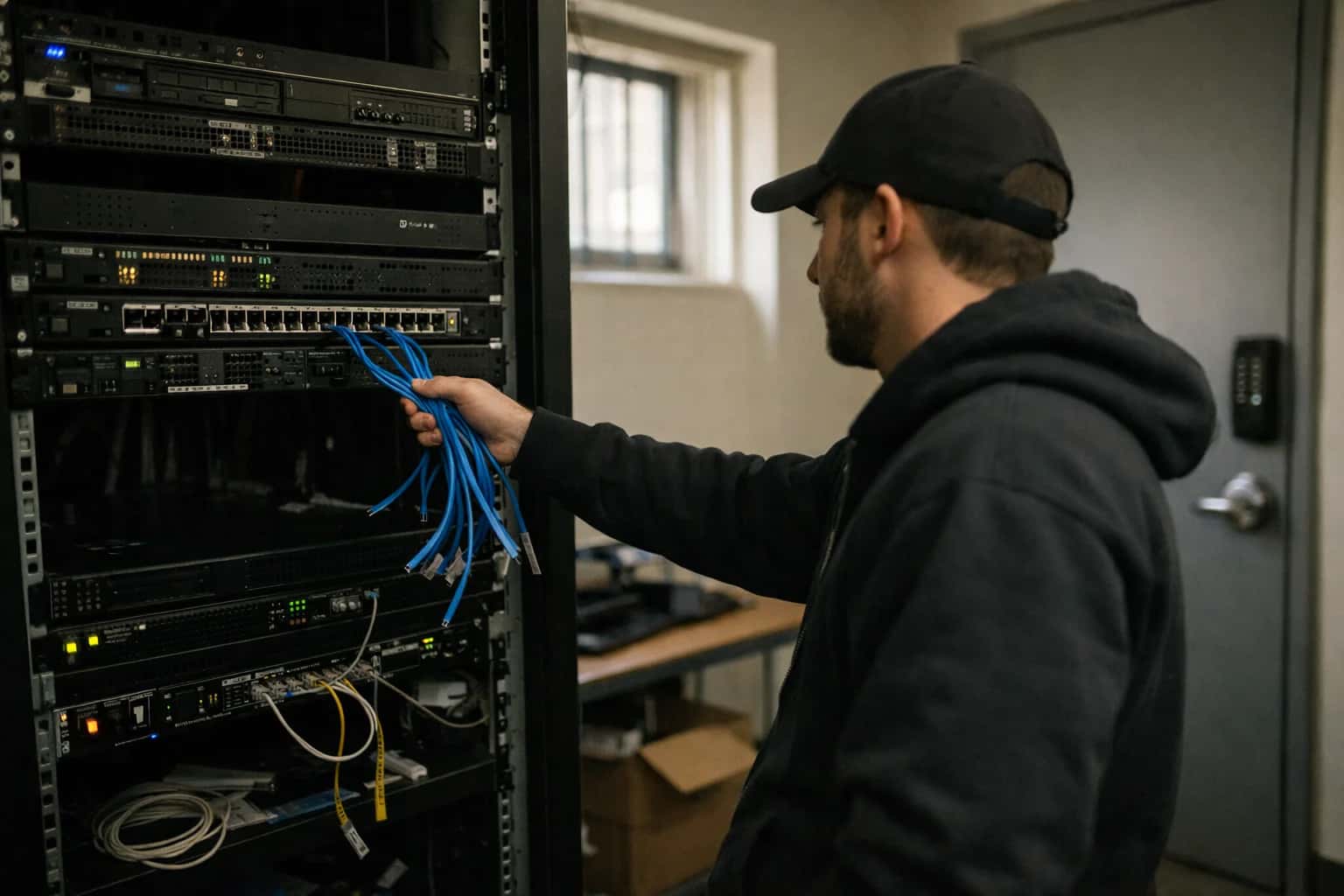
ADVERSARIAL ASSESSMENT
What is Red Teaming?
A structured security evaluation where a dedicated team simulates real-world attacks against an ML system to proactively identify vulnerabilities before malicious actors can exploit them.
The process involves a 'red team' attacking the model's training pipeline, inference API, or supply chain using techniques like backdoor injection, gradient leakage, and model inversion. The goal is not just to find bugs, but to measure the system's Byzantine fault tolerance and validate the effectiveness of existing defenses like robust aggregation and differential privacy under realistic threat models.
ADVERSARIAL ASSESSMENT
Core Characteristics of Effective ML Red Teaming
A structured adversarial assessment where a security team simulates real-world poisoning and evasion attacks against an ML system to proactively identify vulnerabilities before malicious actors can exploit them.
01
Adversarial Mindset & Threat Emulation
Effective red teaming requires adopting the adversarial mindset of a real attacker. This goes beyond running automated vulnerability scanners. It involves threat modeling using frameworks like MITRE ATLAS to systematically map attacker tactics, techniques, and procedures (TTPs) specific to ML systems. The red team emulates realistic threats—from data poisoning and backdoor injection to evasion attacks and model inversion—to test the system's resilience against a motivated, creative opponent, not just known exploits.
02
Full Lifecycle Scope
A robust red teaming exercise must assess the entire ML lifecycle, not just the deployed model. This includes:
- Data Pipeline: Testing for data poisoning injection points and data provenance weaknesses.
- Build & Training: Evaluating the security of the model supply chain, CI/CD pipelines, and vulnerability to backdoor attacks.
- Deployment & Inference: Probing the live API for evasion attacks, membership inference, and model extraction risks.
- Human Factors: Simulating social engineering to gain access to datasets or model weights.
03
Objective-Driven & Metrics-Based
Red teaming is not a penetration test; it is an objective-driven exercise. The team is given a specific, measurable goal, such as:
- "Cause the fraud detection model to misclassify transactions above $10,000 as legitimate."
- "Reconstruct personally identifiable information from the model's training data."
- "Induce a specific misclassification in the autonomous vehicle's perception system." Success is measured by achieving these objectives and quantifying the blast radius and dwell time, providing concrete metrics for the blue team to improve defenses.
04
Collaborative Purple Teaming
The highest-value red teaming is a collaborative purple teaming exercise. Instead of an adversarial "gotcha" dynamic, the red team works transparently with the blue team (defenders). This allows for real-time knowledge transfer. When a vulnerability is found, the teams can immediately discuss its root cause, test detection logic, and validate a fix. This iterative loop dramatically accelerates the improvement of monitoring, alerting, and incident response playbooks for ML-specific threats.
05
Continuous & Iterative Process
ML red teaming is not a one-time compliance checkbox. As models are retrained on new data, new distributional shifts occur, and novel attack research is published, the threat landscape evolves. An effective program is continuous and iterative, integrated into the MLOps cycle. Findings from one exercise should feed directly into automated security tests, data quality firewalls, and robust aggregation rules, creating a feedback loop that hardens the system against future attacks.
06
Clear Rules of Engagement
To prevent unintended damage, every red teaming exercise must operate under strictly defined Rules of Engagement (RoE). These rules explicitly define:
- Authorized Targets: Which models, APIs, and data stores are in scope.
- Prohibited Actions: Techniques that are off-limits (e.g., denial-of-service attacks on production).
- Data Handling: How sensitive data discovered during the exercise will be stored and destroyed.
- Communication Protocols: The out-of-band channels for the red team to signal a critical finding or halt the exercise immediately.
RED TEAMING INSIGHTS
Frequently Asked Questions
Explore the core concepts behind adversarial simulation for machine learning systems. These answers target the most common queries from security engineers and CTOs building resilient AI pipelines.
Red teaming in machine learning is a structured adversarial assessment where a security team simulates real-world poisoning and evasion attacks against an ML system to proactively identify vulnerabilities before malicious actors can exploit them. Unlike traditional penetration testing, which focuses on network infrastructure, ML red teaming targets the model's decision boundaries, training data integrity, and inference logic. The process involves crafting adversarial examples, injecting poisoned data points, and performing model inversion attempts to measure the system's resilience. The goal is not just to break the model but to map out its failure modes and quantify the business risk associated with each vulnerability. This practice is essential for systems deployed in high-stakes environments where a misclassification could lead to financial loss or physical harm.
ADVERSARIAL ASSESSMENT COMPARISON
Red Teaming vs. Other Security Assessments
A structured comparison of red teaming against other common ML security evaluation methodologies, highlighting scope, methodology, and objectives.
| Feature | Red Teaming | Penetration Testing | Vulnerability Scanning |
|---|---|---|---|
Primary Objective | Achieve a specific adversarial goal (e.g., backdoor insertion, data exfiltration) by emulating a persistent, creative human attacker | Identify and safely exploit known technical vulnerabilities in a defined system boundary within a fixed time window | Automatically detect known vulnerabilities, misconfigurations, and missing patches using signature-based tools |
Scope | Holistic: People, processes, ML pipeline, APIs, physical controls, and detection response | Narrow: Specific networks, hosts, applications, or model endpoints in scope | Broad but shallow: Entire network ranges or codebases for surface-level checks |
Attacker Simulation | Full, multi-stage kill chain emulation (MITRE ATLAS) with custom tooling and novel attack paths | Limited, scripted exploitation of known CVEs and common misconfigurations | None; fully automated and non-exploitative |
Stealth Requirement | |||
Tests Blue Team Detection & Response | |||
Evaluates ML-Specific Threats (Poisoning, Evasion, Inversion) | |||
Typical Cadence | Point-in-time, annual or after major architectural changes | Quarterly or after significant new feature releases | Continuous, often integrated into CI/CD pipelines |
Output | Narrative attack path report, strategic remediation roadmap, and purple team exercises | Prioritized list of exploitable vulnerabilities with proof-of-concept code | Automated report of potential vulnerabilities, often with high false positive rate |
Enabling Efficiency, Speed & Accuracy
Intelligent Analysis, Decision & Execution
We build AI systems for teams that need search across company data, workflow automation across tools, or AI features inside products and internal software.
Talk to Us
Search across company data
Give teams answers from docs, tickets, runbooks, and product data with sources and permissions.
Useful when people spend too long searching or get different answers from different systems.
Enterprise searchRAGPermissions
Read more
Automate internal workflows
Use AI to route work, draft outputs, trigger actions, and keep approvals and logs in place.
Useful when repetitive work moves across multiple tools and teams.
AI agentsWorkflow automationGovernance
Read more
Add AI to products and internal tools
Build assistants, guided actions, or decision support into the software your team or customers already use.
Useful when AI needs to be part of the product, not a separate tool.
AI integrationDecision supportModel routing
Read more
About the author
Prasad Kumkar
CEO & MD, Inference Systems
Prasad Kumkar is the CEO & MD of Inference Systems and writes about AI systems architecture, LLM infrastructure, model serving, evaluation, and production deployment. Over 5+ years, he has worked across computer vision models, L5 autonomous vehicle systems, and LLM research, with a focus on taking complex AI ideas into real-world engineering systems.
His work and writing cover AI systems, large language models, AI agents, multimodal systems, autonomous systems, inference optimization, RAG, evaluation, and production AI engineering.
LinkedIn
Limited slotsGet a Free AI Consultation
Partnered with leading AI, data, and software stack.





How We Work
Custom AI workflows for your Business
One-fit-all AI don't work for modern businesses. At Inferensys, we aim to understand your business & custom requirements; which we use to define most efficient agentic workflows, the data, and the tools for your business.
01
Review the use case
We understand the task, the users, and where AI can actually help.
Read more02
Pick the right approach
We define what needs search, automation, or product integration.
Read more03
Build the first useful version
We implement the part that proves the value first.
Read more04
Improve from there
We add the checks and visibility needed to keep it useful.
Read moreThe first call is a practical review of your use case and the right next step.
Talk to Us