A Trusted Execution Environment (TEE) is a hardware-enforced enclave that isolates sensitive computation from the main operating system, hypervisor, and other applications. It guarantees that code and data loaded within it are protected with respect to confidentiality and integrity, ensuring that even a compromised OS kernel cannot access the secrets inside the enclave. This is achieved through hardware-backed memory encryption and access control mechanisms baked directly into the processor.

Glossary
Trusted Execution Environment (TEE)
A hardware-enforced secure area within a main processor that guarantees the confidentiality and integrity of the code and data loaded inside it, isolating model inference from the host operating system.
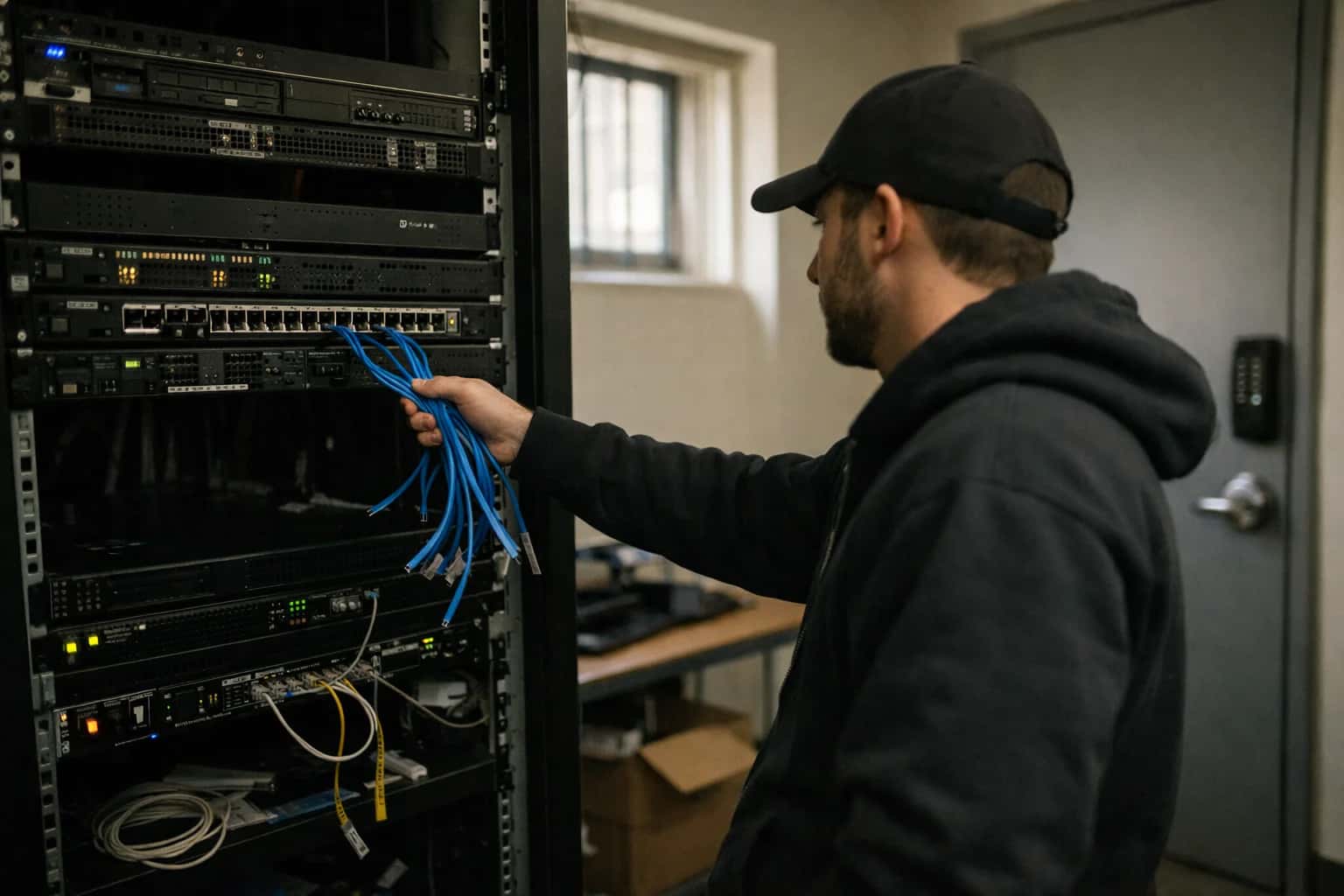
HARDWARE-BASED ISOLATION
What is Trusted Execution Environment (TEE)?
A Trusted Execution Environment is a secure area within a main processor that guarantees the confidentiality and integrity of code and data loaded inside it, isolating sensitive computations from the host operating system.
In the context of model obfuscation, a TEE provides a shielded location to run proprietary inference logic. The model weights and architecture remain encrypted in main memory and are only decrypted inside the TEE's CPU-reserved cache. This prevents model extraction via memory dumps or bus snooping. Additionally, remote attestation allows a client to cryptographically verify that the enclave is running the correct, untampered model before sending sensitive input data for inference.
HARDWARE-GRADE ISOLATION
Core Properties of a TEE
A Trusted Execution Environment provides a hardware-enforced secure area within a main processor. It guarantees the confidentiality and integrity of code and data loaded inside, isolating sensitive computations like model inference from the host operating system, hypervisor, and other applications.
01
Hardware Isolation
The TEE creates a strict physical boundary between the secure world and the normal world. All memory pages assigned to the enclave are hardware-encrypted and inaccessible to the OS, hypervisor, or DMA attacks.
- Memory Encryption: Data in DRAM is encrypted, preventing cold-boot and bus-snooping attacks.
- Address Space Separation: The enclave's memory is mapped to a protected physical address range invisible to non-secure peripherals.
- Interrupt Handling: Secure interrupts are routed directly to the enclave, preventing the OS from observing or manipulating execution state during context switches.
Hardware Root
Trust Boundary
02
Remote Attestation
A cryptographic mechanism that allows a remote client to verify the identity and integrity of the TEE before provisioning secrets or sending sensitive data. The enclave produces a signed measurement of its initial state.
- Measurement Hash: A cryptographic hash of the enclave's code, data, and configuration is generated at load time.
- Attestation Report: The processor signs this hash with a device-specific key fused at manufacture, creating a verifiable report.
- Verification Service: A third-party service validates the signature against the manufacturer's certificate chain, assuring the client the enclave is genuine and unmodified.
Cryptographic
Proof of Identity
03
Data Sealing
A method for securely persisting enclave data to untrusted storage. Data is encrypted with a key derived from the enclave's identity and the processor's unique key, binding it to that specific TEE on that specific device.
- Seal to Enclave Identity: Data can only be decrypted by the exact same enclave binary on the same CPU.
- Seal to Signing Authority: Data can be decrypted by any enclave signed by the same developer, enabling secure data migration across versions.
- Anti-Rollback Protection: Sealed data includes version counters to prevent an attacker from restoring a previous, vulnerable state.
Device-Unique
Encryption Binding
04
Secure Scheduling
The TEE manages its own execution context independently of the host OS scheduler. This prevents timing side-channel attacks where the OS observes cache misses or execution latency to infer enclave secrets.
- Asynchronous Exit (AEX): When an interrupt occurs, the processor saves the enclave's register state to a protected area and clears registers before handing control to the OS handler.
- State Sanitization: All architectural state visible to the non-secure world is scrubbed on enclave exit, preventing data leakage through shared resources.
- Deterministic Execution: Enclave code can be written to execute in constant time, eliminating data-dependent timing variations observable by the OS.
OS-Immune
Context Switching
05
Memory Encryption Engine
A dedicated hardware unit integrated into the memory controller that transparently encrypts and decrypts all enclave data moving between the processor cache and external RAM.
- AES-XTS Encryption: Uses a tweakable block cipher mode where the physical memory address is part of the tweak, preventing an attacker from relocating ciphertext blocks.
- Integrity Tree: A Merkle tree structure stored in memory verifies that data read from RAM has not been tampered with, detecting replay and splicing attacks.
- Zero Latency Overhead: Modern implementations operate at full memory bandwidth, making the performance impact negligible for inference workloads.
Line-Rate
Encryption Speed
06
Side-Channel Resistance
TEEs incorporate hardware and microarchitectural defenses against attacks that observe physical phenomena like power consumption, electromagnetic emanations, or cache access patterns to extract secrets.
- Cache Partitioning: Enclaves can be assigned dedicated cache ways, preventing the OS from priming or probing shared cache sets to observe enclave access patterns.
- Power Analysis Mitigation: Hardware-level techniques like randomized clocking and balanced logic styles reduce the signal-to-noise ratio of power traces.
- Speculation Barriers: Instructions like Intel's
LFENCEor ARM'sDSBprevent speculative execution from accessing enclave memory, closing Spectre-class vulnerabilities at the enclave boundary.
Microarchitectural
Attack Surface
TRUSTED EXECUTION ENVIRONMENTS
Frequently Asked Questions
Clear, technical answers to the most common questions about hardware-enforced secure enclaves and their role in protecting machine learning workloads.
A Trusted Execution Environment (TEE) is a hardware-enforced secure area within a main processor that guarantees the confidentiality and integrity of code and data loaded inside it, isolating sensitive computation from the host operating system, hypervisor, and other applications. It operates by creating a hardware-backed enclave—a protected region of memory that is encrypted at the hardware level and inaccessible to any process outside the enclave, even a compromised OS kernel. When model weights and inference logic are loaded into a TEE, they are decrypted only within the CPU package, and memory pages remain encrypted in DRAM. The processor enforces access control at the silicon level, meaning that even an attacker with physical access to the RAM bus cannot read plaintext model parameters. Key technologies include Intel SGX, AMD SEV, and Arm TrustZone, each implementing attestation mechanisms that cryptographically prove to a remote party that the correct code is running in a genuine enclave before any secrets are provisioned.
Enabling Efficiency, Speed & Accuracy
Intelligent Analysis, Decision & Execution
We build AI systems for teams that need search across company data, workflow automation across tools, or AI features inside products and internal software.
Talk to Us
Search across company data
Give teams answers from docs, tickets, runbooks, and product data with sources and permissions.
Useful when people spend too long searching or get different answers from different systems.
Enterprise searchRAGPermissions
Read more
Automate internal workflows
Use AI to route work, draft outputs, trigger actions, and keep approvals and logs in place.
Useful when repetitive work moves across multiple tools and teams.
AI agentsWorkflow automationGovernance
Read more
Add AI to products and internal tools
Build assistants, guided actions, or decision support into the software your team or customers already use.
Useful when AI needs to be part of the product, not a separate tool.
AI integrationDecision supportModel routing
Read more
About the author
Prasad Kumkar
CEO & MD, Inference Systems
Prasad Kumkar is the CEO & MD of Inference Systems and writes about AI systems architecture, LLM infrastructure, model serving, evaluation, and production deployment. Over 5+ years, he has worked across computer vision models, L5 autonomous vehicle systems, and LLM research, with a focus on taking complex AI ideas into real-world engineering systems.
His work and writing cover AI systems, large language models, AI agents, multimodal systems, autonomous systems, inference optimization, RAG, evaluation, and production AI engineering.
LinkedIn
Limited slotsGet a Free AI Consultation
Partnered with leading AI, data, and software stack.





How We Work
Custom AI workflows for your Business
One-fit-all AI don't work for modern businesses. At Inferensys, we aim to understand your business & custom requirements; which we use to define most efficient agentic workflows, the data, and the tools for your business.
01
Review the use case
We understand the task, the users, and where AI can actually help.
Read more02
Pick the right approach
We define what needs search, automation, or product integration.
Read more03
Build the first useful version
We implement the part that proves the value first.
Read more04
Improve from there
We add the checks and visibility needed to keep it useful.
Read moreThe first call is a practical review of your use case and the right next step.
Talk to Us