A Trusted Execution Environment (TEE) is a hardware-isolated region of a processor that provides data-in-use protection by executing sensitive code and processing data within an encrypted memory enclave. This isolation ensures that even a compromised host OS, hypervisor, or cloud administrator cannot inspect or tamper with the workload. TEEs establish a hardware root of trust, using on-die cryptographic keys to perform attestation—a process that cryptographically verifies the enclave's identity and code integrity to a remote party before any secrets are provisioned.

Glossary
Trusted Execution Environment (TEE)
A secure area within a main processor that guarantees the confidentiality and integrity of code and data loaded inside it, protecting against unauthorized access even from a compromised operating system.
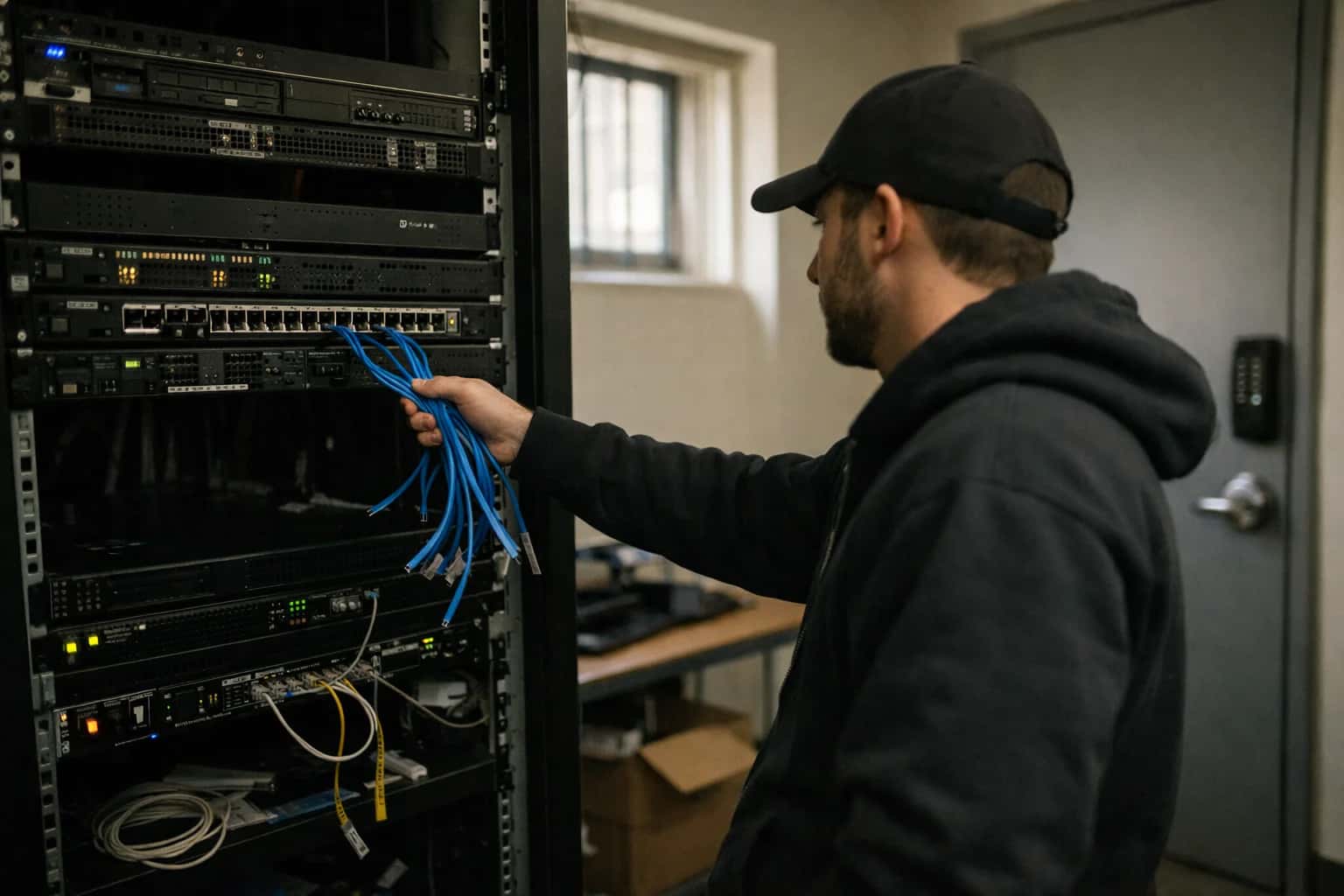
HARDWARE-ENFORCED ISOLATION
What is Trusted Execution Environment (TEE)?
A Trusted Execution Environment is a secure area within a main processor that guarantees the confidentiality and integrity of code and data loaded inside it, protecting against unauthorized access even from a compromised operating system or hypervisor.
TEE implementations include Intel SGX, which creates application-level enclaves, and AMD SEV, which encrypts entire virtual machines. These technologies are foundational to Confidential AI Computing, where model weights and inference queries remain encrypted during computation. By binding data to a specific enclave identity through sealing, TEEs ensure that sensitive information can only be decrypted by the exact same workload on the exact same hardware, providing a verifiable chain of trust from silicon to application.
FOUNDATIONAL GUARANTEES
Core Properties of a TEE
A Trusted Execution Environment (TEE) is defined by three core hardware-enforced properties that distinguish it from traditional software-based security. These properties form the security contract between the hardware and the application.
01
Data Confidentiality
Protects data from unauthorized disclosure while in use within the CPU. Memory encryption engines transparently encrypt cache lines and DRAM contents using hardware-generated keys inaccessible to the OS, hypervisor, or DMA attacks.
- Memory Encryption: AES-XTS or similar ciphers encrypt all enclave memory
- Isolation: Even a compromised kernel cannot read plaintext enclave data
- Scope: Covers both code and data pages within the protected memory region
AES-XTS
Typical Cipher
02
Data Integrity
Guarantees that code and data inside the TEE cannot be modified by any external agent, including the host operating system or a malicious hypervisor. Hardware-level mechanisms detect and prevent unauthorized tampering.
- Memory Authentication: Cryptographic hashes or MACs verify each cache line
- Replay Protection: Prevents an attacker from substituting stale but valid encrypted data
- Enforcement: Any integrity violation triggers an immediate CPU exception or machine check
03
Code Authenticity
Ensures that only the intended, unmodified code executes within the enclave. This is established through remote attestation, where the TEE produces a cryptographically signed measurement of its initial state.
- Measurement: A cryptographic hash of the enclave's code, stack, and configuration
- Hardware Root of Trust: The signing key is fused into the CPU at manufacture
- Verification: A remote party validates the measurement before provisioning secrets
04
Hardware Isolation
The TEE operates as a separate security domain enforced by the CPU's memory management unit. All access control is performed in silicon, not software, creating a hardware-enforced boundary.
- Physical Address Space: Enclave pages reside in a protected region of physical memory
- Access Control: CPU microcode blocks reads/writes from non-enclave code paths
- Interrupt Handling: Interrupts and exceptions are routed securely to prevent state leakage
05
Minimal Trusted Computing Base
The Trusted Computing Base (TCB) is radically reduced compared to a full software stack. Only the CPU package, the enclave code itself, and a thin verified interface layer must be trusted.
- Excluded from TCB: Host OS, hypervisor, device drivers, firmware, and other applications
- Attack Surface Reduction: Eliminates entire classes of privilege escalation attacks
- Auditability: A smaller TCB enables formal verification and thorough security audits
06
Attestation Capability
The TEE can prove its identity and integrity to a remote relying party through a cryptographic attestation report. This report binds the enclave's measurement to the specific hardware platform.
- Local Attestation: Two enclaves on the same platform verify each other's identity
- Remote Attestation: A client verifies the enclave over a network before sending secrets
- Freshness: Reports include nonces or timestamps to prevent replay attacks
TRUSTED EXECUTION ENVIRONMENT
Frequently Asked Questions
Clear, technically precise answers to the most common questions about the hardware and software mechanisms that underpin Trusted Execution Environments and confidential computing.
A Trusted Execution Environment (TEE) is a secure area within a main processor that guarantees the confidentiality and integrity of code and data loaded inside it, protecting against unauthorized access even from a compromised operating system. It works by creating a hardware-enforced enclave, a private region of memory isolated from the host OS, hypervisor, and other applications. When data and code are loaded into this enclave, they are encrypted and measured. The CPU enforces access controls at the hardware level, meaning no software with higher privilege levels can inspect or tamper with the enclave's contents. This provides data-in-use protection, securing sensitive computations like AI model training or financial transactions on untrusted infrastructure, such as a public cloud.
Enabling Efficiency, Speed & Accuracy
Intelligent Analysis, Decision & Execution
We build AI systems for teams that need search across company data, workflow automation across tools, or AI features inside products and internal software.
Talk to Us
Search across company data
Give teams answers from docs, tickets, runbooks, and product data with sources and permissions.
Useful when people spend too long searching or get different answers from different systems.
Enterprise searchRAGPermissions
Read more
Automate internal workflows
Use AI to route work, draft outputs, trigger actions, and keep approvals and logs in place.
Useful when repetitive work moves across multiple tools and teams.
AI agentsWorkflow automationGovernance
Read more
Add AI to products and internal tools
Build assistants, guided actions, or decision support into the software your team or customers already use.
Useful when AI needs to be part of the product, not a separate tool.
AI integrationDecision supportModel routing
Read moreCONFIDENTIAL COMPUTING IN PRACTICE
Real-World TEE Applications
Trusted Execution Environments are not theoretical constructs; they are actively deployed across industries to solve critical data-in-use protection challenges. The following applications demonstrate how hardware-enforced isolation is transforming security postures in finance, healthcare, and artificial intelligence.
01
Confidential AI Inference
Protects proprietary model weights and user prompts during inference by running the entire computation within a hardware-enforced enclave. The cloud provider, host OS, and privileged insiders cannot see the input data, the model parameters, or the generated output.
- Use Case: A healthcare startup processes patient X-rays through a proprietary diagnostic model on shared cloud infrastructure without exposing the model IP or patient data to the infrastructure provider.
- Mechanism: The model is loaded into an AMD SEV-SNP or Intel TDX confidential VM, with memory encryption preventing hypervisor access.
- Attestation: The client verifies the enclave's identity and code hash before sending sensitive data, ensuring the environment is genuine and unmodified.
< 5%
Performance Overhead
End-to-End
Encryption Coverage
02
Secure Multi-Party Data Collaboration
Enables multiple distrusting organizations to jointly analyze or train models on their combined sensitive datasets without revealing the raw data to any other party. Each party's data remains encrypted and isolated within its own enclave.
- Use Case: A consortium of banks collaborates on a fraud detection model by training on their combined transaction histories without any single bank seeing another's customer records.
- Mechanism: Data is loaded into separate enclaves on a neutral cloud platform. Aggregation logic runs inside a coordinating enclave that only receives encrypted gradient updates.
- Governance: Cryptographic remote attestation proves to all parties that the agreed-upon aggregation code is running, with no backdoors to exfiltrate raw data.
Zero
Raw Data Exposure
03
Blockchain Oracle and MEV Protection
Shields blockchain transaction logic and oracle data feeds from front-running and manipulation by validators or node operators. Smart contract execution occurs inside a TEE, keeping the transaction payload encrypted until it is committed on-chain.
- Use Case: A decentralized exchange uses Flashbots MEV-Boost with TEE-based block builders to prevent validators from reordering or sandwiching user trades.
- Mechanism: The order-matching engine runs inside an Intel SGX enclave. The host machine cannot inspect pending orders or manipulate execution order.
- Verification: Users receive an attestation quote confirming the enclave is running the exact open-source matching algorithm before submitting their orders.
$1.4B+
MEV Extracted (2023)
Encrypted
Mempool State
04
Privacy-Preserving Federated Learning
Combines federated learning with TEEs to provide dual protection: local data never leaves the device, and the central aggregation server cannot inspect individual model updates. The aggregation logic runs inside an enclave, guaranteeing that only the final aggregated model is revealed.
- Use Case: A pharmaceutical consortium trains a drug discovery model across proprietary molecular databases from five competing labs without any lab exposing its intellectual property.
- Mechanism: Each lab trains locally and sends encrypted gradient updates to a central AWS Nitro Enclave. The enclave decrypts, aggregates, and re-encrypts the global model.
- Integrity: Attestation proves the enclave discards individual updates after aggregation, preventing reconstruction of any single lab's data.
5+
Collaborating Entities
Provable
Data Deletion
05
Confidential Digital Identity and Credential Issuance
Protects the cryptographic root keys and issuance logic for digital identity systems, ensuring that even the infrastructure operator cannot forge credentials or compromise user privacy. The entire certificate issuance pipeline operates within a TEE.
- Use Case: A government agency issues verifiable credentials for digital passports. The signing keys are generated and stored exclusively within an HSM-backed TEE, making them inaccessible to any system administrator.
- Mechanism: The issuance service runs inside a confidential VM. Remote attestation allows citizens to verify that their credential was signed by the genuine government enclave, not a compromised server.
- Revocation: Revocation lists are updated and signed within the same enclave, maintaining an unbroken chain of trust from issuance to invalidation.
Hardware-Backed
Key Protection
06
Regulated Financial Data Processing
Enables financial institutions to process sensitive transaction data, run risk analytics, and generate regulatory reports in the public cloud while maintaining compliance with data residency and privacy mandates. The data is never exposed to the cloud provider.
- Use Case: A global bank runs anti-money laundering (AML) algorithms on cross-border transactions within Azure confidential computing, satisfying EU data residency requirements without building a private data center.
- Mechanism: Transaction data is loaded into an AMD SEV-protected VM. Memory encryption prevents the Azure hypervisor from accessing customer financial records.
- Audit: Attestation logs provide cryptographic proof to regulators that the AML software ran in a genuine TEE, with no unauthorized access.
GDPR
Compliance Standard
Full
Audit Trail

About the author
Prasad Kumkar
CEO & MD, Inference Systems
Prasad Kumkar is the CEO & MD of Inference Systems and writes about AI systems architecture, LLM infrastructure, model serving, evaluation, and production deployment. Over 5+ years, he has worked across computer vision models, L5 autonomous vehicle systems, and LLM research, with a focus on taking complex AI ideas into real-world engineering systems.
His work and writing cover AI systems, large language models, AI agents, multimodal systems, autonomous systems, inference optimization, RAG, evaluation, and production AI engineering.
LinkedIn
Limited slotsGet a Free AI Consultation
Partnered with leading AI, data, and software stack.





How We Work
Custom AI workflows for your Business
One-fit-all AI don't work for modern businesses. At Inferensys, we aim to understand your business & custom requirements; which we use to define most efficient agentic workflows, the data, and the tools for your business.
01
Review the use case
We understand the task, the users, and where AI can actually help.
Read more02
Pick the right approach
We define what needs search, automation, or product integration.
Read more03
Build the first useful version
We implement the part that proves the value first.
Read more04
Improve from there
We add the checks and visibility needed to keep it useful.
Read moreThe first call is a practical review of your use case and the right next step.
Talk to Us