A side-channel attack bypasses mathematical cryptography by targeting its physical implementation. Unlike traditional attacks that analyze ciphertext for weaknesses, this method monitors secondary emissions produced during computation. An attacker measures variations in power draw, electromagnetic radiation, acoustic noise, or cache access timing to infer sensitive data like private encryption keys. Because the underlying algorithm remains mathematically sound, these attacks exploit the physics of the hardware rather than flaws in the software logic.

Glossary
Side-Channel Attack
A security exploit that gathers information from the physical implementation of a computer system, such as timing information, power consumption, or electromagnetic leaks, rather than weaknesses in the implemented algorithm itself.
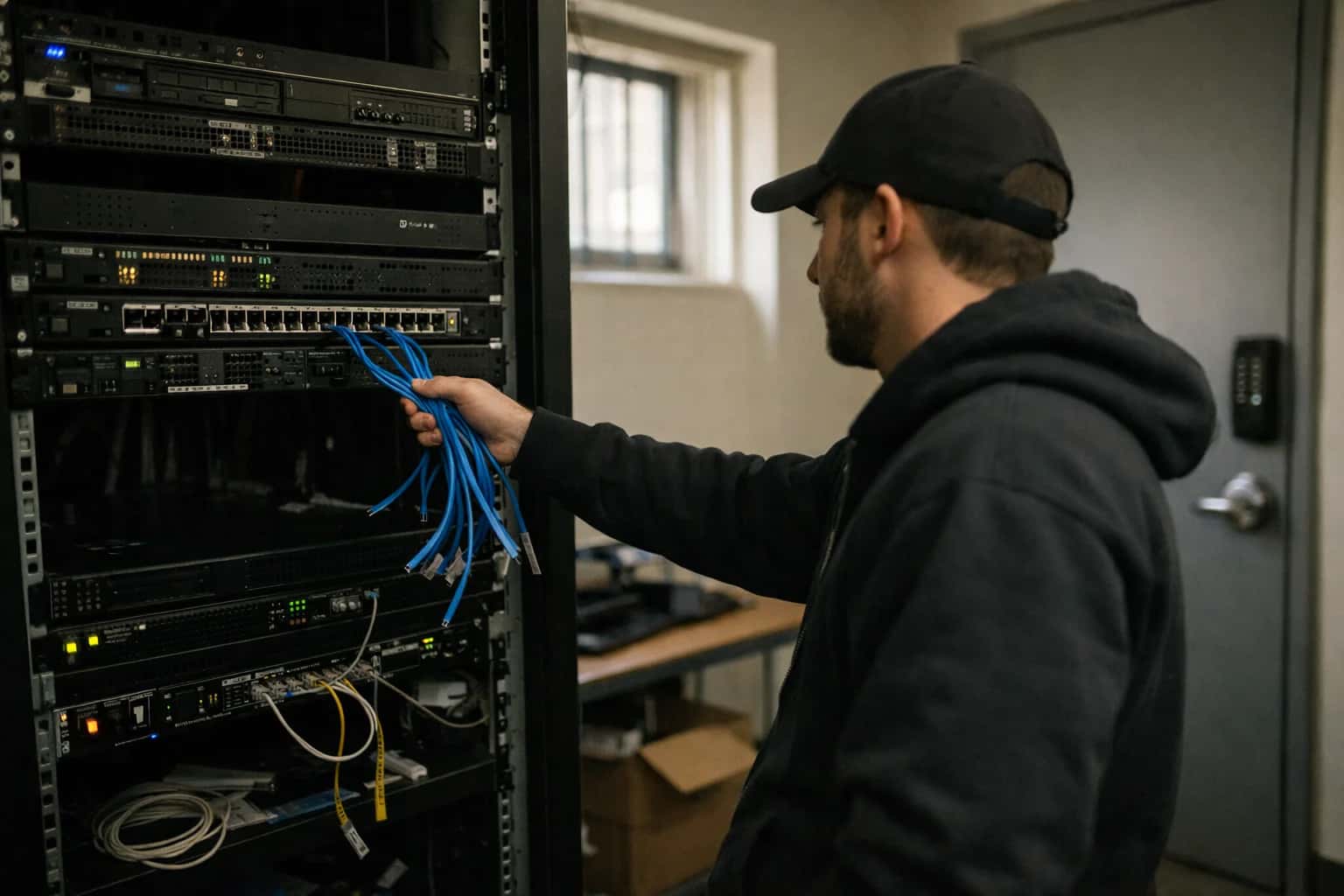
PHYSICAL LEAKAGE EXPLOITATION
What is Side-Channel Attack?
A side-channel attack is an exploit that extracts secrets from a system by observing physical side effects of computation—such as timing, power consumption, or electromagnetic emissions—rather than breaking the cryptographic algorithm itself.
In confidential computing environments, side-channel attacks pose a critical threat to Trusted Execution Environments (TEEs). Even when memory is encrypted, an adversary sharing a physical CPU core can observe microarchitectural timing variations to leak secrets from a co-located enclave. Mitigations include constant-time programming, hardware-level isolation, and noise injection to mask the correlation between secret data and observable physical phenomena.
PHYSICAL LEAKAGE VECTORS
Core Characteristics of Side-Channel Attacks
Side-channel attacks exploit the physical byproducts of computation—timing, power, and electromagnetic emanations—to extract secrets without ever touching the target algorithm. Understanding these vectors is essential for building robust confidential computing defenses.
01
Timing Analysis
Measures the time a system takes to perform cryptographic operations. Variations in execution time can leak information about secret keys. For example, an RSA implementation using a square-and-multiply algorithm may take slightly longer for a '1' bit than a '0' bit, allowing an attacker to reconstruct the private key by observing response latencies.
- Cache-timing attacks exploit CPU cache hit/miss latency differences
- Constant-time programming is the primary mitigation, ensuring all code paths take identical cycles
- Real-world example: Meltdown and Spectre leveraged timing side-channels to read kernel memory
< 1 ms
Measurement Precision Required
02
Power Analysis
Monitors the electrical power consumption of a processor during computation. Simple Power Analysis (SPA) directly interprets power traces to identify instructions, while Differential Power Analysis (DPA) uses statistical methods to correlate power fluctuations with secret key bits.
- SPA reveals the sequence of executed instructions
- DPA can extract keys even from noisy measurements using hundreds to thousands of traces
- Countermeasures include power balancing circuits and randomized clock jitter to decorrelate power draw from data
1000+
Traces for DPA Attack
03
Electromagnetic Emanations
Captures electromagnetic radiation emitted by processors, memory buses, and display cables. These emanations can be picked up non-invasively using an antenna, sometimes from several meters away. TEMPEST is the NATO codename for standards protecting against such leaks.
- Van Eck phreaking reconstructs screen content from CRT/LCD emissions
- Near-field probes can isolate specific chip regions for high-resolution attacks
- Shielding, Faraday cages, and differential signaling are primary hardware defenses
10+ meters
Attack Range
04
Acoustic Cryptanalysis
Analyzes the sound produced by electronic components. Capacitors and coils in voltage regulators can emit audible or ultrasonic noise that correlates with CPU activity. Researchers have demonstrated extracting 4096-bit RSA keys by listening to the high-pitched whine of a laptop's power supply.
- Coil whine in VRMs modulates with current draw patterns
- Low-bandwidth attacks can succeed using a smartphone microphone
- Acoustic dampening and sound-proofed enclosures are physical countermeasures
05
Optical Side-Channels
Exploits visible or infrared light emissions from devices. LED status indicators on networking equipment and servers can flicker in patterns that encode transmitted data. Researchers have reconstructed network traffic by analyzing the blinking of activity LEDs on routers and switches.
- LED flicker can be captured by a telescope from hundreds of meters away
- Optical TEMPEST covers laser microphone attacks on vibrating surfaces
- Mitigation includes optical isolation, opaque enclosures, and decoupling LEDs from data lines
SIDE-CHANNEL ATTACKS
Frequently Asked Questions
Explore the mechanics of side-channel attacks, a class of exploits that target the physical implementation of a system rather than its mathematical algorithms. These FAQs cover the specific threats to confidential AI computing and the hardware countermeasures used to protect data in use.
A side-channel attack is a security exploit that extracts secrets from a system by measuring and analyzing its physical parameters—such as timing information, power consumption, electromagnetic leaks, or even acoustic emanations—rather than breaking its cryptographic algorithms directly. The attack works by observing the unintended information leakage that occurs during a computation. For instance, a CPU might draw slightly more power when processing a '1' bit versus a '0' bit. By collecting thousands of these power traces and applying statistical analysis like Differential Power Analysis (DPA), an attacker can reconstruct a private encryption key. This is particularly dangerous in confidential computing because it targets the hardware boundary of a Trusted Execution Environment (TEE), potentially bypassing the isolation guarantees provided by technologies like Intel SGX or AMD SEV.
Enabling Efficiency, Speed & Accuracy
Intelligent Analysis, Decision & Execution
We build AI systems for teams that need search across company data, workflow automation across tools, or AI features inside products and internal software.
Talk to Us
Search across company data
Give teams answers from docs, tickets, runbooks, and product data with sources and permissions.
Useful when people spend too long searching or get different answers from different systems.
Enterprise searchRAGPermissions
Read more
Automate internal workflows
Use AI to route work, draft outputs, trigger actions, and keep approvals and logs in place.
Useful when repetitive work moves across multiple tools and teams.
AI agentsWorkflow automationGovernance
Read more
Add AI to products and internal tools
Build assistants, guided actions, or decision support into the software your team or customers already use.
Useful when AI needs to be part of the product, not a separate tool.
AI integrationDecision supportModel routing
Read morePHYSICAL LEAKAGE EXPLOITS
Real-World Side-Channel Attack Vectors
Side-channel attacks bypass algorithmic security by exploiting unintended physical emanations from computing hardware. These vectors target the implementation, not the mathematics, and are critical threats to confidential AI computing environments.
01
Timing Attacks
Exploit variations in the time a system takes to perform cryptographic operations. By measuring execution time with high precision, an attacker can infer secret keys.
- Cache timing: Exploits differences in memory access latency between cache hits and misses
- Branch prediction: Leverages speculative execution timing to leak control flow secrets
- Example: The classic Kocher attack recovered RSA private keys by timing modular exponentiation operations
- Mitigation: Constant-time programming, blinding techniques, and hardware-enforced deterministic execution
< 1 ms
Measurement Granularity
4096-bit
RSA Keys Recovered
02
Power Analysis Attacks
Monitor a device's power consumption during cryptographic operations to extract secrets. The instantaneous power draw correlates directly with the data being processed and the instructions being executed.
- Simple Power Analysis (SPA): Directly interprets power traces to identify individual instructions and key bits
- Differential Power Analysis (DPA): Uses statistical methods to correlate power measurements with hypothetical key values across thousands of traces
- Example: Smart card PIN verification and AES key extraction from embedded systems
- Mitigation: Power balancing circuits, random clock jitter, and algorithmic masking
1000+
Traces for DPA
$2B+
Smart Card Industry Impact
03
Electromagnetic Emanations
Capture electromagnetic radiation emitted by processors, memory buses, and display cables to reconstruct sensitive data. This is a non-invasive attack that can be performed at a distance.
- Van Eck phreaking: Reconstructs display contents from CRT or LCD electromagnetic leakage
- Near-field probes: Positioned close to chips to isolate specific component emanations
- TEMPEST: The NATO codename for standards protecting against information leakage via emanations
- Example: Recovering encryption keys from a laptop across a room using a software-defined radio
- Mitigation: RF shielding, spread-spectrum clocking, and differential signaling
10+ meters
Attack Range
SDR
Equipment Cost: Low
04
Acoustic Cryptanalysis
Analyze the sounds produced by electronic components to extract secrets. Capacitors and voltage regulators emit characteristic acoustic signatures that vary with computational load.
- Coil whine: High-frequency vibrations from inductors correlate with CPU operations
- Keyboard acoustics: Keystroke identification through distinct sound signatures
- Example: Researchers extracted 4096-bit RSA keys by recording the high-pitched sounds of a laptop's voltage regulation circuitry during decryption
- Mitigation: Acoustic dampening, sound-proof enclosures, and constant-power circuit design
4096-bit
RSA Key Extraction
4 meters
Recording Distance
05
Optical Side-Channels
Extract information by observing optical emissions from hardware. LEDs, status indicators, and even the faint glow of transistors can leak data.
- LED status lights: Modulated brightness patterns from network or storage activity indicators
- Photon emission: Semiconductor junctions emit photons during switching that can be captured by sensitive cameras
- Example: Recovering encryption keys by filming the power LED of a smart card reader with a photodiode
- Mitigation: Optical shielding, decoupling status indicators from data paths, and opaque enclosures
16 meters
Line-of-Sight Range
Photodiode
Detection Hardware
06
Microarchitectural Attacks
Exploit shared processor resources in multi-tenant environments to leak information between isolated processes. These are the most dangerous vectors for cloud-based confidential AI workloads.
- Spectre/Meltdown: Exploit speculative execution to read protected kernel and cross-process memory
- Cache side-channels: Prime+Probe, Flush+Reload, and Evict+Time techniques on shared CPU caches
- Rowhammer: Induces bit flips in adjacent memory rows through rapid access patterns
- Example: A malicious VM extracting AES keys from a co-located victim VM on the same physical host
- Mitigation: Cache partitioning, TEE isolation, and hardware fixes in newer processor generations
L1/L2/L3
Cache Levels Targeted
Cross-VM
Attack Boundary

About the author
Prasad Kumkar
CEO & MD, Inference Systems
Prasad Kumkar is the CEO & MD of Inference Systems and writes about AI systems architecture, LLM infrastructure, model serving, evaluation, and production deployment. Over 5+ years, he has worked across computer vision models, L5 autonomous vehicle systems, and LLM research, with a focus on taking complex AI ideas into real-world engineering systems.
His work and writing cover AI systems, large language models, AI agents, multimodal systems, autonomous systems, inference optimization, RAG, evaluation, and production AI engineering.
LinkedIn
Limited slotsGet a Free AI Consultation
Partnered with leading AI, data, and software stack.





How We Work
Custom AI workflows for your Business
One-fit-all AI don't work for modern businesses. At Inferensys, we aim to understand your business & custom requirements; which we use to define most efficient agentic workflows, the data, and the tools for your business.
01
Review the use case
We understand the task, the users, and where AI can actually help.
Read more02
Pick the right approach
We define what needs search, automation, or product integration.
Read more03
Build the first useful version
We implement the part that proves the value first.
Read more04
Improve from there
We add the checks and visibility needed to keep it useful.
Read moreThe first call is a practical review of your use case and the right next step.
Talk to Us