A Trusted Execution Environment (TEE) is a hardware-enforced enclave that isolates sensitive computation from the main operating system, hypervisor, and other applications. By creating a distinct memory region accessible only to authorized code, a TEE ensures that even a compromised kernel cannot inspect or exfiltrate data processed within the enclave. This provides confidential computing by executing workloads in a black box that is opaque to the underlying infrastructure owner.

Glossary
Trusted Execution Environment (TEE)
A secure, isolated area within a main processor that guarantees the confidentiality and integrity of code and data loaded inside it, protecting them from the host operating system.
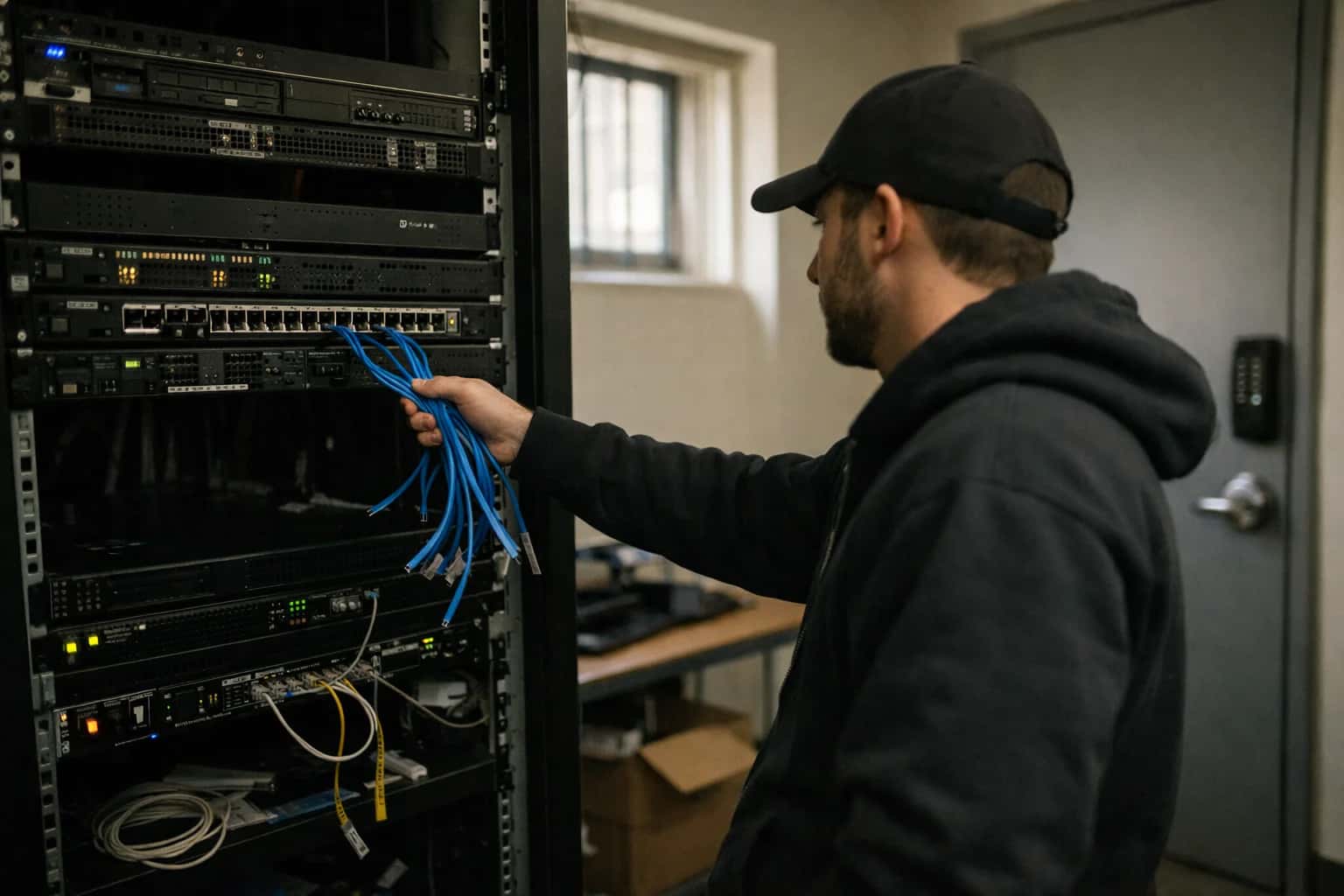
HARDWARE-BASED ISOLATION
What is a Trusted Execution Environment (TEE)?
A Trusted Execution Environment (TEE) is a secure, isolated area within a main processor that guarantees the confidentiality and integrity of code and data loaded inside it, protecting them from the host operating system.
TEEs, such as Intel SGX and AMD SEV, rely on on-chip cryptographic attestation to prove to a remote party that a specific, untampered codebase is running inside the enclave. This mechanism is foundational for AI supply chain security, allowing model owners to deploy proprietary weights into untrusted cloud environments while cryptographically verifying that the inference process has not been altered or observed.
HARDWARE-GRADE ISOLATION
Key Features of a TEE
A Trusted Execution Environment (TEE) is defined by a set of distinct hardware-enforced security properties that isolate sensitive computation from the untrusted operating system, hypervisor, and other applications.
01
Hardware-Enforced Isolation
The TEE creates a secure enclave that is physically isolated at the CPU level. Code and data inside the enclave are protected from all software outside it, including the OS kernel, hypervisor, and DMA attacks. This is achieved through memory encryption engines that automatically encrypt and decrypt data as it moves between the processor cache and external RAM, ensuring plaintext data is never exposed on the memory bus.
Hardware Root
Trust Anchor
02
Remote Attestation
A cryptographic mechanism that allows a remote party to verify the exact identity and integrity of the software running inside a TEE. The processor generates a signed attestation report containing a cryptographic hash of the enclave's initial state and code. This proves to a client that they are communicating with a genuine, untampered application running on a legitimate TEE-capable platform, not a simulator or compromised host.
Cryptographic
Verification Method
03
Data Confidentiality & Integrity
The TEE guarantees that data in use—the most vulnerable state in the data lifecycle—remains encrypted and inaccessible. Key protections include:
- Confidentiality: The host OS, hypervisor, or a physical attacker with a logic probe cannot read plaintext data inside the enclave.
- Integrity: Any attempt to modify enclave memory is detected and blocked, preventing rollback or tampering attacks.
- Sealing: Data can be encrypted and persisted to disk, bound to a specific enclave identity, ensuring only that exact code on that specific CPU can decrypt it later.
04
Minimal Trusted Computing Base (TCB)
The TCB is the set of all hardware, firmware, and software components critical to the system's security. A TEE dramatically reduces the TCB by excluding the entire operating system, device drivers, and hypervisor from the trust boundary. The only trusted components are the CPU silicon itself, the enclave code, and the thin security monitor. This reduction minimizes the attack surface and simplifies formal verification.
OS Excluded
From Trust Boundary
05
Secure Scheduling & Context Switching
The TEE manages enclave thread scheduling securely, ensuring that when the CPU context-switches between an enclave and the untrusted OS, all enclave register state is automatically saved and encrypted. The Asynchronous Enclave Exit (AEX) mechanism handles interrupts and exceptions by flushing sensitive state to protected memory before the OS handler executes, preventing the OS from observing or manipulating the enclave's execution state.
06
Side-Channel Resistance
Modern TEE implementations incorporate hardware and microcode defenses against cache-timing and speculative execution attacks. Protections include:
- Cache partitioning to prevent the OS from priming caches to observe enclave access patterns.
- Speculative execution barriers that prevent transient instructions from leaking secrets.
- Constant-time cryptographic libraries that eliminate data-dependent timing variations within enclave code.
- Page-fault attack mitigation by restricting OS control over enclave page tables.
CONFIDENTIAL COMPUTING COMPARISON
TEE vs. Other Security Approaches
Comparing Trusted Execution Environments with alternative security paradigms for protecting data in use during AI inference and training.
| Feature | Trusted Execution Environment (TEE) | Homomorphic Encryption (HE) | Secure Multi-Party Computation (SMPC) |
|---|---|---|---|
Protection Scope | Data in use (CPU/memory) | Data in use (computation on ciphertext) | Data in use (distributed secret sharing) |
Performance Overhead | 2-15% | 10,000-1,000,000x | 100-1,000x |
Hardware Root of Trust | |||
Supports Arbitrary Computation | |||
Attestation Capability | |||
Protects Against Host OS Compromise | |||
Maturity for Production AI | High (Intel SGX, AMD SEV-SNP) | Low (Research-stage for deep learning) | Medium (Limited to specific protocols) |
Data Output Format | Plaintext within enclave | Encrypted ciphertext result | Reconstructed plaintext |
TRUSTED EXECUTION ENVIRONMENTS
Frequently Asked Questions
Explore the core concepts behind hardware-isolated secure computing and how TEEs protect sensitive data and code from the host operating system.
A Trusted Execution Environment (TEE) is a secure, isolated area within a main processor that guarantees the confidentiality and integrity of code and data loaded inside it, protecting them from the host operating system, hypervisor, and other privileged software. It operates as a hardware-enforced enclave, creating a distinct 'world' that runs in parallel to the standard Rich Execution Environment (REE). When sensitive computation is required, the processor switches to this secure world, decrypts the data within the CPU boundary, performs the computation, and encrypts the results before writing them back to main memory. This mechanism ensures that even if the operating system is compromised, the data and code inside the TEE remain inaccessible. Key implementations include Intel SGX, which creates application-specific enclaves, and ARM TrustZone, which partitions the processor into secure and non-secure worlds at boot time.
Enabling Efficiency, Speed & Accuracy
Intelligent Analysis, Decision & Execution
We build AI systems for teams that need search across company data, workflow automation across tools, or AI features inside products and internal software.
Talk to Us
Search across company data
Give teams answers from docs, tickets, runbooks, and product data with sources and permissions.
Useful when people spend too long searching or get different answers from different systems.
Enterprise searchRAGPermissions
Read more
Automate internal workflows
Use AI to route work, draft outputs, trigger actions, and keep approvals and logs in place.
Useful when repetitive work moves across multiple tools and teams.
AI agentsWorkflow automationGovernance
Read more
Add AI to products and internal tools
Build assistants, guided actions, or decision support into the software your team or customers already use.
Useful when AI needs to be part of the product, not a separate tool.
AI integrationDecision supportModel routing
Read more
About the author
Prasad Kumkar
CEO & MD, Inference Systems
Prasad Kumkar is the CEO & MD of Inference Systems and writes about AI systems architecture, LLM infrastructure, model serving, evaluation, and production deployment. Over 5+ years, he has worked across computer vision models, L5 autonomous vehicle systems, and LLM research, with a focus on taking complex AI ideas into real-world engineering systems.
His work and writing cover AI systems, large language models, AI agents, multimodal systems, autonomous systems, inference optimization, RAG, evaluation, and production AI engineering.
LinkedIn
Limited slotsGet a Free AI Consultation
Partnered with leading AI, data, and software stack.





How We Work
Custom AI workflows for your Business
One-fit-all AI don't work for modern businesses. At Inferensys, we aim to understand your business & custom requirements; which we use to define most efficient agentic workflows, the data, and the tools for your business.
01
Review the use case
We understand the task, the users, and where AI can actually help.
Read more02
Pick the right approach
We define what needs search, automation, or product integration.
Read more03
Build the first useful version
We implement the part that proves the value first.
Read more04
Improve from there
We add the checks and visibility needed to keep it useful.
Read moreThe first call is a practical review of your use case and the right next step.
Talk to Us