Continuous Automated Red Teaming (CART) is the systematic integration of automated adversarial attack simulations directly into the machine learning lifecycle. Unlike periodic manual penetration tests, CART executes a persistent suite of gradient-based attacks, jailbreak automation, and fuzzing probes against model endpoints with every build, ensuring that safety guardrails and alignment training are continuously validated against evolving threat vectors.

Glossary
Continuous Automated Red Teaming (CART)
A DevSecOps practice that integrates persistent, automated adversarial probes into the CI/CD pipeline to detect model regressions and new vulnerabilities with every code update.
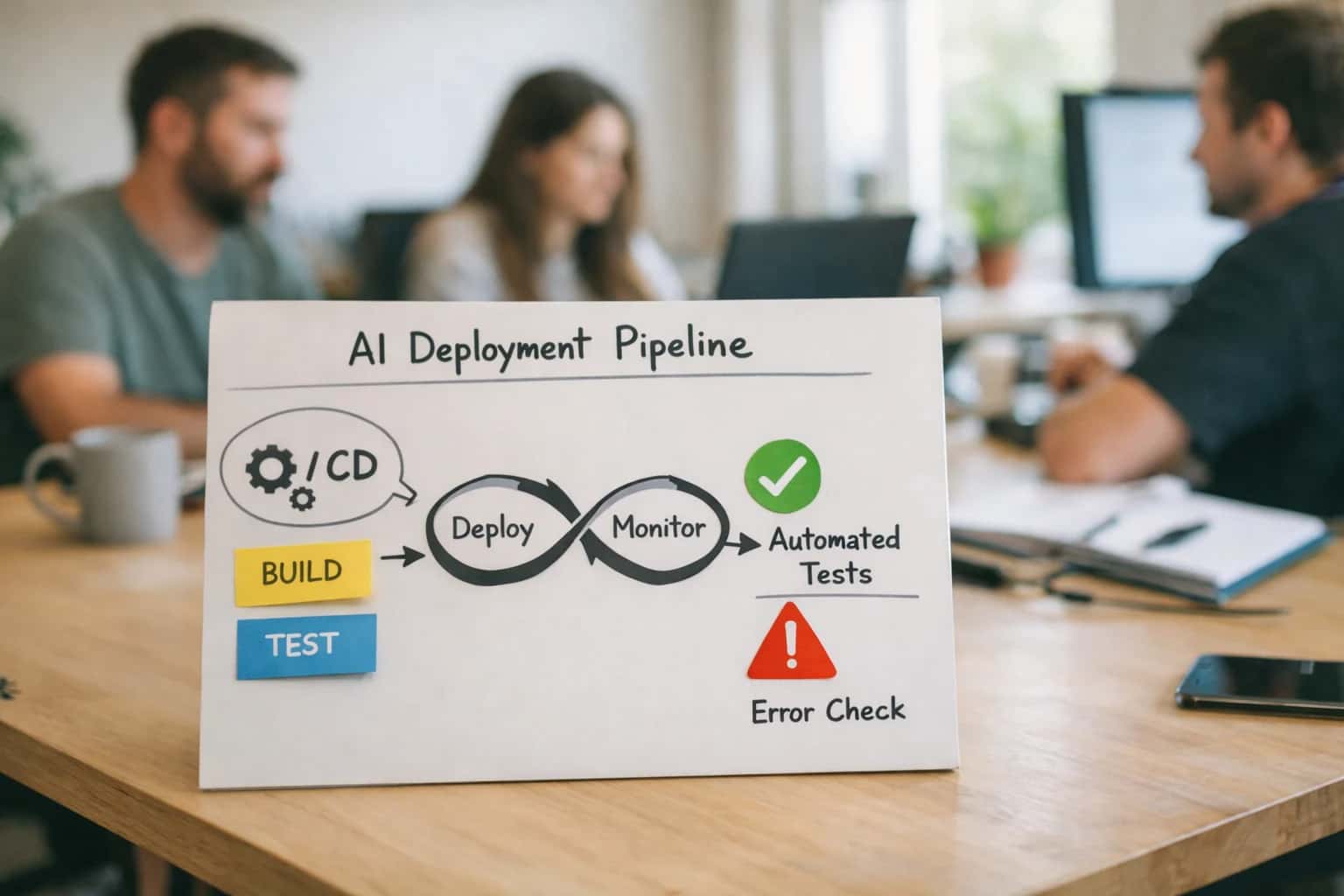
DEFINITION
What is Continuous Automated Red Teaming (CART)?
Continuous Automated Red Teaming (CART) is a DevSecOps practice that integrates persistent, automated adversarial probes into the CI/CD pipeline to detect model regressions and new vulnerabilities with every code update.
By embedding tools like Greedy Coordinate Gradient (GCG) and Tree of Attacks with Pruning (TAP) into the CI/CD pipeline, CART provides immediate feedback on the Attack Success Rate (ASR) for new code commits. This practice bridges the gap between AI Red Teaming Automation and operational security, enabling teams to detect adversarial drift and guardrail bypass regressions before they reach production, thereby maintaining a hardened model resilience scoring posture.
PERSISTENT ADVERSARIAL VALIDATION
Core Characteristics of CART
Continuous Automated Red Teaming (CART) integrates persistent, automated adversarial probes directly into the CI/CD pipeline to detect model regressions and novel vulnerabilities with every code update.
01
Pipeline-Native Integration
CART shifts adversarial testing left by embedding automated attack simulations directly into the DevSecOps CI/CD pipeline. Unlike periodic manual penetration tests, CART executes a comprehensive suite of adversarial prompts, gradient-based attacks, and fuzzing payloads on every pull request and nightly build. This ensures that a new model version is never promoted to staging or production if it introduces a regression in safety alignment or robustness. The system programmatically gates deployment based on a predefined Attack Success Rate (ASR) threshold, preventing vulnerable artifacts from reaching production environments.
02
Multi-Strategy Attack Orchestration
A CART framework does not rely on a single attack vector. It orchestrates a diverse arsenal of techniques to probe the model's complete attack surface:
- Black-Box Query Attacks: Probes the model via API input-output pairs without internal access, simulating an external threat actor.
- White-Box Penetration Testing: Leverages full access to model weights and gradients to execute Greedy Coordinate Gradient (GCG) optimization and identify backdoor triggers.
- Indirect Prompt Injection: Injects malicious instructions into external data sources (e.g., simulated web pages or PDFs) to test the security of retrieval-augmented generation (RAG) pipelines.
- Payload Splitting: Fragments malicious strings across multiple inputs to test the robustness of input-level safety classifiers.
03
Continuous Adversarial Drift Monitoring
CART extends beyond pre-deployment testing to provide runtime security telemetry. In production, the system continuously monitors the live input distribution and model behavior to detect adversarial drift—a scenario where the model becomes increasingly susceptible to known attack patterns due to data distribution shifts. By comparing real-time Attack Success Rate (ASR) metrics against historical baselines, CART triggers automated alerts and can initiate rollback procedures if a model's Model Resilience Scoring degrades below a critical threshold, closing the loop between security observability and incident response.
04
Automated Vulnerability Remediation
Advanced CART implementations close the loop from detection to mitigation. When a specific attack vector, such as a novel Universal Adversarial Trigger or a Many-Shot Jailbreaking exploit, is consistently successful, the system can automatically trigger a remediation workflow. This typically involves:
- Synthetic Data Generation: Automatically creating adversarial training examples based on the successful attack payload.
- Adversarial Robustness Training: Fine-tuning the model on the generated adversarial dataset to patch the specific vulnerability.
- Guardrail Hardening: Updating input/output safety classifiers to detect and block the newly discovered obfuscation or token smuggling technique.
05
Comprehensive Attack Surface Mapping
Before executing attacks, a CART engine performs automated Attack Surface Mapping to enumerate all potential vulnerability vectors. This process dynamically discovers and catalogs every input channel, including tool-calling endpoints, API plugins, retrieval data sources, and multi-modal ingestion points. By maintaining a real-time inventory of the system's exposed interfaces, CART ensures that no shadow endpoint or newly integrated plugin escapes adversarial testing. This mapping directly informs the orchestration engine, which selects the most relevant attack strategies for each discovered vector.
06
Quantitative Resilience Scoring
CART replaces subjective security assessments with a rigorous, data-driven Model Resilience Scoring framework. This single, aggregated metric quantifies a model's overall robustness by synthesizing performance across the entire suite of adversarial tests. The score weights critical factors such as Refusal Suppression resistance, Guardrail Bypass Detection rates, and Transfer Attack susceptibility. By tracking this score over time, engineering teams can objectively compare the security posture of different model versions, set minimum resilience thresholds for production deployment, and provide auditable evidence of security due diligence to compliance officers.
CART EXPLAINED
Frequently Asked Questions
Clear, technical answers to the most common questions about integrating Continuous Automated Red Teaming into modern AI development pipelines.
Continuous Automated Red Teaming (CART) is a DevSecOps practice that integrates persistent, automated adversarial probes directly into the CI/CD pipeline to detect model regressions and new vulnerabilities with every code update. Unlike periodic manual penetration tests, CART operates as a non-stop feedback loop. It works by programmatically executing a suite of attack techniques—such as gradient-based attacks, jailbreak automation, and payload splitting—against a model's inference endpoint whenever a new build is triggered. The system automatically scores the model's Attack Success Rate (ASR) and compares it against a defined Model Resilience Scoring baseline. If a regression is detected, the pipeline can be halted, preventing a vulnerable model from reaching production. This process ensures that safety guardrails and alignment training are continuously validated against the latest adversarial tactics, not just at discrete milestones.
COMPARISON
CART vs. Traditional Red Teaming
A feature-by-feature comparison of Continuous Automated Red Teaming against periodic manual penetration testing and one-time automated assessments.
| Feature | CART | Traditional Manual Red Teaming | One-Time Automated Assessment |
|---|---|---|---|
Execution Frequency | Continuous (per commit/PR) | Quarterly or annually | Once per release cycle |
Integration Point | CI/CD pipeline native | Scheduled external engagement | Pre-deployment checkpoint |
Attack Surface Coverage | Exhaustive combinatorial probing | Human-curated scenarios | Predefined test suite only |
Regression Detection | Immediate on code change | Manual re-testing required | Only if test suite updated |
Time to Remediation | < 1 hour | 2-6 weeks (report cycle) | 1-5 days |
Jailbreak Discovery | Algorithmic (GCG, TAP) | Manual researcher creativity | Static prompt library |
Cost per Assessment | $0.02-0.50 per probe | $50,000-250,000 per engagement | $5,000-20,000 per scan |
Adversarial Drift Adaptation |
Enabling Efficiency, Speed & Accuracy
Intelligent Analysis, Decision & Execution
We build AI systems for teams that need search across company data, workflow automation across tools, or AI features inside products and internal software.
Talk to Us
Search across company data
Give teams answers from docs, tickets, runbooks, and product data with sources and permissions.
Useful when people spend too long searching or get different answers from different systems.
Enterprise searchRAGPermissions
Read more
Automate internal workflows
Use AI to route work, draft outputs, trigger actions, and keep approvals and logs in place.
Useful when repetitive work moves across multiple tools and teams.
AI agentsWorkflow automationGovernance
Read more
Add AI to products and internal tools
Build assistants, guided actions, or decision support into the software your team or customers already use.
Useful when AI needs to be part of the product, not a separate tool.
AI integrationDecision supportModel routing
Read more
About the author
Prasad Kumkar
CEO & MD, Inference Systems
Prasad Kumkar is the CEO & MD of Inference Systems and writes about AI systems architecture, LLM infrastructure, model serving, evaluation, and production deployment. Over 5+ years, he has worked across computer vision models, L5 autonomous vehicle systems, and LLM research, with a focus on taking complex AI ideas into real-world engineering systems.
His work and writing cover AI systems, large language models, AI agents, multimodal systems, autonomous systems, inference optimization, RAG, evaluation, and production AI engineering.
LinkedIn
Limited slotsGet a Free AI Consultation
Partnered with leading AI, data, and software stack.





How We Work
Custom AI workflows for your Business
One-fit-all AI don't work for modern businesses. At Inferensys, we aim to understand your business & custom requirements; which we use to define most efficient agentic workflows, the data, and the tools for your business.
01
Review the use case
We understand the task, the users, and where AI can actually help.
Read more02
Pick the right approach
We define what needs search, automation, or product integration.
Read more03
Build the first useful version
We implement the part that proves the value first.
Read more04
Improve from there
We add the checks and visibility needed to keep it useful.
Read moreThe first call is a practical review of your use case and the right next step.
Talk to Us