User-Specific Adapters are compact, trainable neural modules, such as Low-Rank Adaptation (LoRA) matrices or small Adapter layers, that are uniquely generated for and stored with an individual user or device. During on-device inference, the corresponding user's adapter is dynamically loaded and combined with a frozen, shared base model, allowing the system to produce personalized outputs—like recommendations, content filtering, or behavioral predictions—while keeping the user's raw data locally. This architecture decouples the massive, general knowledge of the foundation model from the lightweight, private adaptations that encode individual preferences.

Glossary
User-Specific Adapters
User-Specific Adapters are compact, trainable PEFT modules uniquely generated and stored per user, enabling a global base model to produce personalized outputs when the corresponding adapter is activated during on-device inference.
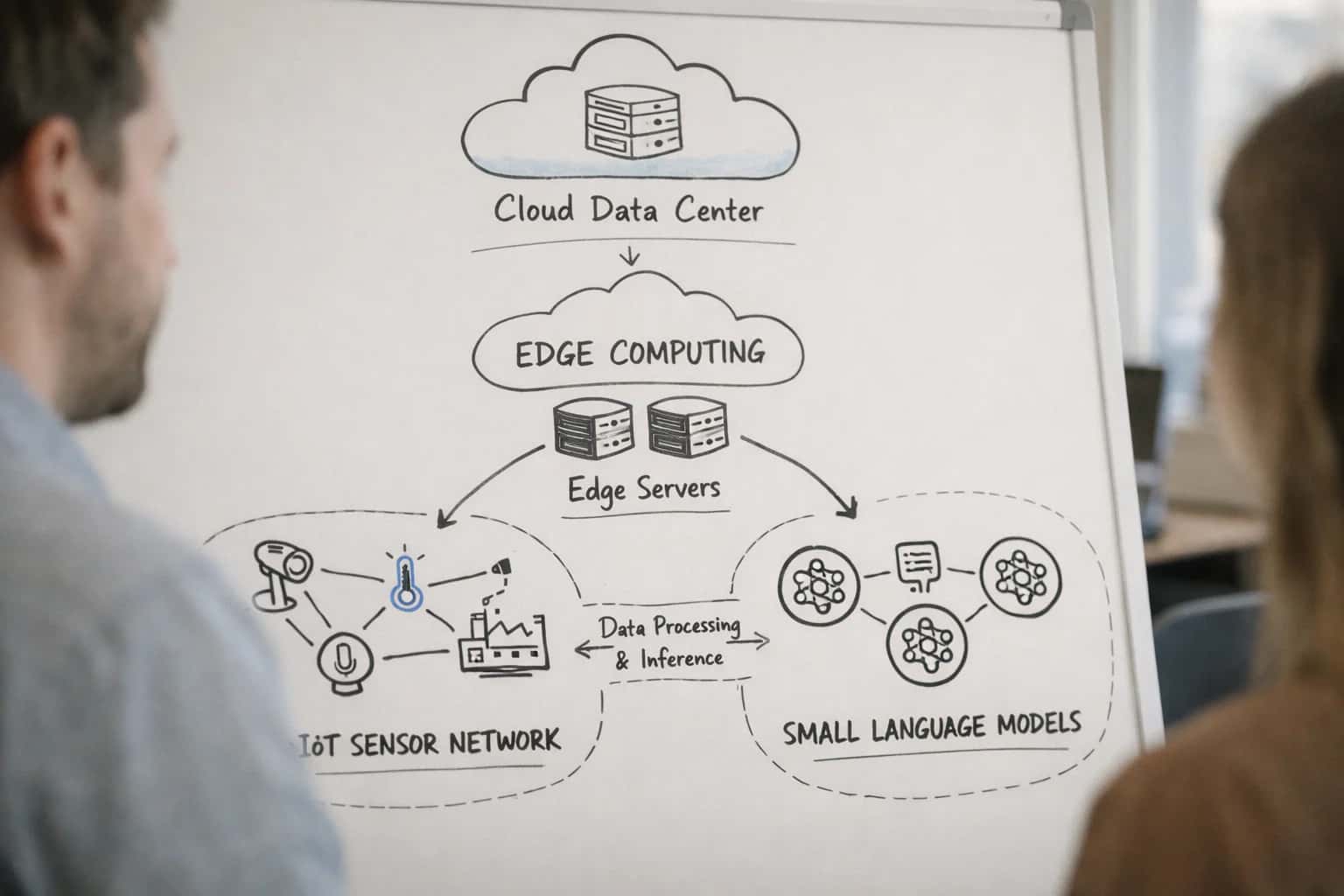
PEFT FOR EDGE AND ON-DEVICE AI
What are User-Specific Adapters?
User-Specific Adapters are a core technique in on-device personalization, enabling a single, global model to serve individualized experiences without compromising privacy or efficiency.
The technical workflow involves a privacy-preserving training loop where the adapter is trained directly on the user's device using local data, a process known as on-device training or federated PEFT. Only the tiny adapter weights (the delta), often just megabytes in size, are stored per user, enabling efficient over-the-air (OTA) updates and runtime adapter loading. This approach is foundational for applications requiring strict data sovereignty, such as personalized assistants, health monitoring, and adaptive user interfaces on smartphones and IoT devices, as it prevents sensitive data from ever leaving the device.
PEFT FOR EDGE AND ON-DEVICE AI
Key Features of User-Specific Adapters
User-Specific Adapters are compact, trainable modules that enable a single, global base model to deliver personalized outputs for individual users by activating their unique adapter during on-device inference.
01
Compact Parameter Footprint
User-Specific Adapters, such as Low-Rank Adaptation (LoRA) matrices or small Adapter modules, typically add less than 1-4% of the base model's parameters. This extreme efficiency is critical for edge deployment, where storage for thousands of individual user profiles is required. For example, a 7-billion-parameter model might only require a 70-million-parameter adapter per user, enabling scalable personalization without prohibitive storage costs.
02
Privacy-Preserving On-Device Training
The core training loop for a user's adapter executes locally on the edge device, using only that user's private interaction data. Sensitive data never leaves the device. The process involves:
- Local forward/backward passes on the frozen base model.
- Updating only the small set of adapter parameters via an optimizer like SGD.
- Persisting the final adapter weights in secure, isolated device storage. This architecture is a foundational element of Federated Learning and Private AI systems, ensuring compliance with regulations like GDPR.
03
Dynamic Runtime Adapter Loading
During inference, the edge serving runtime must dynamically load the correct user's adapter. This requires:
- A low-latency mechanism to swap adapter weights in memory.
- Efficient caching strategies for frequently used adapters.
- Support for hot-swapping between adapters within a single session (e.g., switching user contexts). This capability transforms a static model into a multi-tenant system, where personalization is activated instantaneously upon user authentication.
04
Delta-Based Deployment & Updates
Model updates are delivered as small delta files containing only the adapter weights, not the entire multi-gigabyte base model. This enables:
- Over-the-Air (OTA) updates measured in megabytes, not gigabytes.
- Rapid rollout of personalized improvements or bug fixes.
- Bandwidth-efficient synchronization in Federated PEFT scenarios, where only adapter gradients or weights are aggregated. This delta deployment model is essential for managing large fleets of devices with constrained network connectivity.
05
Hardware-Aware Optimization
The design and training of these adapters must account for target edge hardware constraints. Key techniques include:
- Quantization-Aware Training (QAT) for adapters to ensure stability when deployed in INT8/FP16.
- Static memory allocation patterns predictable for MCU runtimes.
- Compiler-level optimizations (e.g., via TFLite Micro) to fuse adapter operations with the base model graph. This ensures the combined model + adapter operates within strict power, memory, and latency budgets on devices like smartphones, microcontrollers, or NPUs.
06
Use Cases & Application Patterns
User-Specific Adapters enable several key on-device AI patterns:
- Personalized Assistants: A device learns user preferences for phrasing, content, and routines.
- Adaptive UI/UX: Models controlling interface elements adapt to individual interaction speeds and patterns.
- Private Health & Wellness: Biometric or activity models personalize to an individual's physiology without exposing data.
- Customized Content Filtering: Local recommendation engines adapt to evolving user tastes. The central pattern is a shared, powerful base model providing general capability, with a lightweight, private adapter providing the unique user context.
PEFT FOR EDGE AND ON-DEVICE AI
How User-Specific Adapters Work
User-Specific Adapters are a core technique in Parameter-Efficient Fine-Tuning (PEFT) that enable personalized AI on edge devices.
A User-Specific Adapter is a small, trainable neural network module, such as a Low-Rank Adaptation (LoRA) matrix, that is uniquely generated for and stored with an individual user. This adapter is trained locally on the user's device using their private data, creating a personalized parameter 'delta.' During on-device inference, the global base model is frozen, and only this user's specific adapter is activated, allowing the shared model to produce customized responses, recommendations, or predictions without exposing sensitive data to the cloud.
The system operates via a two-stage process: a one-time, resource-efficient on-device training loop fine-tunes only the adapter's parameters. The resulting compact adapter file is then stored locally. At runtime, an edge model serving engine performs runtime adapter loading, dynamically injecting the correct user's adapter into the base model's computational graph. This architecture supports hot-swappable adapters for multi-user devices and enables efficient PEFT delta deployment for updates, making it foundational for privacy-preserving, personalized edge AI.
USER-SPECIFIC ADAPTERS
Examples and Use Cases
User-Specific Adapters enable a single, global model to produce personalized outputs by activating a unique, lightweight module for each individual. Below are key applications demonstrating their practical value in edge AI systems.
01
Personalized Voice Assistants
A global speech recognition model is deployed on a smart speaker. Each user trains a unique LoRA adapter on-device using their voice samples and frequently used commands. During inference, the system loads the corresponding adapter, enabling highly accurate wake-word detection, accent adaptation, and personalized command recognition without compromising other users' privacy or requiring cloud processing.
< 10MB
Adapter Size per User
~50 ms
Inference Latency
02
Adaptive Health & Fitness Monitors
A wearable device uses a pre-trained model for activity recognition (e.g., running, cycling). A user-specific adapter is fine-tuned locally on the wearer's unique biomechanics and movement patterns. This allows the device to:
- Precisely count repetitions and estimate calorie burn.
- Detect subtle form deviations to prevent injury.
- Adapt to the user's fitness level over time, all while keeping sensitive health data on the device.
03
Context-Aware Mobile Keyboards
A mobile keyboard app employs a base language model for next-word prediction. In the background, it trains a compact adapter module on the device using the user's typing history, including:
- Personal slang, names, and technical jargon.
- Frequently used emojis and phrases.
- Writing style patterns. This enables highly personalized and contextually relevant suggestions and autocorrections without transmitting keystroke data to a server.
1-2 MB
Typical Adapter Footprint
04
Smart Home User Profiling
A single vision model for occupancy detection runs on a home security camera. Each resident has a private adapter trained to recognize their typical patterns (e.g., entering the kitchen at 7 AM). The system can then:
- Trigger personalized automations (e.g., your preferred lighting scene).
- Generate user-specific activity summaries.
- Reduce false alarms by learning normal household rhythms, all processed locally to maintain privacy.
05
Individualized Content Recommendation
An e-reader or media device hosts a base recommendation model. Through on-device training, a user-specific adapter learns from implicit feedback (time spent, skips, ratings) to refine suggestions. This enables:
- Hyper-personalized book or movie rankings.
- Discovery of niche content aligned with evolving tastes.
- A complete privacy-first approach, as no consumption history ever leaves the device.
COMPARISON
User-Specific Adapters vs. Other Personalization Methods
A technical comparison of methods for personalizing a shared base model for individual users or devices, focusing on efficiency, privacy, and deployment characteristics.
| Feature / Metric | User-Specific Adapters (PEFT) | Full Model Fine-Tuning | Prompt Engineering / In-Context Learning |
|---|---|---|---|
Core Mechanism | Trains & stores small adapter modules (e.g., LoRA) per user. | Retrains all parameters of the base model per user. | Crafts input prompts or provides examples within the context window. |
Storage per User | < 10 MB |
| ~0 MB (stored as text) |
Compute Cost (Training) | Low (1-10 GPU hours) | Very High (100-1000+ GPU hours) | None (design-time only) |
Inference Overhead | Low (< 5% latency increase) | None (model is dedicated) | High (increased context length, no weight updates) |
Data Privacy | High (adapters can be trained & stored on-device) | Low (requires centralized user data collection) | Variable (prompts may contain private data) |
Update Bandwidth | Very Low (< 10 MB OTA update) | Prohibitive (> 1 GB OTA update) | Low (text instructions) |
Personalization Fidelity | High (learns deep feature representations) | Very High (full model capacity) | Low to Medium (limited by context & model's few-shot ability) |
Multi-User Serving | Efficient (single base model, runtime adapter switching) | Inefficient (N full copies for N users) | Efficient (single model, different prompts) |
Catastrophic Forgetting | Mitigated (base model frozen, adapters isolated) | High Risk (overwrites base knowledge) | Not Applicable |
On-Device Training Feasibility | Yes (primary use case for edge PEFT) | No (requires datacenter-scale compute) | Not Applicable |
USER-SPECIFIC ADAPTERS
Frequently Asked Questions
User-Specific Adapters are a core technique in on-device AI, enabling personalized model behavior while preserving privacy and efficiency. These FAQs address their implementation, benefits, and integration within edge computing architectures.
A User-Specific Adapter is a small, trainable neural network module, such as a Low-Rank Adaptation (LoRA) matrix, that is uniquely generated for and stored with an individual user. It allows a global, frozen base model to produce personalized outputs when the corresponding adapter is activated during on-device inference. The adapter contains only the minimal parameter changes needed to customize the model's behavior for a single user's preferences, speech patterns, or interaction history, typically constituting less than 1% of the base model's total parameters. This architecture separates shared knowledge (in the base model) from private personalization (in the adapter), enabling efficient updates and strong data privacy by keeping sensitive user data on the device.
Enabling Efficiency, Speed & Accuracy
Intelligent Analysis, Decision & Execution
We build AI systems for teams that need search across company data, workflow automation across tools, or AI features inside products and internal software.
Talk to Us
Search across company data
Give teams answers from docs, tickets, runbooks, and product data with sources and permissions.
Useful when people spend too long searching or get different answers from different systems.
Enterprise searchRAGPermissions
Read more
Automate internal workflows
Use AI to route work, draft outputs, trigger actions, and keep approvals and logs in place.
Useful when repetitive work moves across multiple tools and teams.
AI agentsWorkflow automationGovernance
Read more
Add AI to products and internal tools
Build assistants, guided actions, or decision support into the software your team or customers already use.
Useful when AI needs to be part of the product, not a separate tool.
AI integrationDecision supportModel routing
Read more
About the author
Prasad Kumkar
CEO & MD, Inference Systems
Prasad Kumkar is the CEO & MD of Inference Systems and writes about AI systems architecture, LLM infrastructure, model serving, evaluation, and production deployment. Over 5+ years, he has worked across computer vision models, L5 autonomous vehicle systems, and LLM research, with a focus on taking complex AI ideas into real-world engineering systems.
His work and writing cover AI systems, large language models, AI agents, multimodal systems, autonomous systems, inference optimization, RAG, evaluation, and production AI engineering.
LinkedIn
Limited slotsGet a Free AI Consultation
Partnered with leading AI, data, and software stack.





How We Work
Custom AI workflows for your Business
One-fit-all AI don't work for modern businesses. At Inferensys, we aim to understand your business & custom requirements; which we use to define most efficient agentic workflows, the data, and the tools for your business.
01
Review the use case
We understand the task, the users, and where AI can actually help.
Read more02
Pick the right approach
We define what needs search, automation, or product integration.
Read more03
Build the first useful version
We implement the part that proves the value first.
Read more04
Improve from there
We add the checks and visibility needed to keep it useful.
Read moreThe first call is a practical review of your use case and the right next step.
Talk to Us