A Pfeiffer adapter is a simplified parameter-efficient fine-tuning (PEFT) architecture that inserts a single, small adapter layer only after the feed-forward network within each transformer block of a frozen pre-trained model. This design, proposed by Jonas Pfeiffer et al., reduces the adapter overhead compared to earlier architectures like the Houlsby adapter, which used two adapters per block. By training only this minimal set of new parameters, the model can be efficiently adapted to a new downstream task or domain.

Glossary
Pfeiffer Adapter
A Pfeiffer adapter is a simplified parameter-efficient fine-tuning (PEFT) architecture that inserts a single trainable bottleneck module after the feed-forward network within each transformer block.
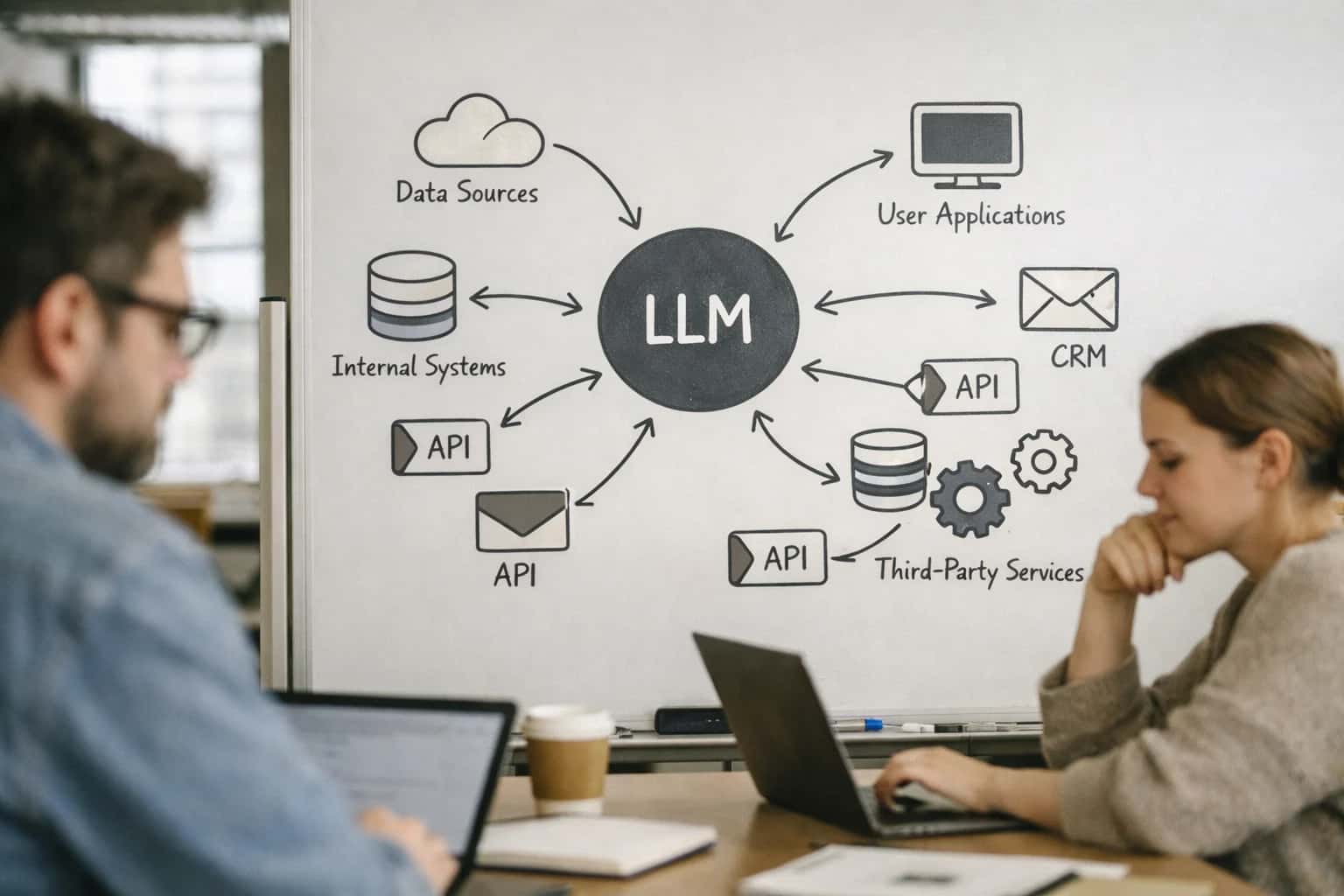
PARAMETER-EFFICIENT FINE-TUNING
What is a Pfeiffer Adapter?
A streamlined architecture for adapting large language models to new tasks with minimal trainable parameters.
The adapter layer itself typically employs a bottleneck design: a down-projection reduces the activation dimension, a nonlinearity (like ReLU) is applied, and an up-projection restores the original dimension. The output is added to the main activation stream via a residual connection. This serial adapter placement and constrained parameter count make Pfeiffer adapters a highly efficient choice within adapter-based PEFT, balancing performance gains with low computational cost for tasks like instruction tuning or domain adaptation.
ARCHITECTURAL SIMPLIFICATION
Key Features of the Pfeiffer Adapter
The Pfeiffer adapter is a streamlined variant of the classic adapter architecture, designed to reduce computational overhead while maintaining strong adaptation performance. Its defining characteristic is the insertion of a single, simplified adapter layer per transformer block.
01
Single-Layer Insertion
Unlike the original Houlsby adapter which inserts two adapter modules per transformer block, the Pfeiffer adapter inserts only one adapter layer, placed exclusively after the feed-forward network. This cuts the number of added parameters and sequential operations nearly in half, directly reducing adapter overhead during both training and inference.
- Location: Post feed-forward network within each transformer block.
- Impact: Reduces sequential depth and latency compared to dual-adapter designs.
02
Bottleneck Architecture
The core of the Pfeiffer adapter is a bottleneck feed-forward network. It projects the input activation into a low-dimensional space, applies a non-linearity, and projects it back to the original dimension. This creates a powerful but parameter-efficient function.
- Structure: Down-projection → Non-linearity (e.g., GELU) → Up-projection.
- Bottleneck Dimension (d): A hyperparameter (e.g., 64, 128) that controls the adapter's capacity and parameter count. A smaller
dincreases efficiency but may reduce representational power.
03
Residual Connection Integration
The adapter is integrated into the transformer block via a residual connection. The output of the adapter is added to the output of the original feed-forward network. This ensures training stability and prevents degradation of the base model's pre-existing knowledge, as the adapter can learn to output near-zero values initially.
- Formula:
output = FFN(x) + Adapter(FFN(x)) - Benefit: Enables stable training from a near-identity initialization and preserves the frozen base model's capabilities.
04
Parameter Efficiency
The Pfeiffer adapter exemplifies parameter-efficient fine-tuning (PEFT). Only the adapter's parameters (the down-projection, up-projection, and sometimes a layer norm) are trained, while the entire pre-trained transformer model remains frozen. This results in a tiny fraction of trainable parameters compared to full fine-tuning.
- Typical Budget: Often <1% of the base model's total parameters.
- Benefit: Dramatically reduces storage requirements (only the small adapter is saved per task) and mitigates catastrophic forgetting.
05
Serial (Sequential) Operation
The Pfeiffer adapter operates in serial with the existing feed-forward network. The activation flows through the frozen FFN first, then through the trainable adapter. This is a key distinction from parallel adapters, which process the input to the FFN in parallel with the FFN itself.
- Flow: Input → Frozen FFN → Adapter → Output.
- Implication: Adds a sequential computational step, but its small bottleneck size minimizes the latency impact.
06
Task-Specific Adaptation
A primary use case is training task-specific adapters. A unique Pfeiffer adapter can be trained for each new downstream task (e.g., sentiment analysis, named entity recognition). These lightweight adapters can be swapped in and out atop the single, shared frozen base model, enabling efficient multi-task serving.
- Workflow: Freeze base model (e.g., BERT, GPT). Train only the adapter on Task A data. Save adapter A. Repeat for Task B with a new adapter.
- Tooling: Frameworks like AdapterHub are built to manage, share, and load these small task-specific modules.
ARCHITECTURE COMPARISON
Pfeiffer Adapter vs. Other Adapter Architectures
A technical comparison of the Pfeiffer adapter's simplified design against other prominent adapter-based PEFT methods, highlighting key architectural and performance trade-offs.
| Feature / Metric | Pfeiffer Adapter | Houlsby Adapter | Parallel Adapter | Bottleneck Adapter |
|---|---|---|---|---|
Insertion Points per Transformer Block | 1 | 2 | 1 | 1 |
Location in Block | After FFN | After MHA & After FFN | Parallel to FFN | Sequential (varies) |
Architectural Style | Serial | Serial | Parallel | Serial (classic) |
Trainable Parameter Overhead | ~0.5-2% of base model | ~1-4% of base model | ~0.5-2% of base model | ~0.5-2% of base model |
Inference Latency Overhead | Low | Medium | Lowest (via residual) | Low |
Primary Design Goal | Simplicity & Efficiency | Comprehensive Adaptation | Minimal Inference Impact | Parameter Efficiency via Bottleneck |
Residual Connection | Yes (implicit via serial add) | Yes (implicit via serial add) | Yes (explicit parallel path) | Yes (implicit via serial add) |
Typical Bottleneck Dimension (d) | 64 | 64 | 64 | 64 |
PFEIFFER ADAPTER
Frequently Asked Questions
A concise technical FAQ on the Pfeiffer adapter, a streamlined architecture for parameter-efficient fine-tuning of transformer models.
A Pfeiffer adapter is a simplified adapter-based PEFT architecture that inserts a single, small trainable module only after the feed-forward network (FFN) within each transformer block of a frozen pre-trained model. It works by projecting the transformer's hidden activations into a lower-dimensional bottleneck space, applying a non-linearity, and projecting back up, with the output added to the main activation stream via a residual connection. This design, a simplification of the earlier Houlsby adapter, trains only the adapter's parameters, efficiently adapting the model to a new task while keeping the original massive parameter count frozen.
Enabling Efficiency, Speed & Accuracy
Intelligent Analysis, Decision & Execution
We build AI systems for teams that need search across company data, workflow automation across tools, or AI features inside products and internal software.
Talk to Us
Search across company data
Give teams answers from docs, tickets, runbooks, and product data with sources and permissions.
Useful when people spend too long searching or get different answers from different systems.
Enterprise searchRAGPermissions
Read more
Automate internal workflows
Use AI to route work, draft outputs, trigger actions, and keep approvals and logs in place.
Useful when repetitive work moves across multiple tools and teams.
AI agentsWorkflow automationGovernance
Read more
Add AI to products and internal tools
Build assistants, guided actions, or decision support into the software your team or customers already use.
Useful when AI needs to be part of the product, not a separate tool.
AI integrationDecision supportModel routing
Read more
About the author
Prasad Kumkar
CEO & MD, Inference Systems
Prasad Kumkar is the CEO & MD of Inference Systems and writes about AI systems architecture, LLM infrastructure, model serving, evaluation, and production deployment. Over 5+ years, he has worked across computer vision models, L5 autonomous vehicle systems, and LLM research, with a focus on taking complex AI ideas into real-world engineering systems.
His work and writing cover AI systems, large language models, AI agents, multimodal systems, autonomous systems, inference optimization, RAG, evaluation, and production AI engineering.
LinkedIn
Limited slotsGet a Free AI Consultation
Partnered with leading AI, data, and software stack.





How We Work
Custom AI workflows for your Business
One-fit-all AI don't work for modern businesses. At Inferensys, we aim to understand your business & custom requirements; which we use to define most efficient agentic workflows, the data, and the tools for your business.
01
Review the use case
We understand the task, the users, and where AI can actually help.
Read more02
Pick the right approach
We define what needs search, automation, or product integration.
Read more03
Build the first useful version
We implement the part that proves the value first.
Read more04
Improve from there
We add the checks and visibility needed to keep it useful.
Read moreThe first call is a practical review of your use case and the right next step.
Talk to Us