A regulatory change workflow is the automated sequence of tasks and approvals initiated by the detection of a new or amended regulation. It orchestrates the end-to-end lifecycle of managing a legal update, moving it from initial identification through impact assessment, stakeholder review, and the assignment of remediation actions to ensure an organization's policies and procedures remain in continuous compliance.

Glossary
Regulatory Change Workflow
The automated orchestration of human and machine tasks triggered by a detected regulatory change, including review, impact assessment, and policy update assignments.
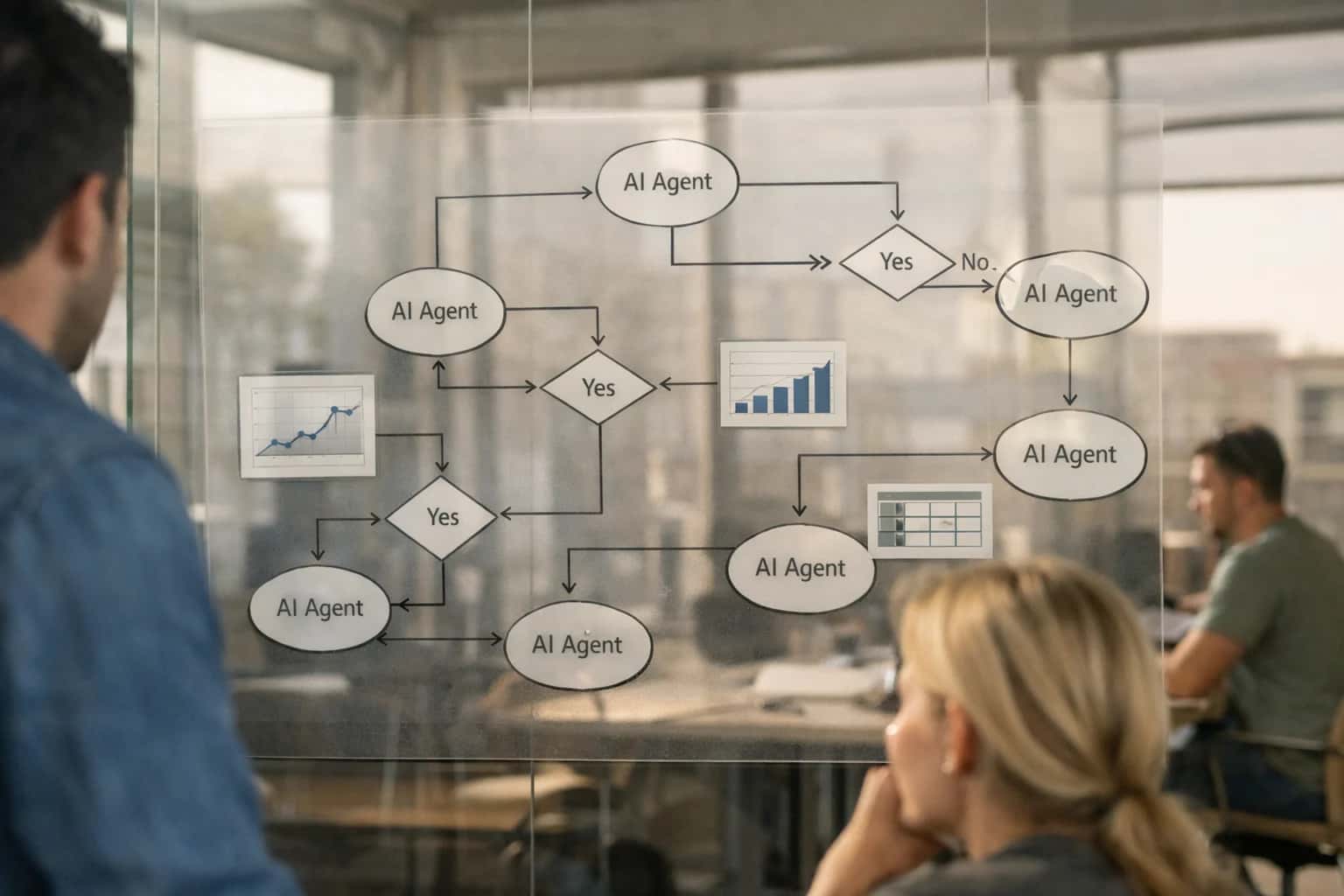
COMPLIANCE ORCHESTRATION
What is Regulatory Change Workflow?
The automated orchestration of human and machine tasks triggered by a detected regulatory change, including review, impact assessment, and policy update assignments.
These workflows integrate machine-driven change detection with human-in-the-loop decision points, routing a specific regulatory delta to the appropriate legal or compliance officer. By codifying the steps for obligation delta analysis and policy revision, the workflow transforms an unstructured alert into a structured, auditable process, providing a complete regulatory change audit trail for governance and reporting.
ORCHESTRATION LIFECYCLE
Core Components of a Regulatory Change Workflow
The automated sequence of human and machine tasks triggered by a detected regulatory change, transforming raw legal deltas into operational compliance actions.
01
Change Intake & Triage
The initial stage where a regulatory event stream is filtered and prioritized. Raw deltas are ingested, deduplicated, and enriched with metadata such as jurisdiction, affected business units, and change impact scoring. This stage routes high-severity amendments for immediate review while queuing minor procedural updates for batch processing. Key activities include:
- Automated effective date extraction to establish urgency
- Application of a regulatory change taxonomy to categorize the amendment type
- Assignment of a unique tracking identifier for full regulatory change audit trail integrity
< 60 sec
Triage Latency Target
02
Impact Assessment & Obligation Mapping
A systematic analysis phase where the regulatory delta is mapped against an organization's internal policy library and control framework. This process performs a compliance gap analysis to identify specific policies, procedures, or controls that require modification. The core output is an obligation delta—a structured enumeration of new, modified, or rescinded duties. This stage often leverages a regulatory change knowledge graph to trace how a single statutory amendment propagates through dependent regulations and cross-references.
3-5x
Faster Than Manual Review
03
Task Decomposition & Assignment
The translation of identified obligation deltas into discrete, assignable work items. A change propagation model informs the decomposition by identifying all downstream artifacts affected by the amendment. The system generates specific remediation tasks—such as updating a policy document, modifying a control test, or revising a training module—and routes them to the appropriate owners based on predefined roles and subject matter expertise. This stage enforces regulatory change governance by embedding approval gates and segregation of duties directly into the workflow.
100%
Task Traceability
04
Remediation & Policy Update
The execution phase where assigned owners draft and implement the required changes. For policy updates, this may involve an automated redline comparison of the current policy against the new regulatory baseline. The workflow supports collaborative editing, version control, and structured commentary. All modifications are tracked within the statutory versioning system to maintain a complete lineage of what changed, why it changed, and who approved it. Integration with document management systems ensures the updated policy is published to the authoritative source of truth.
60-80%
Reduction in Cycle Time
05
Validation & Attestation
A formal closing stage that verifies remediation completeness and captures evidence for audit and regulatory examination. The workflow requires explicit sign-off from accountable executives, confirming that the compliance gap has been fully closed. The system generates a change summarization narrative—a plain-language description of the amendment, the actions taken, and the residual risk posture. All artifacts, decisions, and timestamps are sealed into the immutable regulatory change audit trail, providing demonstrable proof of a controlled, defensible change management process.
100%
Audit Readiness
06
Continuous Monitoring & Feedback
An ongoing loop that ensures the workflow itself remains effective. Regulatory change observability dashboards track key performance indicators such as change detection latency, mean time to remediate, and overdue task aging. This telemetry feeds back into the triage and impact assessment stages to refine change impact scoring models and reassign resources. The system also monitors for regulatory drift detection—identifying interpretive shifts that may necessitate reopening a previously closed change, ensuring the organization's compliance posture remains dynamically aligned with the evolving regulatory environment.
99.5%
SLA Adherence
REGULATORY CHANGE WORKFLOW
Frequently Asked Questions
Clear, technically precise answers to the most common questions about automating the orchestration of tasks triggered by a detected regulatory change.
A regulatory change workflow is the automated orchestration of human and machine tasks initiated by a detected regulatory delta. It is the operational backbone that converts a raw signal of a statutory amendment into a closed-loop compliance action. The workflow begins the moment a change detection pipeline surfaces a verified update and systematically routes it through a predefined sequence of stages: initial triage, compliance gap analysis, change impact scoring, task assignment to subject-matter experts, policy revision, and final audit approval. This structured automation ensures that no regulatory update is dropped and that the organization's response is consistent, auditable, and timely, transforming a reactive scramble into a managed business process.
Enabling Efficiency, Speed & Accuracy
Intelligent Analysis, Decision & Execution
We build AI systems for teams that need search across company data, workflow automation across tools, or AI features inside products and internal software.
Talk to Us
Search across company data
Give teams answers from docs, tickets, runbooks, and product data with sources and permissions.
Useful when people spend too long searching or get different answers from different systems.
Enterprise searchRAGPermissions
Read more
Automate internal workflows
Use AI to route work, draft outputs, trigger actions, and keep approvals and logs in place.
Useful when repetitive work moves across multiple tools and teams.
AI agentsWorkflow automationGovernance
Read more
Add AI to products and internal tools
Build assistants, guided actions, or decision support into the software your team or customers already use.
Useful when AI needs to be part of the product, not a separate tool.
AI integrationDecision supportModel routing
Read more
About the author
Prasad Kumkar
CEO & MD, Inference Systems
Prasad Kumkar is the CEO & MD of Inference Systems and writes about AI systems architecture, LLM infrastructure, model serving, evaluation, and production deployment. Over 5+ years, he has worked across computer vision models, L5 autonomous vehicle systems, and LLM research, with a focus on taking complex AI ideas into real-world engineering systems.
His work and writing cover AI systems, large language models, AI agents, multimodal systems, autonomous systems, inference optimization, RAG, evaluation, and production AI engineering.
LinkedIn
Limited slotsGet a Free AI Consultation
Partnered with leading AI, data, and software stack.





How We Work
Custom AI workflows for your Business
One-fit-all AI don't work for modern businesses. At Inferensys, we aim to understand your business & custom requirements; which we use to define most efficient agentic workflows, the data, and the tools for your business.
01
Review the use case
We understand the task, the users, and where AI can actually help.
Read more02
Pick the right approach
We define what needs search, automation, or product integration.
Read more03
Build the first useful version
We implement the part that proves the value first.
Read more04
Improve from there
We add the checks and visibility needed to keep it useful.
Read moreThe first call is a practical review of your use case and the right next step.
Talk to Us