A regulatory change taxonomy is a structured, hierarchical classification system that categorizes detected legal updates by their semantic type, such as a definitional change, threshold adjustment, or procedural amendment. It serves as the organizing logic within a regulatory intelligence platform, transforming an unstructured stream of textual deltas into a machine-readable, actionable inventory of modifications.

Glossary
Regulatory Change Taxonomy
A hierarchical classification schema used to categorize detected legal updates by type, such as 'definitional change,' 'threshold adjustment,' or 'procedural amendment.'
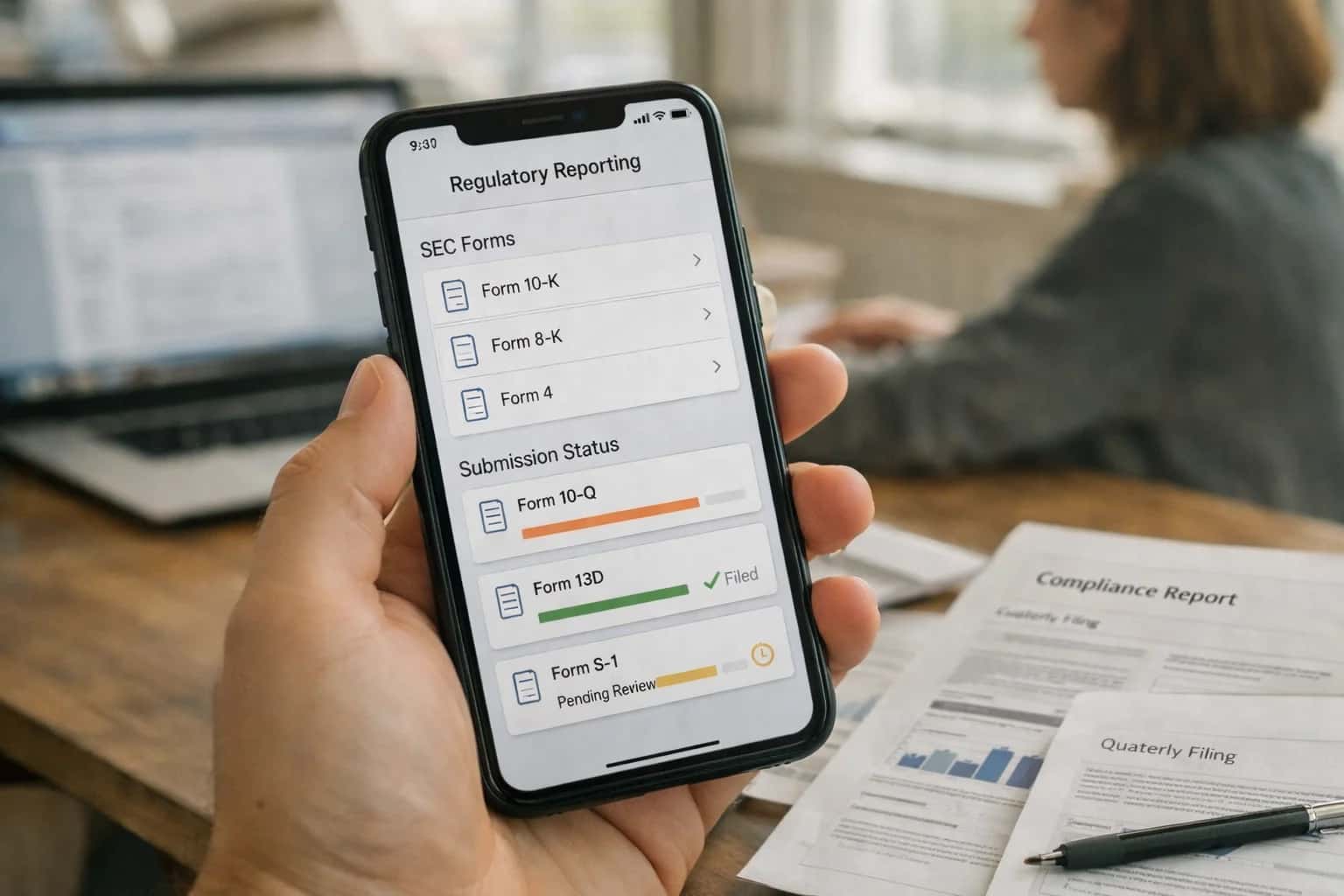
CLASSIFICATION FRAMEWORK
What is Regulatory Change Taxonomy?
A regulatory change taxonomy is a hierarchical classification schema used to categorize detected legal updates by their semantic type, enabling automated prioritization and routing.
By mapping a detected regulatory delta to a specific taxonomic node, the system enables automated downstream workflows. A monetary threshold adjustment can trigger a financial compliance review, while a procedural amendment routes to an operations team. This classification is critical for calculating accurate change impact scoring and maintaining a high-precision regulatory event stream.
REGULATORY CHANGE TAXONOMY
Core Taxonomic Classes
A hierarchical classification schema used to categorize detected legal updates by type, enabling automated routing, impact assessment, and prioritization within regulatory intelligence platforms.
01
Definitional Change
A modification to the legal definition of a term within a statute or regulation. This class of change is high-impact because it alters the semantic scope of key operative terms.
- Example: Expanding the definition of 'personal data' to include biometric identifiers.
- Impact: Triggers cascading compliance updates across all dependent clauses.
- Detection: Requires semantic parsing of definitional sections (e.g., 'For the purposes of this section...').
02
Threshold Adjustment
A change to a quantitative limit, value, or trigger specified in regulatory text. These are often numeric and highly machine-detectable.
- Example: Raising the reporting threshold from $10,000 to $15,000.
- Example: Adjusting a permissible emission level from 50 ppm to 30 ppm.
- Impact: Directly alters operational compliance parameters and monitoring system configurations.
03
Procedural Amendment
A modification to a required sequence of actions, filing steps, or approval workflows mandated by a regulation.
- Example: Changing a filing deadline from 30 days to 45 days.
- Example: Adding a new public comment period before rule finalization.
- Impact: Requires updates to standard operating procedures and compliance calendars.
04
Obligatory Shift
A change that creates, removes, or alters a duty, prohibition, or permission for a regulated entity. This class focuses on deontic modality.
- Example: Changing a 'may' (permission) to a 'shall' (obligation).
- Example: Introducing a new prohibition on a previously unregulated activity.
- Detection: Requires deontic logic parsing to identify modal verbs and their scope.
05
Cross-Reference Update
A change that updates a pointer or citation to another legal authority without altering the substantive rule itself.
- Example: Updating a statutory citation from 'Section 12(a)' to 'Section 14(b)' after a recodification.
- Impact: Low substantive impact but critical for maintaining navigable, accurate legal knowledge graphs.
- Detection: Identified through citation network analysis and link validation.
06
Sunset or Expiration Event
A classification for provisions that are scheduled to terminate automatically on a specific date unless renewed.
- Example: A temporary emergency regulation set to expire on December 31, 2025.
- Impact: Requires proactive tracking to avoid compliance gaps upon expiration or to prepare for renewal.
- Detection: Monitored by specialized sunset provision trackers that parse effective date and duration clauses.
REGULATORY CHANGE TAXONOMY
Frequently Asked Questions
A hierarchical classification schema used to categorize detected legal updates by type, such as 'definitional change,' 'threshold adjustment,' or 'procedural amendment.' The following questions address the core mechanisms, design principles, and operational challenges of building and maintaining a robust regulatory change taxonomy for automated compliance systems.
A regulatory change taxonomy is a hierarchical classification schema that systematically categorizes detected legal updates by their semantic type, such as a definitional change, threshold adjustment, or procedural amendment. It functions as the organizing logic within a regulatory intelligence platform, ingesting a regulatory delta from an automated differencing engine and assigning it a structured label based on its operative language. The taxonomy parses the amendment parsing output to distinguish between a substantive obligation shift and a clerical correction. By mapping each change to a predefined node in the taxonomy, the system enables downstream compliance gap analysis and change impact scoring, ensuring that a minor typographical fix is not routed to the same high-priority workflow as a new criminal liability provision.
Enabling Efficiency, Speed & Accuracy
Intelligent Analysis, Decision & Execution
We build AI systems for teams that need search across company data, workflow automation across tools, or AI features inside products and internal software.
Talk to Us
Search across company data
Give teams answers from docs, tickets, runbooks, and product data with sources and permissions.
Useful when people spend too long searching or get different answers from different systems.
Enterprise searchRAGPermissions
Read more
Automate internal workflows
Use AI to route work, draft outputs, trigger actions, and keep approvals and logs in place.
Useful when repetitive work moves across multiple tools and teams.
AI agentsWorkflow automationGovernance
Read more
Add AI to products and internal tools
Build assistants, guided actions, or decision support into the software your team or customers already use.
Useful when AI needs to be part of the product, not a separate tool.
AI integrationDecision supportModel routing
Read more
About the author
Prasad Kumkar
CEO & MD, Inference Systems
Prasad Kumkar is the CEO & MD of Inference Systems and writes about AI systems architecture, LLM infrastructure, model serving, evaluation, and production deployment. Over 5+ years, he has worked across computer vision models, L5 autonomous vehicle systems, and LLM research, with a focus on taking complex AI ideas into real-world engineering systems.
His work and writing cover AI systems, large language models, AI agents, multimodal systems, autonomous systems, inference optimization, RAG, evaluation, and production AI engineering.
LinkedIn
Limited slotsGet a Free AI Consultation
Partnered with leading AI, data, and software stack.





How We Work
Custom AI workflows for your Business
One-fit-all AI don't work for modern businesses. At Inferensys, we aim to understand your business & custom requirements; which we use to define most efficient agentic workflows, the data, and the tools for your business.
01
Review the use case
We understand the task, the users, and where AI can actually help.
Read more02
Pick the right approach
We define what needs search, automation, or product integration.
Read more03
Build the first useful version
We implement the part that proves the value first.
Read more04
Improve from there
We add the checks and visibility needed to keep it useful.
Read moreThe first call is a practical review of your use case and the right next step.
Talk to Us