Regulatory Change Governance is the structured framework of policies, roles, and procedures that controls how an organization's regulatory change detection system is managed, validated, and audited. It defines who reviews flagged regulatory deltas, how change impact scoring is calibrated, and what constitutes an acceptable change detection latency for the enterprise.

Glossary
Regulatory Change Governance
The framework of policies, roles, and procedures that control how an organization's regulatory change detection system is managed, validated, and audited.
COMPLIANCE FRAMEWORK
What is Regulatory Change Governance?
The institutional framework of policies, roles, and auditable procedures that controls how an organization's regulatory change detection system is managed, validated, and operationalized.
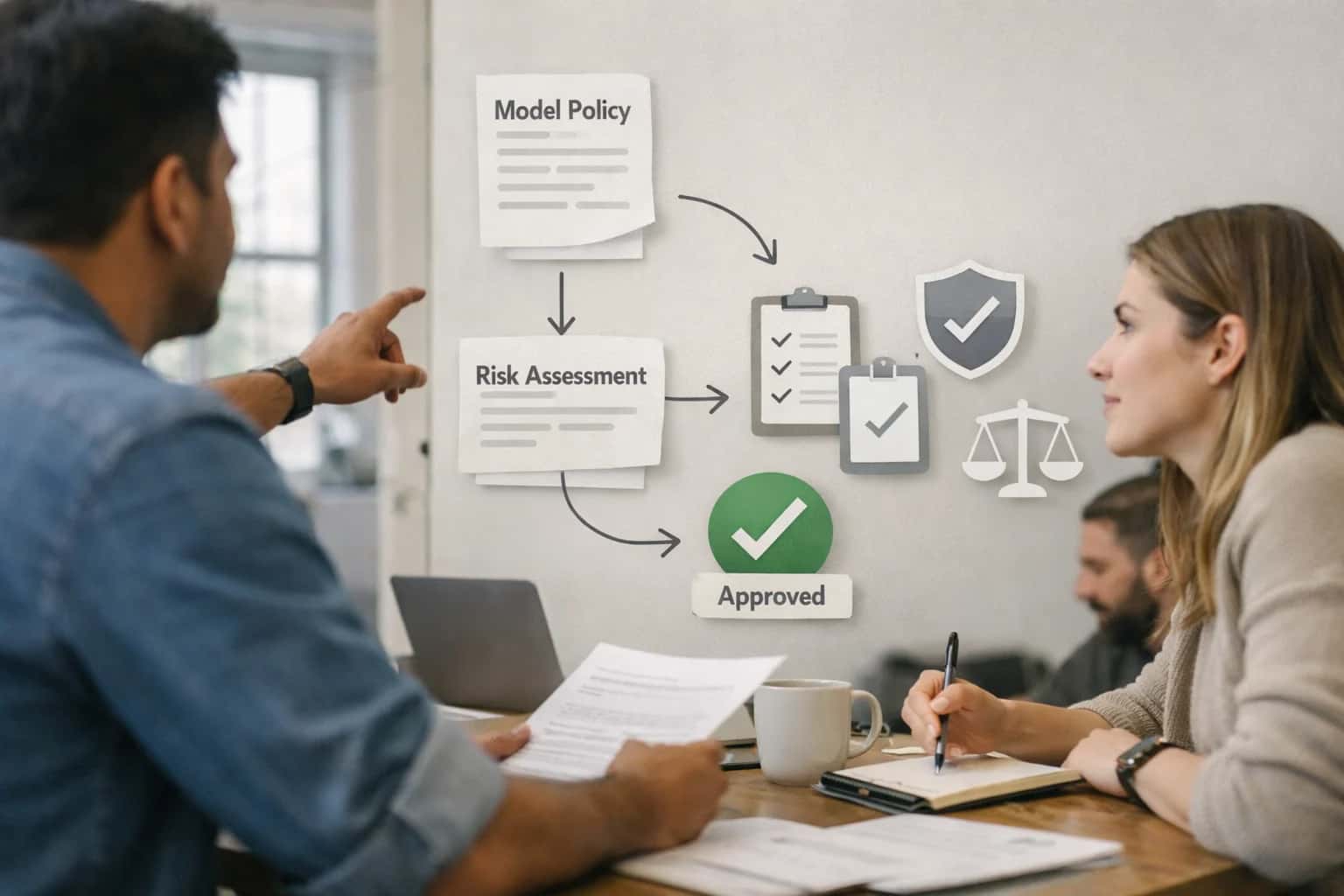
Effective governance establishes a regulatory change audit trail that immutably logs every detected amendment, its disposition, and the analyst's rationale, ensuring full traceability for internal audit and external regulators. This framework integrates with the regulatory change workflow to enforce segregation of duties between the system's automated detection and the human validation of high-severity obligation deltas before they trigger downstream policy updates.
REGULATORY CHANGE GOVERNANCE
Core Components of a Governance Framework
A robust governance framework transforms a regulatory change detection system from a passive monitor into an auditable, controlled, and reliable enterprise function. It defines the policies, roles, and procedures for validation, escalation, and lifecycle management.
01
Role-Based Access Control (RBAC)
Defines a strict permission matrix for the regulatory intelligence platform, segregating duties between those who configure detection parameters, those who validate flagged changes, and those who approve final compliance gap analyses. This ensures no single actor can both detect a change and unilaterally alter an organization's policy response without review.
02
Validation and Triage Workflow
A structured, auditable process for human-in-the-loop review of every detected regulatory delta. Analysts must disposition each alert as a true positive, false positive, or duplicate before it enters the impact assessment queue. This workflow is the primary defense against change detection precision failures and alert fatigue.
03
Audit Trail Immutability
An append-only, time-stamped log that records every state transition of a regulatory change alert. The regulatory change audit trail must capture:
- The raw source document and detected delta
- The analyst's disposition and rationale
- The calculated change impact score
- Any subsequent policy update actions This ensures full traceability for internal auditors and external regulators.
04
Change Taxonomy Governance
The formal ownership and maintenance of the regulatory change taxonomy. A designated governance body must periodically review and update the classification schema—such as 'definitional change,' 'threshold adjustment,' or 'procedural amendment'—to ensure it remains aligned with evolving business risks and regulatory structures.
05
Escalation and Remediation Policies
Pre-defined rules that trigger specific actions based on a change's impact score and taxonomy classification. A high-impact 'prohibition' change may automatically generate a task for the legal department with a 48-hour SLA, while a low-impact 'definitional change' is routed to a quarterly review backlog. This closes the loop between detection and operational response.
06
Model and Pipeline Observability
Continuous monitoring of the change detection pipeline's operational health, not just its outputs. Governance requires tracking change detection latency, recall degradation due to concept drift, and data freshness. Dashboards must provide real-time visibility into the system's performance against its defined service level objectives (SLOs).
REGULATORY CHANGE GOVERNANCE
Frequently Asked Questions
Clear, technically precise answers to the most common questions about the frameworks, roles, and procedures that control how regulatory change detection systems are managed, validated, and audited.
Regulatory change governance is the formal framework of policies, roles, and auditable procedures that controls how an organization's automated regulatory change detection system is managed, validated, and integrated into business operations. It is critical because a detection system without governance is a liability: it can generate a high volume of false positives, miss critical regulatory deltas, or surface changes without a clear chain of accountability for disposition. A robust governance framework defines the regulatory change workflow, establishes human-in-the-loop review gates for high-impact changes identified by a change impact scoring methodology, and mandates a complete regulatory change audit trail. This ensures that every flagged amendment, from an effective date extraction to a complex statutory revision, is traced from its source through to a documented decision, satisfying both internal audit requirements and external regulatory scrutiny.
Enabling Efficiency, Speed & Accuracy
Intelligent Analysis, Decision & Execution
We build AI systems for teams that need search across company data, workflow automation across tools, or AI features inside products and internal software.
Talk to Us
Search across company data
Give teams answers from docs, tickets, runbooks, and product data with sources and permissions.
Useful when people spend too long searching or get different answers from different systems.
Enterprise searchRAGPermissions
Read more
Automate internal workflows
Use AI to route work, draft outputs, trigger actions, and keep approvals and logs in place.
Useful when repetitive work moves across multiple tools and teams.
AI agentsWorkflow automationGovernance
Read more
Add AI to products and internal tools
Build assistants, guided actions, or decision support into the software your team or customers already use.
Useful when AI needs to be part of the product, not a separate tool.
AI integrationDecision supportModel routing
Read more
About the author
Prasad Kumkar
CEO & MD, Inference Systems
Prasad Kumkar is the CEO & MD of Inference Systems and writes about AI systems architecture, LLM infrastructure, model serving, evaluation, and production deployment. Over 5+ years, he has worked across computer vision models, L5 autonomous vehicle systems, and LLM research, with a focus on taking complex AI ideas into real-world engineering systems.
His work and writing cover AI systems, large language models, AI agents, multimodal systems, autonomous systems, inference optimization, RAG, evaluation, and production AI engineering.
LinkedIn
Limited slotsGet a Free AI Consultation
Partnered with leading AI, data, and software stack.





How We Work
Custom AI workflows for your Business
One-fit-all AI don't work for modern businesses. At Inferensys, we aim to understand your business & custom requirements; which we use to define most efficient agentic workflows, the data, and the tools for your business.
01
Review the use case
We understand the task, the users, and where AI can actually help.
Read more02
Pick the right approach
We define what needs search, automation, or product integration.
Read more03
Build the first useful version
We implement the part that proves the value first.
Read more04
Improve from there
We add the checks and visibility needed to keep it useful.
Read moreThe first call is a practical review of your use case and the right next step.
Talk to Us