Compliance gap analysis is the systematic comparison of an organization's internal policies, procedures, and technical controls against a defined external regulatory standard to identify specific areas of non-conformance. The process produces a prioritized inventory of remediation items required to achieve a target state of compliance, serving as the critical bridge between regulatory change detection and operational implementation.

Glossary
Compliance Gap Analysis
The systematic comparison of an organization's internal policies against a new regulatory baseline to identify areas of non-conformance requiring remediation.
REGULATORY RISK MANAGEMENT
What is Compliance Gap Analysis?
A systematic process for identifying discrepancies between an organization's current internal controls and a new or updated regulatory baseline.
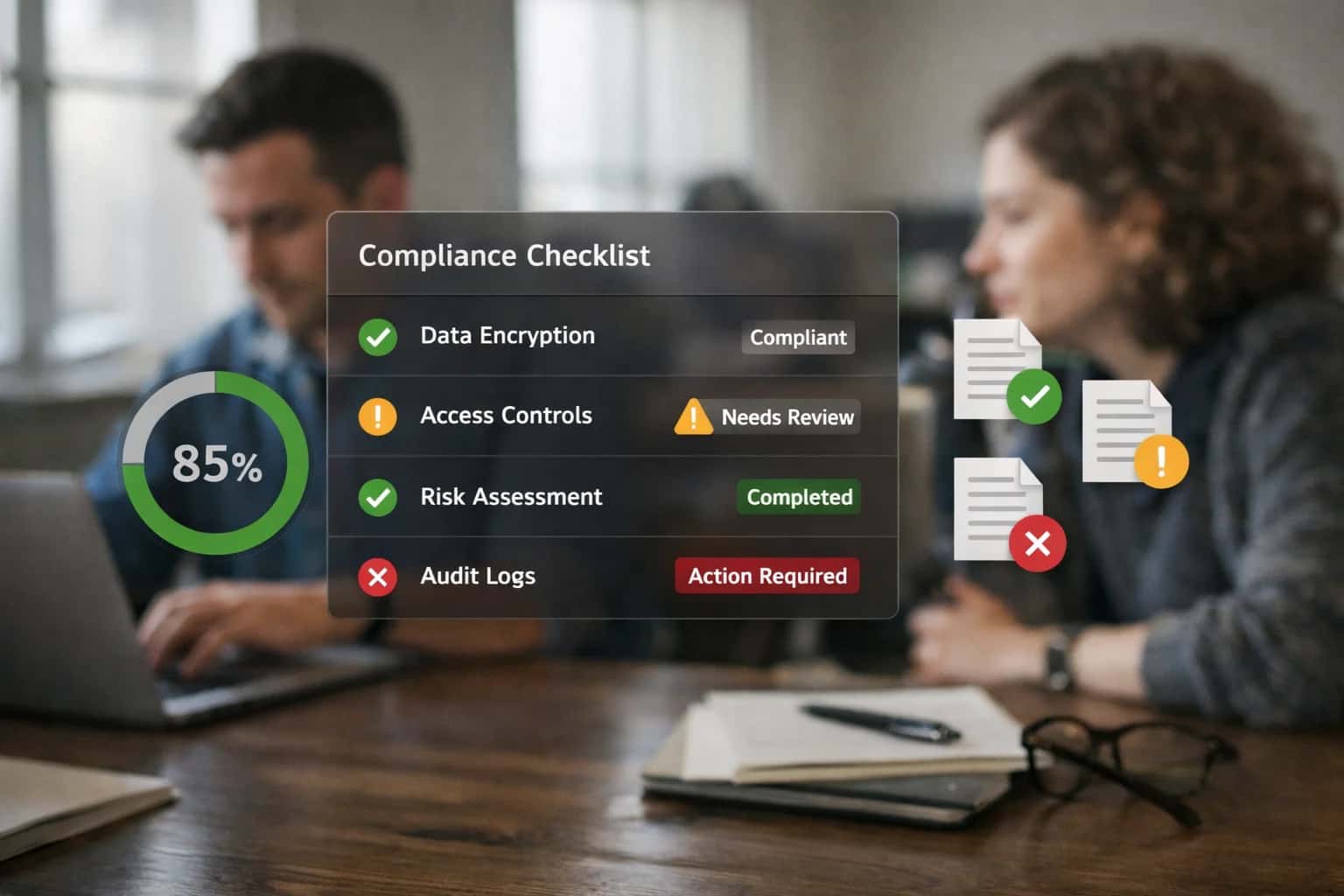
The analysis maps each requirement from a regulatory text to a corresponding internal control, flagging gaps where a control is missing, insufficient, or undocumented. Modern approaches leverage regulatory knowledge graphs and obligation delta calculations to automate this mapping, transforming a static compliance checklist into a dynamic, auditable remediation roadmap that directly informs enterprise risk posture.
COMPLIANCE GAP ANALYSIS
Core Characteristics
The systematic comparison of an organization's internal policies against a new regulatory baseline to identify areas of non-conformance requiring remediation.
01
Regulatory Baseline Establishment
The foundational step of ingesting and normalizing the target regulatory text into a machine-readable format. This involves parsing complex legal documents—statutes, administrative codes, and guidance—to create a structured, queryable representation of all obligations, prohibitions, and permissions. The baseline serves as the single source of truth against which internal controls are measured, requiring precise handling of effective dates, cross-references, and defined terms to ensure the comparison is legally accurate.
02
Internal Policy Normalization
The process of transforming an organization's heterogeneous internal documents—policies, procedures, and controls—into a structured format compatible with the regulatory baseline. This requires extracting semantic obligations from unstructured text, standardizing terminology to match legal language, and mapping internal controls to specific regulatory provisions. The goal is to create a common semantic model that allows for direct, clause-by-clause comparison, eliminating ambiguity between business language and legal text.
03
Semantic Delta Computation
The algorithmic core that identifies mismatches between the regulatory baseline and the normalized internal policy set. This goes beyond simple keyword matching to perform deontic logic comparison, detecting where an internal control is absent, partially compliant, or contradictory to a regulatory requirement. The engine classifies each gap by type:
- Omission: A required control is missing entirely
- Deviation: An existing control is weaker or narrower in scope
- Conflict: An internal policy contradicts a regulatory prohibition
04
Gap Remediation Prioritization
The risk-based framework for sequencing the resolution of identified compliance gaps. Each gap is assigned a change impact score based on factors including the severity of the regulatory obligation, the potential for enforcement action, and the operational cost of remediation. This produces a prioritized remediation roadmap that allows compliance officers to allocate resources to the most critical non-conformances first, often visualized as a heat map plotting gap severity against remediation effort.
05
Continuous Compliance Monitoring
The shift from point-in-time analysis to an ongoing posture assessment. As the regulatory baseline evolves through a regulatory change detection pipeline, the gap analysis engine automatically recomputes the delta against the current internal policy set. This generates a real-time compliance drift alert whenever a new regulation creates a fresh gap, enabling proactive remediation before an audit or enforcement action occurs.
06
Audit-Ready Evidence Packaging
The automated generation of a regulatory change audit trail that documents the entire gap analysis lifecycle. For each identified gap, the system captures the specific regulatory citation, the conflicting internal policy reference, the computed delta, the assigned remediation owner, and the final disposition. This creates an immutable, time-stamped record that serves as defensible evidence of a good-faith compliance program to regulators and external auditors.
COMPLIANCE GAP ANALYSIS
Frequently Asked Questions
Clear, technical answers to the most common questions about systematically identifying and remediating regulatory non-conformance.
Compliance gap analysis is the systematic, computational comparison of an organization's internal policies, procedures, and technical controls against a defined external regulatory baseline to identify specific areas of non-conformance. The process begins by ingesting and structuring both the regulatory text and the internal control library into a common, machine-readable taxonomy. A regulatory delta—the precise difference between the old and new legal requirement—is then mapped against the existing control set. The output is a prioritized register of gaps, where a gap is defined as a regulatory obligation that lacks a corresponding, adequately designed internal control. This analysis moves beyond simple keyword matching to perform deontic logic modeling, determining if a new rule creates an obligation, prohibition, or permission that the organization's current posture does not address, thereby generating a remediation roadmap.
Enabling Efficiency, Speed & Accuracy
Intelligent Analysis, Decision & Execution
We build AI systems for teams that need search across company data, workflow automation across tools, or AI features inside products and internal software.
Talk to Us
Search across company data
Give teams answers from docs, tickets, runbooks, and product data with sources and permissions.
Useful when people spend too long searching or get different answers from different systems.
Enterprise searchRAGPermissions
Read more
Automate internal workflows
Use AI to route work, draft outputs, trigger actions, and keep approvals and logs in place.
Useful when repetitive work moves across multiple tools and teams.
AI agentsWorkflow automationGovernance
Read more
Add AI to products and internal tools
Build assistants, guided actions, or decision support into the software your team or customers already use.
Useful when AI needs to be part of the product, not a separate tool.
AI integrationDecision supportModel routing
Read more
About the author
Prasad Kumkar
CEO & MD, Inference Systems
Prasad Kumkar is the CEO & MD of Inference Systems and writes about AI systems architecture, LLM infrastructure, model serving, evaluation, and production deployment. Over 5+ years, he has worked across computer vision models, L5 autonomous vehicle systems, and LLM research, with a focus on taking complex AI ideas into real-world engineering systems.
His work and writing cover AI systems, large language models, AI agents, multimodal systems, autonomous systems, inference optimization, RAG, evaluation, and production AI engineering.
LinkedIn
Limited slotsGet a Free AI Consultation
Partnered with leading AI, data, and software stack.





How We Work
Custom AI workflows for your Business
One-fit-all AI don't work for modern businesses. At Inferensys, we aim to understand your business & custom requirements; which we use to define most efficient agentic workflows, the data, and the tools for your business.
01
Review the use case
We understand the task, the users, and where AI can actually help.
Read more02
Pick the right approach
We define what needs search, automation, or product integration.
Read more03
Build the first useful version
We implement the part that proves the value first.
Read more04
Improve from there
We add the checks and visibility needed to keep it useful.
Read moreThe first call is a practical review of your use case and the right next step.
Talk to Us