Treaty compliance mapping is the computational and analytical process of decomposing an international agreement into discrete, verifiable obligations and then linking each obligation to its corresponding implementing legislation, regulation, or administrative rule within each signatory jurisdiction. This process resolves the inherent ambiguity between a treaty's high-level principles and the precise technical standards required for domestic enforcement, creating a structured, machine-readable matrix of cross-border legal requirements.

Glossary
Treaty Compliance Mapping
The systematic process of translating the abstract obligations of an international treaty into specific, actionable domestic regulatory requirements across all signatory states.
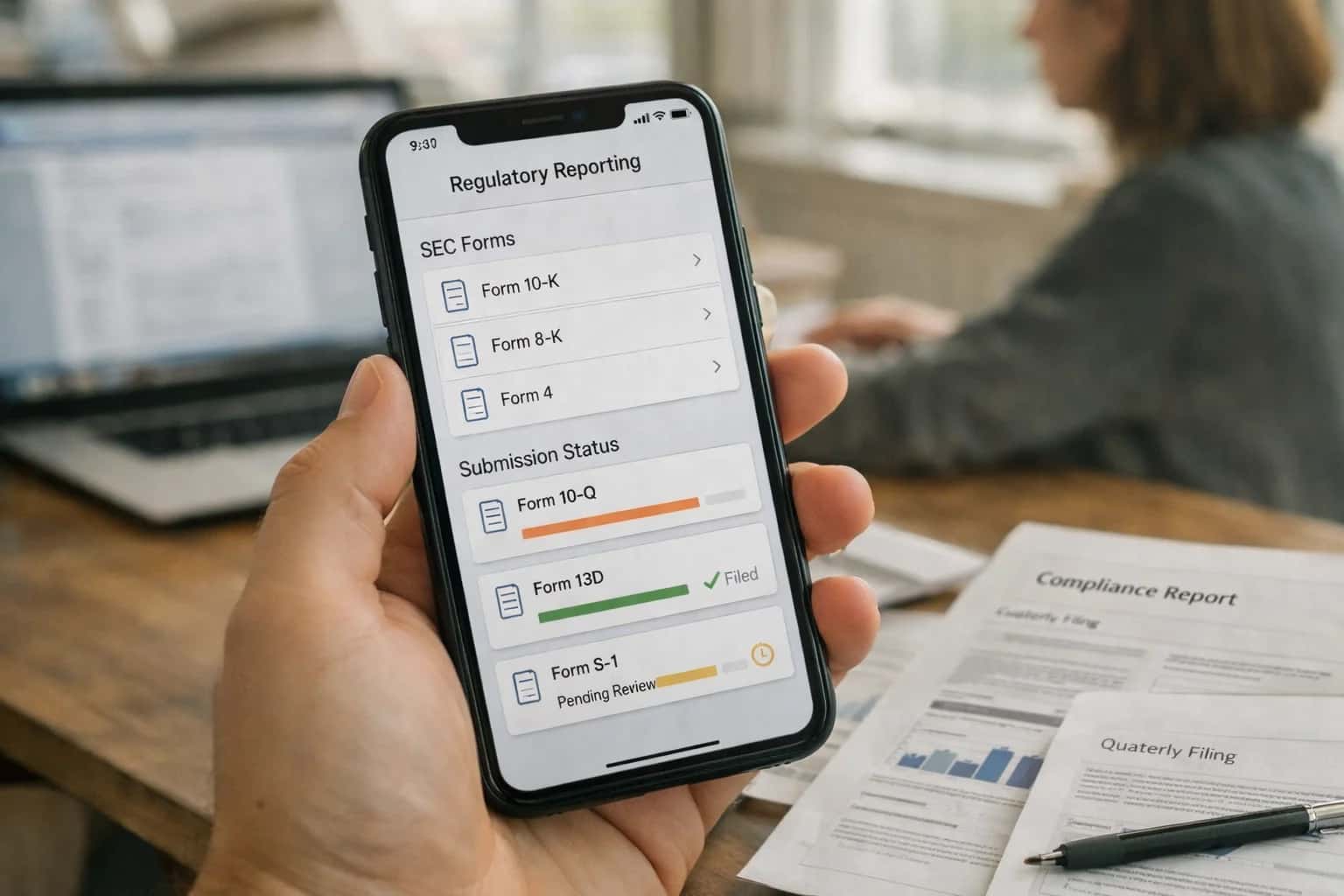
CROSS-JURISDICTIONAL HARMONIZATION
What is Treaty Compliance Mapping?
The systematic process of translating the abstract obligations of an international treaty into specific, actionable domestic regulatory requirements across all signatory states.
The core technical challenge involves performing legal semantic normalization across multiple languages and legal traditions to identify where a single treaty article maps to dozens of functionally equivalent but textually distinct domestic statutes. The output is a normative equivalence class that allows a multinational enterprise to verify that a single internal control simultaneously satisfies the treaty-derived requirements of all relevant sovereign states, closing critical compliance gaps.
MECHANISMS & METHODOLOGIES
Core Characteristics of Treaty Compliance Mapping
The foundational components that enable the systematic translation of international treaty obligations into actionable, machine-readable domestic regulatory requirements across all signatory states.
01
Obligation Extraction & Decomposition
The initial phase involves parsing the treaty text to identify and isolate deontic operators—obligations (shall), prohibitions (shall not), and permissions (may). Each obligation is decomposed into its atomic components: the legal subject (who is bound), the action (what must be done), the object (to what or whom), and any conditions or exceptions. This process often uses fine-tuned legal NER models to handle complex anaphora and cross-references within the text.
02
Jurisdictional Norm Mapping
Each extracted treaty obligation is algorithmically mapped to its functional equivalent in a specific signatory's domestic legal code. This requires a Comparative Law Ontology to bridge terminological differences.
- A treaty mandate for 'data minimization' might map to 'principle of proportionality' in EU law and 'reasonable collection limitation' in a common law jurisdiction.
- The system must account for gold-plating, where a jurisdiction imposes stricter rules than the treaty requires.
03
Regulatory Divergence Scoring
A quantitative metric that measures the semantic and structural distance between a treaty obligation and a domestic regulation. The score combines:
- Textual Entailment: Does the domestic text logically cover the treaty mandate?
- Enforcement Gap: Does the jurisdiction have an adequate penalty and oversight mechanism?
- Scope Variance: Are the covered entities or activities identical? A high divergence score flags a jurisdiction for prioritized remediation or a formal Equivalence Determination review.
04
Change Propagation Engine
Treaties are amended, and domestic laws are revised. The Regulatory Change Propagation engine monitors both sources. When a treaty protocol is updated, the system triggers a cascade of re-evaluations across all signatory states, re-running the norm mapping and divergence scoring for affected obligations. This ensures the compliance map remains a living, continuously audited artifact rather than a static snapshot.
05
Machine-Executable Compliance Rules
The ultimate output is a set of formal, machine-executable rules. Using a Deontic Logic Modeling framework, mapped obligations are encoded as deterministic logic statements.
- Example:
IF data_subject = 'EU citizen' AND processing_purpose = 'marketing' THEN REQUIRE explicit_consent = TRUE - These rules can be integrated directly into a Legal Interoperability Protocol to automate cross-border transaction approvals.
06
Supranational Regulation Adapter
A specialized technical component designed to ingest directives from bodies like the EU or UN. It translates a supranational directive into a structured, machine-readable format. The adapter parses recitals and articles to create an intermediate Norm Hierarchy Graph, which then serves as the authoritative source for mapping to individual member-state implementations, ensuring the treaty compliance map is anchored to the highest applicable legal standard.
Enabling Efficiency, Speed & Accuracy
Intelligent Analysis, Decision & Execution
We build AI systems for teams that need search across company data, workflow automation across tools, or AI features inside products and internal software.
Talk to Us
Search across company data
Give teams answers from docs, tickets, runbooks, and product data with sources and permissions.
Useful when people spend too long searching or get different answers from different systems.
Enterprise searchRAGPermissions
Read more
Automate internal workflows
Use AI to route work, draft outputs, trigger actions, and keep approvals and logs in place.
Useful when repetitive work moves across multiple tools and teams.
AI agentsWorkflow automationGovernance
Read more
Add AI to products and internal tools
Build assistants, guided actions, or decision support into the software your team or customers already use.
Useful when AI needs to be part of the product, not a separate tool.
AI integrationDecision supportModel routing
Read moreTREATY COMPLIANCE MAPPING
Frequently Asked Questions
Clear, technical answers to the most common questions about translating international treaty obligations into actionable, multi-jurisdictional compliance requirements.
Treaty Compliance Mapping is the systematic process of translating the abstract obligations of an international treaty into specific, actionable domestic regulatory requirements across all signatory states. It works by first parsing the treaty text to extract discrete normative statements—obligations, prohibitions, and permissions. Each statement is then mapped against the domestic statutory and regulatory codes of each signatory jurisdiction using a combination of legal semantic normalization, jurisdictional taxonomy, and norm mapping techniques. The output is a structured matrix linking each treaty article to its corresponding local law, regulation, or administrative rule, identifying gaps where domestic implementation is absent or divergent. This process is foundational for cross-border compliance mapping and enables multinational entities to build a single, coherent compliance posture that satisfies all applicable sovereign requirements simultaneously.

About the author
Prasad Kumkar
CEO & MD, Inference Systems
Prasad Kumkar is the CEO & MD of Inference Systems and writes about AI systems architecture, LLM infrastructure, model serving, evaluation, and production deployment. Over 5+ years, he has worked across computer vision models, L5 autonomous vehicle systems, and LLM research, with a focus on taking complex AI ideas into real-world engineering systems.
His work and writing cover AI systems, large language models, AI agents, multimodal systems, autonomous systems, inference optimization, RAG, evaluation, and production AI engineering.
LinkedIn
Limited slotsGet a Free AI Consultation
Partnered with leading AI, data, and software stack.





How We Work
Custom AI workflows for your Business
One-fit-all AI don't work for modern businesses. At Inferensys, we aim to understand your business & custom requirements; which we use to define most efficient agentic workflows, the data, and the tools for your business.
01
Review the use case
We understand the task, the users, and where AI can actually help.
Read more02
Pick the right approach
We define what needs search, automation, or product integration.
Read more03
Build the first useful version
We implement the part that proves the value first.
Read more04
Improve from there
We add the checks and visibility needed to keep it useful.
Read moreThe first call is a practical review of your use case and the right next step.
Talk to Us