Compliance Gap Analysis is the systematic comparison of a firm's current practices, controls, and documentation against a specific regulatory standard to identify and remediate areas of non-conformance. It serves as the foundational diagnostic step in a regulatory change management lifecycle, quantifying the delta between an organization's 'as-is' state and the 'to-be' state mandated by law.

Glossary
Compliance Gap Analysis
The systematic comparison of a firm's current practices against a multi-jurisdictional regulatory standard to identify and remediate specific areas of non-conformance.
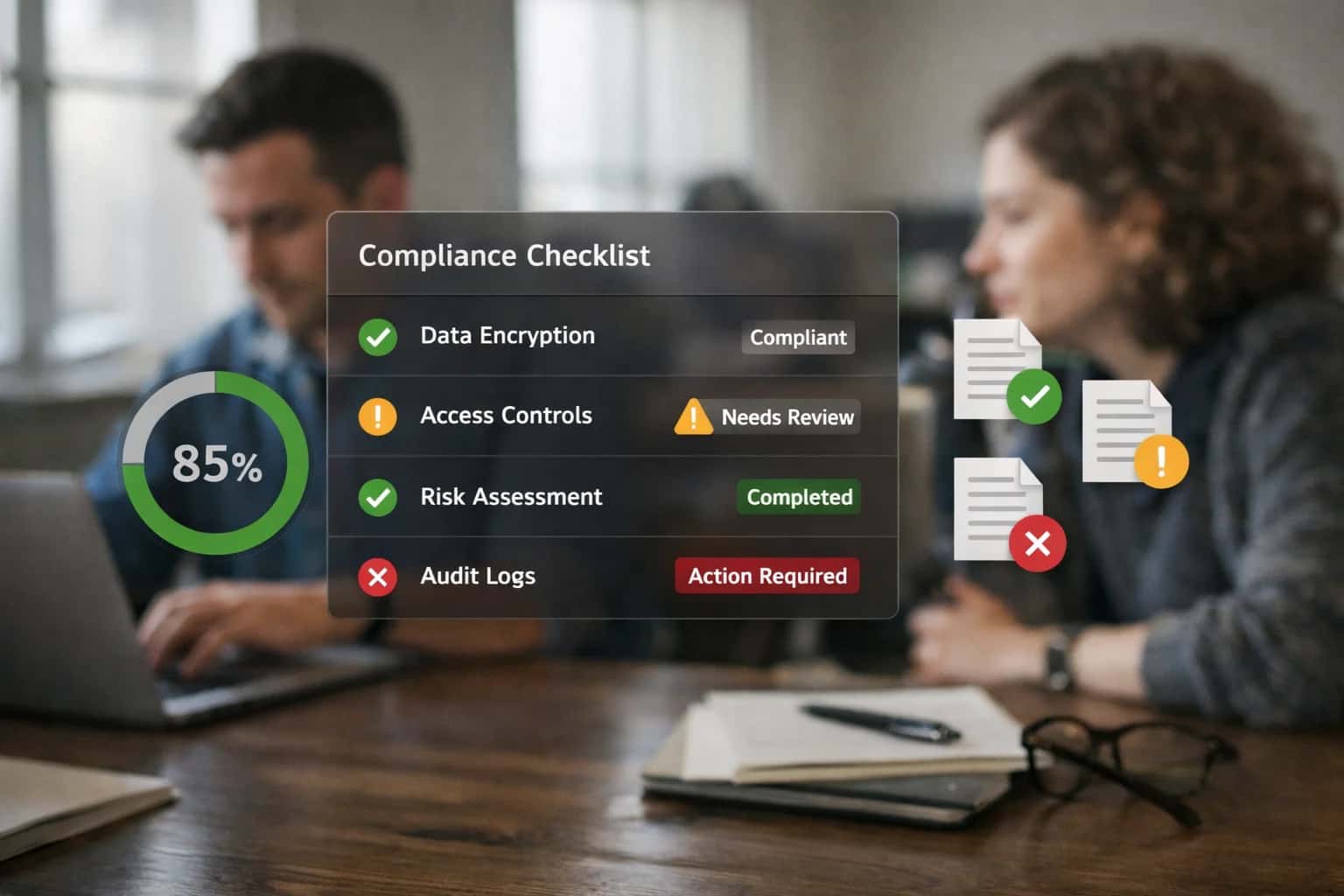
REGULATORY RISK MANAGEMENT
What is Compliance Gap Analysis?
A systematic methodology for identifying discrepancies between an organization's current control environment and the requirements of a multi-jurisdictional regulatory standard.
In a cross-jurisdictional context, this process leverages norm mapping and regulatory equivalence determinations to evaluate a single business process against the overlapping requirements of multiple sovereign regulators. The output is a prioritized remediation roadmap that addresses conflict of laws issues and prevents regulatory arbitrage.
COMPLIANCE GAP ANALYSIS
Core Components of a Gap Analysis System
A systematic comparison of a firm's current practices against a multi-jurisdictional regulatory standard to identify and remediate specific areas of non-conformance.
01
Regulatory Obligation Inventory
The foundational step of compiling a structured, machine-readable catalog of all applicable legal duties from target jurisdictions. This inventory is the ground truth against which internal controls are measured.
- Source Aggregation: Ingesting statutes, administrative codes, and binding guidance from multiple sovereigns.
- Normalization: Using Legal Semantic Normalization to map synonymous terms to a single concept.
- Structuring: Converting prose obligations into logical clauses with explicit deontic modalities (obligations, prohibitions, permissions).
02
Internal Control Mapping
The process of documenting and codifying the organization's existing policies, procedures, and technical controls into a format directly comparable to the Regulatory Obligation Inventory.
- Policy Parsing: Extracting actionable rules from prose-based internal policy documents.
- Control Taxonomy: Classifying controls by type (preventive, detective, corrective) and function.
- Scope Definition: Precisely defining the business units, data flows, and geographies each control covers.
03
Normative Equivalence Engine
The computational core that algorithmically determines if an internal control satisfies a specific regulatory obligation. This engine leverages Regulatory Equivalence logic to avoid redundant remediation.
- Semantic Matching: Using Cross-Jurisdictional Embeddings to compare the meaning of a control description against a legal requirement.
- Functional Testing: Assessing if the control's outcome achieves the regulator's stated objective, even if the mechanism differs.
- Substituted Compliance Logic: Applying Mutual Recognition Frameworks where a home-country control is pre-approved as equivalent.
04
Divergence Scoring & Gap Register
The quantitative output layer that prioritizes remediation efforts. Each identified gap receives a Regulatory Divergence Score based on severity and risk exposure.
- Severity Weighting: Scoring gaps as 'Critical Non-Conformance', 'Partial Conformance', or 'Over-Conformance'.
- Risk Quantification: Calculating the potential financial penalty, operational impact, and reputational damage of each gap.
- Dynamic Register: A live, auditable log of all gaps, their status, assigned owners, and remediation deadlines.
05
Change Propagation Monitor
The continuous monitoring subsystem that tracks amendments in source regulations and automatically re-triggers the gap analysis lifecycle. This prevents the analysis from becoming a stale, point-in-time artifact.
- Regulatory Change Detection: Automated scraping and differencing of official legal gazettes and registers.
- Impact Analysis: Tracing an amended obligation to all mapped internal controls to flag potential new gaps.
- Alerting & Workflow: Triggering automated notifications to compliance officers when a Regulatory Change Propagation event alters a scored gap.
06
Remediation Planning & Audit Trail
The governance layer that transforms identified gaps into a defensible, executable action plan. It maintains a cryptographically verifiable chain of evidence for regulatory auditors.
- Action Assignment: Linking specific gaps to remediation tasks in a project management or GRC system.
- Evidence Packaging: Associating new policy documents, screenshots, or code commits as proof of gap closure.
- Immutable Audit Log: Recording every state change in the gap register to demonstrate a Sovereign Data Boundary-compliant chain of custody to external supervisors.
Enabling Efficiency, Speed & Accuracy
Intelligent Analysis, Decision & Execution
We build AI systems for teams that need search across company data, workflow automation across tools, or AI features inside products and internal software.
Talk to Us
Search across company data
Give teams answers from docs, tickets, runbooks, and product data with sources and permissions.
Useful when people spend too long searching or get different answers from different systems.
Enterprise searchRAGPermissions
Read more
Automate internal workflows
Use AI to route work, draft outputs, trigger actions, and keep approvals and logs in place.
Useful when repetitive work moves across multiple tools and teams.
AI agentsWorkflow automationGovernance
Read more
Add AI to products and internal tools
Build assistants, guided actions, or decision support into the software your team or customers already use.
Useful when AI needs to be part of the product, not a separate tool.
AI integrationDecision supportModel routing
Read moreCOMPLIANCE GAP ANALYSIS
Frequently Asked Questions
Explore the core concepts behind systematically identifying and remediating non-conformance across multi-jurisdictional regulatory environments.
Compliance Gap Analysis is the systematic comparison of an organization's current policies, procedures, and technical controls against a defined multi-jurisdictional regulatory standard to identify and remediate specific areas of non-conformance. The process begins by establishing a regulatory equivalence baseline, mapping requirements from multiple sovereign jurisdictions to a single, unified control framework. Automated systems then ingest internal evidence—such as system logs, policy documents, and access control lists—and perform a normative conflict resolution pass to flag discrepancies. The output is a prioritized remediation roadmap where each gap is scored by severity and linked to the specific statutory text or regulatory divergence scoring metric that triggered the finding, enabling legal and engineering teams to address the most critical exposures first.

About the author
Prasad Kumkar
CEO & MD, Inference Systems
Prasad Kumkar is the CEO & MD of Inference Systems and writes about AI systems architecture, LLM infrastructure, model serving, evaluation, and production deployment. Over 5+ years, he has worked across computer vision models, L5 autonomous vehicle systems, and LLM research, with a focus on taking complex AI ideas into real-world engineering systems.
His work and writing cover AI systems, large language models, AI agents, multimodal systems, autonomous systems, inference optimization, RAG, evaluation, and production AI engineering.
LinkedIn
Limited slotsGet a Free AI Consultation
Partnered with leading AI, data, and software stack.





How We Work
Custom AI workflows for your Business
One-fit-all AI don't work for modern businesses. At Inferensys, we aim to understand your business & custom requirements; which we use to define most efficient agentic workflows, the data, and the tools for your business.
01
Review the use case
We understand the task, the users, and where AI can actually help.
Read more02
Pick the right approach
We define what needs search, automation, or product integration.
Read more03
Build the first useful version
We implement the part that proves the value first.
Read more04
Improve from there
We add the checks and visibility needed to keep it useful.
Read moreThe first call is a practical review of your use case and the right next step.
Talk to Us