Audit logging is the systematic, chronological recording of security-relevant events—such as agent authentication, API calls, data access, and policy decisions—to create an immutable, tamper-evident trail for forensic analysis, compliance, and system integrity. In multi-agent system orchestration, it provides essential observability into the actions of autonomous entities, enabling the reconstruction of complex workflows and the detection of anomalous or malicious behavior across the distributed network.

Glossary
Audit Logging
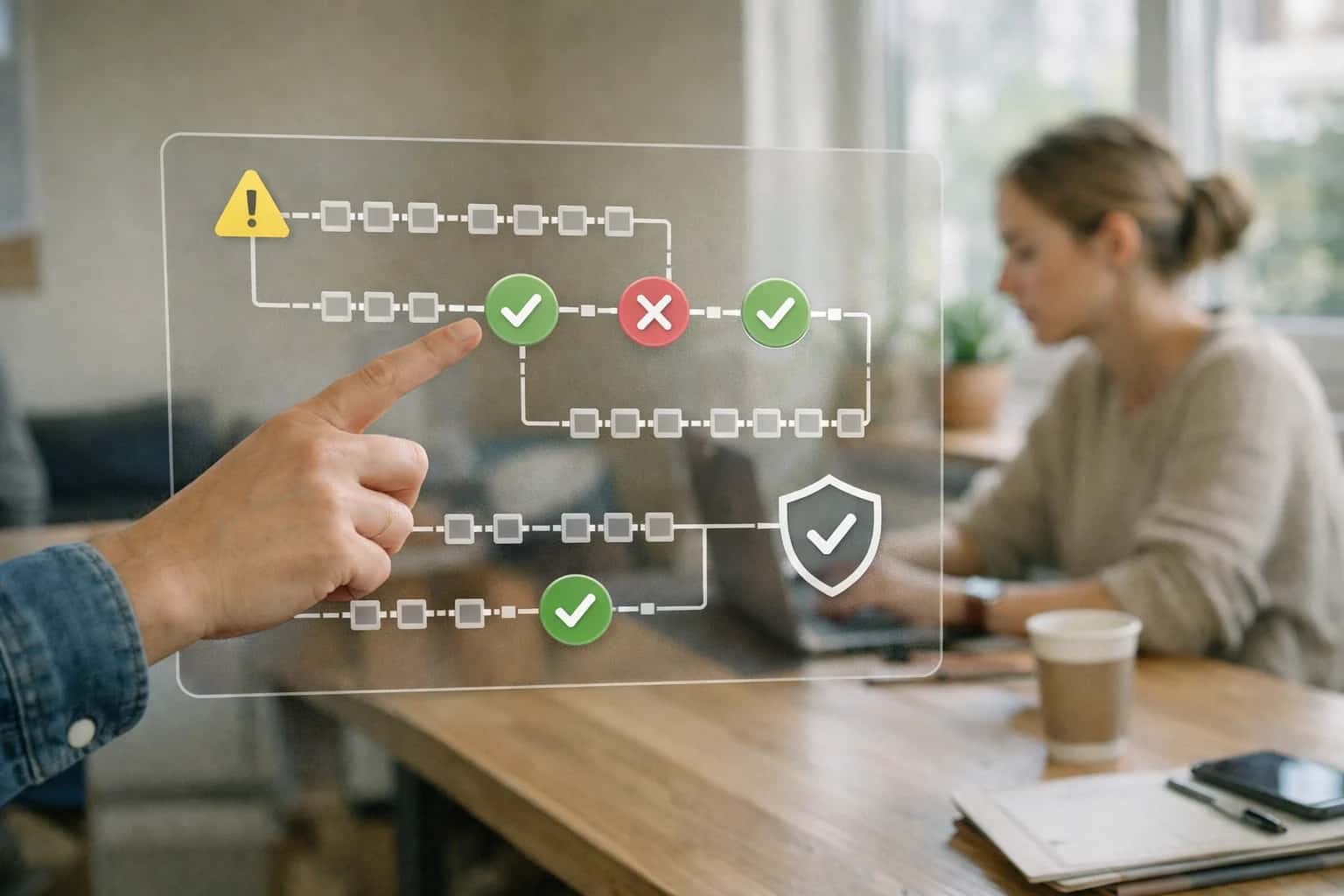
Audit logging is the systematic recording of security-relevant events to create an immutable, chronological trail for forensic analysis, compliance verification, and system debugging.
ORCHESTRATION SECURITY
What is Audit Logging?
A foundational security practice for multi-agent systems, providing a verifiable record of all security-relevant events.
Effective audit logs are immutable, cryptographically verifiable, and capture a standardized set of metadata including timestamps, entity identifiers (agent or user), actions performed, target resources, and the outcome. This data feeds into Security Information and Event Management (SIEM) systems and supports agentic threat modeling by providing the factual basis for investigating incidents like prompt injection or unauthorized tool execution, thereby enforcing accountability within the orchestration framework.
ORCHESTRATION SECURITY
Core Components of an Audit Log
An effective audit log for multi-agent systems is built on specific, non-negotiable components that together create a tamper-evident, forensically sound record of all security-relevant events.
01
Immutable Event Records
The foundational component is an immutable, append-only sequence of events. Each entry is cryptographically hashed and linked to the previous one, creating a tamper-evident chain. Any alteration to a past event would break the cryptographic linkage, providing immediate evidence of compromise. This is critical for forensic integrity and meeting compliance standards like SOC 2 or GDPR, where log authenticity is legally required.
02
Standardized Event Schema
Every logged event must follow a strict, machine-readable schema to enable automated analysis. Essential fields include:
- Timestamp: High-precision, synchronized time (e.g., ISO 8601 with nanosecond resolution).
- Principal: The authenticated entity (user, service account, agent ID) initiating the action.
- Action: The specific operation performed (e.g.,
agent.create,tool.execute,model.query). - Resource: The target object of the action (e.g., agent ID, dataset URI, API endpoint).
- Outcome: Success, failure, and error codes.
- Contextual Metadata: Session ID, correlation ID, and originating IP or node. Standardization is key for log aggregation and parsing by SIEM systems.
03
Cryptographic Integrity Proofs
Beyond immutability, logs require active integrity verification. This is achieved through digital signatures or hash chains. A common pattern is to periodically (e.g., hourly) generate a Merkle tree root of all log entries and publish this root to a separate, highly secure system (like a blockchain or a Hardware Security Module). This creates an external, independently verifiable proof that the log has not been altered, a process known as proof of past logs. This is a best practice for legal admissibility.
04
Agent-Specific Context
In multi-agent orchestration, logs must capture the unique context of autonomous interactions. This includes:
- Agent Session Identifiers: To trace an agent's actions across its lifecycle.
- Conversation Thread IDs: To link related messages and tool calls within a single workflow.
- Parent/Child Task Relationships: To map the execution tree of decomposed tasks.
- Tool Call Inputs/Outputs (Sanitized): Logging the fact of a tool call and its success/failure, while often omitting sensitive payloads. This context is vital for distributed tracing and debugging complex, cascading agent behaviors.
05
Secure Ingestion & Storage
The pipeline that collects and stores logs must itself be secure. Components include:
- Write-Ahead Logging (WAL): Events are first written to a durable, local WAL before being acknowledged, preventing loss during network failure.
- Secure Transport: Logs are transmitted to central storage using authenticated and encrypted channels like Mutual TLS (mTLS).
- Immutable Backend Storage: Final storage is on write-once-read-many (WORM) media or cloud object storage with object-lock policies.
- Access Control: Strict Role-Based Access Control (RBAC) governs who can read the logs, with separation of duties to prevent developers from erasing their own traces.
06
Real-Time Processing & Alerting
A passive log is insufficient for security. A core component is a stream processor that analyzes events in real-time to detect anomalies and trigger alerts. For agent systems, this monitors for:
- Policy Violations: An agent attempting to access a resource outside its defined permissions.
- Rate Limit Breaches: A sudden spike in tool calls or API requests from a single agent.
- Suspicious Patterns: Sequences of actions indicative of prompt injection attempts or lateral movement.
- System Health Degradation: Increased error rates or latency in agent communication. These alerts feed into Security Orchestration, Automation, and Response (SOAR) platforms.
ORCHESTRATION SECURITY
Audit Logging in Multi-Agent Systems
A specialized security practice for recording the chronological sequence of actions and decisions within a coordinated network of autonomous AI agents.
Audit logging in multi-agent systems is the systematic, tamper-evident recording of all security-relevant events across a network of interacting autonomous agents to establish accountability, enable forensic analysis, and meet compliance mandates. Unlike monolithic applications, these logs must capture complex inter-agent communications, task delegation decisions, conflict resolutions, and tool-calling events, creating a unified trace of the system's emergent behavior for security teams and regulators.
Effective implementation requires immutable logs with cryptographic integrity, structured formats like OpenTelemetry for machine readability, and correlation of events across distributed agents. This creates a data provenance trail critical for diagnosing cascading failures, investigating prompt injection attempts, and proving adherence to the Principle of Least Privilege (PoLP) within a dynamic, zero-trust architecture. The logs feed into Security Information and Event Management (SIEM) and orchestration observability dashboards.
ORCHESTRATION SECURITY
Frequently Asked Questions
Audit logging is a foundational security control for multi-agent systems, providing a chronological, immutable record of all security-relevant events for forensic analysis, compliance, and operational oversight.
Audit logging in a multi-agent system is the systematic, chronological recording of security-relevant events generated by autonomous agents, their orchestrator, and the underlying infrastructure. It captures immutable records of agent actions (e.g., tool calls, API executions, state changes), communication events (message sends/receives, protocol handshakes), authentication and authorization decisions (JWT validation, RBAC/ABAC policy evaluations), and system-level operations (agent lifecycle events, resource allocation). This creates a forensic trail essential for detecting anomalies, investigating security incidents, and proving compliance with regulations like GDPR or the EU AI Act, which mandate transparency in automated decision-making.
Enabling Efficiency, Speed & Accuracy
Intelligent Analysis, Decision & Execution
We build AI systems for teams that need search across company data, workflow automation across tools, or AI features inside products and internal software.
Talk to Us
Search across company data
Give teams answers from docs, tickets, runbooks, and product data with sources and permissions.
Useful when people spend too long searching or get different answers from different systems.
Enterprise searchRAGPermissions
Read more
Automate internal workflows
Use AI to route work, draft outputs, trigger actions, and keep approvals and logs in place.
Useful when repetitive work moves across multiple tools and teams.
AI agentsWorkflow automationGovernance
Read more
Add AI to products and internal tools
Build assistants, guided actions, or decision support into the software your team or customers already use.
Useful when AI needs to be part of the product, not a separate tool.
AI integrationDecision supportModel routing
Read more
About the author
Prasad Kumkar
CEO & MD, Inference Systems
Prasad Kumkar is the CEO & MD of Inference Systems and writes about AI systems architecture, LLM infrastructure, model serving, evaluation, and production deployment. Over 5+ years, he has worked across computer vision models, L5 autonomous vehicle systems, and LLM research, with a focus on taking complex AI ideas into real-world engineering systems.
His work and writing cover AI systems, large language models, AI agents, multimodal systems, autonomous systems, inference optimization, RAG, evaluation, and production AI engineering.
LinkedIn
Limited slotsGet a Free AI Consultation
Partnered with leading AI, data, and software stack.





How We Work
Custom AI workflows for your Business
One-fit-all AI don't work for modern businesses. At Inferensys, we aim to understand your business & custom requirements; which we use to define most efficient agentic workflows, the data, and the tools for your business.
01
Review the use case
We understand the task, the users, and where AI can actually help.
Read more02
Pick the right approach
We define what needs search, automation, or product integration.
Read more03
Build the first useful version
We implement the part that proves the value first.
Read more04
Improve from there
We add the checks and visibility needed to keep it useful.
Read moreThe first call is a practical review of your use case and the right next step.
Talk to Us