Agent as a Service (AaaS) is a cloud computing delivery model where the capabilities of pre-built or customizable autonomous agents are provided on-demand over a network. It abstracts the underlying infrastructure, agent lifecycle management, and orchestration complexities, allowing developers to integrate agentic functionality via APIs much like other Platform-as-a-Service (PaaS) offerings. This model shifts the operational burden from building and maintaining the multi-agent system framework to consuming defined agentic capabilities.

Glossary
Agent as a Service (AaaS)
Agent as a Service (AaaS) is a cloud computing delivery model where the capabilities of pre-built or customizable autonomous agents are provided on-demand over a network.
MULTI-AGENT FRAMEWORKS
What is Agent as a Service (AaaS)?
Agent as a Service (AaaS) is a cloud computing model for deploying and consuming autonomous AI agents.
In an AaaS model, providers typically offer a catalog of specialized agents—for tasks like data analysis, customer support, or workflow automation—that can be composed into solutions. Key technical enablers include standardized Agent Communication Languages (ACL), secure agent containers, and robust orchestration workflow engines. For enterprises, AaaS accelerates deployment, ensures scalability, and provides built-in agent observability and security, though it may limit low-level customization compared to using a foundational agent framework.
SERVICE MODEL
Core Characteristics of AaaS
Agent as a Service (AaaS) abstracts the infrastructure and management complexities of autonomous agents, delivering them as on-demand, scalable cloud resources. This model is defined by several key architectural and operational principles.
01
Infrastructure Abstraction
The AaaS model completely abstracts the underlying compute, networking, and storage infrastructure required to run autonomous agents. Developers interact with agents via APIs and SDKs without managing servers, container orchestration (like Kubernetes), or GPU provisioning. This shifts the operational burden to the service provider, who handles scaling, high availability, and maintenance.
- Key Benefit: Eliminates DevOps overhead for agent runtime.
- Example: A developer provisions a document analysis agent via an API call; the service automatically spins up the necessary container with the correct model dependencies and scaling rules.
02
On-Demand, Elastic Scalability
AaaS platforms provide elastic scalability, allowing the number of agent instances or their computational power to scale up or down automatically based on real-time demand. This is typically managed through auto-scaling policies tied to metrics like request queue depth or inference latency.
- Mechanism: Uses cloud-native patterns (serverless functions, container pools) to instantiate agents in milliseconds.
- Contrast with Traditional Deployment: Unlike a fixed deployment of agents on owned infrastructure, AaaS ensures cost-efficiency (pay-per-use) and handles sudden traffic spikes without manual intervention.
03
Pre-Built & Customizable Agent Catalog
Providers offer a catalog of pre-built, domain-specialized agents (e.g., customer support triage, SQL query generation, supply chain optimizer) that are ready for immediate use via API. Simultaneously, AaaS platforms provide tools for custom agent development, allowing engineers to define unique agent logic, tools, and knowledge bases while still leveraging the managed platform for deployment and orchestration.
- Pre-Built Value: Rapid time-to-value and proven architectural patterns.
- Customization Path: Use provided Agent Development Kits (ADKs) and SDKs to build proprietary agents that run on the managed platform.
04
Integrated Multi-Agent Orchestration
A core differentiator from single-agent APIs is native support for multi-agent system (MAS) orchestration. The service includes built-in workflow engines, agent registries, and communication buses that manage the coordination, sequencing, and handoffs between multiple interacting agents to solve complex tasks.
- Key Features: Managed inter-agent messaging, conflict resolution mechanisms, and collective state management.
- Developer Experience: Engineers define agent teams and interaction protocols declaratively, while the platform handles the runtime coordination and concurrency.
05
Unified Observability & Governance
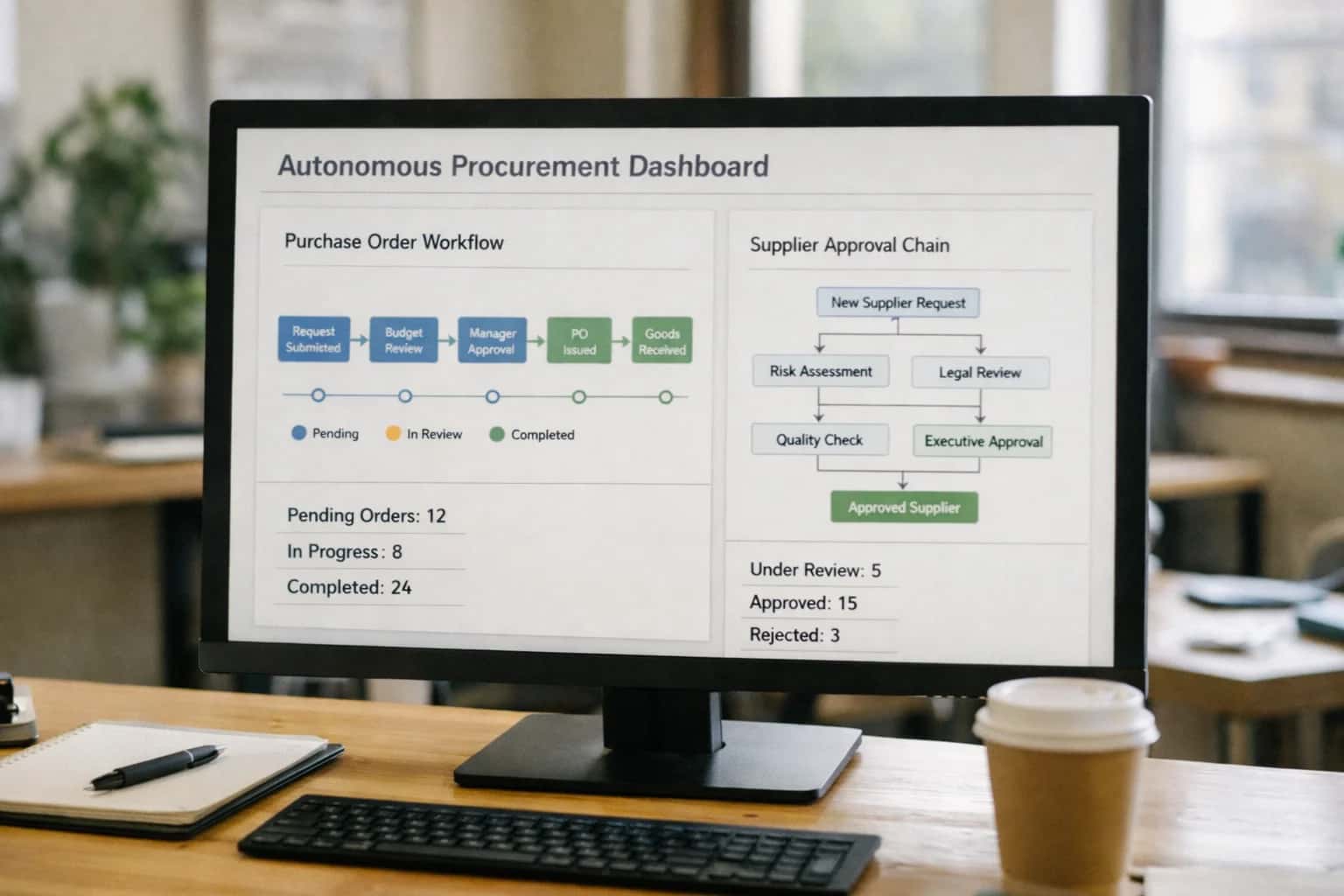
AaaS provides a centralized dashboard and APIs for cross-agent observability. This includes aggregated logs, traces of inter-agent communications, performance metrics (latency, cost per task), and evaluation scores. It also enforces governance policies for security, data privacy, and compliance across all agents running on the platform.
- Observability: Track a business process executed by a swarm of agents as a single, traceable unit of work.
- Governance: Apply uniform authentication, audit logging, and data retention policies at the platform level.
06
Consumption-Based Pricing Model
AaaS typically employs a consumption-based pricing model, analogous to other cloud services. Costs are incurred based on measurable units of agent activity, not pre-allocated infrastructure. Common metrics include:
- Number of agent sessions or tasks executed.
- Total inference tokens processed (for LLM-based agents).
- Complexity units (weighted by agent type or runtime).
This model aligns cost directly with business value generated and provides granular cost attribution per agent or business process.
DELIVERY MODEL
How Agent as a Service Works
Agent as a Service (AaaS) abstracts the infrastructure and management of autonomous agents, delivering them as scalable, on-demand cloud resources.
Agent as a Service (AaaS) is a cloud computing model where pre-configured or customizable autonomous agents are provisioned and managed via APIs, eliminating the need for users to handle underlying infrastructure, scaling, or complex agent lifecycle management. Providers operate a shared platform that hosts the agent containers, orchestration engines, and necessary tooling, offering the agents' capabilities—such as reasoning, planning, or API execution—as a consumable utility. This shifts the operational burden from the user to the service provider.
The service typically exposes agents through a well-defined interface, where users submit high-level tasks or goals. The AaaS platform's agent orchestrator then handles task decomposition, assigns work to specialized agents, manages state synchronization and concurrency, and returns the final result. Key operational components include secure agent communication protocols, a dynamic agent registry for discovery, and comprehensive orchestration observability tools for monitoring performance and costs.
AGENT AS A SERVICE (AAAS)
Frequently Asked Questions
Agent as a Service (AaaS) is a cloud computing model for delivering autonomous agent capabilities on-demand. These FAQs address its core mechanisms, business value, and technical implementation.
Agent as a Service (AaaS) is a cloud computing delivery model where pre-built or customizable autonomous software agents are provisioned and managed as a scalable, on-demand utility over a network. It works by abstracting the underlying agent infrastructure—including the orchestration engine, agent containers, communication middleware, and persistent memory backends—into a managed platform. Developers or systems interact with agents via standardized APIs, submitting tasks or goals. The AaaS platform handles agent lifecycle management, concurrent execution, inter-agent communication, and state synchronization, returning the final result or a stream of intermediate states. This shifts the operational burden from building and maintaining a full multi-agent system (MAS) to simply consuming agent capabilities.
Enabling Efficiency, Speed & Accuracy
Intelligent Analysis, Decision & Execution
We build AI systems for teams that need search across company data, workflow automation across tools, or AI features inside products and internal software.
Talk to Us
Search across company data
Give teams answers from docs, tickets, runbooks, and product data with sources and permissions.
Useful when people spend too long searching or get different answers from different systems.
Enterprise searchRAGPermissions
Read more
Automate internal workflows
Use AI to route work, draft outputs, trigger actions, and keep approvals and logs in place.
Useful when repetitive work moves across multiple tools and teams.
AI agentsWorkflow automationGovernance
Read more
Add AI to products and internal tools
Build assistants, guided actions, or decision support into the software your team or customers already use.
Useful when AI needs to be part of the product, not a separate tool.
AI integrationDecision supportModel routing
Read more
About the author
Prasad Kumkar
CEO & MD, Inference Systems
Prasad Kumkar is the CEO & MD of Inference Systems and writes about AI systems architecture, LLM infrastructure, model serving, evaluation, and production deployment. Over 5+ years, he has worked across computer vision models, L5 autonomous vehicle systems, and LLM research, with a focus on taking complex AI ideas into real-world engineering systems.
His work and writing cover AI systems, large language models, AI agents, multimodal systems, autonomous systems, inference optimization, RAG, evaluation, and production AI engineering.
LinkedIn
Limited slotsGet a Free AI Consultation
Partnered with leading AI, data, and software stack.





How We Work
Custom AI workflows for your Business
One-fit-all AI don't work for modern businesses. At Inferensys, we aim to understand your business & custom requirements; which we use to define most efficient agentic workflows, the data, and the tools for your business.
01
Review the use case
We understand the task, the users, and where AI can actually help.
Read more02
Pick the right approach
We define what needs search, automation, or product integration.
Read more03
Build the first useful version
We implement the part that proves the value first.
Read more04
Improve from there
We add the checks and visibility needed to keep it useful.
Read moreThe first call is a practical review of your use case and the right next step.
Talk to Us