Load balancer integration is a critical pattern in distributed systems and multi-agent orchestration where a load balancer dynamically updates its pool of healthy backend servers (agents) by subscribing to a service registry. This creates a server-side discovery pattern, where the load balancer, not the client, queries the registry to route incoming requests. The integration is typically automated via APIs or a service mesh data plane like Envoy Proxy, ensuring traffic is only sent to registered, responsive agents.

Glossary
Load Balancer Integration
Load balancer integration is the configuration of a load balancer to dynamically update its pool of backend targets based on information from a service registry.
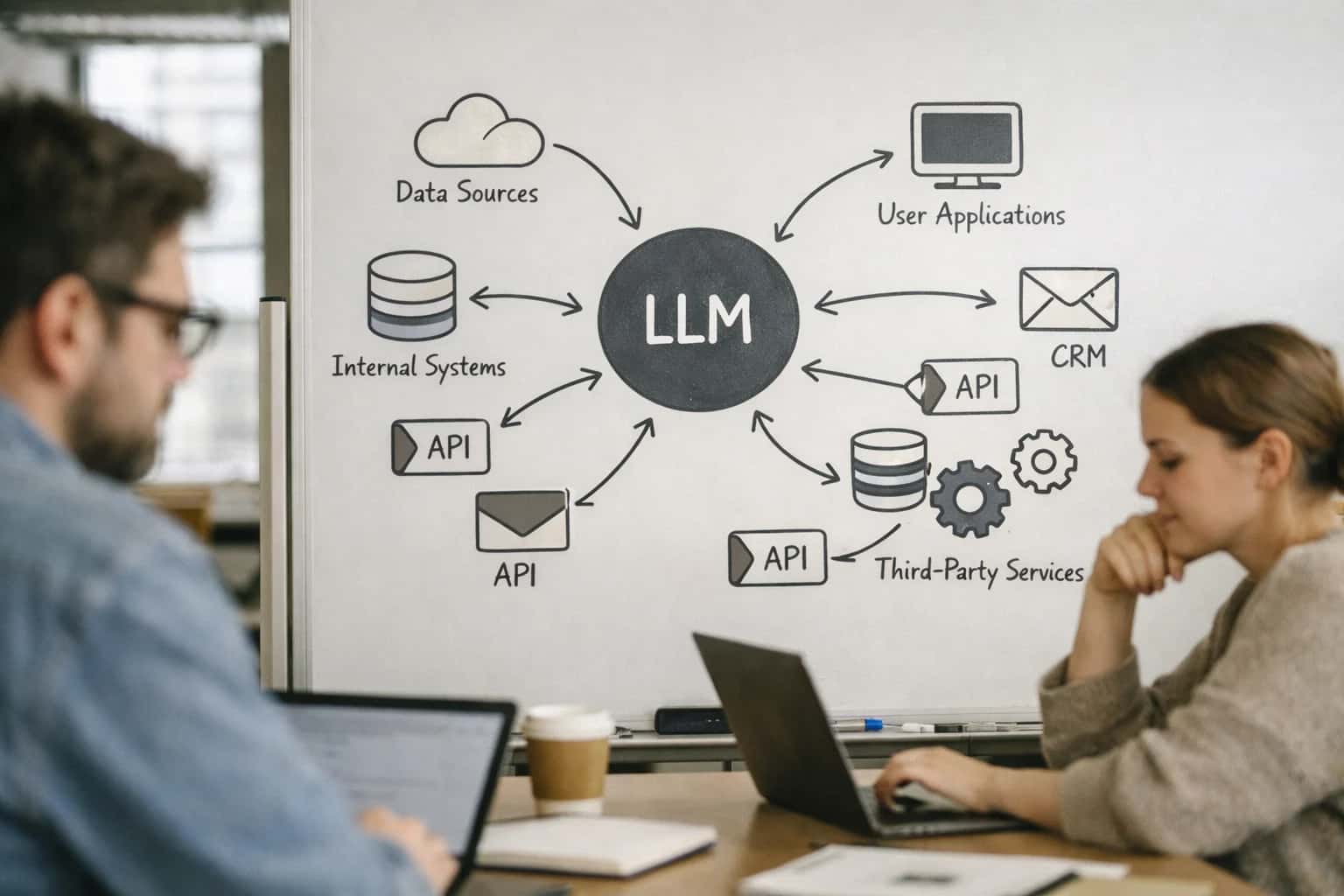
AGENT REGISTRATION AND DISCOVERY
What is Load Balancer Integration?
Load balancer integration is the automated configuration of a load balancer's backend target pool using real-time data from a service registry.
This integration relies on the registry's health check and lease mechanism signals to add new agents and remove failed ones. It is foundational for achieving fault tolerance and elastic scaling in cloud-native architectures. Common implementations involve tools like Consul Template, Kubernetes Endpoints controllers, or service mesh sidecars, which continuously synchronize the load balancer's configuration with the canonical state of the agent fleet in the registry.
AGENT REGISTRATION AND DISCOVERY
Key Characteristics of Load Balancer Integration
Load balancer integration is the configuration of a load balancer to dynamically update its pool of backend targets based on information from a service registry. This creates a resilient, self-healing routing layer for multi-agent systems.
01
Dynamic Target Pool Updates
The core function is the automatic addition and removal of backend agents from the load balancer's routing table. This is driven by health checks and registration events from a service registry like Consul or etcd.
- When an agent starts and registers, it's added to the pool.
- When an agent fails a health check or gracefully deregisters, it's removed.
- This eliminates manual configuration, enabling zero-downtime deployments and immediate failure response.
02
Server-Side Discovery Pattern
This integration implements the server-side discovery pattern. The client sends a request to a stable load balancer endpoint (e.g., api.example.com). The load balancer, not the client, is responsible for:
- Querying the service registry for healthy instances.
- Selecting a target using its load balancing algorithm (round-robin, least connections).
- This decouples clients from the dynamic topology, simplifying client logic and centralizing routing policy.
03
Health-Aware Traffic Distribution
Integration enables intelligent, health-aware routing. The load balancer continuously polls agent health endpoints or receives push notifications from the registry.
- Unhealthy agents are immediately taken out of rotation, preventing request failures.
- Traffic is distributed only among verified healthy instances.
- This is critical for maintaining system-level Service-Level Agreements (SLAs) and ensuring high availability in agent-based architectures.
04
Integration with Service Mesh
In advanced architectures, load balancing is often delegated to a service mesh data plane (e.g., Envoy Proxy). The mesh control plane (e.g., Istio, Linkerd) manages service discovery.
- The load balancer becomes a per-agent sidecar proxy.
- Discovery and routing policies are defined declaratively and distributed via the control plane.
- This provides fine-grained traffic control (canary deployments, circuit breaking) beyond simple round-robin distribution.
05
Lease-Based Liveness
Reliable integration depends on a lease or heartbeat mechanism in the service registry. Agents hold a time-bound registration lease they must periodically renew.
- If an agent crashes and stops sending heartbeats, its lease expires.
- The registry triggers a deregistration event, prompting the load balancer to remove the dead target.
- This prevents stale entries and ensures the load balancer's view eventually converges with the system's true state, a key concept in distributed systems consistency.
06
Capability-Aware Routing
Beyond basic IP/port discovery, integration can leverage capability advertisement. Agents register metadata describing their specialized functions.
- A load balancer or API gateway can route requests based on this metadata.
- For example, a query for "image_analysis" is routed only to agents advertising that capability, even within a larger pool.
- This enables intelligent task allocation and forms the basis for a capability query system within the orchestration framework.
AGENT REGISTRATION AND DISCOVERY
How Load Balancer Integration Works
Load balancer integration is the configuration of a load balancer to dynamically update its pool of backend targets based on information from a service registry.
In a multi-agent system, a load balancer acts as the traffic director, distributing incoming requests across a pool of available agents. For this to work dynamically, the load balancer must integrate with a service registry (like Consul or etcd). This integration allows the load balancer to receive real-time updates via a watch mechanism, automatically adding healthy agents and removing unresponsive ones from its routing table without manual intervention.
This pattern is a cornerstone of server-side discovery, where the load balancer, not the client, handles the lookup. The integration typically relies on the registry's health check and lease mechanism data to make routing decisions. This creates a resilient architecture where the failure or scaling of individual agents is transparent to clients, ensuring continuous service availability and efficient resource utilization across the distributed system.
LOAD BALANCER INTEGRATION
Frequently Asked Questions
Questions about configuring load balancers to dynamically route traffic to agents based on real-time service registry data.
Load balancer integration is the automated configuration of a load balancer to dynamically update its pool of backend targets (agents) based on real-time information from a service registry. It ensures traffic is distributed only to healthy, registered agents, enabling scalability and high availability without manual intervention. The integration typically involves a controller or plugin that subscribes to registry events (via a watch mechanism) and programmatically adds or removes agent endpoints from the load balancer's configuration. This creates a closed-loop system where the infrastructure automatically adapts to agent lifecycle events like startup, shutdown, or failure.
Enabling Efficiency, Speed & Accuracy
Intelligent Analysis, Decision & Execution
We build AI systems for teams that need search across company data, workflow automation across tools, or AI features inside products and internal software.
Talk to Us
Search across company data
Give teams answers from docs, tickets, runbooks, and product data with sources and permissions.
Useful when people spend too long searching or get different answers from different systems.
Enterprise searchRAGPermissions
Read more
Automate internal workflows
Use AI to route work, draft outputs, trigger actions, and keep approvals and logs in place.
Useful when repetitive work moves across multiple tools and teams.
AI agentsWorkflow automationGovernance
Read more
Add AI to products and internal tools
Build assistants, guided actions, or decision support into the software your team or customers already use.
Useful when AI needs to be part of the product, not a separate tool.
AI integrationDecision supportModel routing
Read more
About the author
Prasad Kumkar
CEO & MD, Inference Systems
Prasad Kumkar is the CEO & MD of Inference Systems and writes about AI systems architecture, LLM infrastructure, model serving, evaluation, and production deployment. Over 5+ years, he has worked across computer vision models, L5 autonomous vehicle systems, and LLM research, with a focus on taking complex AI ideas into real-world engineering systems.
His work and writing cover AI systems, large language models, AI agents, multimodal systems, autonomous systems, inference optimization, RAG, evaluation, and production AI engineering.
LinkedIn
Limited slotsGet a Free AI Consultation
Partnered with leading AI, data, and software stack.





How We Work
Custom AI workflows for your Business
One-fit-all AI don't work for modern businesses. At Inferensys, we aim to understand your business & custom requirements; which we use to define most efficient agentic workflows, the data, and the tools for your business.
01
Review the use case
We understand the task, the users, and where AI can actually help.
Read more02
Pick the right approach
We define what needs search, automation, or product integration.
Read more03
Build the first useful version
We implement the part that proves the value first.
Read more04
Improve from there
We add the checks and visibility needed to keep it useful.
Read moreThe first call is a practical review of your use case and the right next step.
Talk to Us