Agent telemetry is the automated collection and transmission of operational data—including metrics, logs, and distributed traces—from an autonomous agent to a centralized monitoring system. This data provides a comprehensive view of an agent's internal state, resource consumption, and interaction patterns, forming the foundation for observability in multi-agent systems. It enables platform engineers to detect anomalies, measure latency, and audit autonomous behavior in production environments.

Glossary
Agent Telemetry
Agent telemetry is the automated collection and transmission of operational data from an AI agent to a monitoring system for observability and performance analysis.
AGENT LIFECYCLE MANAGEMENT
What is Agent Telemetry?
Agent telemetry is the automated collection and transmission of operational data from an autonomous agent to a monitoring system for observability and performance analysis.
Effective telemetry implementation involves instrumenting agents to emit structured events at key lifecycle stages, such as task initiation, tool execution, and error states. This data is critical for performance analysis, capacity planning, and enabling agent self-healing mechanisms. By correlating telemetry across a fleet of agents, orchestration systems can perform dynamic scaling, implement graceful termination, and maintain system-wide fault tolerance, ensuring deterministic execution and operational resilience.
DATA CATEGORIES
Key Components of Agent Telemetry
Agent telemetry is the automated collection and transmission of operational data from an agent to a monitoring system. It is composed of three primary data types, each providing a different lens for observability and performance analysis.
06
Derived Observability Concepts
Raw telemetry data enables higher-level observability concepts that are critical for managing agent systems in production.
- Service Level Indicators (SLIs): Key metrics that directly measure a service's performance from the user's perspective, derived from telemetry (e.g., agent task success rate, end-to-end latency).
- Service Level Objectives (SLOs): Target values or ranges for SLIs (e.g., '99.9% of agent tasks complete within 2 seconds').
- Service Level Agreements (SLAs): Formal commitments based on SLOs, often with business consequences.
- Golden Signals: Four key metrics for any service: Latency, Traffic, Errors, and Saturation. These provide a quick, comprehensive health check for any agent.
Defining these concepts based on agent telemetry shifts monitoring from 'is the server up?' to 'is the agent delivering its intended business value reliably?'
AGENT LIFECYCLE MANAGEMENT
How Agent Telemetry Works
Agent telemetry is the automated collection and transmission of operational data from an agent to a monitoring system for observability and performance analysis.
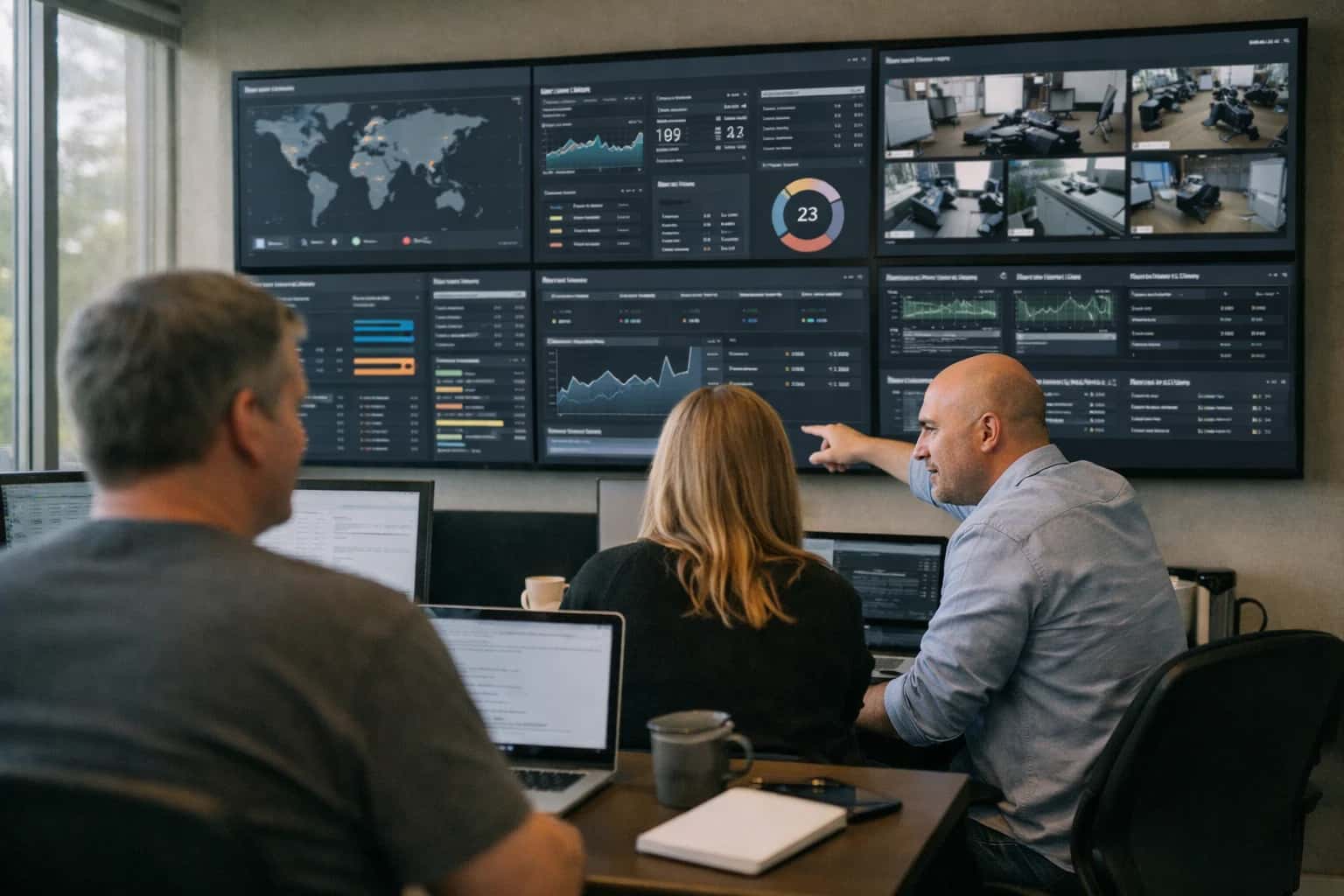
Agent telemetry functions as a continuous data pipeline, where an instrumented agent emits structured metrics, logs, and traces during its execution. This data is collected by a telemetry client or sidecar, which formats and transmits it via protocols like OpenTelemetry to a central observability backend. The backend aggregates and indexes this data, enabling real-time dashboards and historical analysis for platform engineers and DevOps teams.
The core telemetry data includes performance metrics (CPU, memory, latency), business logic events (tasks started/completed), and distributed traces linking actions across agents. This enables key operational capabilities: detecting agent failures via health checks, triggering auto-scaling based on load, and debugging complex issues through end-to-end trace correlation. Effective telemetry is foundational for agent self-healing and maintaining system Service Level Objectives (SLOs) within a multi-agent orchestration framework.
AGENT TELEMETRY
Frequently Asked Questions
Agent telemetry is the automated collection and transmission of operational data from autonomous agents to a monitoring system. This FAQ addresses key concepts, implementation details, and best practices for achieving comprehensive observability in multi-agent systems.
Agent telemetry is the automated collection, processing, and transmission of operational data—including metrics, logs, and traces—from an autonomous agent to a centralized monitoring system. It is the foundational practice for achieving observability in distributed AI systems. In multi-agent orchestration, telemetry is critical because it provides the only window into the complex, concurrent, and often non-deterministic interactions between agents. Without it, diagnosing failures, understanding system performance, and ensuring deterministic execution in production becomes impossible. It enables platform engineers to answer questions like: Why did a negotiation between two agents fail? What is the latency distribution for tool-calling across the swarm? Which agent is consuming excessive memory?
Enabling Efficiency, Speed & Accuracy
Intelligent Analysis, Decision & Execution
We build AI systems for teams that need search across company data, workflow automation across tools, or AI features inside products and internal software.
Talk to Us
Search across company data
Give teams answers from docs, tickets, runbooks, and product data with sources and permissions.
Useful when people spend too long searching or get different answers from different systems.
Enterprise searchRAGPermissions
Read more
Automate internal workflows
Use AI to route work, draft outputs, trigger actions, and keep approvals and logs in place.
Useful when repetitive work moves across multiple tools and teams.
AI agentsWorkflow automationGovernance
Read more
Add AI to products and internal tools
Build assistants, guided actions, or decision support into the software your team or customers already use.
Useful when AI needs to be part of the product, not a separate tool.
AI integrationDecision supportModel routing
Read more
About the author
Prasad Kumkar
CEO & MD, Inference Systems
Prasad Kumkar is the CEO & MD of Inference Systems and writes about AI systems architecture, LLM infrastructure, model serving, evaluation, and production deployment. Over 5+ years, he has worked across computer vision models, L5 autonomous vehicle systems, and LLM research, with a focus on taking complex AI ideas into real-world engineering systems.
His work and writing cover AI systems, large language models, AI agents, multimodal systems, autonomous systems, inference optimization, RAG, evaluation, and production AI engineering.
LinkedIn
Limited slotsGet a Free AI Consultation
Partnered with leading AI, data, and software stack.





How We Work
Custom AI workflows for your Business
One-fit-all AI don't work for modern businesses. At Inferensys, we aim to understand your business & custom requirements; which we use to define most efficient agentic workflows, the data, and the tools for your business.
01
Review the use case
We understand the task, the users, and where AI can actually help.
Read more02
Pick the right approach
We define what needs search, automation, or product integration.
Read more03
Build the first useful version
We implement the part that proves the value first.
Read more04
Improve from there
We add the checks and visibility needed to keep it useful.
Read moreThe first call is a practical review of your use case and the right next step.
Talk to Us