Zone Priority Override is a dynamic access control protocol that allows a high-priority agent or task to preemptively gain entry to a controlled geographic zone, potentially displacing lower-priority occupants according to predefined safety and operational rules. This mechanism is critical for managing heterogeneous fleets containing both autonomous mobile robots and manual vehicles, ensuring critical missions can proceed without deadlock. It functions as an exception to standard spatial-temporal scheduling and zone reservation systems, triggered by real-time operational needs.

Glossary
Zone Priority Override
Zone Priority Override is a protocol in heterogeneous fleet orchestration that allows a high-priority agent or task to preemptively gain access to a controlled geographic zone, potentially displacing lower-priority occupants according to defined safety and operational rules.
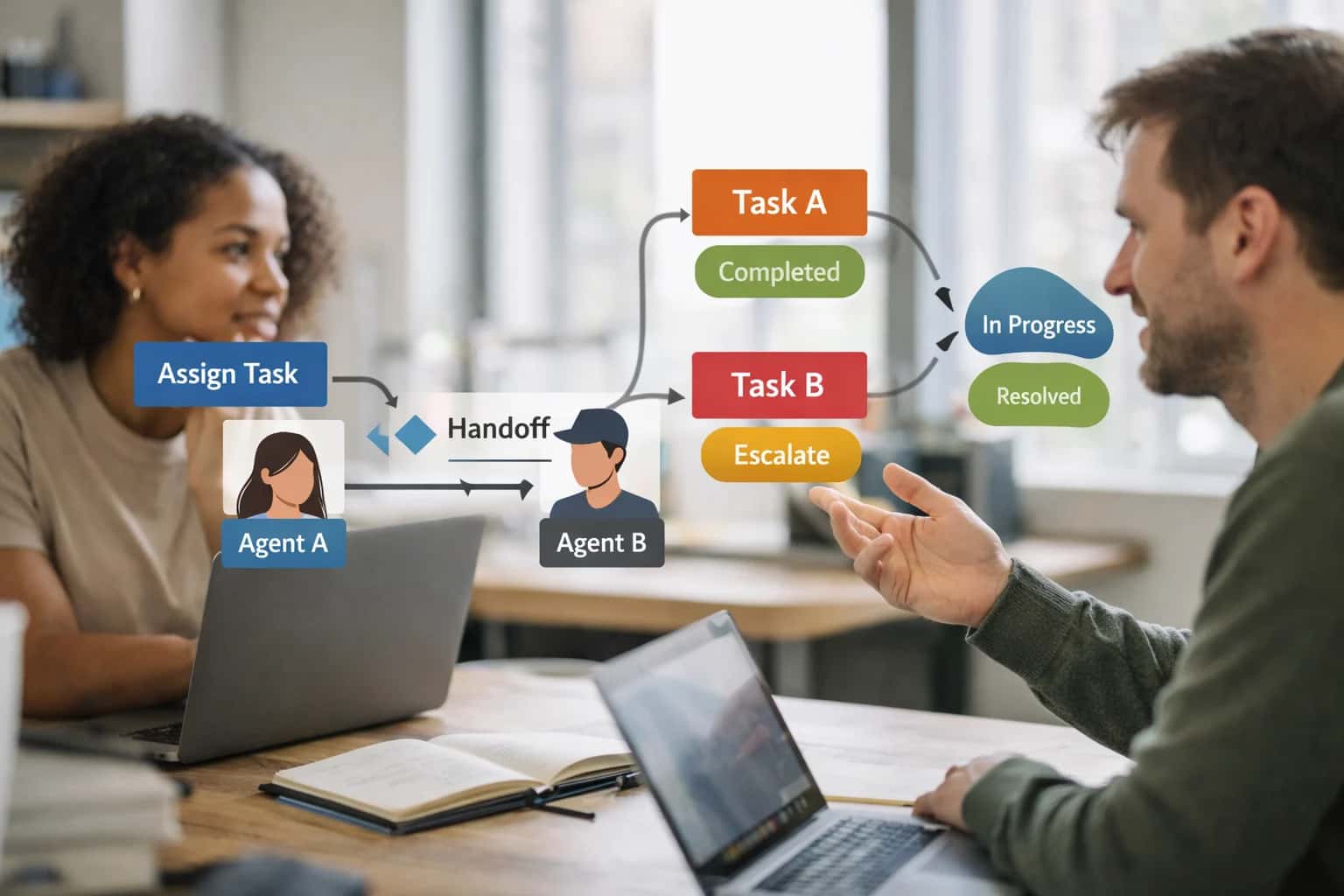
ZONE MANAGEMENT PROTOCOLS
What is Zone Priority Override?
A core protocol in heterogeneous fleet orchestration for managing dynamic access to shared workspaces.
The protocol is governed by a zone orchestration engine which evaluates the requesting agent's priority attributes—such as task urgency or agent role—against the current zone state and the priorities of occupying agents. Execution involves a zone handshake protocol for safe evacuation and entry, often integrated with deadlock detection and recovery systems. This ensures collision avoidance while maintaining overall system throughput, making it essential for responsive logistics and warehousing operations.
AUTHORIZATION PROTOCOL
Core Characteristics of Zone Priority Override
Zone Priority Override is a critical safety and efficiency protocol within heterogeneous fleet orchestration. It defines the rules and mechanisms by which a high-priority agent or task can preemptively gain access to a controlled geographic zone, potentially displacing lower-priority occupants.
01
Preemptive Access Mechanism
The protocol's core function is to grant immediate access to a requesting agent, overriding any existing reservations or occupancy by lower-priority entities. This is not a queue-jumping mechanism but a system-level preemption triggered by a high-priority condition. The process involves:
- A priority assessment comparing the requester's priority score against current occupants.
- Issuance of a preemption command to the zone's Policy Enforcement Point (PEP).
- Execution of a safe displacement procedure for any agents being displaced.
02
Priority Scoring Schema
Override decisions are based on a dynamic, multi-factor priority score. This score is calculated in real-time using attributes such as:
- Task Criticality: Mission-critical operations (e.g., emergency response, line-down recovery).
- Agent Role: Privileged roles like emergency vehicles or system maintenance bots.
- Temporal Urgency: Tasks with strict time-window constraints or escalating penalties for delay.
- System State: Overrides triggered by faults, safety incidents, or deadlock scenarios. The schema is configurable and often integrates with the broader Attribute-Based Access Control (ABAC) model.
03
Safe Displacement Protocol
A defining characteristic is the mandated safe and orderly evacuation of lower-priority agents. This is not an abrupt termination. The protocol coordinates a graceful exit, which may include:
- Issuing a preemption warning to the occupying agent, allowing it to complete its current atomic action.
- The orchestrator computing and communicating an alternative path or holding location for the displaced agent.
- Verifying the zone is clear before granting access to the high-priority agent. This prevents cascading collisions and ensures system stability.
04
Integration with Zone State Machine
The override protocol directly manipulates the Zone State Machine. A successful override triggers a state transition, typically from OCCUPIED to PRIORITY_OVERRIDE_PENDING and then to OCCUPIED by the new agent. Key integrations include:
- State Locking: The zone state is locked during the override process to prevent race conditions.
- Audit Logging: All state transitions due to overrides are logged with full context (agent IDs, priority scores, timestamps).
- Notification Propagation: State changes are broadcast to all subscribed systems, including real-time zone monitoring dashboards.
05
Conflict Resolution & Cascading Overrides
The system must handle scenarios where multiple high-priority agents request an override simultaneously. The conflict resolution logic uses:
- Tie-breaking rules: Such as earliest request time or a secondary priority attribute.
- Cascading override management: If Agent A displaces Agent B from Zone 1, the system may automatically grant Agent B an override priority for Zone 2 to complete its task, preventing systemic deadlock.
- Recursion limits: Safeguards to prevent infinite override chains, falling back to human-in-the-loop intervention.
06
Use Cases and Operational Context
This protocol is essential in dynamic environments like warehouses, factories, and hospitals. Concrete examples include:
- Emergency Response: A fire alarm triggers an override, clearing a path for an emergency response robot.
- Critical Maintenance: A mobile repair bot receives override priority to access a malfunctioning automated guided vehicle (AGV).
- Hot-Swap Operations: A high-importance delivery is rerouted, requiring override access to a packing station.
- Deadlock Recovery: The orchestration engine uses override protocols to manually break a detected deadlock between multiple agents.
ZONE MANAGEMENT PROTOCOLS
How the Zone Priority Override Protocol Works
A detailed explanation of the protocol that allows high-priority agents to preemptively access controlled zones, ensuring critical task continuity in heterogeneous fleet orchestration.
Zone Priority Override is a concurrency control protocol within a multi-agent orchestration system that allows a high-priority agent or task to preemptively gain access to a controlled geographic zone, potentially displacing lower-priority occupants according to defined safety and operational rules. It functions as a dynamic exception to standard access control lists (ACLs) and spatial authorization policies, triggered when a critical task (e.g., an emergency response or a time-sensitive delivery) requires immediate passage. The protocol's core mechanism involves the zone orchestration engine evaluating the requesting agent's priority attribute against the zone state machine and the priorities of current occupants.
Upon a valid override request, the zone policy decision point (PDP) issues a command, executed by the zone policy enforcement point (PEP), which initiates a graceful evacuation sequence for displaced agents. This involves issuing rerouting instructions via the real-time replanning engine and enforcing a temporal access window for the high-priority agent. The protocol is logged by zone audit logging systems and is integral to exception handling frameworks, ensuring that preemption maintains overall system liveness and deadlock avoidance while adhering to safety-critical operational boundaries.
ZONE MANAGEMENT PROTOCOLS
Real-World Applications and Examples
Zone Priority Override is a critical safety and efficiency protocol in heterogeneous fleets. These examples illustrate its practical implementation across industries where dynamic, high-stakes coordination is essential.
01
Emergency Response in Automated Warehouses
A fire alarm or spill detection sensor triggers an Emergency Zone Clearance command. The orchestration engine issues a Zone Priority Override for safety personnel or cleanup AMRs, granting them immediate access. All other agents—picking robots, forklifts, and autonomous carts—receive preemptive reroute commands to vacate the hazard zone and adjacent corridors. This protocol ensures a clear, safe path for the emergency response, overriding all standard task priorities and zone reservations.
< 5 sec
Typical Override Activation Time
02
High-Priority Manufacturing Line Intervention
In a software-defined manufacturing cell, a critical machine fault requires immediate human technician intervention. The technician's wearable device requests access to the Mutual Exclusion Zone around the machine. Using a Zone Priority Override linked to the 'Maintenance' role, the system:
- Preempts the current occupant (e.g., a collaborative robot).
- Commands the robot to perform a safe e-stop and park procedure.
- Changes the zone's Zone State Machine to
LOCKED_FOR_MAINTENANCE. - Issues an Authorization Token to the technician. This override is governed by a Spatial Authorization Policy that grants the 'Maintenance' role the highest priority level for safety-critical zones.
03
Express Logistics in Distribution Centers
A time-sensitive premium shipment (e.g., medical supplies) arrives. The warehouse management system assigns it the highest task priority. The orchestration middleware uses Zone Priority Override to expedite its journey:
- The transport AMR receives override tokens for each zone along its Priority-Based Routing path.
- The Zone Deconfliction Algorithm temporarily elevates this AMR's priority in the scheduling queue.
- Lower-priority agents (e.g., standard replenishment robots) may be instructed to yield at zone entrances or take alternative routes via Real-Time Replanning Engines. All overrides are logged in the Zone Audit Logging system for performance analysis and SLA verification.
99.9%
On-Time Delivery SLA
04
Airport Baggage Handling System Coordination
In a baggage sorting hall, a late-connecting flight creates a rush bag. The system executes a Zone Priority Override for the specific container carrying that bag. The override propagates through the network of conveyor zones and transfer points:
- Zone Load Balancers temporarily redirect other baggage flows.
- Cross-Zone Transition Protocols are fast-tracked for the priority container.
- The Zone Policy Enforcement Point (PEP) at each merge point grants immediate access, preventing the container from waiting in standard queues. This dynamic adjustment prevents flight delays while minimizing disruption to the overall flow, showcasing advanced Spatial-Temporal Scheduling.
05
Hospital Pharmacy & Lab Automation
A STAT lab sample or critical medication requires urgent delivery. The hospital's autonomous courier system invokes a Zone Priority Override for the transport robot. This affects several zone types:
- Temporal Access Windows for sterile zones may be temporarily suspended.
- Zone Capacity Limits in narrow corridors are managed by having lower-priority agents wait in alcoves.
- The robot uses a Zone Handshake Protocol with elevator controllers for immediate service. The override policy is part of a broader Attribute-Based Access Control (ABAC) model, where the
item_criticalityattribute directly influences access priority, ensuring life-critical items move fastest.
06
Semiconductor Fab Material Handling
In a cleanroom, a wafer lot approaching a process time limit (photoresist stability) is flagged. The Material Control System issues a zone priority override for the lot's Front-Opening Unified Pod (FOUP) and its transport vehicle. The Zone Orchestration Engine:
- Applies Zone Affinity Rules to clear a direct path to the target tool.
- May use Zone Anti-Affinity Rules to keep other chemical-carrying vehicles away from the expedited path.
- Coordinates with the Zone Reservation System to preempt a soon-to-be-free tool slot. This application prevents multi-million dollar yield loss by integrating time-critical process metrics directly into the spatial authorization framework.
> $1M
Potential Cost of Wafer Lot Loss
ZONE MANAGEMENT PROTOCOLS
Frequently Asked Questions
Common questions about Zone Priority Override, a critical protocol in heterogeneous fleet orchestration that manages preemptive access to controlled workspaces.
Zone Priority Override is a protocol within a fleet orchestration system that allows a high-priority agent or task to preemptively gain access to a controlled geographic zone, potentially displacing lower-priority occupants according to a defined set of rules. It works by integrating with the Zone Policy Decision Point (PDP). When a high-priority access request is made, the PDP evaluates it against the current zone state and occupant priorities. If the override is granted, the system issues commands to the lower-priority agent(s) to execute a safe egress protocol, followed by an authorization token for the high-priority agent to enter. This process is managed by the Zone Policy Enforcement Point (PEP) to ensure the physical transition adheres to safety and coordination rules.
Enabling Efficiency, Speed & Accuracy
Intelligent Analysis, Decision & Execution
We build AI systems for teams that need search across company data, workflow automation across tools, or AI features inside products and internal software.
Talk to Us
Search across company data
Give teams answers from docs, tickets, runbooks, and product data with sources and permissions.
Useful when people spend too long searching or get different answers from different systems.
Enterprise searchRAGPermissions
Read more
Automate internal workflows
Use AI to route work, draft outputs, trigger actions, and keep approvals and logs in place.
Useful when repetitive work moves across multiple tools and teams.
AI agentsWorkflow automationGovernance
Read more
Add AI to products and internal tools
Build assistants, guided actions, or decision support into the software your team or customers already use.
Useful when AI needs to be part of the product, not a separate tool.
AI integrationDecision supportModel routing
Read more
About the author
Prasad Kumkar
CEO & MD, Inference Systems
Prasad Kumkar is the CEO & MD of Inference Systems and writes about AI systems architecture, LLM infrastructure, model serving, evaluation, and production deployment. Over 5+ years, he has worked across computer vision models, L5 autonomous vehicle systems, and LLM research, with a focus on taking complex AI ideas into real-world engineering systems.
His work and writing cover AI systems, large language models, AI agents, multimodal systems, autonomous systems, inference optimization, RAG, evaluation, and production AI engineering.
LinkedIn
Limited slotsGet a Free AI Consultation
Partnered with leading AI, data, and software stack.





How We Work
Custom AI workflows for your Business
One-fit-all AI don't work for modern businesses. At Inferensys, we aim to understand your business & custom requirements; which we use to define most efficient agentic workflows, the data, and the tools for your business.
01
Review the use case
We understand the task, the users, and where AI can actually help.
Read more02
Pick the right approach
We define what needs search, automation, or product integration.
Read more03
Build the first useful version
We implement the part that proves the value first.
Read more04
Improve from there
We add the checks and visibility needed to keep it useful.
Read moreThe first call is a practical review of your use case and the right next step.
Talk to Us