Configuration drift is the unintended, gradual divergence of a software agent's system settings, dependencies, or operational parameters from a defined, approved baseline or golden image. In heterogeneous fleet orchestration, this occurs when individual robots or vehicles undergo unmanaged changes—such as manual hotfixes, software updates, or environmental adaptations—that cause their runtime state to differ from the centrally managed specification. This inconsistency introduces unpredictability, leading to agent failures, security vulnerabilities, and fleet-wide operational instability.

Glossary
Configuration Drift
Configuration drift is the unintended, gradual divergence of a system's software, settings, or security posture from its defined, approved baseline or 'golden image' over time.
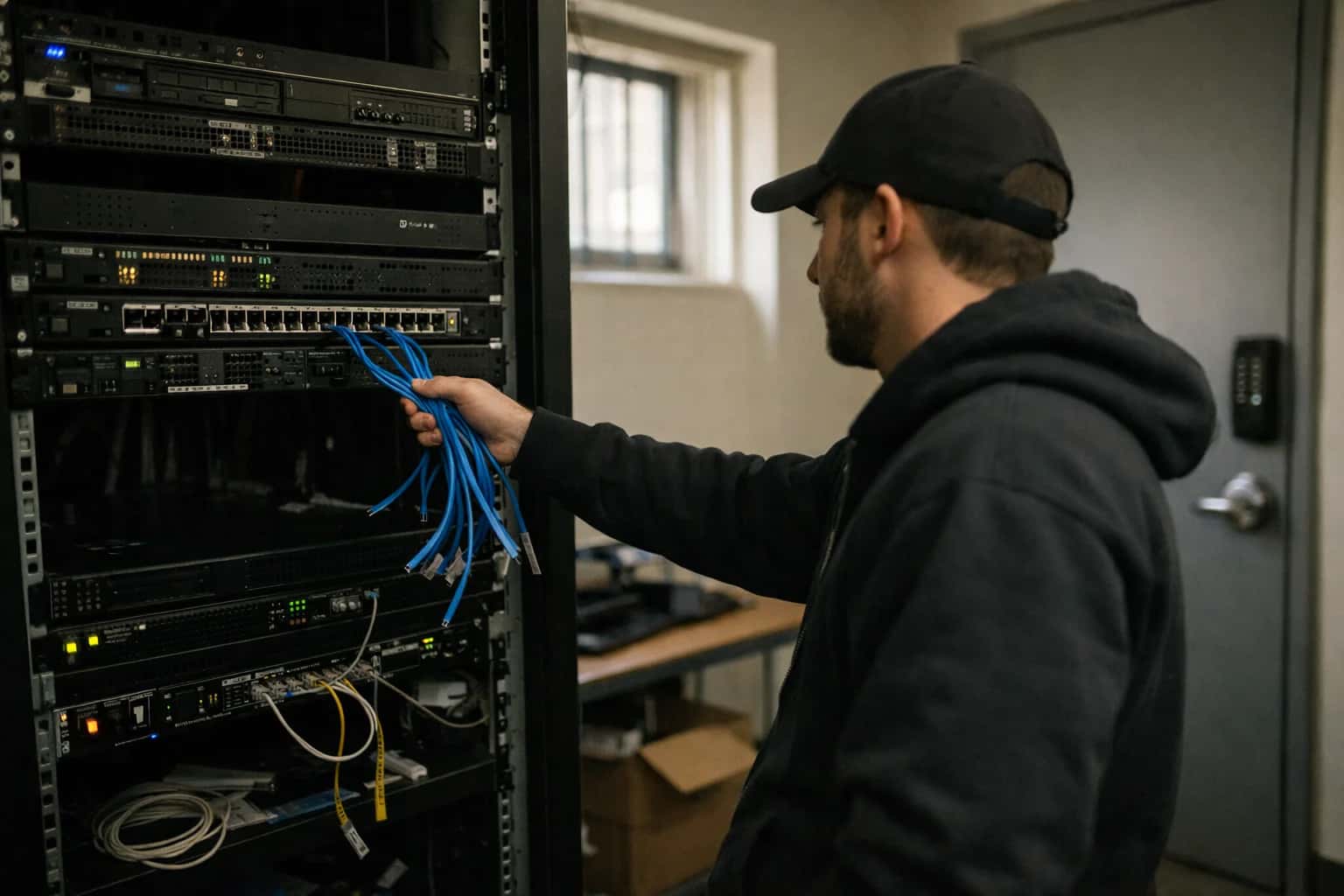
FLEET HEALTH MONITORING
What is Configuration Drift?
Configuration drift is a critical operational risk in managing heterogeneous fleets of autonomous and manual agents.
Effective fleet health monitoring requires automated systems to detect and remediate drift. This is achieved through continuous configuration validation, where agents periodically report their state against the declared baseline. Declarative infrastructure models, where the desired state is codified and the system enforces it, are key to prevention. For physical agents, this extends to firmware versions, sensor calibrations, and network settings. Unchecked drift degrades the fleet-wide view, making diagnostics unreliable and complicating predictive maintenance and over-the-air (OTA) updates.
CONFIGURATION DRIFT
Key Causes and Associated Risks
Configuration drift is not a single event but a gradual process of entropy. It arises from specific operational patterns and introduces distinct risks to fleet reliability, security, and operational cost.
01
Manual Ad-Hoc Changes
The most common cause of drift is human operators making direct, unrecorded modifications to an agent's system to solve an immediate problem. This bypasses the version-controlled configuration management process.
- Example: A site engineer SSHes into a robot to tweak a network timeout setting to resolve a transient communication drop, but does not update the central playbook.
- Risk: Creates snowflake servers—unique, undocumented configurations that cannot be reliably reproduced, complicating debugging and scaling.
02
Inconsistent Update Rollouts
Drift occurs when Over-the-Air (OTA) updates or patches are applied unevenly across a fleet due to network issues, agent downtime, or phased deployment strategies.
- Example: A security patch is pushed, but 15% of the fleet is offline performing tasks. Those agents remain on the vulnerable version, creating a mixed-state environment.
- Risk: Introduces security vulnerabilities and functional incompatibilities between agents that are supposed to collaborate, potentially causing systemic failures.
03
Environmental Dependencies
Agents operating in dynamic physical environments can experience drift when their software adapts to local conditions in ways not captured by the baseline golden image.
- Example: An Autonomous Mobile Robot (AMR) auto-calibrates its lidar sensor due to persistent dust in one warehouse zone, creating a local configuration divergence.
- Risk: Leads to environment-specific coupling, where agents perform well in one location but fail if redeployed, reducing fleet flexibility.
04
Software Dependency Decay
Even without direct changes, an agent's effective configuration drifts as its runtime environment ages. This includes unmanaged updates to shared libraries, expired certificates, or accumulating log files consuming disk space.
- Example: A background OS package manager auto-updates a critical library, creating a version mismatch with the approved software stack.
- Risk: Causes subtle performance degradation and runtime errors that are difficult to trace, as the source code remains unchanged.
05
Risk: Security Breach & Compliance Failure
Drifted agents become weak links. An outdated, unpatched agent can serve as an entry point for a network breach. Furthermore, drift can violate audit trails and immutability requirements mandated by standards like ISO 27001 or SOC 2.
- Impact: A single agent with disabled security policies can compromise the entire fleet's data and control systems, leading to regulatory penalties.
06
Risk: Operational Instability & Increased MTTR
Drift directly undermines predictability. When failures occur, engineers must debug unique system states instead of a known baseline, dramatically increasing Mean Time To Repair (MTTR).
- Impact: Incidents become longer and more costly to resolve. The fleet-wide view becomes unreliable, as aggregated metrics come from heterogeneously configured agents, masking true performance.
FLEET HEALTH MONITORING
Detection, Prevention, and Remediation
This section defines core operational concepts for maintaining the integrity and reliability of a heterogeneous agent fleet, focusing on the systematic identification, mitigation, and correction of deviations from intended operational baselines.
Configuration drift is the unintended divergence of an agent's software, settings, or operational state from its defined, approved baseline or 'golden image' over time. In heterogeneous fleet orchestration, this manifests as agents—from autonomous mobile robots to manual vehicle gateways—developing inconsistent software versions, security policies, or network settings. This divergence introduces operational unpredictability, security vulnerabilities, and can cause systemic failures when agents cannot interoperate as designed.
Detection relies on continuous compliance scanning and state reconciliation engines that compare live agent telemetry against the declared desired state. Prevention is enforced through immutable infrastructure patterns and declarative configuration management. Automated remediation is achieved via orchestrated rollback to the known-good baseline or the application of corrective patches through secure over-the-air (OTA) update mechanisms, restoring fleet-wide homogeneity without manual intervention.
CONFIGURATION DRIFT
Frequently Asked Questions
Configuration drift is a critical operational risk in heterogeneous fleets where autonomous agents and manual vehicles must operate in concert. This FAQ addresses common questions about its causes, detection, and remediation.
Configuration drift is the unintended, gradual divergence of a software system's or agent's operational settings from a defined, approved baseline or 'golden image' over time. In heterogeneous fleet orchestration, this means an autonomous mobile robot (AMR) or a software agent controlling a manual vehicle no longer matches the exact software versions, security policies, network settings, or dependency libraries that were originally validated and deployed. This divergence occurs due to manual hotfixes, ad-hoc updates, environmental changes, or software rot, leading to unpredictable behavior, security vulnerabilities, and fleet inconsistency.
Key characteristics include:
- Unintentional: Changes are not part of a formal change management process.
- Cumulative: Small, individual changes accumulate into significant deviation.
- Destabilizing: Increases the risk of runtime errors, integration failures, and security breaches.
Enabling Efficiency, Speed & Accuracy
Intelligent Analysis, Decision & Execution
We build AI systems for teams that need search across company data, workflow automation across tools, or AI features inside products and internal software.
Talk to Us
Search across company data
Give teams answers from docs, tickets, runbooks, and product data with sources and permissions.
Useful when people spend too long searching or get different answers from different systems.
Enterprise searchRAGPermissions
Read more
Automate internal workflows
Use AI to route work, draft outputs, trigger actions, and keep approvals and logs in place.
Useful when repetitive work moves across multiple tools and teams.
AI agentsWorkflow automationGovernance
Read more
Add AI to products and internal tools
Build assistants, guided actions, or decision support into the software your team or customers already use.
Useful when AI needs to be part of the product, not a separate tool.
AI integrationDecision supportModel routing
Read more
About the author
Prasad Kumkar
CEO & MD, Inference Systems
Prasad Kumkar is the CEO & MD of Inference Systems and writes about AI systems architecture, LLM infrastructure, model serving, evaluation, and production deployment. Over 5+ years, he has worked across computer vision models, L5 autonomous vehicle systems, and LLM research, with a focus on taking complex AI ideas into real-world engineering systems.
His work and writing cover AI systems, large language models, AI agents, multimodal systems, autonomous systems, inference optimization, RAG, evaluation, and production AI engineering.
LinkedIn
Limited slotsGet a Free AI Consultation
Partnered with leading AI, data, and software stack.





How We Work
Custom AI workflows for your Business
One-fit-all AI don't work for modern businesses. At Inferensys, we aim to understand your business & custom requirements; which we use to define most efficient agentic workflows, the data, and the tools for your business.
01
Review the use case
We understand the task, the users, and where AI can actually help.
Read more02
Pick the right approach
We define what needs search, automation, or product integration.
Read more03
Build the first useful version
We implement the part that proves the value first.
Read more04
Improve from there
We add the checks and visibility needed to keep it useful.
Read moreThe first call is a practical review of your use case and the right next step.
Talk to Us