Confidential Computing protects data in use by performing computation inside a hardware-based Trusted Execution Environment (TEE) or secure enclave. Unlike encryption that protects data at rest or in transit, this paradigm ensures that patient records and model weights remain encrypted in memory during active processing, invisible to the cloud provider, hypervisor, and operating system.

Glossary
Confidential Computing
A hardware-based security paradigm that isolates sensitive healthcare data and model parameters within a protected CPU enclave during processing, shielding it even from the host operating system.
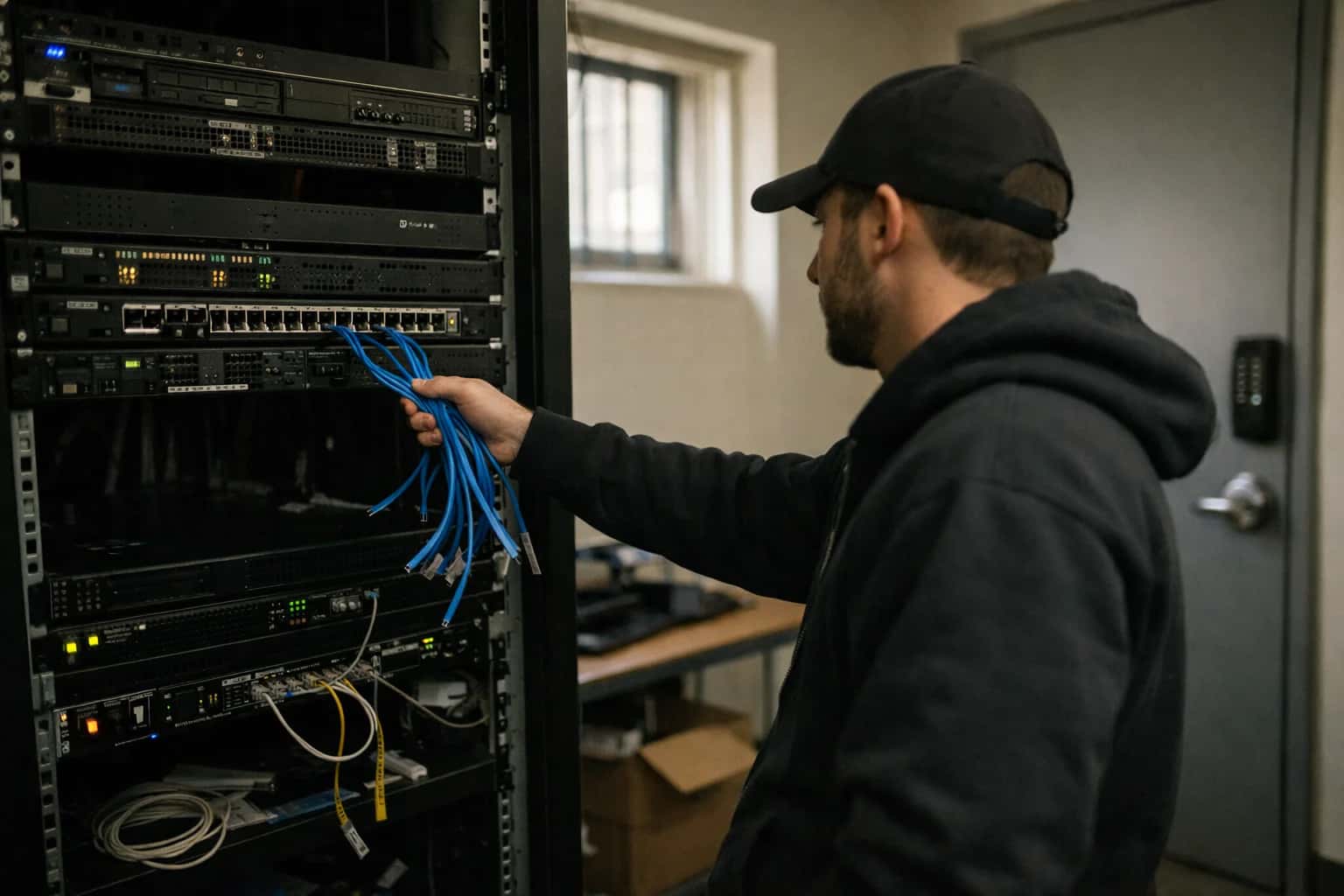
HARDWARE-LEVEL DATA ISOLATION
What is Confidential Computing?
Confidential Computing is a hardware-based security paradigm that isolates sensitive healthcare data and model parameters within a protected CPU enclave during processing, shielding it even from the host operating system.
For healthcare federated learning, this provides a critical hardware root of trust. The enclave performs remote attestation—cryptographically proving to remote institutions that the correct code is executing in an untampered environment—before any sensitive gradient updates or clinical data are decrypted for aggregation, satisfying strict regulatory chain-of-custody requirements.
HARDWARE-GRADE ISOLATION
Key Features of Confidential Computing
Confidential Computing establishes a hardware-enforced boundary that protects sensitive healthcare data and model parameters during active computation, ensuring that even privileged system software cannot access the workload.
01
Hardware-Based Trusted Execution Environment
A Trusted Execution Environment (TEE) is a secure enclave within the CPU that isolates code and data from the host operating system, hypervisor, and other applications. Unlike software-based security, the TEE encrypts data in use—while it is being processed in memory—closing the final gap in the encryption lifecycle alongside encryption at rest and in transit. Major implementations include Intel SGX, AMD SEV-SNP, and Arm Confidential Compute Architecture (CCA).
3 States
Data Protected: At Rest, In Transit, In Use
02
Remote Attestation
Remote attestation is the cryptographic mechanism by which a TEE proves to a remote party that it is running unmodified, trusted code on genuine hardware. The process generates a hardware-signed attestation report containing a cryptographic hash of the enclave's initial state and identity. For healthcare federated learning, this allows a central aggregator to verify that each hospital's node is executing the correct training logic before accepting model updates, preventing data exfiltration through compromised software.
03
Memory Encryption and Integrity
Confidential Computing platforms employ dedicated memory encryption engines integrated into the memory controller. These engines automatically encrypt all data written to RAM and decrypt it upon read, using keys that are inaccessible to the operating system. Advanced implementations like AMD SEV-SNP add integrity protection, which cryptographically detects attempts to replay, corrupt, or remap memory pages—defending against physical attacks such as cold-boot or bus-snooping attacks on DIMM modules.
04
Side-Channel Resistance
Modern TEE designs incorporate mitigations against microarchitectural side-channel attacks that attempt to infer enclave secrets by observing execution timing, cache access patterns, or power consumption. Techniques include:
- Cache partitioning to prevent co-resident processes from probing shared cache lines
- Speculation barriers to block Spectre-class attacks
- Constant-time cryptographic operations that eliminate timing leakage These defenses are critical for healthcare workloads where model parameters and patient data must remain opaque even to sophisticated attackers with physical machine access.
05
Confidential Containers and VMs
The Confidential Containers project, part of the Cloud Native Computing Foundation, extends the TEE model to Kubernetes pods and standard container runtimes. This allows healthcare federated learning workloads to run in familiar Docker or OCI containers while the entire virtual machine or pod is transparently encrypted by the hardware. The operator sees only an encrypted memory image, enabling zero-trust deployment where the cloud provider itself cannot inspect the training data or model logic executing within the confidential VM.
06
Integration with Federated Learning Pipelines
Confidential Computing serves as a complementary layer to cryptographic techniques like secure aggregation and differential privacy. In a typical healthcare federated learning deployment:
- The TEE decrypts incoming encrypted model updates inside the enclave
- Performs the aggregation logic on plaintext data within the protected memory region
- Re-encrypts the global model before it exits the enclave This ensures that even the aggregation server's operator never sees individual hospital contributions in plaintext, satisfying HIPAA's technical safeguard requirements for data processing integrity.
HARDWARE-BASED ISOLATION COMPARED
Confidential Computing vs. Other Privacy Technologies
How hardware-enforced enclave isolation compares to cryptographic and statistical privacy-preserving techniques across key operational dimensions for healthcare federated learning.
| Feature | Confidential Computing | Homomorphic Encryption | Differential Privacy |
|---|---|---|---|
Protection Scope | Data in use (CPU/memory) | Data in use (computation) | Data in output (statistical) |
Underlying Mechanism | Hardware-enforced TEE enclave isolation | Lattice-based cryptographic schemes | Calibrated noise injection with privacy budget |
Computational Overhead | 2-5% performance degradation | 100-1000x slowdown vs. plaintext | Minimal overhead; noise calibration cost |
Protects Against Host OS Compromise | |||
Requires Specialized Hardware | |||
Supports Arbitrary Computation | |||
Provides Formal Privacy Guarantee | |||
Typical Deployment Model | Single-node enclave or federated TEE mesh | Outsourced computation on encrypted data | Federated aggregation with epsilon budgeting |
CONFIDENTIAL COMPUTING CLARIFIED
Frequently Asked Questions
Confidential Computing is a rapidly evolving hardware-based security paradigm critical for protecting sensitive healthcare data during federated learning. Below are direct answers to the most common questions asked by technical and compliance leaders evaluating this technology for regulated clinical environments.
Confidential Computing is a hardware-based security paradigm that isolates sensitive data and model parameters within a protected CPU enclave during processing, shielding it even from the host operating system, hypervisor, and cloud provider administrators. It works by creating a Trusted Execution Environment (TEE) —a secure area within the main processor that encrypts data in use, not just at rest or in transit. When a federated learning workload enters the TEE, the CPU generates cryptographic attestation evidence proving the enclave's integrity to remote parties. This allows a healthcare institution to verify that the code processing its patient data has not been tampered with before transmitting model updates. Key implementations include Intel SGX, AMD SEV-SNP, and ARM CCA, each providing hardware-rooted isolation that reduces the attack surface to the CPU boundary itself, making it computationally infeasible for privileged insiders to exfiltrate raw Protected Health Information (PHI) during computation.
Enabling Efficiency, Speed & Accuracy
Intelligent Analysis, Decision & Execution
We build AI systems for teams that need search across company data, workflow automation across tools, or AI features inside products and internal software.
Talk to Us
Search across company data
Give teams answers from docs, tickets, runbooks, and product data with sources and permissions.
Useful when people spend too long searching or get different answers from different systems.
Enterprise searchRAGPermissions
Read more
Automate internal workflows
Use AI to route work, draft outputs, trigger actions, and keep approvals and logs in place.
Useful when repetitive work moves across multiple tools and teams.
AI agentsWorkflow automationGovernance
Read more
Add AI to products and internal tools
Build assistants, guided actions, or decision support into the software your team or customers already use.
Useful when AI needs to be part of the product, not a separate tool.
AI integrationDecision supportModel routing
Read more
About the author
Prasad Kumkar
CEO & MD, Inference Systems
Prasad Kumkar is the CEO & MD of Inference Systems and writes about AI systems architecture, LLM infrastructure, model serving, evaluation, and production deployment. Over 5+ years, he has worked across computer vision models, L5 autonomous vehicle systems, and LLM research, with a focus on taking complex AI ideas into real-world engineering systems.
His work and writing cover AI systems, large language models, AI agents, multimodal systems, autonomous systems, inference optimization, RAG, evaluation, and production AI engineering.
LinkedIn
Limited slotsGet a Free AI Consultation
Partnered with leading AI, data, and software stack.





How We Work
Custom AI workflows for your Business
One-fit-all AI don't work for modern businesses. At Inferensys, we aim to understand your business & custom requirements; which we use to define most efficient agentic workflows, the data, and the tools for your business.
01
Review the use case
We understand the task, the users, and where AI can actually help.
Read more02
Pick the right approach
We define what needs search, automation, or product integration.
Read more03
Build the first useful version
We implement the part that proves the value first.
Read more04
Improve from there
We add the checks and visibility needed to keep it useful.
Read moreThe first call is a practical review of your use case and the right next step.
Talk to Us