A Crawl Transparency Report is a structured document—either public or private—that provides a detailed audit trail of how AI crawler agents interact with a web property. It logs specific access events, including the frequency of requests, the volume of data ingested, the specific user-agent tokens (like GPTBot or CCBot) involved, and whether the crawler respected directives set in robots.txt or X-Robots-Tag headers. This report serves as the primary mechanism for governance, allowing infrastructure engineers to move beyond simple blocking and into verified compliance monitoring.

Glossary
Crawl Transparency Report
A public or private document detailing a website's interactions with AI crawlers, including access frequency, data ingested, and compliance with directives, used for auditing and governance.
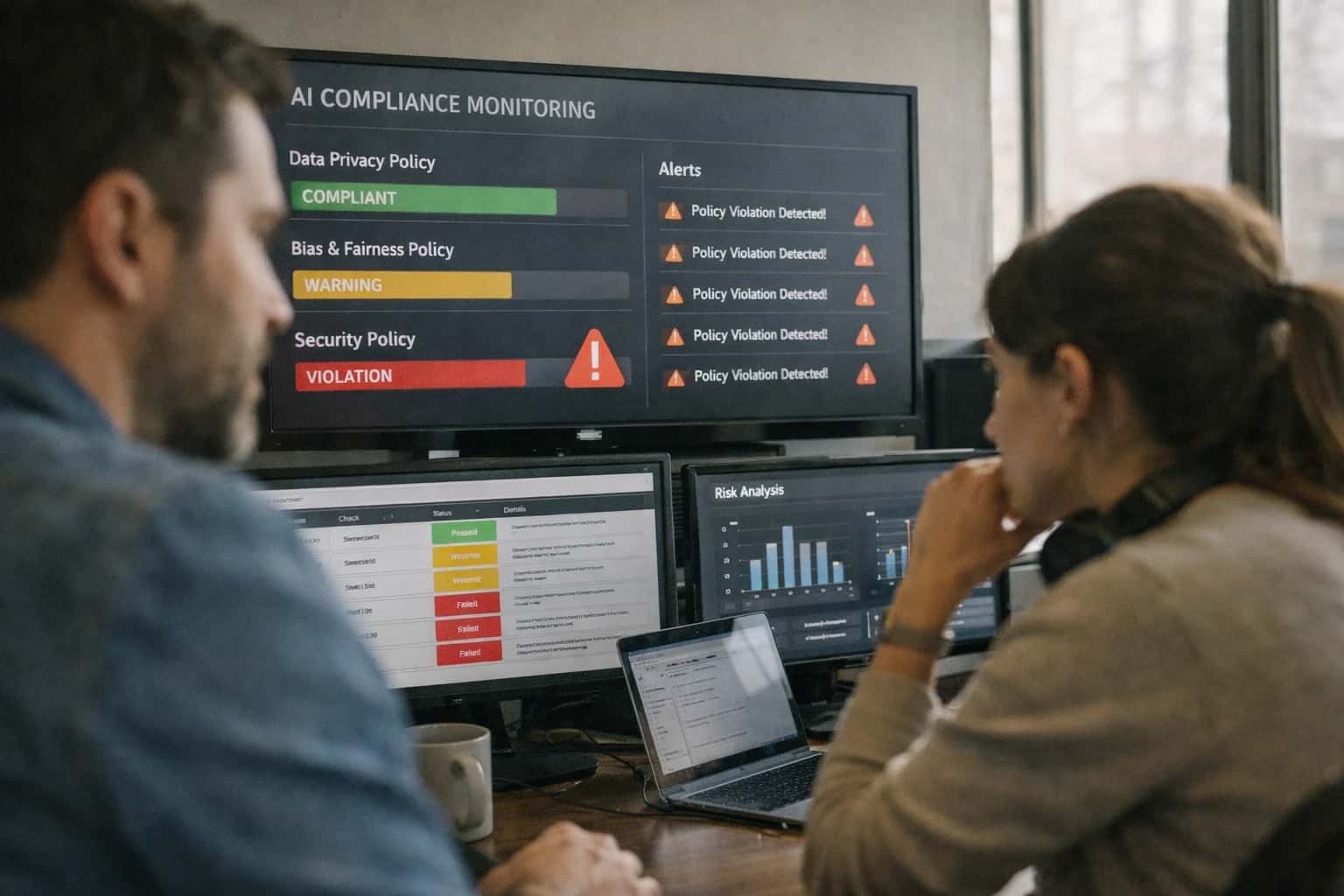
AI GOVERNANCE
What is a Crawl Transparency Report?
A formal audit log detailing the interaction between a website and autonomous AI crawlers, used to verify compliance with access directives and assess data exposure.
By correlating server access logs with declared AI training opt-out policies, the report identifies crawl anomaly detection events such as user-agent spoofing or unauthorized ingestion of nosnippet-tagged assets. For CTOs, this artifact is critical for enforcing content ingestion firewall policies and conducting security posture assessments, ensuring that proprietary data isn't silently vacuumed into external foundation models without explicit consent.
Audit & Governance
Key Features of a Crawl Transparency Report
A Crawl Transparency Report provides a forensic audit trail of AI agent activity, enabling infrastructure teams to verify compliance with directives and quantify data exposure.
01
User-Agent Identification & Classification
Logs and categorizes every visitor by its User-Agent Token, distinguishing between legitimate AI crawlers like GPTBot, Google-Extended, and ClaudeBot, versus spoofed or unidentified agents. This classification is the foundation for auditing compliance with robots.txt directives and identifying unauthorized access attempts.
02
Directive Compliance Auditing
Automatically cross-references actual crawl behavior against the published robots.txt and X-Robots-Tag rules. The report flags violations where a bot accessed a disallowed path or ignored a Crawl-Delay directive, providing evidence for Bot Management policy enforcement and potential blocking decisions.
03
Ingestion Volume & Frequency Metrics
Quantifies the exact number of requests, bytes transferred, and unique URLs fetched by each AI crawler over a reporting period. This data is critical for calculating Crawl Budget consumption and understanding the bandwidth and server load impact of AI-driven data collection on your origin infrastructure.
04
Content Sensitivity Tagging
Maps crawled URLs against internal content classifications to identify which types of proprietary data were accessed. The report can highlight if a bot ingested gated product documentation, unpublished research, or customer data, enabling risk assessment for AI Training Opt-Out compliance and intellectual property exposure.
05
Anomaly Detection & Threat Signaling
Uses heuristic analysis to detect Crawl Anomalies such as sudden spikes in request rates, sequential access patterns suggesting data scraping, or activity from known User-Agent Spoofing sources. This transforms the report from a passive log into an active security tool for the Content Ingestion Firewall.
06
Structured Data Export for Governance
Generates machine-readable outputs in formats like JSON or CSV, designed for integration into SIEM systems and compliance dashboards. This allows enterprises to maintain a permanent, auditable record of all AI crawler interactions for regulatory review, proving adherence to internal Crawl Consent Management policies.
Enabling Efficiency, Speed & Accuracy
Intelligent Analysis, Decision & Execution
We build AI systems for teams that need search across company data, workflow automation across tools, or AI features inside products and internal software.
Talk to Us
Search across company data
Give teams answers from docs, tickets, runbooks, and product data with sources and permissions.
Useful when people spend too long searching or get different answers from different systems.
Enterprise searchRAGPermissions
Read more
Automate internal workflows
Use AI to route work, draft outputs, trigger actions, and keep approvals and logs in place.
Useful when repetitive work moves across multiple tools and teams.
AI agentsWorkflow automationGovernance
Read more
Add AI to products and internal tools
Build assistants, guided actions, or decision support into the software your team or customers already use.
Useful when AI needs to be part of the product, not a separate tool.
AI integrationDecision supportModel routing
Read moreCRAWL TRANSPARENCY REPORT
Frequently Asked Questions
A crawl transparency report is a public or private document detailing a website's interactions with AI crawlers, including access frequency, data ingested, and compliance with directives, used for auditing and governance.
A crawl transparency report is a structured audit log that documents every interaction between a website and autonomous AI crawlers, such as GPTBot, ClaudeBot, or PerplexityBot. It records the user-agent token, the specific URLs accessed, the robots.txt directives served, the HTTP response codes, and the volume of data ingested. This report is critical for AI governance because it provides verifiable evidence of compliance with the Robots Exclusion Protocol and internal data policies. Without it, organizations operate blindly, unable to prove that their AI Training Opt-Out directives were respected or to detect unauthorized scraping by spoofed agents. It transforms opaque bot traffic into an auditable data supply chain, allowing CTOs to enforce crawl consent management and mitigate the risk of proprietary intellectual property leaking into foundation model training sets.

About the author
Prasad Kumkar
CEO & MD, Inference Systems
Prasad Kumkar is the CEO & MD of Inference Systems and writes about AI systems architecture, LLM infrastructure, model serving, evaluation, and production deployment. Over 5+ years, he has worked across computer vision models, L5 autonomous vehicle systems, and LLM research, with a focus on taking complex AI ideas into real-world engineering systems.
His work and writing cover AI systems, large language models, AI agents, multimodal systems, autonomous systems, inference optimization, RAG, evaluation, and production AI engineering.
LinkedIn
Limited slotsGet a Free AI Consultation
Partnered with leading AI, data, and software stack.





How We Work
Custom AI workflows for your Business
One-fit-all AI don't work for modern businesses. At Inferensys, we aim to understand your business & custom requirements; which we use to define most efficient agentic workflows, the data, and the tools for your business.
01
Review the use case
We understand the task, the users, and where AI can actually help.
Read more02
Pick the right approach
We define what needs search, automation, or product integration.
Read more03
Build the first useful version
We implement the part that proves the value first.
Read more04
Improve from there
We add the checks and visibility needed to keep it useful.
Read moreThe first call is a practical review of your use case and the right next step.
Talk to Us