A velocity check is a real-time fraud prevention mechanism that counts the number of transactions associated with a specific data attribute—such as a credit card number, IP address, device fingerprint, or email address—within a defined time window. When the count exceeds a statistically derived threshold, the system flags the activity as high-risk and may trigger a step-up authentication challenge or a hard block before the authorization flow completes.

Glossary
Velocity Checks
A fraud detection technique that monitors the frequency of specific attributes, such as card numbers or IP addresses, over a short time window to identify anomalous bursts of activity.
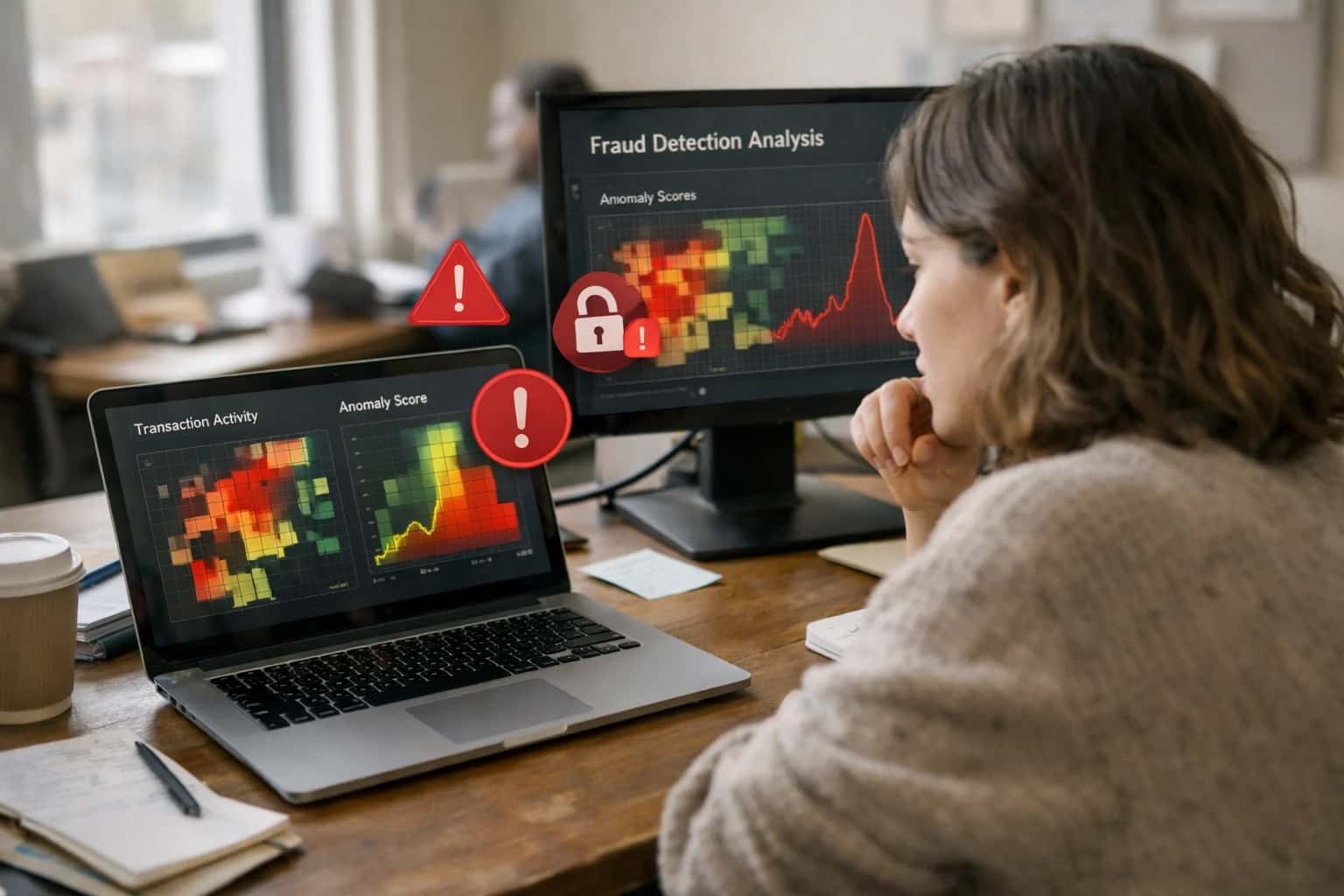
TRANSACTION FREQUENCY ANALYSIS
What is Velocity Checks?
A fraud detection technique that monitors the frequency of specific attributes over a short time window to identify anomalous bursts of activity indicative of automated attacks.
Engineered for the hot path of payment processing, velocity checks rely on high-performance, in-memory data structures like the Count-Min Sketch or Token Bucket Algorithm to maintain state with sub-millisecond latency. Unlike static rules, modern implementations integrate with a feature store and sliding window aggregation to dynamically adjust thresholds based on the historical behavioral profile of the entity, effectively distinguishing a legitimate holiday shopping spree from a card-testing attack executed by a botnet.
FREQUENCY-BASED ANOMALY DETECTION
Core Characteristics of Velocity Checks
Velocity checks form a critical first line of defense in real-time fraud scoring pipelines by monitoring the rate of events associated with specific attributes over short, sliding time windows. These checks detect anomalous bursts of activity that deviate from established behavioral baselines.
01
Attribute-Based Aggregation
Velocity checks operate by grouping transactions on categorical attributes such as:
- Card Number (PAN): Detecting rapid repeated use of a single card.
- IP Address: Identifying a single source generating many transactions.
- Device Fingerprint: Linking sessions to a specific device.
- Email Address or Shipping Address: Spotting account creation or checkout velocity.
Each attribute dimension provides a distinct signal. A high velocity on a card number combined with a high velocity on an IP address from a different geolocation is a strong composite indicator of fraud.
02
Sliding Window Computation
Velocity is calculated over a continuously updating time interval, not fixed calendar windows. A sliding window of 15 minutes means the system counts events in the last 15 minutes from the current moment.
This is implemented using:
- Tumbling windows: Fixed, non-overlapping intervals.
- Hopping windows: Fixed-size, overlapping intervals.
- Session windows: Dynamic windows that group events by periods of activity separated by inactivity gaps.
The choice of window size is critical: too short misses patterns, too long introduces latency and dilutes the signal.
03
Probabilistic Data Structures
Maintaining exact counts for millions of attributes with sub-millisecond latency is memory-prohibitive. Velocity checks often leverage approximate algorithms:
- Count-Min Sketch: Estimates frequency with a tunable error bound, using sub-linear space. Ideal for heavy-hitter detection.
- Bloom Filter: Efficiently tests set membership to answer "have we seen this attribute before?" with no false negatives.
- HyperLogLog: Estimates the cardinality of unique attributes, useful for measuring the distinct number of cards used from a single IP.
These structures trade a small, controlled error rate for massive reductions in memory footprint.
04
Threshold Tuning and Baselines
A velocity check is not a binary rule; it compares a computed rate against a dynamic threshold. Effective tuning involves:
- Statistical baselining: Calculating the mean and standard deviation of velocity for a given attribute across a historical population.
- Percentile-based thresholds: Setting limits at the 99th or 99.9th percentile of normal behavior.
- Context-aware thresholds: Adjusting limits based on merchant category code (MCC), transaction amount, or time of day.
A threshold set too low generates false positives; too high allows fraud to pass. Continuous monitoring of threshold performance is essential.
05
Stateful Stream Processing
Velocity checks require state management to remember previous events. In a distributed stream processor like Apache Kafka Streams or Apache Flink, this state is stored in a local, fault-tolerant state store backed by a changelog topic.
Key considerations:
- RocksDB: A common embedded key-value store for local state.
- State TTL: Time-to-live settings automatically expire old entries to prevent unbounded memory growth.
- Exactly-Once Semantics: Ensures that a single transaction does not increment the velocity counter more than once, even during system failures and retries.
06
Composite Velocity Rules
Individual velocity checks are combined into composite rules to increase precision. A single high-velocity signal might be a false positive, but multiple concurrent signals create a high-confidence alert.
Example composite rule:
IF (card_velocity_10min > 5) AND (ip_velocity_10min > 10) AND (amount_velocity_1hr > $50,000) THEN score += 850
These rules are often managed in a rules engine with decision tables, allowing fraud analysts to modify logic without deploying code. The output feeds into the overall risk scoring engine.
Enabling Efficiency, Speed & Accuracy
Intelligent Analysis, Decision & Execution
We build AI systems for teams that need search across company data, workflow automation across tools, or AI features inside products and internal software.
Talk to Us
Search across company data
Give teams answers from docs, tickets, runbooks, and product data with sources and permissions.
Useful when people spend too long searching or get different answers from different systems.
Enterprise searchRAGPermissions
Read more
Automate internal workflows
Use AI to route work, draft outputs, trigger actions, and keep approvals and logs in place.
Useful when repetitive work moves across multiple tools and teams.
AI agentsWorkflow automationGovernance
Read more
Add AI to products and internal tools
Build assistants, guided actions, or decision support into the software your team or customers already use.
Useful when AI needs to be part of the product, not a separate tool.
AI integrationDecision supportModel routing
Read moreVELOCITY CHECKS
Frequently Asked Questions
Clear, technically precise answers to the most common questions about velocity check algorithms, their implementation in real-time fraud scoring pipelines, and their role in blocking anomalous transaction bursts before authorization.
A velocity check is a real-time fraud detection technique that monitors the frequency of specific attributes—such as a credit card number, IP address, device fingerprint, or email address—over a short, sliding time window to identify anomalous bursts of activity. When the count of events for a given attribute exceeds a predefined threshold within the window, the system triggers a risk alert or blocks the transaction. Unlike static rule checks that evaluate a single transaction in isolation, velocity checks capture the temporal density of activity, making them effective against card testing, credential stuffing, and automated bot attacks. The underlying data structure is often a Count-Min Sketch or token bucket, which provides approximate frequency counts with sub-linear space complexity, enabling sub-millisecond lookups in high-throughput payment streams.

About the author
Prasad Kumkar
CEO & MD, Inference Systems
Prasad Kumkar is the CEO & MD of Inference Systems and writes about AI systems architecture, LLM infrastructure, model serving, evaluation, and production deployment. Over 5+ years, he has worked across computer vision models, L5 autonomous vehicle systems, and LLM research, with a focus on taking complex AI ideas into real-world engineering systems.
His work and writing cover AI systems, large language models, AI agents, multimodal systems, autonomous systems, inference optimization, RAG, evaluation, and production AI engineering.
LinkedIn
Limited slotsGet a Free AI Consultation
Partnered with leading AI, data, and software stack.





How We Work
Custom AI workflows for your Business
One-fit-all AI don't work for modern businesses. At Inferensys, we aim to understand your business & custom requirements; which we use to define most efficient agentic workflows, the data, and the tools for your business.
01
Review the use case
We understand the task, the users, and where AI can actually help.
Read more02
Pick the right approach
We define what needs search, automation, or product integration.
Read more03
Build the first useful version
We implement the part that proves the value first.
Read more04
Improve from there
We add the checks and visibility needed to keep it useful.
Read moreThe first call is a practical review of your use case and the right next step.
Talk to Us