Regulatory Technology (RegTech) is the systematic application of cloud computing, big data analytics, and machine learning to streamline and automate an institution's compliance lifecycle. It transforms complex, text-heavy regulatory mandates into machine-executable code, enabling real-time monitoring, anomaly detection, and automated regulatory reporting. This shifts compliance from a periodic, backward-looking exercise to a continuous, proactive operational function.

Glossary
Regulatory Technology (RegTech)
Regulatory Technology (RegTech) is the application of software and machine learning to automate the ingestion, interpretation, and operationalization of regulatory obligations, reducing manual compliance burdens.
COMPLIANCE AUTOMATION
What is Regulatory Technology (RegTech)?
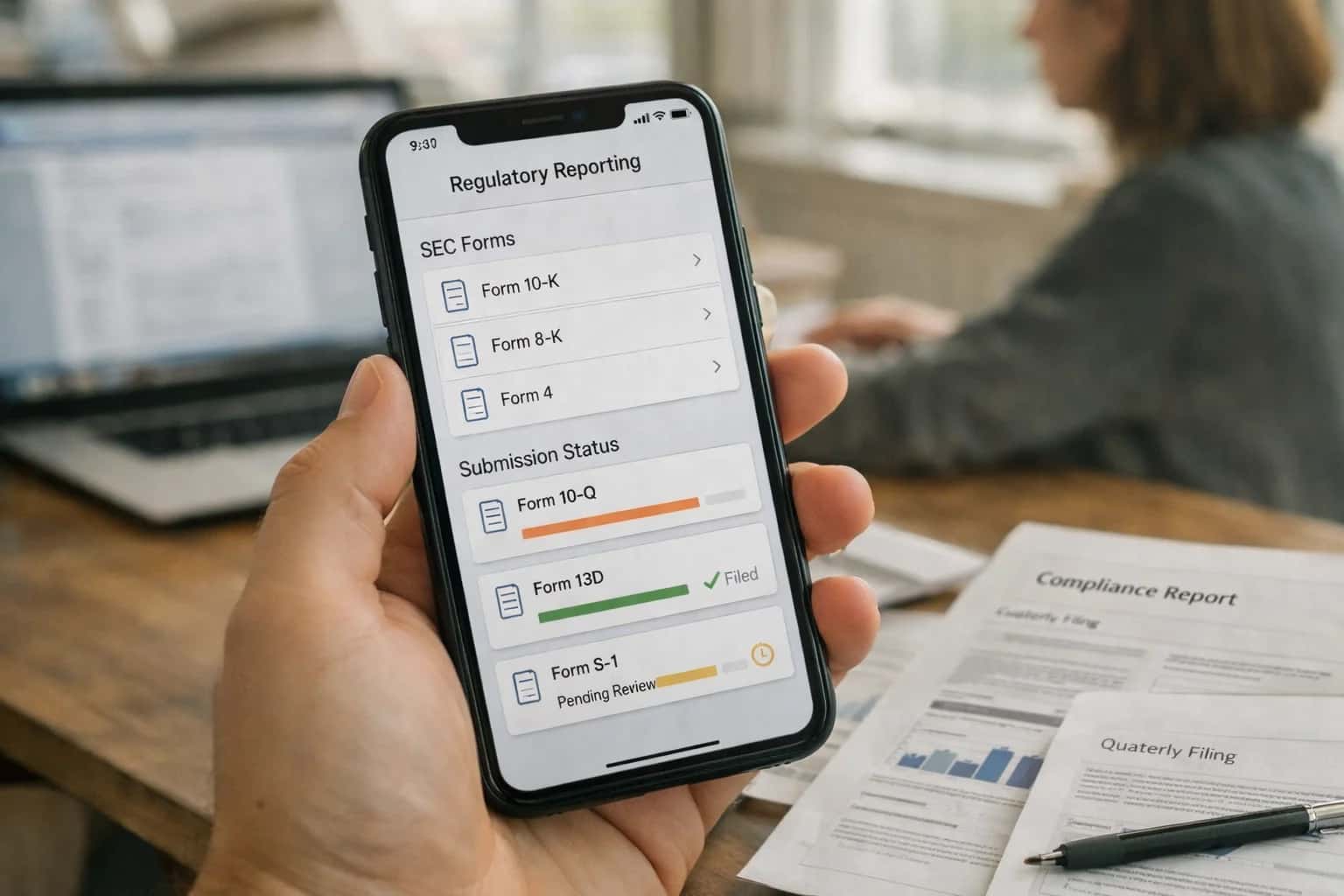
Regulatory Technology (RegTech) is the application of software and machine learning to automate the ingestion, interpretation, and operationalization of regulatory obligations, reducing the manual burden of compliance monitoring and reporting.
Core RegTech capabilities include automated regulatory change management, where natural language processing parses legal text to identify obligations, and regulatory reporting engines that auto-generate filings. By integrating directly with transaction systems, RegTech enables continuous compliance monitoring and automated audit trail generation, significantly reducing the operational risk of human error and the cost of manual compliance interpretation.
AUTOMATED COMPLIANCE
Core Capabilities of RegTech Platforms
Regulatory Technology platforms automate the ingestion, interpretation, and operationalization of complex regulatory obligations. These core capabilities transform manual compliance into a continuous, auditable, and machine-executable process.
01
Regulatory Horizon Scanning
Automated, continuous monitoring of global regulatory publications, enforcement actions, and consultation papers. Uses natural language processing (NLP) to parse unstructured legal text and classify relevance.
- Ingests documents from hundreds of regulators globally
- Maps new obligations to existing internal policies and controls
- Provides early-warning alerts for upcoming regulatory changes
- Reduces manual legal research from weeks to hours
200+
Regulatory Sources Monitored
02
Obligation Mapping & Taxonomy
Transforms raw regulatory text into structured, machine-readable obligations. Creates a centralized regulatory taxonomy that links each rule to specific business units, products, and geographies.
- Extracts actionable 'shall' and 'must' statements from legal prose
- Tags obligations by jurisdiction, risk type, and business function
- Maintains a dynamic, version-controlled obligations register
- Enables gap analysis between regulatory requirements and existing controls
03
Automated Regulatory Reporting
Streamlines the creation, validation, and submission of mandated reports to supervisory authorities. Integrates with core banking and risk systems to auto-populate regulatory templates.
- Supports formats like COREP, FINREP, and FFIEC 031
- Validates data against regulatory business rules before submission
- Maintains a complete audit trail of all report versions and sign-offs
- Reduces manual data aggregation errors and submission latency
< 1 hr
Report Generation Time
04
Compliance Workflow Automation
Orchestrates end-to-end compliance processes, from policy attestation to breach remediation. Routes tasks, escalates exceptions, and enforces segregation of duties across the three lines of defense.
- Automates periodic policy review and employee attestation cycles
- Triggers remediation workflows upon control failure detection
- Integrates with GRC platforms for unified risk and compliance visibility
- Provides real-time dashboards on compliance posture for senior management
05
Model Risk Management Integration
Extends governance frameworks specifically to AI and machine learning models used in financial decision-making. Automates model inventory tracking, validation scheduling, and findings remediation in alignment with SR 11-7.
- Maintains a complete, searchable model inventory with ownership metadata
- Tracks model validation cycles, findings, and remediation status
- Monitors model performance metrics and triggers alerts on drift
- Generates audit-ready model documentation and attestation reports
06
Audit Trail & Immutable Recordkeeping
Creates a cryptographically secure, time-stamped record of all compliance activities, data accesses, and decisions. Supports forensic reconstruction and demonstrates regulatory due diligence.
- Captures who accessed what data, when, and why
- Records all model decisions, overrides, and justifications
- Provides immutable logs for internal audit and external examiner review
- Enables rapid response to regulatory inquiries with complete evidence packages
REGULATORY TECHNOLOGY
Frequently Asked Questions
Clear, technical answers to the most common questions about how machine learning and software automation are transforming regulatory compliance in financial services.
Regulatory Technology, or RegTech, is the application of software and machine learning to automate the ingestion, interpretation, and operationalization of regulatory obligations, replacing manual compliance processes with scalable digital workflows. It works by ingesting unstructured regulatory text from global agencies, using natural language processing (NLP) to extract actionable rules, and mapping those rules to an institution's internal policies, transaction data, and risk controls. The core mechanism involves a continuous feedback loop: regulatory change detection triggers a gap analysis against existing controls, which then generates remediation workflows, policy updates, and automated reporting artifacts. This transforms compliance from a periodic, reactive audit exercise into a continuous, data-driven operational function, dramatically reducing the manual burden of horizon scanning, obligation mapping, and regulatory filing.
Enabling Efficiency, Speed & Accuracy
Intelligent Analysis, Decision & Execution
We build AI systems for teams that need search across company data, workflow automation across tools, or AI features inside products and internal software.
Talk to Us
Search across company data
Give teams answers from docs, tickets, runbooks, and product data with sources and permissions.
Useful when people spend too long searching or get different answers from different systems.
Enterprise searchRAGPermissions
Read more
Automate internal workflows
Use AI to route work, draft outputs, trigger actions, and keep approvals and logs in place.
Useful when repetitive work moves across multiple tools and teams.
AI agentsWorkflow automationGovernance
Read more
Add AI to products and internal tools
Build assistants, guided actions, or decision support into the software your team or customers already use.
Useful when AI needs to be part of the product, not a separate tool.
AI integrationDecision supportModel routing
Read more
About the author
Prasad Kumkar
CEO & MD, Inference Systems
Prasad Kumkar is the CEO & MD of Inference Systems and writes about AI systems architecture, LLM infrastructure, model serving, evaluation, and production deployment. Over 5+ years, he has worked across computer vision models, L5 autonomous vehicle systems, and LLM research, with a focus on taking complex AI ideas into real-world engineering systems.
His work and writing cover AI systems, large language models, AI agents, multimodal systems, autonomous systems, inference optimization, RAG, evaluation, and production AI engineering.
LinkedIn
Limited slotsGet a Free AI Consultation
Partnered with leading AI, data, and software stack.





How We Work
Custom AI workflows for your Business
One-fit-all AI don't work for modern businesses. At Inferensys, we aim to understand your business & custom requirements; which we use to define most efficient agentic workflows, the data, and the tools for your business.
01
Review the use case
We understand the task, the users, and where AI can actually help.
Read more02
Pick the right approach
We define what needs search, automation, or product integration.
Read more03
Build the first useful version
We implement the part that proves the value first.
Read more04
Improve from there
We add the checks and visibility needed to keep it useful.
Read moreThe first call is a practical review of your use case and the right next step.
Talk to Us