Champion-Challenger Testing is a production evaluation framework where a new suppression rule or model (the challenger) runs in parallel against the current production logic (the champion) to validate performance before cutover. This shadow mode evaluation allows the challenger to process live traffic and log decisions silently without affecting operational outcomes, enabling safe, empirical performance benchmarking on real-world data distributions.

Glossary
Champion-Challenger Testing
A production evaluation framework where a new suppression rule or model (challenger) runs in parallel against the current production logic (champion) to validate performance before cutover.
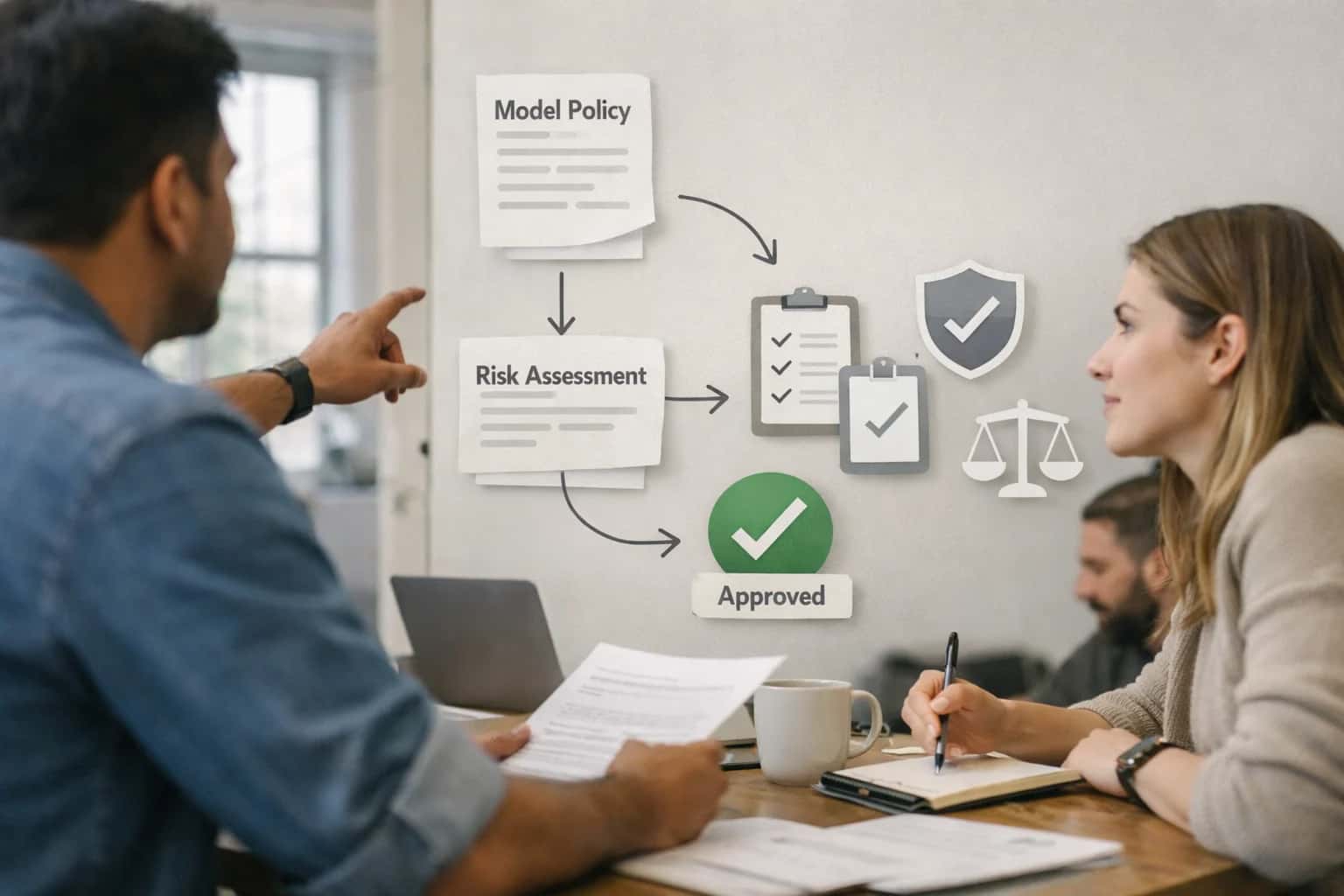
PRODUCTION MODEL VALIDATION
What is Champion-Challenger Testing?
A rigorous evaluation framework for safely comparing a new model against the incumbent before full deployment.
By comparing key metrics such as False Positive Rate (FPR) and Precision-Recall trade-off between the two models, teams can quantify the challenger's impact on alert fatigue and investigator efficiency. The framework ensures that a new decision threshold tuning strategy or ML-based alert scoring model demonstrably outperforms the incumbent before it is promoted, mitigating the risk of degrading fraud detection efficacy in production.
PRODUCTION EVALUATION FRAMEWORK
Key Characteristics of Champion-Challenger Testing
A rigorous methodology for validating new fraud suppression rules or models against the incumbent production logic using live traffic before full deployment.
01
Parallel Production Execution
The challenger model processes identical live transaction streams simultaneously with the champion model, but its decisions are logged in shadow mode without affecting operational alerts. This ensures zero production risk while collecting statistically significant performance data under real-world conditions. Both models receive the same features, timestamps, and payloads to guarantee a fair comparison.
02
Statistical Significance Validation
Testing must run until results achieve statistical power—typically requiring a minimum sample size calculated from expected effect size, significance level (α = 0.05), and desired power (1-β = 0.80). For fraud detection with low base rates, this often means weeks or months of shadow evaluation to capture enough rare positive events for meaningful comparison.
03
Multi-Metric Evaluation Criteria
Performance is assessed across a balanced scorecard, not a single metric:
- False Positive Rate (FPR): Reduction in false alarms per thousand transactions
- Detection Rate: True positive capture at equivalent FPR thresholds
- Alert Precision: Ratio of true fraud to total alerts generated
- Investigator Efficiency: Average time-to-disposition for generated alerts
- Business Cost Impact: Dollar value of fraud prevented vs. operational cost of review
04
Traffic Segmentation Strategy
Sophisticated champion-challenger frameworks employ stratified sampling across transaction segments—by channel (mobile, web, API), geography, merchant category, or amount tier—to detect performance regressions in specific slices. A challenger may outperform globally but degrade detection in high-value wire transfers, requiring segment-level analysis before cutover approval.
05
Automated Cutover Governance
The transition from champion to challenger follows a gated promotion pipeline: Shadow Mode → Low-Volume Canary (1% traffic) → Ramped Deployment (10%, 25%, 50%) → Full Cutover. Each gate requires automated validation that key metrics remain within acceptable drift bounds. A rollback trigger is configured to automatically revert to the champion if anomaly rates spike beyond predefined thresholds.
06
Feedback Loop Integration
During shadow evaluation, investigator dispositions on champion-generated alerts are simultaneously applied to the challenger's logged decisions through retrospective labeling. This enables calculation of what the challenger's precision and recall would have been had it been in production, providing a direct, apples-to-apples comparison grounded in actual human-verified outcomes rather than proxy metrics.
CHAMPION-CHALLENGER TESTING
Frequently Asked Questions
Explore the operational framework for safely validating new fraud detection models and suppression rules in production before full deployment.
Champion-Challenger Testing is a production evaluation framework where a new fraud detection model or suppression rule (the 'challenger') runs in parallel against the current production logic (the 'champion') to validate performance before cutover. The champion continues to handle all live decisions—blocking transactions or generating alerts—while the challenger processes the same traffic in a shadow mode, logging its decisions without operational impact. This allows data science teams to compare metrics like False Positive Rate (FPR), precision-recall trade-off, and detection latency on identical real-world data. The framework eliminates the risk of deploying an underperforming model by providing statistically significant evidence that the challenger outperforms or matches the champion across defined business KPIs before a full canary release or cutover is authorized.
Enabling Efficiency, Speed & Accuracy
Intelligent Analysis, Decision & Execution
We build AI systems for teams that need search across company data, workflow automation across tools, or AI features inside products and internal software.
Talk to Us
Search across company data
Give teams answers from docs, tickets, runbooks, and product data with sources and permissions.
Useful when people spend too long searching or get different answers from different systems.
Enterprise searchRAGPermissions
Read more
Automate internal workflows
Use AI to route work, draft outputs, trigger actions, and keep approvals and logs in place.
Useful when repetitive work moves across multiple tools and teams.
AI agentsWorkflow automationGovernance
Read more
Add AI to products and internal tools
Build assistants, guided actions, or decision support into the software your team or customers already use.
Useful when AI needs to be part of the product, not a separate tool.
AI integrationDecision supportModel routing
Read more
About the author
Prasad Kumkar
CEO & MD, Inference Systems
Prasad Kumkar is the CEO & MD of Inference Systems and writes about AI systems architecture, LLM infrastructure, model serving, evaluation, and production deployment. Over 5+ years, he has worked across computer vision models, L5 autonomous vehicle systems, and LLM research, with a focus on taking complex AI ideas into real-world engineering systems.
His work and writing cover AI systems, large language models, AI agents, multimodal systems, autonomous systems, inference optimization, RAG, evaluation, and production AI engineering.
LinkedIn
Limited slotsGet a Free AI Consultation
Partnered with leading AI, data, and software stack.





How We Work
Custom AI workflows for your Business
One-fit-all AI don't work for modern businesses. At Inferensys, we aim to understand your business & custom requirements; which we use to define most efficient agentic workflows, the data, and the tools for your business.
01
Review the use case
We understand the task, the users, and where AI can actually help.
Read more02
Pick the right approach
We define what needs search, automation, or product integration.
Read more03
Build the first useful version
We implement the part that proves the value first.
Read more04
Improve from there
We add the checks and visibility needed to keep it useful.
Read moreThe first call is a practical review of your use case and the right next step.
Talk to Us