Benign Pattern Recognition is the algorithmic process of identifying and cataloging known legitimate transaction sequences, user behaviors, or system events to explicitly exclude them from anomaly detection alerts. It functions as a deterministic or probabilistic filter that distinguishes between genuinely anomalous activity and recurring, authorized deviations—such as corporate payroll runs or automated treasury sweeps—that would otherwise trigger false positives.

Glossary
Benign Pattern Recognition
The algorithmic identification of known safe transaction sequences or recurring legitimate behaviors that should be excluded from anomaly detection alerts.
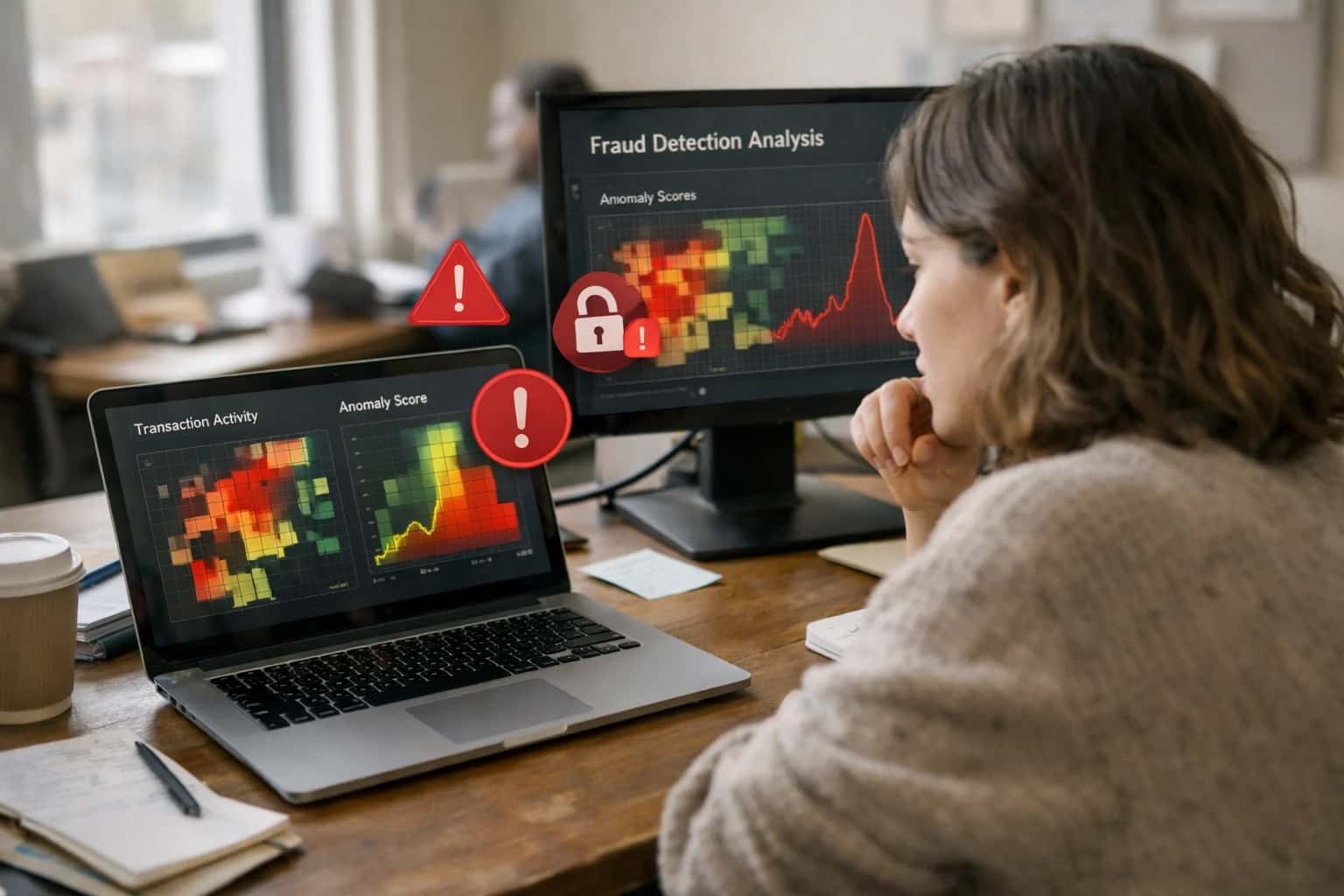
FALSE POSITIVE REDUCTION
What is Benign Pattern Recognition?
The algorithmic identification of known safe transaction sequences or recurring legitimate behaviors that should be excluded from anomaly detection alerts.
By maintaining a dynamic library of pre-validated safe patterns, this technique directly suppresses noise before alerts reach human investigators. It leverages entity profiling, contextual suppression, and historical baselines to recognize that a high-velocity transfer from a CFO's device at month-end is a benign pattern, not a fraud event, thereby reducing alert fatigue and preserving investigative resources for genuinely novel threats.
FALSE POSITIVE REDUCTION
Key Characteristics of Benign Pattern Recognition
Benign pattern recognition identifies known-safe transaction sequences and recurring legitimate behaviors, systematically excluding them from anomaly detection alerts to reduce investigator noise.
01
Whitelist-Based Exclusion
Deterministic filtering that suppresses alerts when transactions match pre-validated safe entities such as trusted beneficiaries, internal transfers, or known corporate treasury accounts. Unlike probabilistic scoring, whitelisting provides zero false positive guarantees for explicitly enumerated patterns.
- Static whitelists: Hardcoded lists of accounts, merchant category codes, or routing numbers
- Dynamic whitelists: Time-bound exclusions for scheduled payroll runs or recurring vendor payments
- Risk: Overly broad whitelists create blind spots exploitable by sophisticated attackers
30-50%
Alert volume reduction via whitelisting
02
Behavioral Baseline Profiling
Constructs historical normalcy models for individual users, accounts, or devices by analyzing transaction frequency, amount distributions, geolocation patterns, and temporal rhythms. Deviations are scored against this personalized baseline rather than population-level statistics, dramatically reducing false positives for legitimate high-net-worth or high-frequency actors.
- Rolling time windows: 30/60/90-day baselines with exponential decay weighting
- Multi-dimensional profiles: Separate baselines for velocity, amount, geography, and device fingerprint
- Seasonality awareness: Accounts for predictable spikes during tax season, holidays, or quarter-end
03
Contextual Suppression Rules
Logic that evaluates surrounding transaction attributes before allowing an alert to fire. A high anomaly score is suppressed if contextual signals—such as device fingerprint reputation, IP geolocation consistency, or prior successful authentication events—indicate legitimate activity.
- Device trust scoring: Recognized devices with long usage history bypass step-up checks
- Geolocation consistency: Suppresses alerts when location matches historical patterns within acceptable radius
- Session continuity: Validates that the transaction originates from an authenticated session without anomalies
04
Velocity Check Overrides
Standard velocity checks flag rapid transaction sequences as suspicious, but known high-frequency legitimate actors—corporate treasury systems, algorithmic trading desks, or e-commerce payment processors—routinely trigger these rules. Override mechanisms recognize these benign high-velocity patterns through entity profiling and suppress corresponding alerts.
- Entity-type classification: Distinguishes corporate treasury from consumer accounts
- Expected throughput modeling: Learns normal transaction-per-second rates per entity
- Time-window tuning: Adjusts velocity windows based on business operating hours
05
SHAP-Based Feature Filtering
Applies SHAP (SHapley Additive exPlanations) value analysis to high-scoring transactions before alert generation. If the top contributing features to an anomaly score are explainable by benign business logic—such as a known salary deposit amount or a recurring utility payment—the alert is suppressed.
- Feature attribution decomposition: Identifies which input variables drove the anomaly score
- Business logic validation: Cross-references contributing features against known-safe patterns
- Explainability threshold: Suppresses when top-k features are all classified as non-risky
06
Recurring Transaction Recognition
Identifies periodic payment patterns—subscriptions, payroll deposits, utility bills, and inter-account transfers—through time-series analysis and automatically excludes them from anomaly scoring. These transactions exhibit low coefficient of variation in amount and predictable temporal cadence.
- Periodicity detection: Fourier transform or autocorrelation analysis to identify cycles
- Amount tolerance bands: Allows minor fluctuations (e.g., variable utility bills) without flagging
- Counterparty stability: Validates that the recipient remains consistent across recurrence cycles
Enabling Efficiency, Speed & Accuracy
Intelligent Analysis, Decision & Execution
We build AI systems for teams that need search across company data, workflow automation across tools, or AI features inside products and internal software.
Talk to Us
Search across company data
Give teams answers from docs, tickets, runbooks, and product data with sources and permissions.
Useful when people spend too long searching or get different answers from different systems.
Enterprise searchRAGPermissions
Read more
Automate internal workflows
Use AI to route work, draft outputs, trigger actions, and keep approvals and logs in place.
Useful when repetitive work moves across multiple tools and teams.
AI agentsWorkflow automationGovernance
Read more
Add AI to products and internal tools
Build assistants, guided actions, or decision support into the software your team or customers already use.
Useful when AI needs to be part of the product, not a separate tool.
AI integrationDecision supportModel routing
Read moreBENIGN PATTERN RECOGNITION
Frequently Asked Questions
Explore the algorithmic techniques used to identify and exclude known safe transaction sequences from fraud detection alerts, reducing false positives and improving investigator efficiency.
Benign pattern recognition is the algorithmic process of identifying and cataloging known legitimate transaction sequences, recurring user behaviors, and trusted entity relationships that should be systematically excluded from anomaly detection alerts. Unlike anomaly detection, which hunts for deviations, this technique builds a positive profile of "normal" to suppress false positives. It operates by ingesting historical transaction data, extracting recurring motifs—such as monthly payroll runs, corporate treasury sweeps, or subscription billing cycles—and encoding them into suppression rules or allowlist embeddings. When a live transaction matches a recognized benign pattern with high confidence, the alert is suppressed before it reaches an investigator. This approach is critical in high-volume payment environments where even a 1% false positive rate can generate thousands of daily false alarms, causing alert fatigue and masking genuine threats. Modern implementations use sequence mining algorithms like PrefixSpan or autoencoder-based pattern extractors to discover these safe sequences without manual rule authoring.

About the author
Prasad Kumkar
CEO & MD, Inference Systems
Prasad Kumkar is the CEO & MD of Inference Systems and writes about AI systems architecture, LLM infrastructure, model serving, evaluation, and production deployment. Over 5+ years, he has worked across computer vision models, L5 autonomous vehicle systems, and LLM research, with a focus on taking complex AI ideas into real-world engineering systems.
His work and writing cover AI systems, large language models, AI agents, multimodal systems, autonomous systems, inference optimization, RAG, evaluation, and production AI engineering.
LinkedIn
Limited slotsGet a Free AI Consultation
Partnered with leading AI, data, and software stack.





How We Work
Custom AI workflows for your Business
One-fit-all AI don't work for modern businesses. At Inferensys, we aim to understand your business & custom requirements; which we use to define most efficient agentic workflows, the data, and the tools for your business.
01
Review the use case
We understand the task, the users, and where AI can actually help.
Read more02
Pick the right approach
We define what needs search, automation, or product integration.
Read more03
Build the first useful version
We implement the part that proves the value first.
Read more04
Improve from there
We add the checks and visibility needed to keep it useful.
Read moreThe first call is a practical review of your use case and the right next step.
Talk to Us