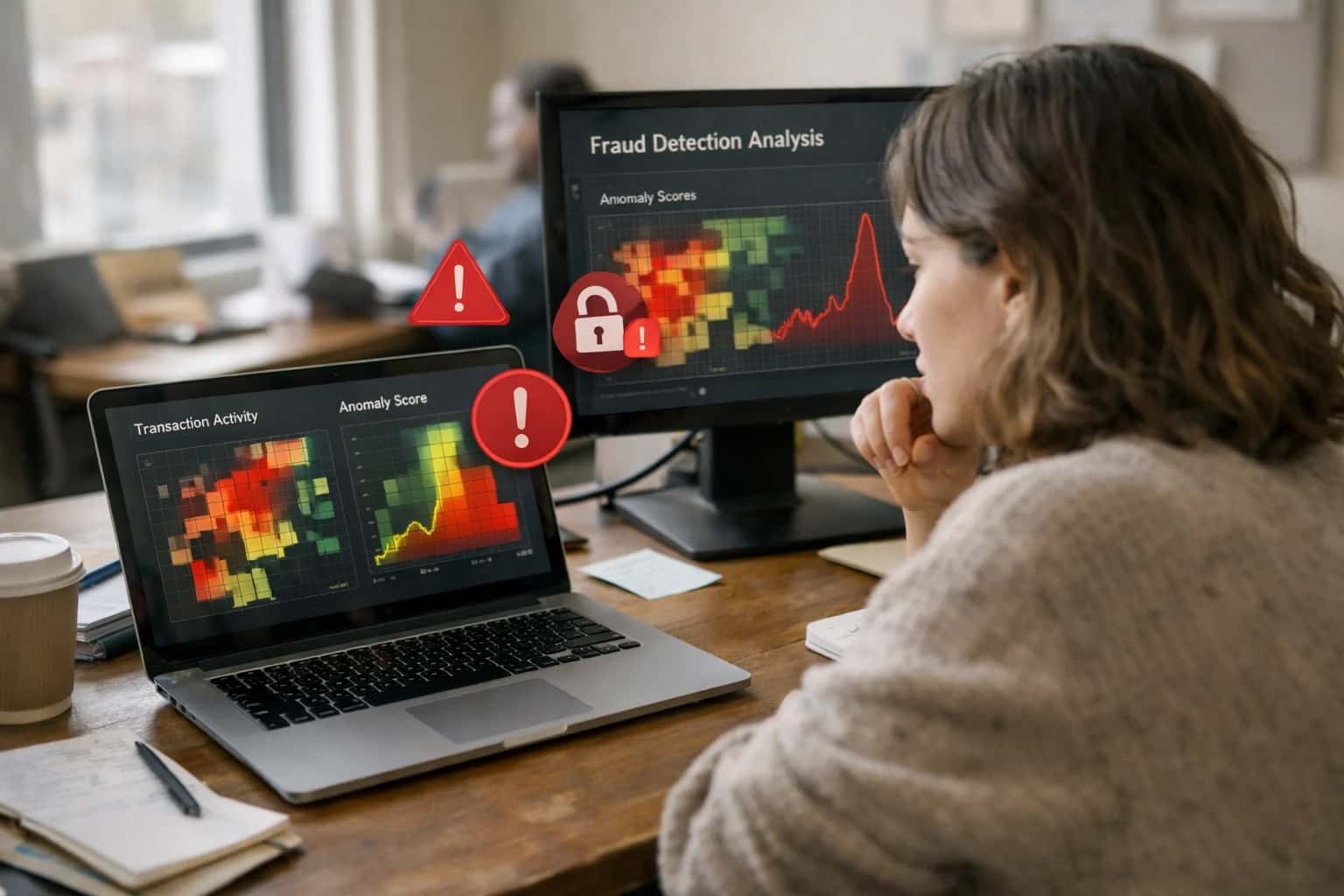
SIM swap detection is the technical process of identifying when a mobile subscriber's service is illicitly transferred to a new SIM card by an attacker. This fraud type exploits the carrier's number porting or SIM replacement process to intercept SMS-based one-time passcodes and multi-factor authentication challenges, granting the attacker access to banking, email, and cryptocurrency accounts. Detection relies on analyzing carrier-level signaling data, such as SS7 and Diameter protocol messages, to flag unauthorized SIM re-provisioning events in near real-time before financial damage occurs.

Glossary
SIM Swap Detection
The identification of a fraudulent account takeover where a mobile phone number is transferred to a new SIM card controlled by an attacker, often detected by analyzing carrier-level signaling data or sudden device changes.
TELECOM FRAUD PREVENTION
What is SIM Swap Detection?
SIM swap detection identifies the fraudulent transfer of a victim's mobile phone number to a SIM card controlled by an attacker, a critical account takeover vector that bypasses SMS-based two-factor authentication.
Effective detection correlates multiple data sources, including sudden changes in a device's International Mobile Equipment Identity (IMEI) paired with an existing International Mobile Subscriber Identity (IMSI) , abrupt geolocation shifts, and loss of network attachment followed by re-registration on a new device. Machine learning models trained on historical swap events and legitimate device changes distinguish genuine upgrades from hostile takeovers by evaluating temporal patterns, account tenure, and anomalous signaling sequences, enabling financial institutions to halt high-risk transactions before approving fund transfers.
SIM SWAP DETECTION
Core Detection Signals
The technical signals and data sources used to identify fraudulent SIM swaps before they enable account takeover. These indicators span carrier network events, device state changes, and behavioral anomalies.
01
Carrier Event Monitoring
Direct integration with mobile network operator APIs to receive real-time notifications of SIM card changes. This is the gold standard signal, providing authoritative confirmation that a subscriber identity module has been reassigned.
- SS7 signaling analysis detects the exact moment a new SIM is provisioned
- Number Portability Check identifies if a number was recently ported to a new carrier
- IMSI change detection flags when the International Mobile Subscriber Identity associated with a phone number changes
- Typical latency: sub-second to 30 seconds depending on carrier integration depth
< 30 sec
Detection Latency
99.9%
Signal Accuracy
02
Device Fingerprint Mutation
When a SIM swap occurs, the victim's phone number is now associated with an attacker's physical device. Monitoring for abrupt device identity changes tied to the same account provides a strong heuristic signal.
- Device ID hash changes when the same phone number appears on new hardware
- IMEI mismatch between the expected device and the newly registered handset
- Operating system version and browser fingerprint inconsistencies with historical baselines
- This signal is passive, requiring no carrier relationship, but is susceptible to emulator spoofing
03
Network Identity Mismatch
Cross-referencing the IP address geolocation and network provider against the claimed mobile carrier to detect inconsistencies. A legitimate SIM swap should not cause an immediate, impossible geographic relocation.
- IP-to-carrier mismatch: Device claims to be on Verizon but IP originates from a T-Mobile data center
- Geolocation discontinuity: Phone number last seen in Chicago suddenly authenticates from Lagos within minutes
- ASN analysis reveals if traffic routes through unexpected autonomous systems or hosting providers
- Combine with impossible travel velocity checks for high-confidence scoring
04
SMS Delivery Failure Patterns
Monitoring the delivery status of SMS-based one-time passcodes as a passive detection layer. When a SIM swap executes, the legitimate user's device stops receiving messages while the attacker's device begins receiving them.
- Delivery receipt codes shift from 'delivered' to 'undeliverable' or 'absent subscriber'
- Sudden SMS routing changes to a different SMSC address
- Time-to-deliver spikes as messages traverse unfamiliar network paths
- This signal is retrospective but provides strong confirmation when correlated with other indicators
05
Behavioral Biometric Drift
After a SIM swap, the human operating the account changes entirely. Passive behavioral signals detect this identity shift even if the attacker has valid credentials.
- Keystroke dynamics and typing cadence deviate from the established user profile
- Touchscreen pressure patterns and swipe geometry change on mobile applications
- Interaction timing with security prompts differs from historical norms
- This signal is continuous and operates post-authentication, catching attackers who bypass initial SIM swap detection
06
SS7 and Diameter Signaling Analysis
Deep packet inspection of telecom signaling protocols to detect SIM provisioning events at the network layer. This requires specialized telecom infrastructure access but provides the earliest possible detection.
- Update Location Request messages in SS7 indicate a subscriber's association with a new MSC/VLR
- Insert Subscriber Data operations in Diameter signaling reveal profile changes
- Cancel Location messages sent to the previous MSC confirm the handover
- This is the same signaling data used by carriers internally, offering near-zero false positive rates when properly instrumented
COMPARATIVE ANALYSIS
SIM Swap Detection vs. Related Fraud Vectors
A technical comparison of SIM swap detection against adjacent account takeover vectors, highlighting detection mechanisms, signal sources, and operational characteristics.
| Feature | SIM Swap Detection | Credential Stuffing Detection | Session Hijacking Detection |
|---|---|---|---|
Primary Attack Vector | Fraudulent mobile number porting to attacker-controlled SIM | Automated injection of breached username/password pairs | Theft and reuse of valid session tokens or cookies |
Core Detection Signal | Carrier-level signaling data, MSISDN-to-IMSI binding changes | Velocity checks, high failure rates, bot signatures | Abrupt device fingerprint, geolocation, or behavioral biometric delta |
Signal Source | SS7/Diameter signaling, carrier APIs, HLR lookups | Application login telemetry, IP reputation databases | Client-side telemetry, session token binding analysis |
Real-Time Capability | |||
Passive Detection | |||
Behavioral Biometric Integration | |||
Carrier Network Dependency | |||
Typical Detection Latency | < 500 ms | < 100 ms | < 50 ms |
False Positive Rate | 0.01% | 0.5% | 0.1% |
Enabling Efficiency, Speed & Accuracy
Intelligent Analysis, Decision & Execution
We build AI systems for teams that need search across company data, workflow automation across tools, or AI features inside products and internal software.
Talk to Us
Search across company data
Give teams answers from docs, tickets, runbooks, and product data with sources and permissions.
Useful when people spend too long searching or get different answers from different systems.
Enterprise searchRAGPermissions
Read more
Automate internal workflows
Use AI to route work, draft outputs, trigger actions, and keep approvals and logs in place.
Useful when repetitive work moves across multiple tools and teams.
AI agentsWorkflow automationGovernance
Read more
Add AI to products and internal tools
Build assistants, guided actions, or decision support into the software your team or customers already use.
Useful when AI needs to be part of the product, not a separate tool.
AI integrationDecision supportModel routing
Read moreSIM SWAP DETECTION
Frequently Asked Questions
Clear, technically precise answers to the most common questions about detecting and preventing fraudulent SIM swap attacks using carrier signaling data, device intelligence, and behavioral analysis.
SIM swap detection is a security process that identifies when a mobile phone number has been fraudulently transferred from a victim's SIM card to one controlled by an attacker, enabling account takeover. Detection works by monitoring carrier-level signaling data, specifically the SS7 (Signaling System No. 7) and Diameter protocols, for events like a sudden IMSI (International Mobile Subscriber Identity) change associated with the same MSISDN (phone number). When a SIM swap occurs, the IMSI attached to the number changes abruptly. Detection engines cross-reference this event with contextual signals—such as a simultaneous device fingerprint change, an impossible travel geolocation flag, or a recent password reset—to confirm the swap is fraudulent rather than a legitimate upgrade. Advanced implementations ingest real-time SMS Home Routing data and Mobile Number Portability feeds to detect unauthorized transfers within milliseconds, before the attacker can intercept a one-time password.

About the author
Prasad Kumkar
CEO & MD, Inference Systems
Prasad Kumkar is the CEO & MD of Inference Systems and writes about AI systems architecture, LLM infrastructure, model serving, evaluation, and production deployment. Over 5+ years, he has worked across computer vision models, L5 autonomous vehicle systems, and LLM research, with a focus on taking complex AI ideas into real-world engineering systems.
His work and writing cover AI systems, large language models, AI agents, multimodal systems, autonomous systems, inference optimization, RAG, evaluation, and production AI engineering.
LinkedIn
Limited slotsGet a Free AI Consultation
Partnered with leading AI, data, and software stack.





How We Work
Custom AI workflows for your Business
One-fit-all AI don't work for modern businesses. At Inferensys, we aim to understand your business & custom requirements; which we use to define most efficient agentic workflows, the data, and the tools for your business.
01
Review the use case
We understand the task, the users, and where AI can actually help.
Read more02
Pick the right approach
We define what needs search, automation, or product integration.
Read more03
Build the first useful version
We implement the part that proves the value first.
Read more04
Improve from there
We add the checks and visibility needed to keep it useful.
Read moreThe first call is a practical review of your use case and the right next step.
Talk to Us