Device fingerprinting is the process of aggregating numerous, often inconspicuous, attributes from a client device—including the operating system, browser version, installed fonts, screen resolution, and WebGL rendering parameters—to compute a unique hash or identifier. Unlike cookies, this identifier is stored server-side and is resistant to user deletion, making it a robust mechanism for recognizing returning devices without relying on client-side storage.

Glossary
Device Fingerprinting
A passive identification technique that collects a multitude of attributes from a remote computing device—including browser version, operating system, installed fonts, and screen resolution—to generate a unique identifier for fraud detection.
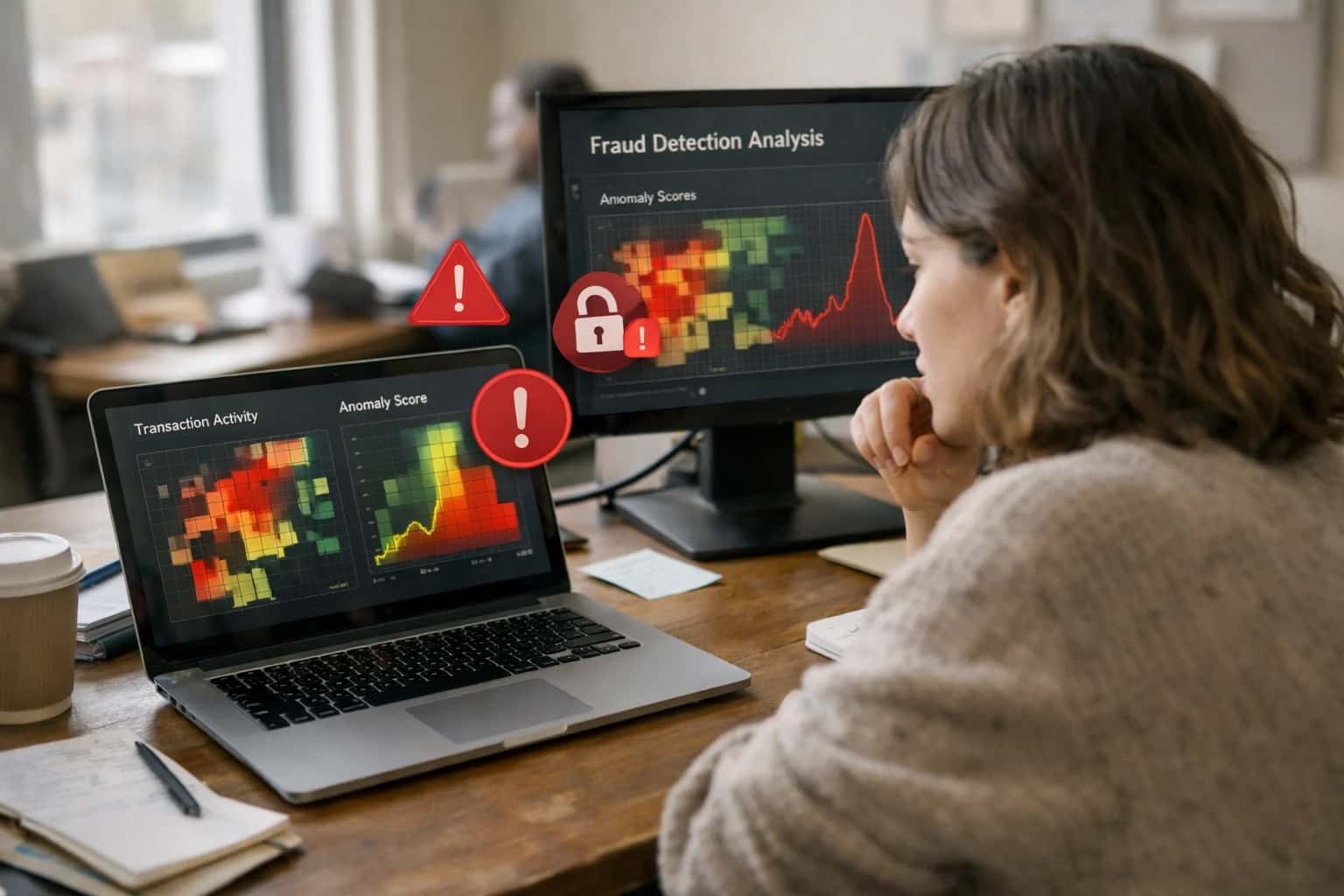
PASSIVE IDENTIFICATION
What is Device Fingerprinting?
Device fingerprinting is a passive identification technique that collects a multitude of attributes from a remote computing device to generate a unique, persistent identifier for fraud detection and security enforcement.
In fraud detection, this technique passively identifies anomalies such as a sudden change in the device associated with a user account, signaling potential account takeover. By analyzing inconsistencies in the fingerprint—such as a mismatch between the claimed User-Agent header and the actual JavaScript engine—security systems can detect emulators, bots, and session hijacking attempts without adding friction for legitimate users.
PASSIVE IDENTIFICATION
Key Characteristics of Device Fingerprinting
Device fingerprinting is a passive identification technique that collects a multitude of attributes from a remote computing device to generate a unique, persistent identifier for fraud detection and session integrity.
01
Passive Data Collection
Fingerprinting operates transparently in the background without user interaction or knowledge. Unlike cookies, it does not require storing data on the client device.
- Collects attributes via standard HTTP headers and JavaScript APIs
- No consent banners or opt-in mechanisms required
- Functions even when cookies are cleared or blocked
- Example: Extracting
User-Agent,Accept-Language, and screen resolution on page load
02
Entropy and Uniqueness
The effectiveness of a fingerprint depends on its entropy—the amount of identifying information it carries. Higher entropy means a more unique and stable identifier.
- A single attribute like
User-Agenthas low entropy (~10 bits) - Combining dozens of signals (fonts, plugins, canvas) yields high entropy (>30 bits)
- Browser fingerprinting can achieve 90-99% uniqueness in large-scale studies
- The goal is to distinguish one device among millions without relying on IP addresses
03
Canvas Fingerprinting
A specific technique that exploits the HTML5 Canvas API to render a hidden graphic and capture subtle variations in the device's graphics hardware and driver stack.
- Renders text and geometric shapes to a hidden
<canvas>element - Extracts the pixel data via
toDataURL()and hashes the output - Variations arise from GPU model, driver version, and OS rendering engines
- Example: Two identical iPhones with different iOS versions produce distinct canvas hashes
04
AudioContext Fingerprinting
A technique that leverages the Web Audio API to measure minute differences in how a device processes audio signals, revealing hardware and software stack characteristics.
- Generates a low-frequency oscillator signal and processes it through an
AudioContext - Measures the compressed output for variations in sample rate and DSP rounding
- Highly stable across browser restarts and private browsing sessions
- Example: Detecting a virtual machine by its lack of a real audio hardware stack
05
TLS and Network Fingerprinting
Beyond the browser, the Transport Layer Security (TLS) handshake itself exposes a unique set of parameters that identify the client application and operating system.
- Analyzes the
ClientHellomessage: cipher suites, extensions, and elliptic curves - JA3 and JA4 fingerprints are standardized hashes of these TLS parameters
- Effective even against headless browsers and API clients
- Example: A Python
requestslibrary produces a distinct TLS fingerprint from a Chrome browser, unmasking automated scripts
06
Anti-Spoofing and Consistency Checks
Sophisticated fingerprinting systems cross-reference multiple signals to detect inconsistencies that indicate spoofing or emulation.
- Validates that the claimed
User-Agentmatches the actual JavaScript engine behavior - Checks for mismatches between reported screen resolution and actual viewport dimensions
- Detects headless browsers by probing for missing rendering artifacts (e.g.,
navigator.webdriver) - Example: A client claiming to be Chrome on Windows but exhibiting Firefox-specific font rendering is flagged as fraudulent
DEVICE FINGERPRINTING
Frequently Asked Questions
Clear, technical answers to the most common questions about how remote devices are passively identified and analyzed for fraud detection, security, and risk assessment.
Device fingerprinting is a passive identification technique that collects a multitude of attributes from a remote computing device to generate a unique, persistent identifier. It works by executing a JavaScript snippet or analyzing network-level handshake parameters to gather over 100 distinct signals, including the User-Agent string, operating system version, browser type, installed fonts, screen resolution, timezone, WebGL renderer, and canvas fingerprint. These individual attributes, while not unique on their own, are combined and hashed to create a highly entropic identifier. Unlike cookies, this fingerprint is stored server-side and is resistant to user deletion, making it a robust tool for recognizing returning devices even in incognito mode or after cache clearing. The process is stateless from the client's perspective, relying entirely on the inherent properties of the device's hardware and software stack.
IDENTIFICATION TECHNIQUE COMPARISON
Device Fingerprinting vs. Other Identification Methods
A comparative analysis of passive device fingerprinting against active authentication and behavioral biometric methods across key operational dimensions.
| Feature | Device Fingerprinting | Behavioral Biometrics | Multi-Factor Authentication |
|---|---|---|---|
Authentication Type | Passive | Passive | Active |
User Interaction Required | |||
Identification Granularity | Device-level | User-level | Credential-level |
Persistence Duration | Months to years | Session to weeks | Single transaction |
Spoofing Resistance | Moderate | High | Low to moderate |
False Acceptance Rate | 0.01% - 0.1% | 0.001% - 0.01% | 1% - 5% |
Latency to Decision | < 50 ms | 2 - 10 seconds | 5 - 30 seconds |
Privacy Sensitivity | High | Very High | Low |
Enabling Efficiency, Speed & Accuracy
Intelligent Analysis, Decision & Execution
We build AI systems for teams that need search across company data, workflow automation across tools, or AI features inside products and internal software.
Talk to Us
Search across company data
Give teams answers from docs, tickets, runbooks, and product data with sources and permissions.
Useful when people spend too long searching or get different answers from different systems.
Enterprise searchRAGPermissions
Read more
Automate internal workflows
Use AI to route work, draft outputs, trigger actions, and keep approvals and logs in place.
Useful when repetitive work moves across multiple tools and teams.
AI agentsWorkflow automationGovernance
Read more
Add AI to products and internal tools
Build assistants, guided actions, or decision support into the software your team or customers already use.
Useful when AI needs to be part of the product, not a separate tool.
AI integrationDecision supportModel routing
Read more
About the author
Prasad Kumkar
CEO & MD, Inference Systems
Prasad Kumkar is the CEO & MD of Inference Systems and writes about AI systems architecture, LLM infrastructure, model serving, evaluation, and production deployment. Over 5+ years, he has worked across computer vision models, L5 autonomous vehicle systems, and LLM research, with a focus on taking complex AI ideas into real-world engineering systems.
His work and writing cover AI systems, large language models, AI agents, multimodal systems, autonomous systems, inference optimization, RAG, evaluation, and production AI engineering.
LinkedIn
Limited slotsGet a Free AI Consultation
Partnered with leading AI, data, and software stack.





How We Work
Custom AI workflows for your Business
One-fit-all AI don't work for modern businesses. At Inferensys, we aim to understand your business & custom requirements; which we use to define most efficient agentic workflows, the data, and the tools for your business.
01
Review the use case
We understand the task, the users, and where AI can actually help.
Read more02
Pick the right approach
We define what needs search, automation, or product integration.
Read more03
Build the first useful version
We implement the part that proves the value first.
Read more04
Improve from there
We add the checks and visibility needed to keep it useful.
Read moreThe first call is a practical review of your use case and the right next step.
Talk to Us