Bot signature detection is the technical process of distinguishing automated scripts from human users by analyzing non-human behavioral patterns and environmental inconsistencies. Unlike simple IP blacklisting, it examines telemetry such as superhuman click speed, perfectly linear mouse trajectories, or the absence of standard browser rendering artifacts to generate a deterministic or probabilistic bot classification.

Glossary
Bot Signature Detection
Bot signature detection is the process of identifying automated web traffic by analyzing non-human behavioral patterns, such as superhuman speed, perfectly linear mouse movements, or the absence of typical browser environmental attributes.
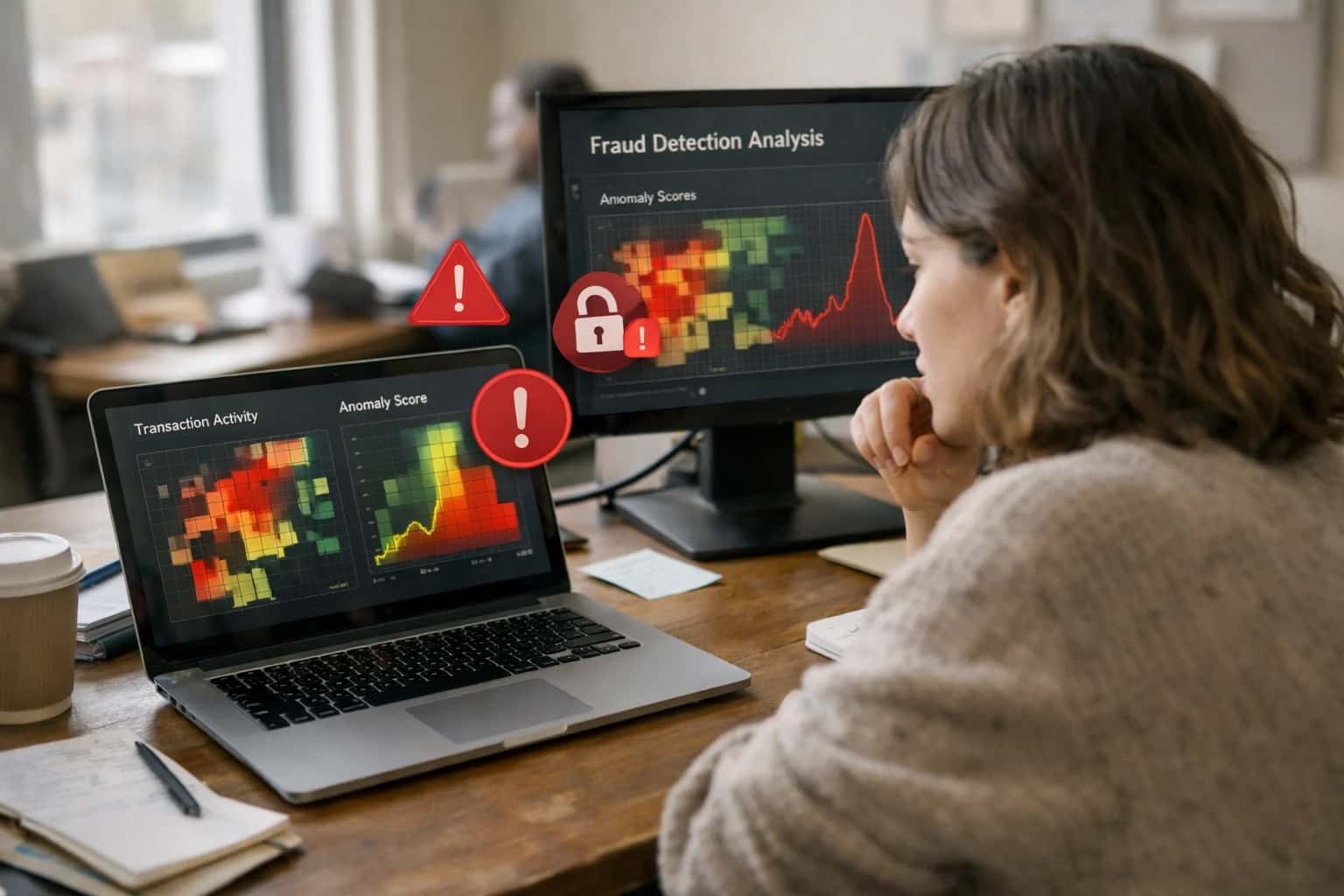
AUTOMATED TRAFFIC IDENTIFICATION
What is Bot Signature Detection?
Bot signature detection is the process of identifying automated, non-human traffic by analyzing behavioral patterns and environmental attributes that deviate from genuine human interaction.
The methodology relies on passive signals including headless browser detection, WebDriver property inspection, and TLS fingerprinting to identify automation frameworks like Selenium or Puppeteer. By correlating these technical signatures with behavioral anomalies—such as zero mouse entropy or perfectly consistent inter-event timing—security systems can block credential stuffing, scraping, and inventory hoarding attacks before they impact application integrity.
Bot Signature Detection
Core Detection Signals
The foundational telemetry and environmental attributes analyzed to distinguish automated scripts from genuine human users. These signals form the basis of passive bot detection and account takeover prevention.
02
Mouse Entropy Analysis
Quantifies the randomness of cursor movements to distinguish human motor control from scripted trajectories. Low entropy indicates automation.
- Human Movement: Exhibits natural micro-jitters, variable acceleration, and curved paths.
- Bot Movement: Displays perfectly linear lines, constant velocity, and instant teleportation.
- Entropy Scoring: Algorithms calculate the Shannon entropy of the movement vector series.
Example: A cursor moving in a perfectly straight line at a constant speed of 500px/s has near-zero entropy and is a definitive bot signature.
03
TLS Fingerprinting
Creates a client identifier from the specific parameters advertised during the Transport Layer Security handshake, independent of the IP address.
- Client Hello Analysis: Inspects the ordered list of cipher suites, TLS extensions, and elliptic curves.
- Signature Uniqueness: Different operating systems, browsers, and libraries (e.g., Python
requests, Gohttp) produce distinct fingerprints. - Impersonation Detection: Flags mismatches where a TLS fingerprint doesn't match the claimed User-Agent.
Example: A User-Agent claiming to be Firefox but presenting a Python urllib3 TLS fingerprint is a clear indicator of a scripted client.
04
WebDriver Detection
Identifies browser automation frameworks like Selenium, Puppeteer, and Playwright by probing for specific JavaScript properties injected by the automation driver.
navigator.webdriver: A standard property set totruein automated browsers.- Chrome DevTools Protocol: Checks for debugging flags like
--remote-debugging-port. - Shadow DOM Artifacts: Detects inconsistencies in the Document Object Model structure.
Example: The presence of document.querySelector('html').__driver_evaluate or window.cdc_adoQpoasnfa76pfcZLmcfl_Array is a definitive Puppeteer signature.
05
Canvas Fingerprinting
Exploits the HTML5 Canvas API to render a hidden graphic and capture subtle variations in the device's graphics hardware and driver stack to create a unique identifier.
- Rendering Differences: Subtle anti-aliasing and pixel rounding vary across GPU and OS combinations.
- Hash Generation: The rendered image data is hashed into a stable fingerprint.
- Bot Consistency: Bots often render identical canvases due to running on homogeneous virtualized infrastructure.
Example: Thousands of sessions sharing an identical canvas hash from a known cloud provider's virtual GPU is a strong signal of a bot farm.
06
Keystroke Entropy
Measures the timing variability within a typing stream to detect automated key injectors. Human typists exhibit natural inconsistencies, while bots display highly regular, low-entropy patterns.
- Dwell Time: The duration a key is held down. Humans vary; bots are constant.
- Flight Time: The interval between key releases and presses. Bots inject text with near-zero flight time.
- Rhythm Analysis: Models the cadence of typing bursts.
Example: A login form filled in 50ms with uniform 1ms flight times between all keystrokes is a definitive signature of a scripted paste or key injector, not a human typist.
BOT SIGNATURE DETECTION
Frequently Asked Questions
Clear, technical answers to the most common questions about identifying automated traffic through behavioral and environmental analysis.
Bot signature detection is the process of identifying automated, non-human traffic by analyzing behavioral patterns, environmental inconsistencies, and network artifacts that deviate from genuine human interaction. It works by passively collecting telemetry—such as mouse movements, keystroke timing, browser API responses, and TLS handshake parameters—and comparing them against known human baselines. When a session exhibits superhuman speed, perfectly linear cursor trajectories, missing browser environmental attributes, or headless browser artifacts, the system assigns a risk score. Unlike simple IP blocklists or CAPTCHA challenges, bot signature detection operates continuously in the background, often leveraging machine learning classifiers trained on labeled human and bot traffic to identify novel automation frameworks and scripted attacks in real time.
Enabling Efficiency, Speed & Accuracy
Intelligent Analysis, Decision & Execution
We build AI systems for teams that need search across company data, workflow automation across tools, or AI features inside products and internal software.
Talk to Us
Search across company data
Give teams answers from docs, tickets, runbooks, and product data with sources and permissions.
Useful when people spend too long searching or get different answers from different systems.
Enterprise searchRAGPermissions
Read more
Automate internal workflows
Use AI to route work, draft outputs, trigger actions, and keep approvals and logs in place.
Useful when repetitive work moves across multiple tools and teams.
AI agentsWorkflow automationGovernance
Read more
Add AI to products and internal tools
Build assistants, guided actions, or decision support into the software your team or customers already use.
Useful when AI needs to be part of the product, not a separate tool.
AI integrationDecision supportModel routing
Read more
About the author
Prasad Kumkar
CEO & MD, Inference Systems
Prasad Kumkar is the CEO & MD of Inference Systems and writes about AI systems architecture, LLM infrastructure, model serving, evaluation, and production deployment. Over 5+ years, he has worked across computer vision models, L5 autonomous vehicle systems, and LLM research, with a focus on taking complex AI ideas into real-world engineering systems.
His work and writing cover AI systems, large language models, AI agents, multimodal systems, autonomous systems, inference optimization, RAG, evaluation, and production AI engineering.
LinkedIn
Limited slotsGet a Free AI Consultation
Partnered with leading AI, data, and software stack.





How We Work
Custom AI workflows for your Business
One-fit-all AI don't work for modern businesses. At Inferensys, we aim to understand your business & custom requirements; which we use to define most efficient agentic workflows, the data, and the tools for your business.
01
Review the use case
We understand the task, the users, and where AI can actually help.
Read more02
Pick the right approach
We define what needs search, automation, or product integration.
Read more03
Build the first useful version
We implement the part that proves the value first.
Read more04
Improve from there
We add the checks and visibility needed to keep it useful.
Read moreThe first call is a practical review of your use case and the right next step.
Talk to Us