Transaction monitoring is the systematic, rules-based and machine learning-driven process of scrutinizing financial transactions—both in real-time and batch—to detect deviations from a customer's established behavioral profile. By analyzing attributes such as amount, frequency, geography, and counterparty against dynamic risk ratings, the system generates alerts for potential structuring, layering, or sanctions violations, enabling compliance teams to file Suspicious Activity Reports (SARs).

Glossary
Transaction Monitoring
The automated, real-time analysis of financial transactions to identify suspicious patterns indicative of money laundering, fraud, or terrorist financing.
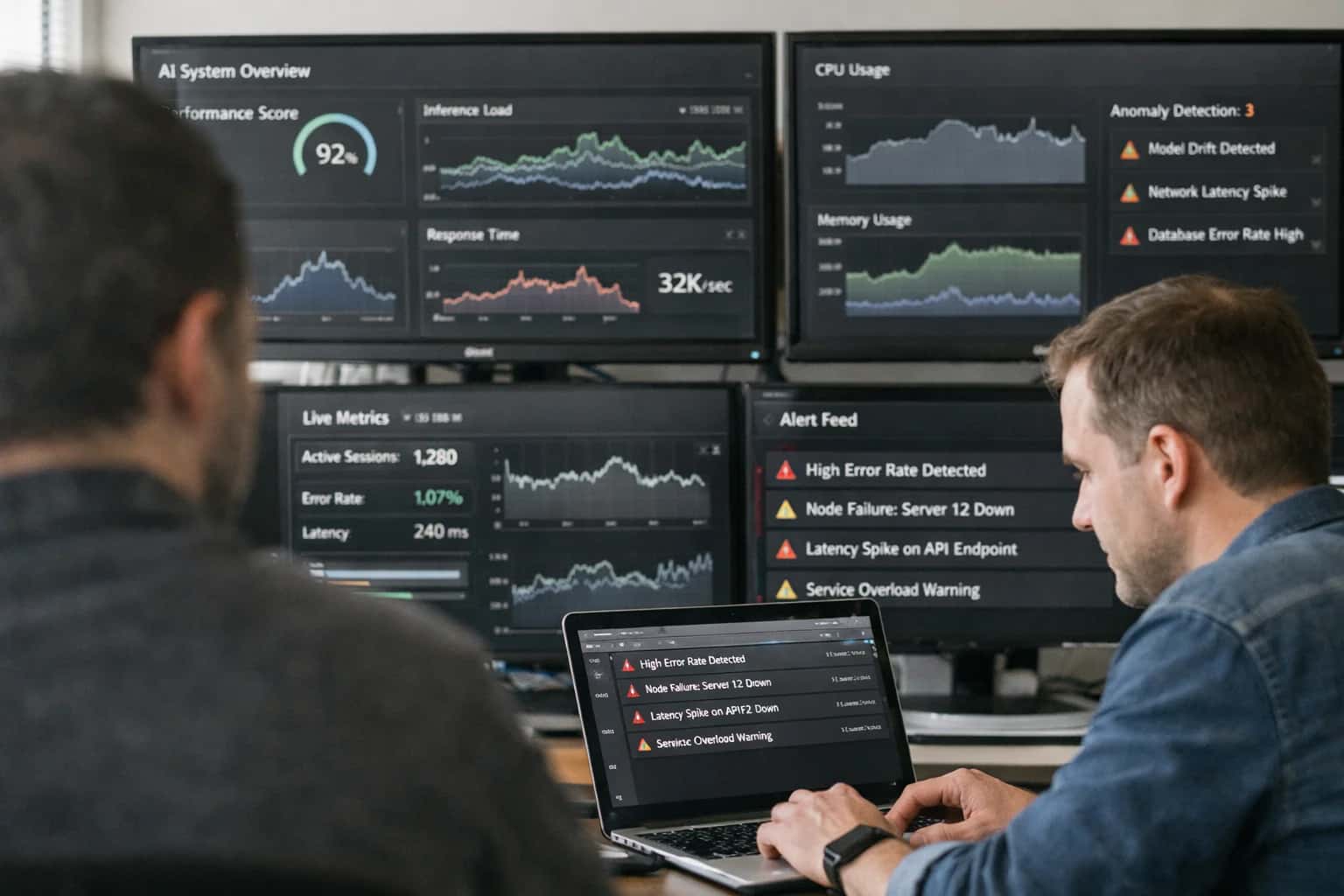
DEFINITION
What is Transaction Monitoring?
Transaction monitoring is the automated, real-time analysis of financial transactions to identify suspicious patterns indicative of money laundering, fraud, or terrorist financing.
Modern systems transcend static threshold rules by deploying unsupervised anomaly detection algorithms and temporal sequence modeling to identify complex, non-linear patterns across massive transaction volumes. This continuous evaluation integrates entity resolution to unmask hidden relationships and network analysis to map collusion rings, directly reducing false positives while ensuring adherence to a risk-based approach mandated by global anti-money laundering regulations.
REAL-TIME FINANCIAL CRIME DETECTION
Core Capabilities of Modern Transaction Monitoring
Modern transaction monitoring systems leverage machine learning and behavioral analytics to move beyond static rules, analyzing vast transaction volumes in real time to identify the subtle, non-linear patterns indicative of money laundering and fraud.
01
Real-Time Stream Processing
Ingests and analyzes financial transactions against risk models within milliseconds of initiation, enabling pre-authorization blocking. This capability relies on complex event processing (CEP) engines and stream-processing frameworks like Apache Kafka and Flink to handle high-velocity payment rails.
- Evaluates transactions against dynamic risk scores before settlement.
- Integrates with payment switches for inline intervention.
- Maintains sub-10ms latency for high-throughput card networks.
02
Behavioral Profiling & Peer Group Analysis
Establishes a dynamic, multi-dimensional baseline of expected activity for an individual entity and its peer group to detect subtle deviations. Instead of static thresholds, the system learns that a corporate account typically sends wires of $50,000 on Tuesdays.
- Compares entity velocity against a statistically similar cohort.
- Detects account takeover via sudden changes in device, location, or transaction typology.
- Uses unsupervised clustering to define dynamic peer groups automatically.
03
Network & Link Analysis
Maps and examines the relationships between entities to identify hidden connections, collusion, and the structural hierarchy of criminal rings. This moves beyond individual transaction scrutiny to visualize money laundering networks.
- Identifies structuring by linking multiple accounts controlled by a single syndicate.
- Reveals hidden beneficial ownership through shared addresses, devices, or counterparties.
- Applies graph algorithms to detect circular fund flows and layering loops.
04
Unsupervised Anomaly Detection
Employs machine learning models like autoencoders and isolation forests to identify novel, previously unseen fraud patterns without relying on historical labels. This is critical for detecting zero-day attacks and new money laundering typologies.
- Flags transactions that deviate from a learned representation of 'normal' behavior.
- Complements rules-based systems by finding the unknown unknowns.
- Reduces time-to-detect for emerging trade-based money laundering schemes.
05
Intelligent Alert Triage
Applies a secondary layer of machine learning to prioritize generated alerts, dramatically reducing false positive rates and investigator fatigue. The system scores alerts based on risk, context, and historical outcomes.
- Auto-closes low-fidelity alerts with high confidence.
- Enriches high-risk alerts with relevant transaction history and entity profiles.
- Integrates directly with case management systems via API for a seamless workflow.
06
Adaptive Risk Scoring
Generates a holistic, dynamic risk score for every transaction by fusing outputs from multiple detection engines—rules, behavioral models, and network analysis—into a single, explainable composite score.
- Weights model outputs based on real-time performance and model drift.
- Incorporates external signals from sanctions screening and adverse media.
- Provides a unified, auditable decision metric for downstream systems and investigators.
Enabling Efficiency, Speed & Accuracy
Intelligent Analysis, Decision & Execution
We build AI systems for teams that need search across company data, workflow automation across tools, or AI features inside products and internal software.
Talk to Us
Search across company data
Give teams answers from docs, tickets, runbooks, and product data with sources and permissions.
Useful when people spend too long searching or get different answers from different systems.
Enterprise searchRAGPermissions
Read more
Automate internal workflows
Use AI to route work, draft outputs, trigger actions, and keep approvals and logs in place.
Useful when repetitive work moves across multiple tools and teams.
AI agentsWorkflow automationGovernance
Read more
Add AI to products and internal tools
Build assistants, guided actions, or decision support into the software your team or customers already use.
Useful when AI needs to be part of the product, not a separate tool.
AI integrationDecision supportModel routing
Read moreTRANSACTION MONITORING FAQ
Frequently Asked Questions
Clear, technically precise answers to the most common questions about automated transaction monitoring systems, their operational mechanics, and their role in anti-money laundering compliance.
Transaction monitoring is the automated, real-time analysis of financial transactions to identify suspicious patterns indicative of money laundering, fraud, or terrorist financing. It works by ingesting transactional data streams, applying predefined detection scenarios and machine learning models to score each transaction for risk, and generating alerts when activity deviates from a customer's established behavioral baseline or matches known money laundering typologies. Modern systems operate on a risk-based approach, dynamically adjusting scrutiny based on customer risk ratings, and integrate with case management workflows to document the lifecycle of an investigation from alert generation to Suspicious Activity Report (SAR) filing.

About the author
Prasad Kumkar
CEO & MD, Inference Systems
Prasad Kumkar is the CEO & MD of Inference Systems and writes about AI systems architecture, LLM infrastructure, model serving, evaluation, and production deployment. Over 5+ years, he has worked across computer vision models, L5 autonomous vehicle systems, and LLM research, with a focus on taking complex AI ideas into real-world engineering systems.
His work and writing cover AI systems, large language models, AI agents, multimodal systems, autonomous systems, inference optimization, RAG, evaluation, and production AI engineering.
LinkedIn
Limited slotsGet a Free AI Consultation
Partnered with leading AI, data, and software stack.





How We Work
Custom AI workflows for your Business
One-fit-all AI don't work for modern businesses. At Inferensys, we aim to understand your business & custom requirements; which we use to define most efficient agentic workflows, the data, and the tools for your business.
01
Review the use case
We understand the task, the users, and where AI can actually help.
Read more02
Pick the right approach
We define what needs search, automation, or product integration.
Read more03
Build the first useful version
We implement the part that proves the value first.
Read more04
Improve from there
We add the checks and visibility needed to keep it useful.
Read moreThe first call is a practical review of your use case and the right next step.
Talk to Us