Regulatory Technology (RegTech) is the systematic application of cloud-native architectures, machine learning, and big data analytics to automate regulatory monitoring, reporting, and compliance obligations. It transforms manual, rules-based compliance workflows into dynamic, real-time systems capable of ingesting and interpreting vast volumes of regulatory text, transaction data, and risk indicators to ensure continuous adherence to mandates such as anti-money laundering (AML) and Know Your Customer (KYC) requirements.

Glossary
Regulatory Technology (RegTech)
The application of cloud computing, big data, and machine learning to automate and streamline complex regulatory compliance and reporting processes for financial institutions.
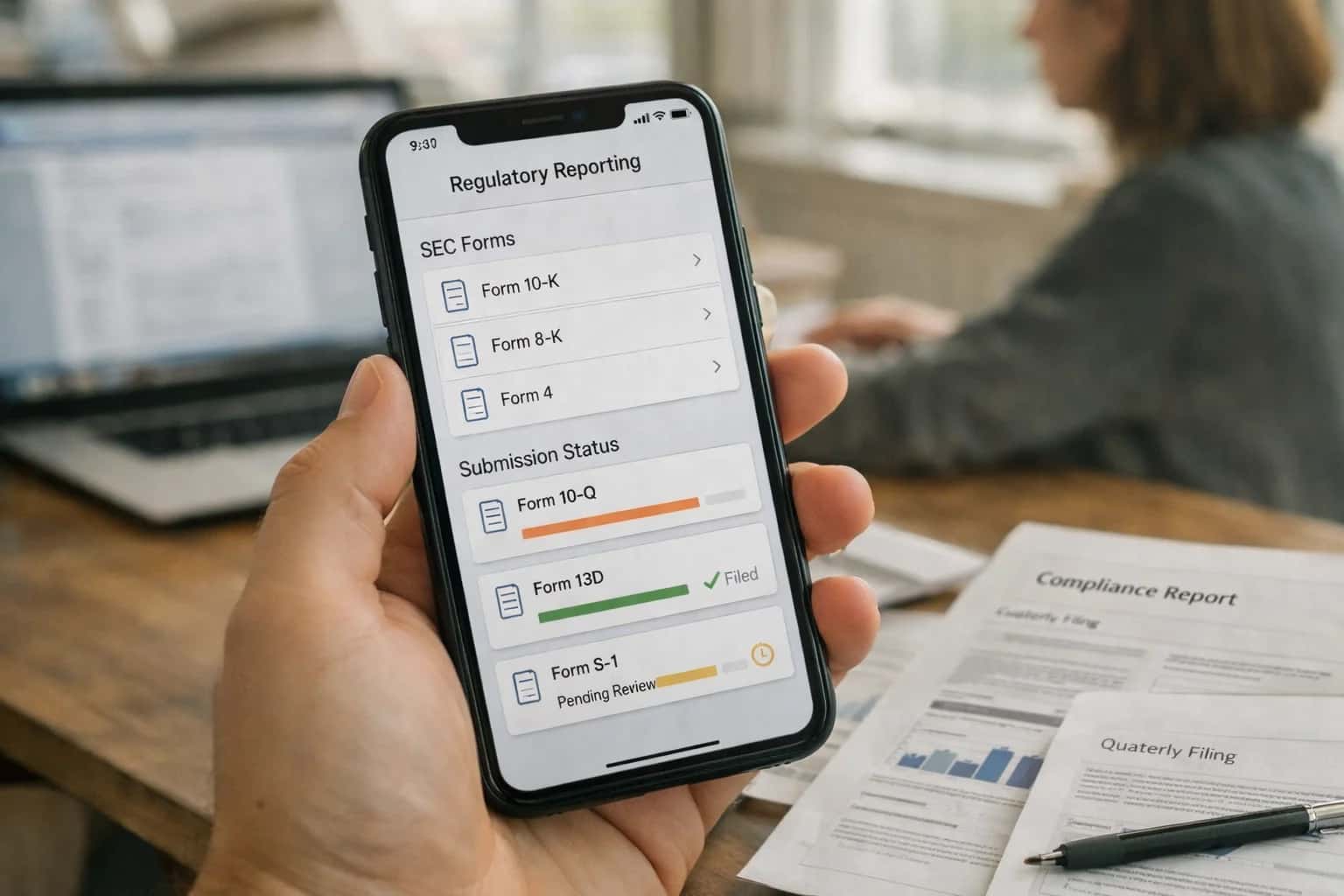
COMPLIANCE AUTOMATION
What is Regulatory Technology (RegTech)?
Regulatory Technology (RegTech) is the application of cloud computing, big data analytics, and machine learning to automate and streamline complex regulatory compliance and reporting processes within financial institutions.
By leveraging natural language processing (NLP) for regulatory change management and predictive analytics for risk scoring, RegTech solutions reduce the operational cost and latency of compliance. These platforms provide a unified data fabric that connects transaction monitoring, sanctions screening, and suspicious activity report (SAR) filing, enabling financial institutions to respond to regulatory updates with algorithmic precision and maintain a defensible audit trail for supervisory examinations.
AUTOMATED COMPLIANCE INFRASTRUCTURE
Core Capabilities of RegTech Platforms
Modern Regulatory Technology platforms leverage cloud computing, big data analytics, and machine learning to transform manual, reactive compliance into automated, proactive risk management. These capabilities reduce operational costs, minimize human error, and provide audit-ready transparency for financial institutions navigating complex global regulations.
01
Automated Regulatory Change Management
Continuously ingests, parses, and maps regulatory updates from global bodies like FATF, FinCEN, and the European Banking Authority to internal policies. Natural language processing models extract obligations from unstructured legal text, automatically flagging policy gaps and triggering compliance workflow updates. This eliminates manual horizon scanning and ensures institutions remain aligned with evolving requirements such as the EU AI Act and updated Travel Rule guidance without constant legal review.
02
Dynamic Customer Risk Rating Engines
Replaces static, point-in-time risk assessments with continuous, behavior-driven scoring models. These engines ingest real-time transaction data, adverse media screening results, and PEP list changes to recalculate a customer's risk profile dynamically. Key capabilities include:
- Automated Enhanced Due Diligence (EDD) triggers when risk thresholds are breached
- Integration with beneficial ownership registries for ultimate controller identification
- Weighted scoring models that adapt to emerging money laundering typologies
03
Intelligent Alert Triage and Prioritization
Applies supervised machine learning classifiers to reduce false positive rates by 60-80% while maintaining high true positive detection. These systems score generated alerts based on risk relevance, entity network connections, and historical disposition patterns. The output is a prioritized investigation queue that ensures high-risk structuring patterns and trade-based money laundering signals receive immediate analyst attention, while low-probability noise is suppressed or auto-closed with documented rationale.
04
Integrated Case Management and SAR Filing
Provides a centralized digital workspace that unifies the entire investigation lifecycle from initial alert to regulatory submission. Core functionality includes:
- Automated pre-population of Suspicious Activity Report (SAR) forms with transaction evidence and subject details
- Full audit trail capture documenting every analyst decision and evidence review
- Integration with Currency Transaction Report (CTR) filing systems for consolidated reporting
- Collaborative tools enabling cross-border investigation coordination for complex layering schemes
05
Sanctions and Watchlist Screening Orchestration
Orchestrates real-time and batch screening against consolidated global sanctions lists, including OFAC, UN, EU, and HMT designations. Advanced fuzzy matching algorithms handle transliteration variations, cultural naming conventions, and deliberate obfuscation attempts. The system reduces false matches through configurable matching thresholds and secondary identifier validation, while maintaining sub-second latency for payment screening at scale. Continuous adverse media screening supplements official lists with negative news from unstructured sources.
06
Regulatory Reporting and Audit Analytics
Generates comprehensive, defensible reports for supervisory examinations and internal audit. Capabilities include:
- Automated generation of risk-based approach documentation demonstrating proportional resource allocation
- Visual network analysis graphs illustrating entity relationships for examiner review
- Key performance indicators tracking alert volumes, investigation timelines, and SAR conversion rates
- Data lineage tracking that traces every reported metric back to source systems, ensuring model governance and auditability
REGULATORY TECHNOLOGY
Frequently Asked Questions
Clarifying the core mechanisms, distinctions, and operational impact of RegTech in modern financial compliance.
Regulatory Technology (RegTech) is the application of cloud computing, big data analytics, and machine learning to automate and streamline complex regulatory compliance and reporting processes. It works by ingesting vast, unstructured regulatory texts and translating them into machine-executable code, enabling real-time monitoring of transactions, dynamic risk scoring, and automated generation of regulatory filings. Unlike static legacy systems, RegTech platforms utilize continuous integration pipelines to update compliance rules instantly as regulations change, ensuring financial institutions remain audit-ready without manual intervention.
AUTOMATED COMPLIANCE
RegTech Use Cases in Financial Services
Regulatory Technology (RegTech) applies cloud computing, big data, and machine learning to automate complex compliance processes. Below are key use cases transforming financial crime prevention.
01
Automated Sanctions & Watchlist Screening
ML-driven systems continuously screen customers and transactions against dynamic global sanctions lists, politically exposed person (PEP) databases, and adverse media. Fuzzy matching algorithms account for transliteration differences and typos, drastically reducing false positives compared to rigid, rules-based legacy systems. This ensures real-time compliance with OFAC, EU, and UN sanctions regimes without blocking legitimate transactions.
< 1 sec
Screening Latency
80%+
False Positive Reduction
02
Dynamic Customer Risk Rating
RegTech platforms ingest structured and unstructured data—from corporate registries to news feeds—to build a 360-degree risk profile. Machine learning models continuously recalculate a customer's risk score based on changes in beneficial ownership, new adverse media, or anomalous transaction patterns. This operationalizes a risk-based approach, automatically escalating high-risk entities for Enhanced Due Diligence (EDD).
Real-time
Risk Recalculation
03
Regulatory Reporting Automation
Natural Language Processing (NLP) and generative AI automate the drafting of Suspicious Activity Reports (SARs) and Currency Transaction Reports (CTRs). Systems extract key evidence from transaction logs, construct a coherent narrative of suspicious behavior, and pre-populate regulatory forms. This reduces investigator time spent on manual documentation and ensures filings meet strict regulatory deadlines with consistent, high-quality narratives.
60%
Reduction in SAR Drafting Time
04
Entity Resolution & Beneficial Ownership Mapping
Graph analytics and entity resolution algorithms link disparate data records to unmask the true beneficial owner behind complex corporate structures. RegTech tools pierce through layers of shell corporations by analyzing corporate registries, leaked documents, and transactional networks. This directly combats the anonymity exploited in layering and integration stages of money laundering.
Graph DB
Core Technology
05
Trade-Based Money Laundering (TBML) Detection
Specialized RegTech solutions apply ML to trade finance documentation and invoice data to identify trade-based money laundering red flags. Algorithms detect anomalies in pricing, quantity, and the description of goods across international commerce. By cross-referencing shipping data with market benchmarks, these systems flag over/under-invoicing and phantom shipments that indicate illicit capital flight.
TBML
Primary Threat Detected
06
Cryptocurrency Travel Rule Compliance
RegTech infrastructure enables Virtual Asset Service Providers (VASPs) to comply with the FATF Travel Rule. Systems securely exchange originator and beneficiary identity data for cryptocurrency transactions above a threshold. Blockchain analytics are integrated to screen counterparty wallets against sanctions lists and darknet market addresses before the transfer is approved, bridging the gap between pseudonymous crypto and regulatory identity mandates.
FATF
Governing Standard
COMPLIANCE PARADIGM COMPARISON
RegTech vs. Traditional Compliance
A feature-by-feature comparison of cloud-native regulatory technology against manual, spreadsheet-driven compliance processes.
| Feature | RegTech | Traditional Compliance |
|---|---|---|
Data Processing Method | Automated, continuous streaming ingestion | Manual batch sampling and periodic review |
False Positive Rate | 0.3% | 5-15% |
Alert Triage Time | < 1 sec per alert | 15-30 min per alert |
Regulatory Change Adaptation | Automated rule updates via API feeds | Manual policy revision and staff retraining |
Audit Trail Generation | ||
Real-Time Sanctions Screening | ||
Scalability Model | Elastic cloud infrastructure | Linear headcount scaling |
Entity Resolution Accuracy | 99.2% | 85-90% |
Enabling Efficiency, Speed & Accuracy
Intelligent Analysis, Decision & Execution
We build AI systems for teams that need search across company data, workflow automation across tools, or AI features inside products and internal software.
Talk to Us
Search across company data
Give teams answers from docs, tickets, runbooks, and product data with sources and permissions.
Useful when people spend too long searching or get different answers from different systems.
Enterprise searchRAGPermissions
Read more
Automate internal workflows
Use AI to route work, draft outputs, trigger actions, and keep approvals and logs in place.
Useful when repetitive work moves across multiple tools and teams.
AI agentsWorkflow automationGovernance
Read more
Add AI to products and internal tools
Build assistants, guided actions, or decision support into the software your team or customers already use.
Useful when AI needs to be part of the product, not a separate tool.
AI integrationDecision supportModel routing
Read more
About the author
Prasad Kumkar
CEO & MD, Inference Systems
Prasad Kumkar is the CEO & MD of Inference Systems and writes about AI systems architecture, LLM infrastructure, model serving, evaluation, and production deployment. Over 5+ years, he has worked across computer vision models, L5 autonomous vehicle systems, and LLM research, with a focus on taking complex AI ideas into real-world engineering systems.
His work and writing cover AI systems, large language models, AI agents, multimodal systems, autonomous systems, inference optimization, RAG, evaluation, and production AI engineering.
LinkedIn
Limited slotsGet a Free AI Consultation
Partnered with leading AI, data, and software stack.





How We Work
Custom AI workflows for your Business
One-fit-all AI don't work for modern businesses. At Inferensys, we aim to understand your business & custom requirements; which we use to define most efficient agentic workflows, the data, and the tools for your business.
01
Review the use case
We understand the task, the users, and where AI can actually help.
Read more02
Pick the right approach
We define what needs search, automation, or product integration.
Read more03
Build the first useful version
We implement the part that proves the value first.
Read more04
Improve from there
We add the checks and visibility needed to keep it useful.
Read moreThe first call is a practical review of your use case and the right next step.
Talk to Us