On-device preprocessing is the execution of data transformation and feature extraction algorithms directly on an edge device or microcontroller, prior to model inference or training. This involves operations like filtering, normalization, Fast Fourier Transforms (FFT), or feature scaling applied to the raw sensor data stream. By processing data locally, the system reduces the volume of information that must be stored on the device or transmitted over a network, which is critical for bandwidth-constrained and latency-sensitive applications.

Glossary
On-Device Preprocessing
On-device preprocessing is the execution of data transformation and feature extraction algorithms directly on an edge device, reducing raw data volume for transmission and tailoring inputs for machine learning models.
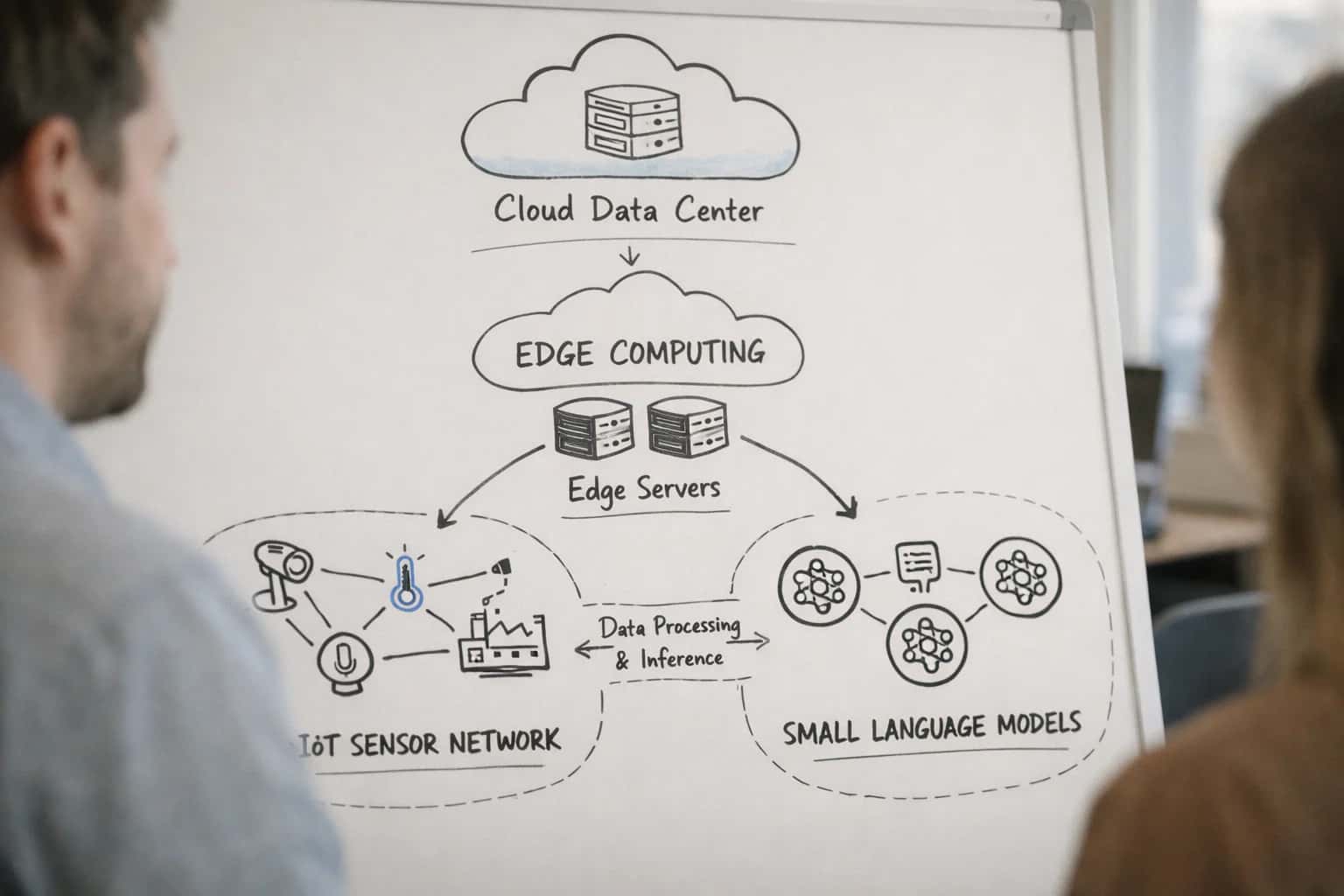
FEDERATED LEARNING FOR TINYML
What is On-Device Preprocessing?
On-device preprocessing is a foundational technique in edge AI and federated learning where raw sensor data is transformed into a model-ready format directly on the embedded device.
This technique is essential for TinyML and federated edge learning, as it tailors input specifically for the deployed model's expected format while conserving the device's limited memory footprint and energy budget. It enables real-time responsiveness and supports data minimization principles by ensuring only relevant, distilled features are used for further computation or sharing, forming a key part of the embedded AI pipeline from sensor to decision.
ON-DEVICE PREPROCESSING
Core Techniques & Algorithms
On-device preprocessing transforms raw sensor data directly on the edge device, reducing transmission volume and tailoring inputs for local models. These are the fundamental algorithms that make it possible.
01
Digital Filtering & Windowing
Digital filtering (e.g., Butterworth, Chebyshev) removes noise and isolates frequency bands of interest from raw sensor streams. Windowing functions (e.g., Hamming, Hann) are applied to finite data segments before spectral analysis to minimize spectral leakage in the Fast Fourier Transform (FFT). This is foundational for audio, vibration, and biomedical signal processing on devices like microphones and accelerometers.
- Example: Applying a 50Hz notch filter to remove power line interference from an ECG signal before feature extraction.
02
Feature Extraction & Dimensionality Reduction
This involves calculating statistical features (mean, variance, skewness) and domain-specific features (Zero-Crossing Rate, Spectral Centroid, Mel-Frequency Cepstral Coefficients) from preprocessed data. Dimensionality reduction techniques like Principal Component Analysis (PCA) project high-dimensional features into a lower-dimensional space, preserving essential information while drastically reducing the input size for the downstream model. This step converts raw signals into a compact, informative representation suitable for inference.
- Example: Extracting 13 MFCCs from a 1-second audio frame to represent speech for a keyword spotting model.
03
Normalization & Standardization
These are scaling techniques applied per sensor channel to ensure stable and efficient model training/inference. Normalization rescales data to a fixed range, typically [0, 1] or [-1, 1]. Standardization transforms data to have zero mean and unit variance. On-device, scaling parameters (min/max or mean/std) are calculated from a calibration dataset and stored as fixed constants in the firmware. This corrects for sensor gain drift and environmental variations.
- Example: Standardizing accelerometer readings (x, y, z) using pre-computed mean and standard deviation values stored in Flash memory.
04
Fixed-Point Arithmetic Implementation
To run efficiently on microcontrollers without Floating-Point Units (FPUs), preprocessing algorithms are implemented using fixed-point arithmetic. This represents numbers using integers with an implicit scaling factor (the binary point). It requires careful management of bit precision, overflow, and rounding to maintain numerical stability. Libraries like CMSIS-DSP provide optimized fixed-point FFT and filter functions for Arm Cortex-M processors.
- Example: A 256-point FFT implemented using Q15 (1.15) fixed-point format on a Cortex-M4, using saturating arithmetic to prevent overflow.
05
Real-Time Sliding Window Buffers
For continuous sensor streams, preprocessing operates on a sliding window of the most recent samples. This requires a circular buffer in memory that efficiently overwrites old data with new samples. The algorithm processes the window at a fixed interval (e.g., every 100ms) or when the buffer is full. This design minimizes memory copies and ensures low-latency, continuous feature generation for real-time applications like gesture recognition or anomaly detection.
- Example: A 1-second audio buffer (16 kHz sampling rate) slides by 0.5 seconds, triggering MFCC extraction every 500ms.
06
Sensor Fusion & Alignment
In multi-modal systems, data from different sensors (e.g., IMU, microphone, camera) must be fused. This involves temporal alignment (synchronizing timestamps), spatial alignment (transforming coordinates to a common frame), and algorithmic fusion (e.g., Kalman Filtering, Complementary Filters). On-device, this creates a unified, robust representation from heterogeneous, noisy inputs, which is critical for applications like inertial navigation or context-aware sensing.
- Example: Fusing accelerometer and gyroscope data with a complementary filter to estimate stable device orientation.
TINYML DATA PIPELINE
How On-Device Preprocessing Works
On-device preprocessing is the execution of data transformation and feature extraction algorithms directly on the edge device, a foundational step in TinyML and federated edge learning systems.
On-device preprocessing transforms raw sensor data streams (e.g., accelerometer readings, audio waveforms) into clean, structured inputs suitable for a machine learning model. This involves algorithms like filtering, normalization, and Fast Fourier Transforms (FFT) executed locally. By performing this step on the resource-constrained device itself, it drastically reduces the volume of data that must be stored in memory or transmitted over a network, which is critical for systems with severe energy budget and bandwidth constraints.
This local processing tailors the input features specifically for the deployed model's architecture, improving inference accuracy. It also enables privacy-preserving machine learning by ensuring raw, potentially sensitive data never leaves the device. In a federated learning context, only the extracted features or model updates are shared, not the original on-device dataset. Effective preprocessing is therefore a key determinant of system efficiency, latency, and privacy for TinyML applications.
ON-DEVICE PREPROCESSING
Primary Use Cases & Applications
On-device preprocessing transforms raw sensor data into model-ready features directly on the edge device. Its applications are driven by the core imperatives of TinyML and federated edge learning: reducing data transmission, preserving privacy, and operating within severe resource constraints.
01
Bandwidth & Cost Reduction
This is the most direct application. Transmitting raw, high-frequency sensor data (e.g., audio waveforms, accelerometer streams) is often infeasible or prohibitively expensive. On-device preprocessing extracts only the relevant features, drastically reducing payload size.
- Example: A vibration sensor sampling at 4 kHz generates ~32 kbps of raw data. Applying a Fast Fourier Transform (FFT) on-device and transmitting only 10 dominant frequency bins reduces data by over 99%.
- This enables viable operation over low-power wide-area networks (LPWAN) like LoRaWAN or NB-IoT, where bandwidth is scarce and power for radio transmission is the primary battery drain.
02
Data Privacy & Sovereignty
Preprocessing acts as a first line of privacy defense. By converting sensitive raw data into anonymized features on the device, the risk of exposing personal or proprietary information is minimized.
- Critical for Federated Learning: In a federated edge learning system, devices share model updates, not raw data. On-device preprocessing ensures that even the intermediate data used for local training never leaves the device.
- Example: A smartwatch converts raw PPG (photoplethysmogram) signals into heart rate variability features on-device. Only these abstract features are used for local model personalization, never the raw blood volume pulse data.
03
Real-Time Responsiveness
For applications requiring immediate action, sending data to the cloud for processing introduces unacceptable latency. On-device preprocessing enables sub-second, deterministic response times.
- Key Applications: Keyword spotting for voice assistants, anomaly detection in industrial machinery, and gesture recognition for controllers.
- The pipeline involves streaming data through fixed, efficient algorithms (e.g., Mel-Frequency Cepstral Coefficients (MFCCs) for audio, digital filters for noise reduction) to create a continuous feature stream for the model, enabling real-time inference loops.
04
Robustness in Intermittent Connectivity
Edge devices often operate in environments with unreliable or non-existent network links. On-device preprocessing allows the device to function intelligently regardless of connection state.
- Data can be preprocessed and stored in a compact feature buffer locally, ready for transmission when a connection is restored.
- For on-device training, the preprocessed feature dataset is available continuously, allowing the local model to learn from new experiences even during extended offline periods, syncing only the model updates later.
05
Energy & Compute Optimization
Contrary to intuition, preprocessing on a microcontroller can be more energy-efficient than transmitting raw data. Radio transmission is often the most power-hungry operation on an IoT device.
- Trade-off Analysis: The energy cost of running a fixed-function DSP (Digital Signal Processing) routine or a small neural network feature extractor is frequently far lower than the energy required to power the radio and transmit the equivalent raw data volume.
- This optimization is central to extending the battery life of deployed sensors from days to years.
06
Input Normalization & Domain Adaptation
Sensor characteristics vary between hardware units and environments. On-device preprocessing standardizes the input, making the downstream model more robust and portable.
- Common Techniques: Sensor calibration, dynamic range adjustment, and per-channel normalization (e.g., subtracting mean, dividing by standard deviation computed over a local window).
- This is essential for heterogeneous clients in federated learning, as it helps align the data distribution across different device models and environments before local training, improving global model convergence.
ARCHITECTURAL COMPARISON
On-Device vs. Cloud Preprocessing
A technical comparison of preprocessing data at the edge versus in the cloud, highlighting trade-offs critical for Federated Edge Learning and TinyML system design.
| Feature / Metric | On-Device Preprocessing | Cloud Preprocessing |
|---|---|---|
Data Privacy & Sovereignty | ||
Raw Data Transmission Volume | < 1% of original | 100% of original |
End-to-End Latency | 10-100 ms | 200-2000 ms+ |
Operational Bandwidth Cost | $0.01 - $0.10 per GB | $0.05 - $0.20 per GB |
Compute Hardware Dependency | MCU/DSP/NPU | Cloud CPU/GPU/TPU |
Power Consumption Per Inference | 5-50 mJ | 500-5000 mJ |
System Availability (No Network) | ||
Preprocessing Algorithm Flexibility | Fixed, compiled functions | Dynamic, service-based |
Data Observability & Debugging | Limited, indirect metrics | Full trace & lineage |
Initial Development & Deployment Complexity | High (firmware integration) | Low (API integration) |
ON-DEVICE PREPROCESSING
Frequently Asked Questions
On-device preprocessing is a foundational technique for edge AI, executing data transformation directly on sensors and microcontrollers. This FAQ addresses its core mechanisms, trade-offs, and integration within federated learning systems for TinyML.
On-device preprocessing is the execution of data transformation and feature extraction algorithms directly on an edge device or sensor, such as a microcontroller, before data is stored or transmitted. It works by applying a fixed or configurable pipeline of operations—like filtering, normalization, Fast Fourier Transforms (FFT), or windowing—to raw sensor data streams (e.g., accelerometer, microphone). This tailors the data into a structured format suitable for immediate on-device inference by a machine learning model or for creating a compact feature vector to be used in local training. The core technical mechanism involves embedding lightweight, often statically compiled, signal processing code into the device's firmware, operating within strict memory and compute constraints.
Enabling Efficiency, Speed & Accuracy
Intelligent Analysis, Decision & Execution
We build AI systems for teams that need search across company data, workflow automation across tools, or AI features inside products and internal software.
Talk to Us
Search across company data
Give teams answers from docs, tickets, runbooks, and product data with sources and permissions.
Useful when people spend too long searching or get different answers from different systems.
Enterprise searchRAGPermissions
Read more
Automate internal workflows
Use AI to route work, draft outputs, trigger actions, and keep approvals and logs in place.
Useful when repetitive work moves across multiple tools and teams.
AI agentsWorkflow automationGovernance
Read more
Add AI to products and internal tools
Build assistants, guided actions, or decision support into the software your team or customers already use.
Useful when AI needs to be part of the product, not a separate tool.
AI integrationDecision supportModel routing
Read more
About the author
Prasad Kumkar
CEO & MD, Inference Systems
Prasad Kumkar is the CEO & MD of Inference Systems and writes about AI systems architecture, LLM infrastructure, model serving, evaluation, and production deployment. Over 5+ years, he has worked across computer vision models, L5 autonomous vehicle systems, and LLM research, with a focus on taking complex AI ideas into real-world engineering systems.
His work and writing cover AI systems, large language models, AI agents, multimodal systems, autonomous systems, inference optimization, RAG, evaluation, and production AI engineering.
LinkedIn
Limited slotsGet a Free AI Consultation
Partnered with leading AI, data, and software stack.





How We Work
Custom AI workflows for your Business
One-fit-all AI don't work for modern businesses. At Inferensys, we aim to understand your business & custom requirements; which we use to define most efficient agentic workflows, the data, and the tools for your business.
01
Review the use case
We understand the task, the users, and where AI can actually help.
Read more02
Pick the right approach
We define what needs search, automation, or product integration.
Read more03
Build the first useful version
We implement the part that proves the value first.
Read more04
Improve from there
We add the checks and visibility needed to keep it useful.
Read moreThe first call is a practical review of your use case and the right next step.
Talk to Us