A streaming graph is a dynamic graph processed in a continuous, real-time manner as new nodes, edges, or attribute updates arrive as a data stream. Unlike static graphs, it represents a constantly evolving network where the topology and properties change over time. This model is essential for applications requiring immediate insights from live, interconnected data, such as fraud detection in financial transactions, real-time recommendation engines, and monitoring network security events. Processing is typically handled by stream processing engines like Apache Flink or specialized temporal graph databases.

Glossary
Streaming Graph
A streaming graph is a dynamic graph processed continuously in real-time as new nodes, edges, or updates arrive from a data stream.
TEMPORAL KNOWLEDGE GRAPHS
What is a Streaming Graph?
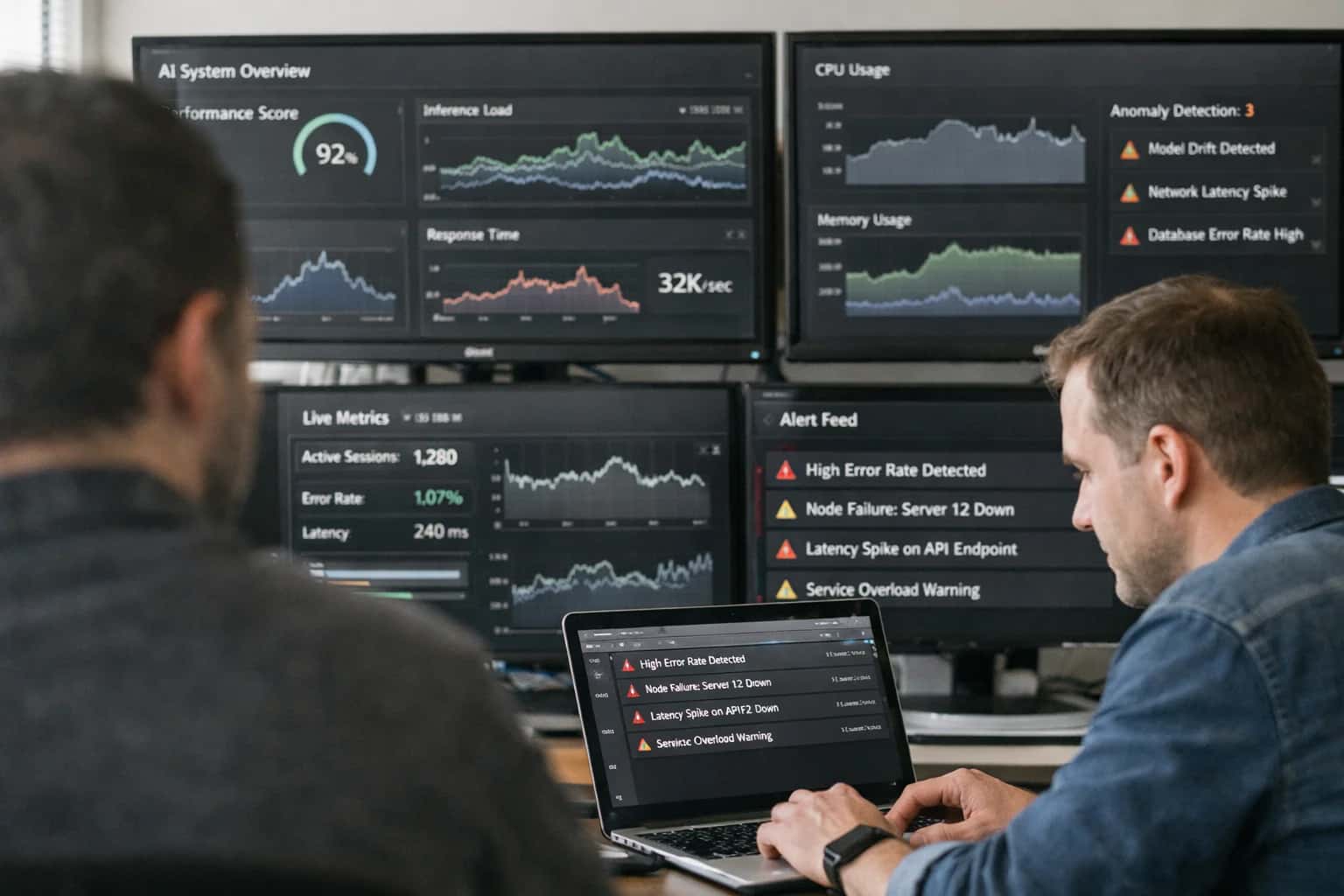
A streaming graph is a dynamic data structure processed continuously in real-time as new nodes, edges, and updates arrive as a data stream.
The core challenge is maintaining low-latency query capabilities and accurate analytics over the graph's current state while efficiently ingesting updates. Techniques like temporal sliding windows focus computation on recent activity, and incremental graph algorithms update metrics without full recomputation. Streaming graphs are a foundational component of temporal knowledge graphs, enabling the representation of time-varying facts and relationships for deterministic reasoning in agentic cognitive architectures and retrieval-augmented generation systems.
TEMPORAL KNOWLEDGE GRAPHS
Core Characteristics of Streaming Graphs
A Streaming Graph is a dynamic graph processed in a continuous, real-time manner as new nodes, edges, or updates arrive as a data stream. Unlike static graphs, its structure and properties evolve over time, requiring specialized architectures for ingestion, processing, and querying.
01
Continuous Ingestion & Low-Latency Updates
The primary characteristic is the continuous ingestion of graph updates from high-velocity data streams. This requires a system architecture capable of processing incremental updates with sub-second latency. Unlike batch-loaded graphs, a streaming graph must handle inserts, deletes, and property modifications as they occur, maintaining a near-real-time view of the evolving network. This is foundational for use cases like fraud detection in financial transactions or real-time network monitoring.
02
Temporal First-Class Citizen
Time is an intrinsic, first-class property of every element. Each node and edge is associated with one or more temporal validity intervals (e.g., [start_timestamp, end_timestamp]). The system natively supports queries over time, such as:
- Point-in-time queries: "What did the graph look like at time T?"
- Interval queries: "Show all relationships active between T1 and T2."
- Evolutionary queries: "How has this entity's connections changed over the last hour?" This contrasts with static graphs where time is often an afterthought stored as a node property.
03
Incremental Graph Computation
Graph algorithms and metrics must be computed incrementally to avoid the prohibitive cost of recomputing from scratch after each update. This involves maintaining partial results and applying delta updates. Key techniques include:
- Incremental PageRank: Adjusting node scores based on recent edge additions/removals.
- Dynamic Community Detection: Updating cluster assignments as nodes form new connections.
- Sliding Window Aggregates: Computing metrics like degree centrality over a moving time window (e.g., last 5 minutes). This enables real-time insights into graph dynamics.
04
Event-Driven Architecture & Triggers
Streaming graphs are inherently event-driven. The arrival of a new edge or node update is an event that can trigger downstream actions. Systems implement pattern-matching triggers or continuous queries that monitor the stream for specific subgraph patterns. For example:
- Trigger: "Alert if a new transaction edge creates a cycle between accounts A, B, and C within 10 seconds."
- Action: Execute a fraud mitigation script or update a dashboard. This allows the graph to act as a real-time decision engine, not just a passive database.
05
Bounded State Management
To manage unbounded data streams, streaming graphs employ strategies for state management and data retention. Common approaches include:
- Temporal Windows: Only the most recent data (e.g., last 24 hours) is kept in hot storage for low-latency querying; older data is archived.
- TTL (Time-To-Live): Automatic expiration of graph elements after a defined period.
- Compaction & Summarization: Aggregating fine-grained historical events into coarser-grained summary nodes or edges. This balances the need for historical context with system performance and storage costs.
06
Integration with Stream Processing Engines
Streaming graphs are not standalone; they are integrated components within a larger stream processing pipeline. They typically consume from and publish to platforms like Apache Kafka, Apache Flink, or Apache Spark Streaming. The graph acts as a stateful operator within this pipeline, enriching events with graph context (e.g., "this user is part of a known fraud ring") or detecting complex multi-event patterns that span time, which simple stream processing cannot easily identify.
COMPUTATIONAL MODEL
How Streaming Graph Processing Works
Streaming graph processing is a computational model for analyzing dynamic networks where data arrives continuously, enabling real-time insights on evolving relationships.
A streaming graph is a dynamic data structure where nodes, edges, and their properties are updated via a continuous, high-velocity data stream. Unlike static graphs processed in batch, a streaming graph processing engine applies algorithms incrementally as each update arrives. This model is essential for real-time applications like fraud detection in transaction networks or monitoring live infrastructure dependencies, where the state of relationships is constantly in flux.
Core to this architecture is the incremental computation of graph metrics. Instead of recalculating from scratch, the system maintains a materialized view of the graph and applies delta updates to algorithms like PageRank or community detection. Frameworks implement this using event-time processing and windowed aggregations to reason over recent temporal slices of graph activity, ensuring low-latency responses to topological changes.
REAL-TIME APPLICATIONS
Streaming Graph Use Cases
Streaming graphs enable continuous, low-latency processing of dynamic relationships as data arrives. These are the primary domains where this capability delivers critical operational intelligence.
01
Real-Time Fraud Detection
A streaming graph continuously ingests transaction events as nodes, linking them to accounts, devices, and IP addresses in real-time. It identifies fraud rings by detecting anomalous subgraph patterns as they form, such as:
- Rapid, circular money flows between newly created accounts.
- A single device suddenly linked to dozens of accounts.
- Geographically impossible transaction sequences. This allows for transaction blocking within milliseconds, far faster than batch-based systems.
< 100ms
Detection Latency
50%+
Higher Precision
02
Dynamic Network Security
In cybersecurity, a streaming graph models live network traffic, where IP addresses, users, and processes are nodes, and connections are edges. It performs continuous threat hunting by:
- Tracking lateral movement as an attacker pivots between hosts.
- Identifying command-and-control (C2) callbacks by spotting beaconing patterns.
- Correlating alerts across siloed tools into a unified attack graph. Security teams see the evolving attack surface in real-time, enabling immediate containment.
Real-Time
Attack Graph
03
Financial Market Surveillance
Exchanges and regulators use streaming graphs to monitor for market manipulation like spoofing or layering. Each order and trade is a timestamped event. The graph links traders, accounts, and instruments, calculating temporal centrality metrics on-the-fly to flag collusive patterns, such as:
- Coordinated order placement across multiple accounts to create false liquidity.
- Wash trades between linked entities. The system provides a real-time view of market microstructure and participant relationships.
04
IoT & Smart Infrastructure
In a smart city or factory, thousands of sensors (nodes) generate continuous telemetry. A streaming graph connects sensors based on physical proximity, data correlations, or process flow. It enables:
- Predictive maintenance: Spotting patterns that precede a failure in an industrial asset graph.
- Anomaly propagation: Understanding how a failure in one utility (water) impacts another (power).
- Real-time optimization: Dynamically rerouting traffic or adjusting energy distribution based on live graph state.
Sub-Second
Response Time
05
Recommendation & Personalization
E-commerce and content platforms use streaming graphs to update user-item interaction networks in real-time. Each click, view, or purchase adds a timestamped edge. This allows for session-aware recommendations by:
- Immediately incorporating a user's latest actions into their neighborhood in the graph.
- Detecting trending items or viral content as its connectivity rapidly increases.
- Adjusting community detection for real-time audience segmentation during live events.
06
Supply Chain & Logistics
A streaming graph models a global supply chain where nodes are shipments, ports, trucks, and warehouses. As GPS and RFID events stream in, the graph updates locations and ETAs. It provides continuous resilience monitoring by:
- Identifying single points of failure as they emerge (e.g., a port closure).
- Dynamically recalculating optimal rerouting paths for thousands of shipments.
- Detecting deviations from planned routes that may indicate theft or delay. This transforms static supply chain maps into living, operational systems.
Real-Time
Visibility
COMPARISON MATRIX
Streaming Graph vs. Related Concepts
A technical comparison of streaming graphs against related temporal and dynamic graph paradigms, highlighting core architectural and operational differences.
| Feature / Metric | Streaming Graph | Temporal Knowledge Graph (TKG) | Dynamic Graph (General Model) | Event Sourcing Pattern |
|---|---|---|---|---|
Primary Data Model | Continuous, unbounded stream of graph updates (inserts/updates/deletes) | Versioned, time-annotated facts with explicit validity intervals | Snapshot-based evolution; graph at time T1, T2, ... | Immutable, append-only log of state-changing events |
Core Query Paradigm | Continuous queries over the stream; real-time pattern matching on new data | Time-point or interval-based historical queries (e.g., "graph as of 2023-01-01") | Snapshot queries; analysis of graph structure at discrete times | Replay of event sequence to materialize a past or current state |
Time Representation | Processing time / event time of the update; implicit in stream order | Explicit timestamps or intervals attached to facts as properties | Implicit in snapshot sequence; time is often an external dimension | Event creation timestamp; time is intrinsic to the log's sequence |
State Management | Incremental, mutable state (e.g., a materialized view of the current graph) | Immutable, versioned state; history is preserved and queryable | Typically mutable; past states may not be retained without versioning | State is derived; the log is the source of truth, state is ephemeral |
Update Semantics | CRUD operations on nodes/edges applied to the live graph | New facts with new validity intervals; old facts are logically retired, not deleted | Structural changes between snapshots; update semantics are implementation-specific | Append-only; updates are new events that describe a change |
Typical Latency | Sub-second to seconds for update-to-query visibility | Seconds to minutes for batch ingestion of temporal facts | Varies widely; from batch (hours) to near-real-time | Milliseconds to append event; variable latency to materialize state |
Primary Use Case | Real-time fraud detection, network monitoring, live recommendation engines | Historical analysis, regulatory compliance, temporal reasoning ("what was true when?") | Academic research, offline analysis of network evolution | Audit trails, state reconstruction, complex domain modeling in microservices |
Storage Backend | Specialized streaming graph processor (e.g., Apache Flink with graph ops) | Temporal Graph Database or versioned triplestore | General graph database with time-series snapshots or custom schema | Event store (e.g., Kafka, specialized database) + state store |
STREAMING GRAPH
Frequently Asked Questions
A streaming graph is a dynamic data structure processed continuously as new nodes, edges, and updates arrive in real-time. This FAQ addresses its core mechanisms, applications, and how it differs from static and temporal graphs.
A streaming graph is a dynamic graph data structure that is processed in a continuous, real-time manner as new nodes, edges, or updates to existing elements arrive as a data stream. It works by ingesting a potentially infinite sequence of graph update operations—such as ADD_NODE, ADD_EDGE, DELETE_EDGE, or UPDATE_NODE_PROPERTY—and applying them to an in-memory or persisted graph representation. Processing is typically window-based, where algorithms operate on a sliding window of recent updates (e.g., the last 5 minutes), or incremental, where the graph's state and derived metrics are updated continuously with each new piece of data. This enables real-time analytics on evolving networks without the latency of batch reprocessing.
Enabling Efficiency, Speed & Accuracy
Intelligent Analysis, Decision & Execution
We build AI systems for teams that need search across company data, workflow automation across tools, or AI features inside products and internal software.
Talk to Us
Search across company data
Give teams answers from docs, tickets, runbooks, and product data with sources and permissions.
Useful when people spend too long searching or get different answers from different systems.
Enterprise searchRAGPermissions
Read more
Automate internal workflows
Use AI to route work, draft outputs, trigger actions, and keep approvals and logs in place.
Useful when repetitive work moves across multiple tools and teams.
AI agentsWorkflow automationGovernance
Read more
Add AI to products and internal tools
Build assistants, guided actions, or decision support into the software your team or customers already use.
Useful when AI needs to be part of the product, not a separate tool.
AI integrationDecision supportModel routing
Read more
About the author
Prasad Kumkar
CEO & MD, Inference Systems
Prasad Kumkar is the CEO & MD of Inference Systems and writes about AI systems architecture, LLM infrastructure, model serving, evaluation, and production deployment. Over 5+ years, he has worked across computer vision models, L5 autonomous vehicle systems, and LLM research, with a focus on taking complex AI ideas into real-world engineering systems.
His work and writing cover AI systems, large language models, AI agents, multimodal systems, autonomous systems, inference optimization, RAG, evaluation, and production AI engineering.
LinkedIn
Limited slotsGet a Free AI Consultation
Partnered with leading AI, data, and software stack.





How We Work
Custom AI workflows for your Business
One-fit-all AI don't work for modern businesses. At Inferensys, we aim to understand your business & custom requirements; which we use to define most efficient agentic workflows, the data, and the tools for your business.
01
Review the use case
We understand the task, the users, and where AI can actually help.
Read more02
Pick the right approach
We define what needs search, automation, or product integration.
Read more03
Build the first useful version
We implement the part that proves the value first.
Read more04
Improve from there
We add the checks and visibility needed to keep it useful.
Read moreThe first call is a practical review of your use case and the right next step.
Talk to Us